‘We’re losing people.’ Emotional pleas to fix deadly Hwy 395 stretch
AI-generated summary reviewed by our newsroom.
- Residents, officials and lawmakers press for federal and state action on Hwy 395
- Community demands short-term safety measures while pursuing costly federal fixes
- Repeated fatal crashes strain first responders, businesses and local families' safety
More than 100 people from around the Tri-Cities made a passionate plea to lawmakers Wednesday for help with a deadly stretch of highway just outside Pasco.
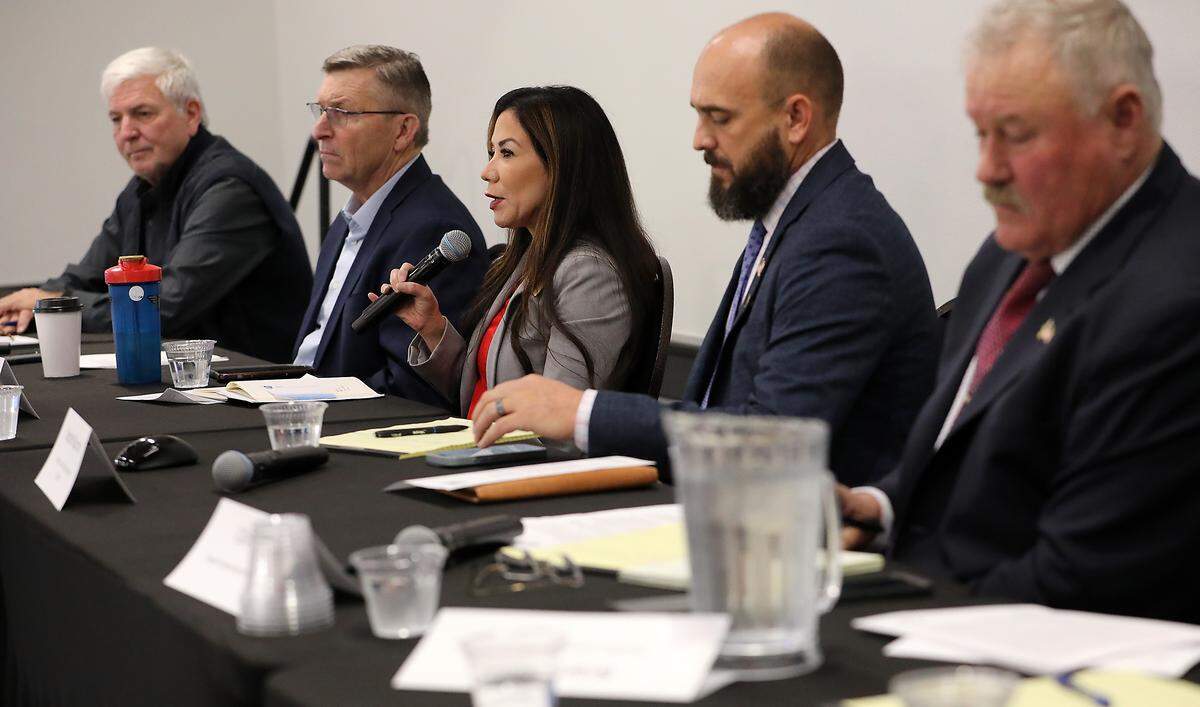
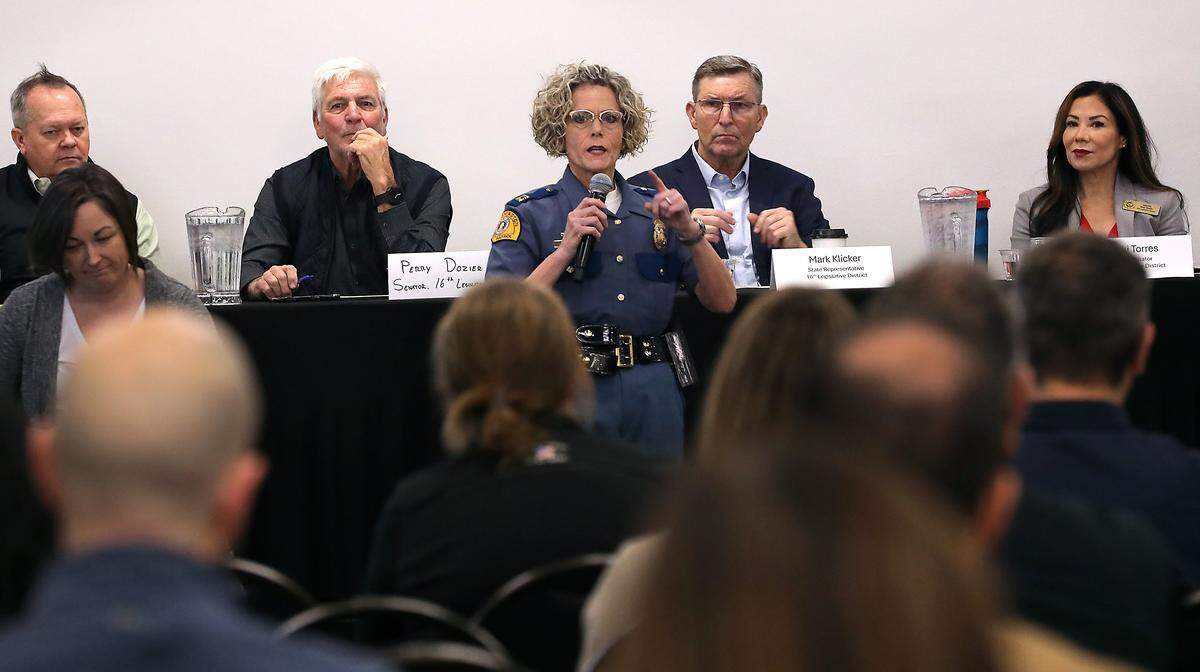
City and county leaders were joined by officials from the Washington State Patrol and Washington Traffic Safety Commission, as well as state lawmakers and staff from the offices of Eastern Washington’s congressional delegation.
Franklin County commissioners organized the meeting Wednesday at the HAPO Center in Pasco.
In addition to more than a dozen community members sharing their stories in person, many others sent in written comments. It was a staggering response to the meeting announced just days prior.
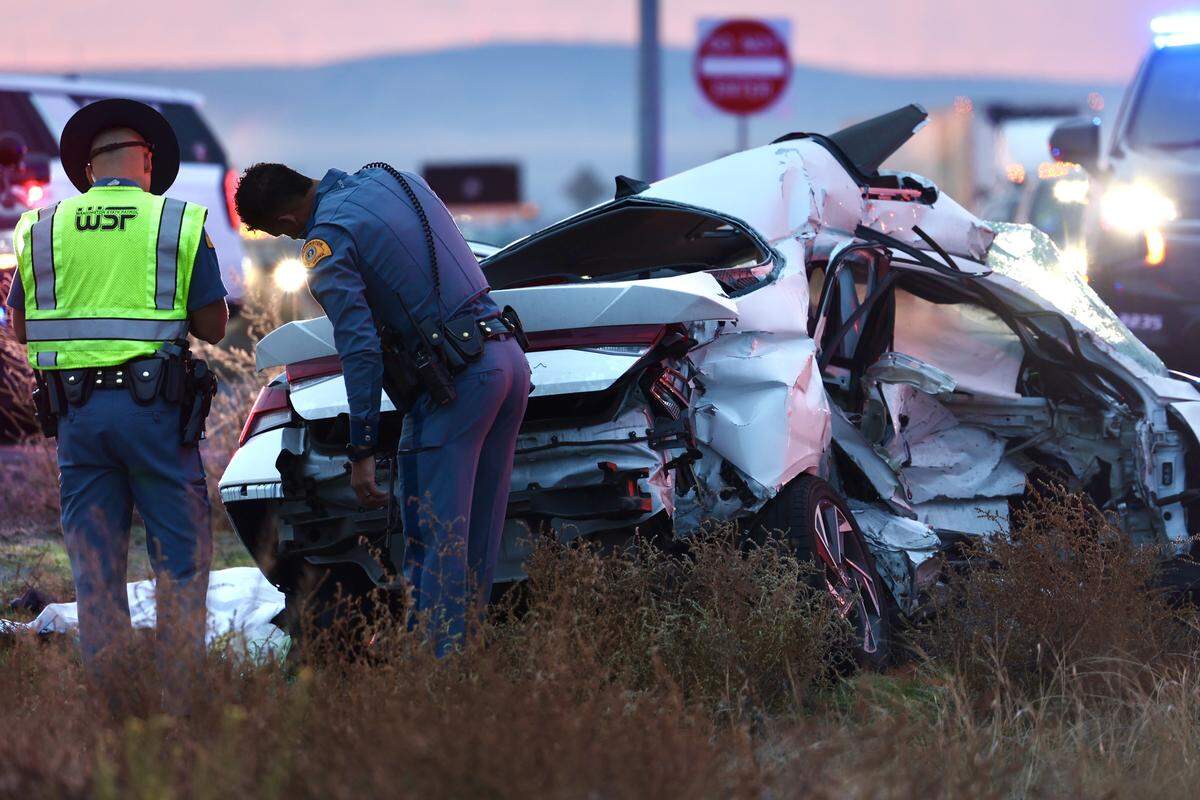
The meeting follows four deaths in three wrecks since August on Highway 395 at intersections near Country Mercantile, including a Kahlotus councilman who died in a crash just days before Thanksgiving. And even before the meeting was over, some WSP troopers in attendance had to leave for a Highway 395 collision in Kennewick.
In Franklin County, the five-mile stretch of highway between the interchange at the King City truck stop and Sagemoor Road includes crossings at Crestloch Road, East Vineyard Drive and Foster Wells Road.
While state lawmakers can likely secure some money to help improve safety there, because Highway 395 is a U.S. highway, major changes such as interchanges or overpasses will require federal intervention.
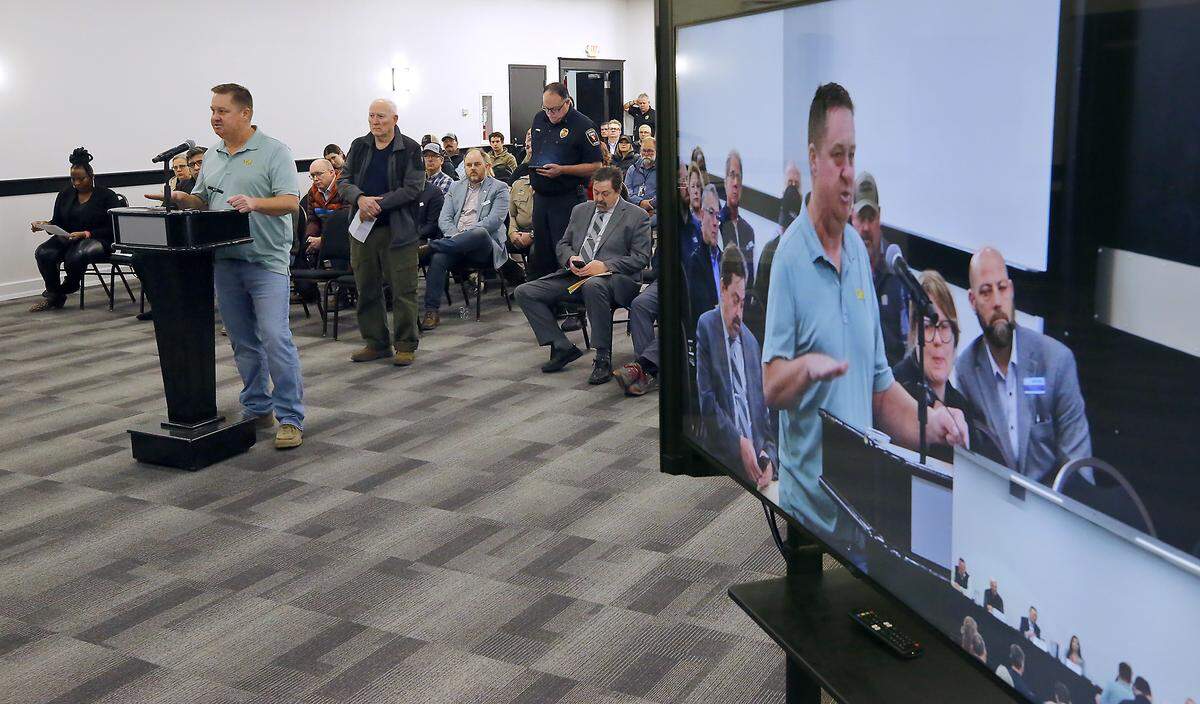
Life shattering consequences
Franklin County Fire District 3 Captain Jason Langston said volunteer firefighters and EMTS are burned out and crews are struggling with the toll the repeated fatal wrecks have had on them.
He told lawmakers that just last month he was doing CPR at a fatal crash next to a roadside cross that marked the site of another deadly wreck he had responded to.
Some officials said the issues on Highway 395 were a driver problem, as well as an infrastructure challenge, but many residents pushed back pointing out that growth in the Tri-Cities isn’t going to slow down.
Madeline Johnson said two years ago she was driving north on the highway with her family when another driver made a mistake that ended in tragedy for both families.
“A driver leaving the Country Mercantile failed to yield and entered the highway,” she said. “I braked with both feet trying to avoid the collision, but a truck like mine, which is the average size here, takes about 400 feet to stop at 70 mph. I had about 40 (feet).”
“Unfortunately, the other driver’s split second misjudgment led to an instant double fatality tragedy for herself and her 18-year-old daughter,” she said.
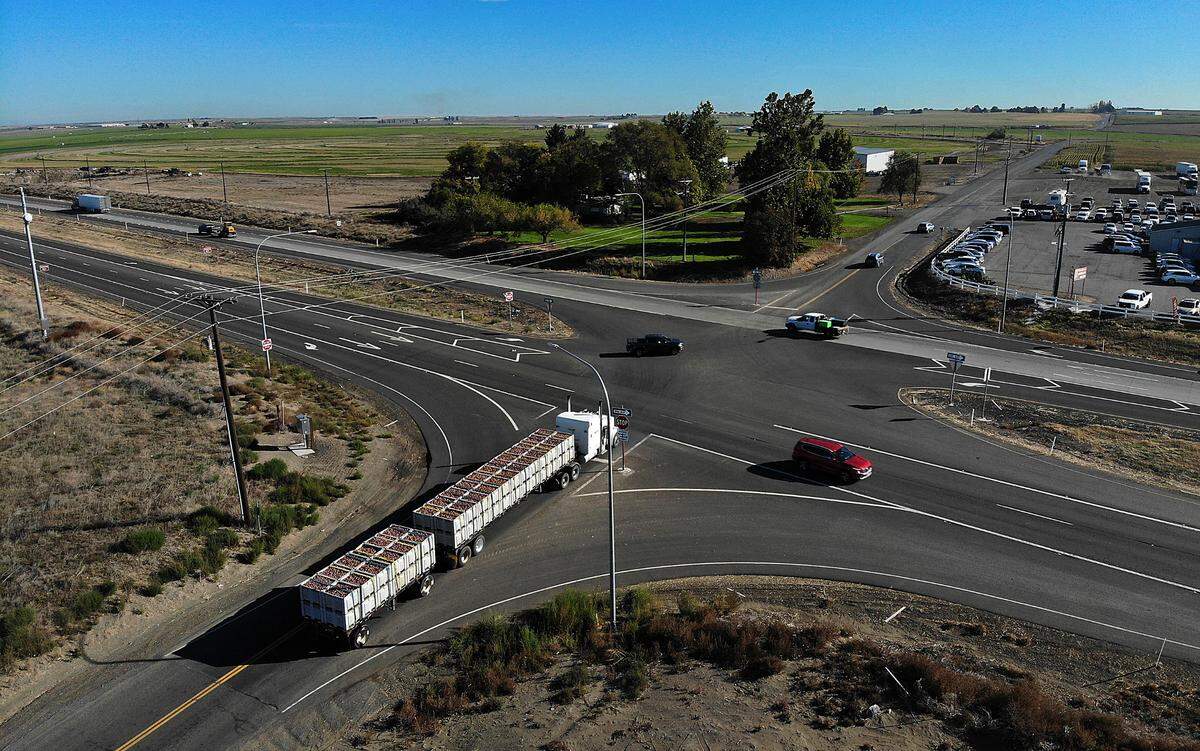
Johnson and her husband were left with lifelong injuries and PTSD she still struggles with. She said just driving through the area sends her heart into her throat.
“This is not a tragic anomaly, it is one example of a larger pattern,” she said.
“Human error exists everywhere, but on a well-designed highway human error doesn’t routinely end in fatalities,” Johnson said. “On this stretch of 395 it does. Repeatedly, consistently and predictably. That’s the difference between a driver mistake and a systemwide failure.”
Johnson said that approaching this stretch of highway is so dangerous that it feels like entering a battlefield.
“You have the authority, you have the data, you have the human cost standing right in front of you, please act before the next tragedy makes my speech someone else’s burden,” she said.
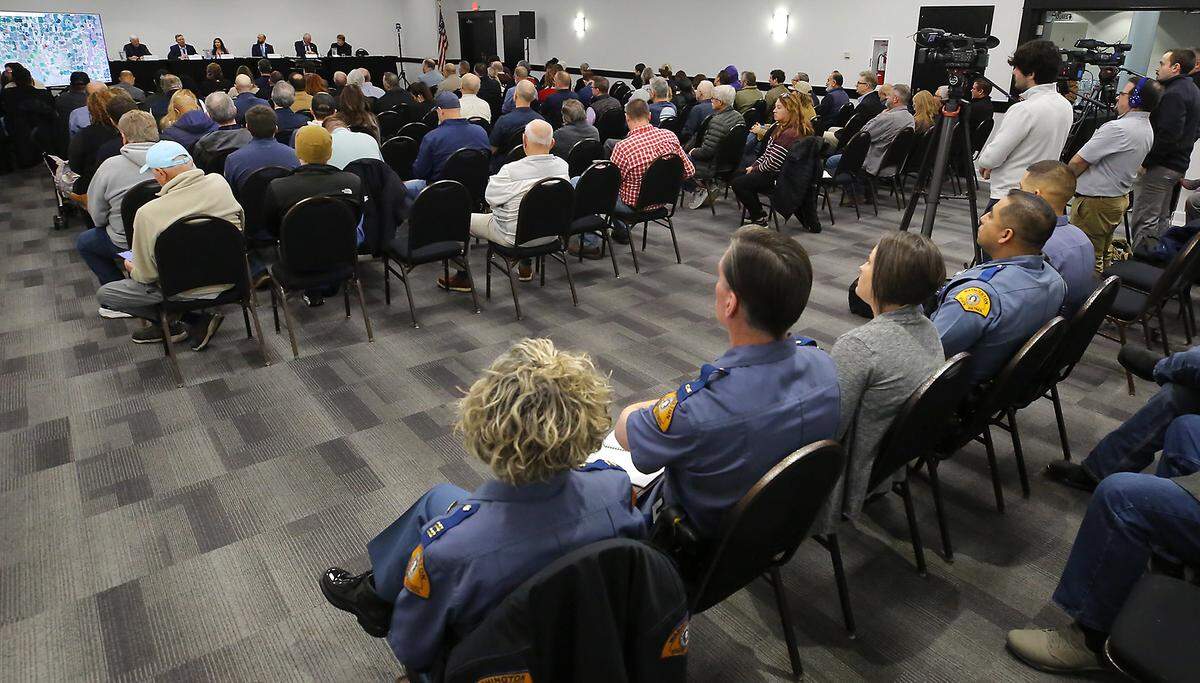
Growth in traffic
Tyler Halliday owns a farm in an area that requires his crews to use the highway near East Vineyard Road. He said that the growth in traffic in the area since his family bought their land 25 years ago has turned their dream into a nightmare.
His employees have been in three wrecks over the years, and just recently he had a scare when he got a call about a fatal crash with an SUV that matched his wife’s car.
He said it was the most gut-wrenching 30 minutes of his life.
“I disagree that it’s not a roadway problem, for those of you who used to play the game ‘Frogger,’ it’s like playing ‘Frogger’ at 70 miles per hour with semi trucks, ten wheelers and tractors sometimes pulling equipment trains that are 40 feet long,” Halliday said.
He’s terrified of the day his teenage son has to start driving Highway 395.
“When my dad bought that farm it was a dream come true to me,” he said. “I got to live on that farm, I raised my family on that farm, and I never thought I’d want to move. Now I’ve got a 14-year-old son who’s going to be driving in two years and that intersection terrifies me.”
Halliday said he’s been trying to get responses from lawmakers since at least 2020, but his pleas have gone unanswered. He took the opportunity to challenge the lawmakers and their staffs to listen to the community and begin making changes.
Santos Rodriguez, a manager at Country Mercantile, said the wrecks are having a huge toll on their staff. They worry daily that the collisions might be one of the more than 100 teens who work for the company.
“We used to be a place where people feared going because they were going to spend a lot of money, now we’re feared for something else and that’s causing everybody ... a lot of concern,” he said.
Rodriguez said his employees are also often the first people trying to help when a wreck happens. They’ve had to implement protocols on how to respond.
“It used to be a place people would want to come with their families, now people are scared to come with their families,” he said.
What lawmakers are doing
Franklin County Commissioner Stephen Bauman said that while the county can’t make changes to the highway, they are looking at plans for relief on the intersecting roads they can control.
“While this is not a Franklin County road, it is a Franklin County concern,” he said. “This is our community ... When we talk about these intersections, it’s more than just the highway.”
Commission Chairman Clint Didier said he knows a long-term solution will cost millions of dollars, and likely need to come from the federal government, they need relief now.
“People get impatient, and then they do things that aren’t very wise,” Didier said. “We need a solution now, we’re losing people. And the near misses out there? We can’t even count them.”
Didier and Bauman want to see yield lights and intersection warnings put in as an immediate step to try and slow down drivers near the troubled crossings.
“It’s up to those of us that are in the room right now to spread the word, let’s be a voice that can’t be ignored anymore,” Didier said.
State Rep. Mark Klicker, of Walla Walla, and Sen. Nikki Torres are working on a pitch to their colleagues in the Legislature to help with short term measures, but they acknowledged finding money for major changes is going to be a challenge. Senators Perry Dozier, of Walla Walla, and Matt Boehnke, of Kennewick, also spoke.
Torres said she knows how dangerous the roadway can be, with a commute from her Pasco home to Spokane for her day job. She avoids using Highway 395 in winter and peak agriculture season, even when it means a much longer drive.
“I completely avoid it, and I know many of you do too, because I’ve felt the impact and the strain there,” she said.
She’s confident they can gain buy-in for their plan for solutions that can implemented immediately.
“It’s something we can do in the meantime that will help,” she said. “It’s going to feel more like a band-aid, but that’s not what we want (a fix) to be.”
The contingent of state lawmakers encouraged residents to keep sending their feedback, and said finding solutions is at the top of their priority list going into the 2026 legislative session.
This story was originally published December 10, 2025 at 3:11 PM.