‘Falling apart.’ Tri-Cities coaches push joint city hall-pool complex
AI-generated summary reviewed by our newsroom.
- Kennewick coaches propose adding a 50m indoor aquatics center to city hall project.
- Kenneth Serier pool failures limit year-round programs and cap meet capacity.
- Council weighs costs, partnerships and funding at 2026 retreat.
A group of Kennewick swim coaches say they have a solution for the city’s decrepit pool problem: Add on an aquatics center to the city hall replacement project.
It’s a bold proposal, but one that has captured the imaginations of parents, coaches and athletes, and has brought them out consistently in recent months to lobby at city council meetings.
Staff and the city council are weighing the options to replace the 60-year-old city hall at 210 West Sixth Ave. It’s a project that has reached top priority.
At the same time, they’re also mulling a multi-million dollar replacement for the 70-year-old Kenneth Serier Memorial Pool, which is long past its useful lifespan and could reach a failure point sometime soon. The pool currently is next door to the police department, across the street from city hall.
It’s the city’s only public pool, and it underscores the Tri-City region’s lack of a publicly available, 50-meter indoor pool.
Coaches say a combination city hall-swimming pool at the downtown civic center could be the answer.
“The pool is crumbling. It’s falling apart,” said Kennewick Lions head dive coach Mike Sandbeck, who’s coached three decades in the Tri-Cities. “Like they’ve said, at the next big breakdown we’re done. It’s a lost opportunity for a lot of people — to learn to swim, to learn to dive, to get their exercise, rehabilitation and all of that stuff.”
The city has acknowledged the aging pool has significant water leaks because of its poor integrity.
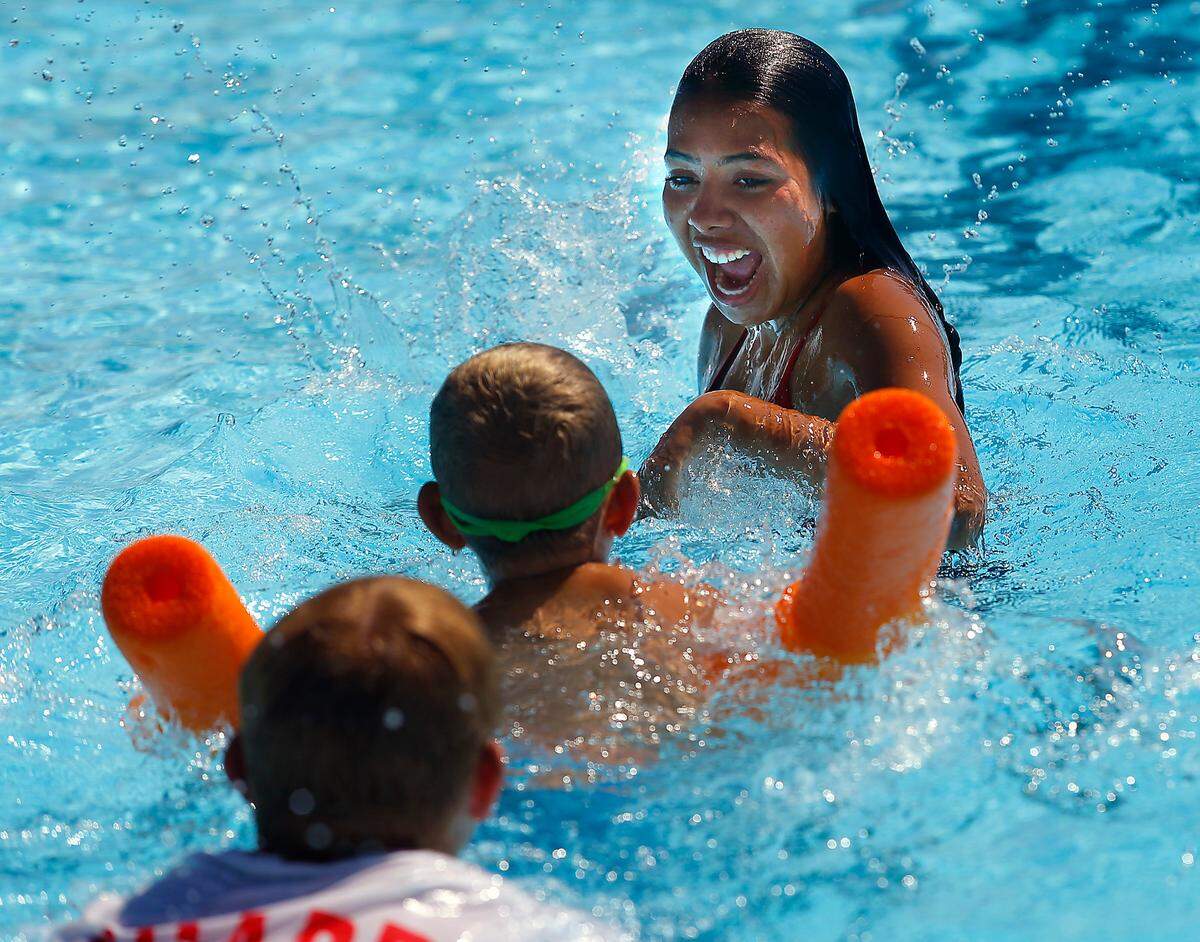
Will Kennewick be the Tri-Cities’ swim town?
While Pasco plans to open a new $40 million aquatics center next year off Broadmoor Boulevard, the swim coaches say Kennewick also has the potential to be the Tri-Cities’ swim town.
Last fall, the Serier pool hosted nearly 400 athletes from across the state for the 14th Mid-Columbia Invite.
It was the second-largest high school event in Washington that season, and saw the most athletes compete in the event’s history. And it maxed out the pool’s capacity.
It also was a boon for the economy, said the coaches. They estimate those out-of-town families and athletes spent about $20,000 at hotels and local businesses for the one-day event.
And it brought together swimmers of all abilities — from first-time athletes to state champions.
“I’m confident that we could double the size of that meet if we could bring more teams in, and if we had a bigger pool,” said Jesse Grow, a Hanford High School coach who owns Atomic Swim Club and is involved in Special Olympics swim.
The coaches also criticized parts of a 2024 recreational facilities feasibility study conducted for Kennewick.
While it acknowledged the city’s lack of public pools and overwhelming demand, it said competitive swim events are “less frequent, exhibit lower nonlocal draw, and generate reduced returns relative to their substantial overhead facility costs.”
Lions coach Trine Tippett said more research on the topic was needed. All three high schools — Kennewick, Southridge and Kamiakin — use the pool. Between boys and girls, that’s six teams.
Then there are clubs teams, master’s programs and the Special Olympics teams. And coaches are advocating to bring competitive swim to Tri-Cities middle schools.
City to review budget priorities
While the city council isn’t fully sold on rebuilding city hall at its current downtown site, staff has begun the planning process for the project and is also drafting a broader master plan to guide the future civic center campus.
Adding a pool or aquatics center would be a considerable increase to the $36 million price tag for a new city hall, though it’s unclear how much.
The Kennewick coaches — who characterize themselves as a microcosm of a wider community of swimmers — said local businessman and artist Warren Hughs provided them with some rough figures, but those are based on a dream facility at the University of Iowa.
A similar replacement of the Serier pool alone would cost about $11 million, with a new pool house and lap pool.
A full-scale, 23,000-square-foot indoor aquatic facility could cost the city more than $23 million, but would allow for year-round use. Currently, Serier is only open June to September.
Kennewick Mayor Gretl Crawford said the city council will discuss the matter in early 2026 at a retreat establishing council priorities, and will review its funding options for a pool replacement. It also expects to consider partnerships with the Kennewick School District.
“While we haven’t yet taken action, rest assured we are hearing you, and it is a priority to follow up on,” she told pool advocates at a November city council meeting.
‘It baffles me’
The pool is frequently closed for weeks on end due to broken heaters, pumps or other maintenance issues. Cold and stormy weather also can affect fall swimmers practicing outside.
About 1,500 come to the pool each summer for swim lessons, many of them repeat swimmers. Coaches say those slots fill up quickly in the mornings, locking many families out of decent aquatics recreation.
“It baffles me that we have a community of 81,000, and we do not provide year-round instruction for all citizens,” said Tippett, noting that opportunities are often reserved for those who can afford them.
Tippett says even smaller Washington communities, like Clarkston, play host to new and larger facilities than Kennewick. Those crown jewel public facilities build community, she contends.
“We don’t have a core community anymore, in terms of the city. There is a push to revitalize that, and I think it’s massive,” she said. “When we look at economic development as a whole, and you want people to stay, what makes them stay?”
“Community,” Grow chimes in.
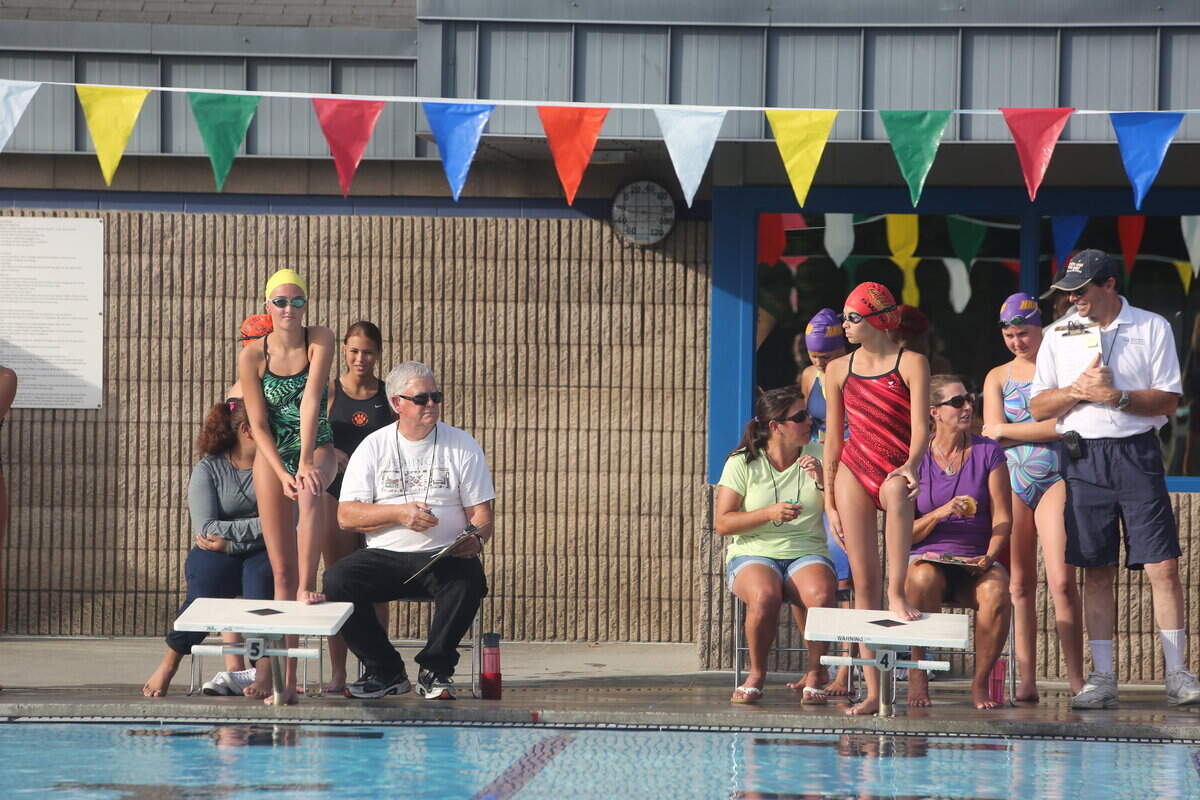
Swimming can ‘save your life’
While the Serier pool operates a variety of programs for people of all ages and those with disabilities, Kennewick community members say they’re dissatisfied with the city’s current swimming facilities.
A recent American Community Survey highlighted in the 2024 Kennewick Parks and Recs master plan shows, 56% of residents said they were either “dissatisfied” or “very dissatisfied” with the quality of aquatics facilities.
About 73% of those who responded said they would be either “very supportive” or “somewhat supportive” of the city developing a new indoor facility. “Quality of swimming facilities” was also identified as a Top 3 priority for residents over the next five years.
The National Recreation and Parks Association recommends municipal governments offer one swimming pool for about every 43,000 residents. In Kennewick’s case, a whole second facility would be needed to meet the association’s recommendations.
Jason Hart, a head coach at Southridge High — and self-proclaimed “hellraiser” for the pool movement — said it’s also about opening up education opportunities for kids.
With the Tri-Cities — the state’s third-largest metro area — located at the feet of the largest river system in the Pacific Northwest, and with so many families taking to them to cool off in the summer, the chance for swimming accidents, death or injuries is high.
Grow said it’s the only sport that “can save your life.”
“I guarantee you that you or a friend of yours has dealt with a drowning or near-drowning incident because it happens all the time,” Hart said.
Grow and Hart said a combination city hall-aquatics facility also has the potential to bring together community members and create an “inclusive community.” Grow mentioned the different perceptions that downtowners and Southridge residents have of one another.
“We can bring a community together through swimming, we can bring a community together through a pool, we can bring the state to our community and show them what we can offer to the rest of the state, as opposed to this eastside-westside thing,” Grow said.
This story was originally published December 5, 2025 at 5:00 AM.