Out of options, Franklin agrees to join $30M fix for Tri-City region’s failing 911 towers
Franklin County commissioners had regional 911 communications leaders sweating, but ultimately agreed to enter into a joint agreement with Motorola to begin $30 million in upgrades for failing emergency communication infrastructure.
When the agenda item first came before Franklin commissioners on Wednesday they discussed budget concerns and possible alternatives before letting the issue die without taking a vote.
That would have left Benton County, Kennewick, Pasco and Richland scrambling to retool the plans on a tight deadline without Franklin County’s involvement.
The other three cities and county had already adopted the plan at their own meetings in recent weeks and will split the total cost.
The upgrades are critical, with failures becoming more frequent and potentially putting residents and first responders at risk.
Local leaders have been told that the longer they wait to act, the more likely there could be a major failure, leaving some areas without functioning emergency communications.
Later in the Wednesday meeting, after a brief recess, Commissioner Stephen Bauman asked for the agenda item to be brought back up, leading to a unanimous vote to approve the deal.
The first payments, estimated to be about $1 million from each city and county, will be due in February.
“As much as I don’t want to spend money we don’t have, I don’t see any other alternative,” Chairman Rocky Mullen said.
Where will the money come from?
Franklin County is running an especially lean budget this year, having just managed to avoid a financial crisis that could have seen them as much as $7 million in the hole.
Bauman said he felt the move was necessary for the safety of the community.
“Having dug into this really deep and thought long and hard about it, I believe this is very necessary for our county,” Bauman said. “I don’t like where we’re at, but I don’t get to change yesterday and how we got here. I think this is necessary and public safety is our number one responsibility.”
“I believe we need to address this today and then we need to pass this today because we ask our first responders to be there and be ready to serve us, and it’s our responsibility to give them the tools to do so,” he continued.”
Commissioner Clint Didier said he was still alarmed by the cost of the program, and how much of it is outside of their control, but felt like it was the right move to enter the five-party agreement and begin working to get a final cost for the project.
The county will most likely need to lean on its emergency reserves to pay for the first year of the program, as that payment is outside of the $1 million they have budgeted for the separate, but related tower microwave transmitter replacement project approved earlier this year.
“I’ve been doing this for our region for over 30 years, and that’s the closest to a heart attack I’ve ever come,” Michael Namchek with Benton County Emergency Services told the board.
Namchek helped build Franklin’s antiquated system and has worked hard to keep it functional. He told the board they would do everything they can try and keep costs manageable.
BCES is currently under Richland’s umbrella, but recently started the process of moving toward becoming an independent agency. The region’s 911 dispatch center, the Southeast Communications Center or SECOMM, is also under BCES’s umbrella.
Becoming an independent agency would mean they qualify as a taxing district and would have authority to ask voters to approve a sales tax vote similar to Franklin County’s measure that failed in November.
The sales tax would have paid for both the Franklin County and Pasco portion of the costs, as well as their fire districts, but ended up about 900 votes short of passing.
If BCES brought the measure back up, it would be for their proposed bi-county district and pay for the cost of the upgrades for both counties, the cities and fire districts.
They’re hoping to become independent by early 2026. With payments due at the end of February each year, that could mean Franklin would only need to cover the cost of the first two years before other funding mechanisms could be put into place.
Grants and funding help from the legislature could also further reduce their obligation.
What will it pay for?
Earlier this year law enforcement and fire chiefs from across the Tri-Cities got together to renew a push for a systemwide replacement of failing VHF and microwave infrastructure across the two projects.
That’s split between Benton and Franklin counties and Pasco, Richland and Kennewick.
The bulk of the cost though comes from Franklin County, because Benton County already has an 800 MHZ system in place, which is used by all of the law enforcement agencies including Pasco.
It’s a plan that’s been on their radar for years, but was pushed back due to the COVID-19 pandemic.
Already grant funding has eliminated a significant chunk of the costs for the first portion of the project, knocking millions off the project price tag.
Cost breakdown
The first $4.5 million of the project, which has already been approved and paid for through various other means such as remaining American Rescue Plan funds, will start the process of replacing the VHF and microwave drums on towers.
The $30 million includes new sites that would add equipment to places with interior signal issues such as the Kennewick Police Department or Kadlec Regional Medical Center in Richland.
That price tag includes subscriber units and radios, but there will also be annual costs for the ongoing repair and upgrade of infrastructure, software updates, licensing fees and replacing radios.
The radio fees are being estimated at about $2 million a year for Franklin County and Pasco, Atwood told commissioners this week. That’s down by $1.5 million after a full accounting of how many were actually in use.
Those radio costs would go directly to helping fire districts that could otherwise not afford the purchases.
Tri-Cities area fire districts have had a number of levy lid lift failures in recent years and their budgets are feeling the pinch. Most of the lid lifts approved by taxpayers in recent years have been significantly scaled back after initial voter rejections.
Franklin County Fire District 1, which serves the Connell area, asked for a lid lift for the first time just to keep operations going, but voters rejected the measure. Their area also is one of the worst for radio dead spots, but the small town had just lost its Lamb Weston french fry plant just weeks before the vote.
Without help to pay for radios, these fire districts might have to ask for additional property tax increases down the line because their budgets are restricted to a 1% increase per year, unless they put a levy lid lift on the ballot.
Obsolete systems
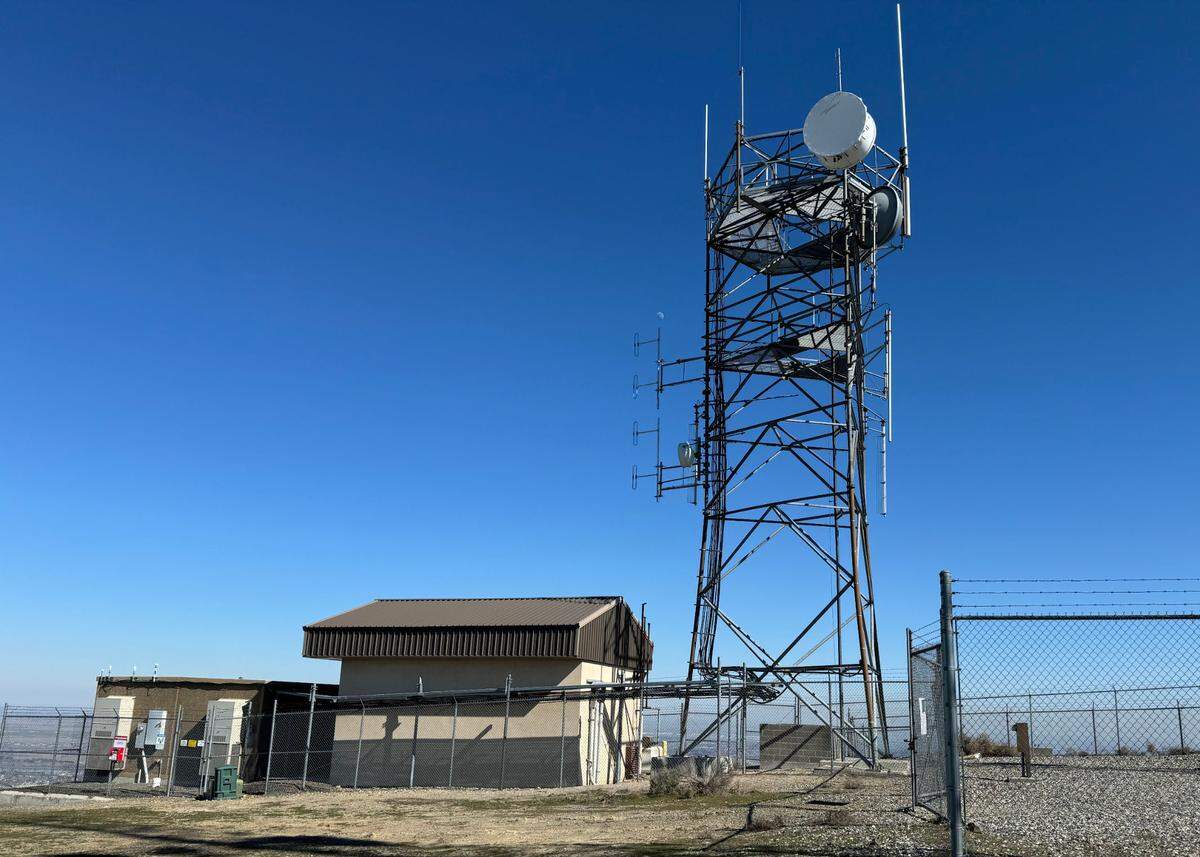
These 911 communication towers are a complex system. It starts with a microwave transmitter, the drums often seen on cell phone towers, which lead into a computer and transmitting equipment.
Phase one of the project is replacing those drums and the parts used to connect them to electronics that help reroute the signals. This is the portion that’s already being paid for.
Parts for the older VHF system haven’t been made in years. While Benton County is largely already upgraded, they still have more than a half dozen VHF systems across the county that fire departments use.
Many of the VHF setups still use monochrome monitors, the old black and green displays that haven’t been manufactured in decades.
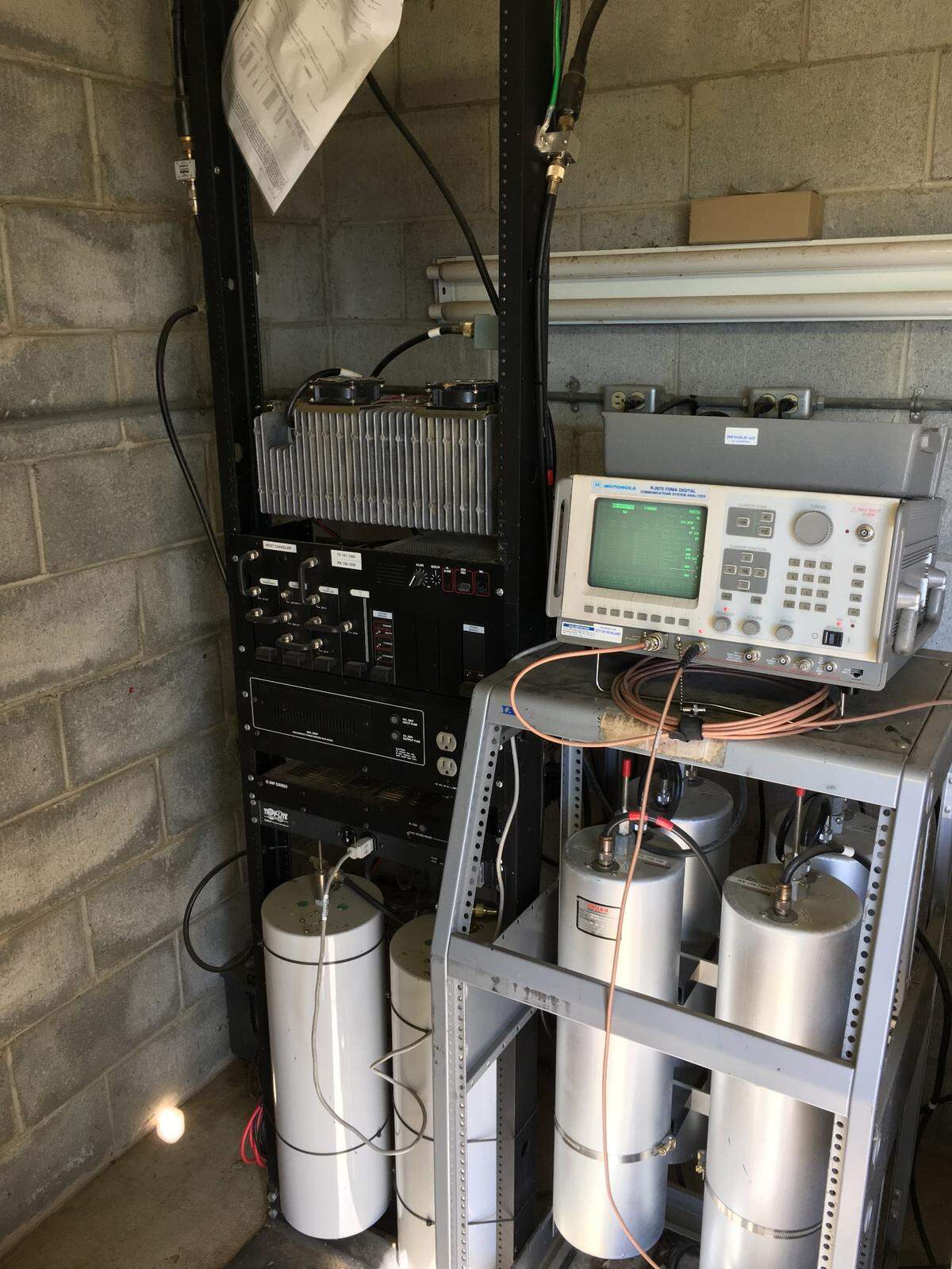
While Franklin County could do a total overhaul of their antiquated VHF system, the technology format itself would be obsolete before the end of the decade, and they’d be back at square one.
Atwood told commissioners that would actually increase their microwave replacement costs, because failing sites such as the one on Jump Off Joe would need to be replaced. With the regional agreement and new equipment, that site won’t be needed.
He said that it would ultimately cost as much or more than just moving to the 800 MHz system.
The second, larger portion of the upgrade, will see all of the other electronics, transmitters and repeaters on Franklin County hilltops upgraded to be brought in line with the rest of the region.
That’s all of the equipment in the small buildings you see next to the towers in places like the top of Badger Mountain.
The 800 MHz system is digital and far more robust, allowing for greater numbers of channels and easier coordination. The old VHF system has limited channels and they’re typically used by only one agency at a time.