
Homelessness is up in Benton and Franklin counties. Is Washington D.C. listening?
More and more people are homeless in Benton and Franklin counties, and while Congress is eager to provide more funding and support, advocates worry it’s just not enough.
The counties’ 2019 homeless census found 222 homeless people, up from 163 last year.
One bright spot: Those living in unsheltered conditions, such as cars, encampments and the streets, dropped from 80 in 2018 to 47 last year.
While Washington state and Washington, D.C., win praise from many advocates for promoting programs and funding to help, they also acknowledge there’s much more to be done.
“I don’t think the money is being misspent. There’s just not enough available,” said Daniel Malone, executive director of the Downtown Emergency Service Center in Seattle.
Washington, D.C., lawmakers say they understand the gravity of the problem. The issue got unusually unified political support this year, as House and Senate budget-writers quietly agreed on more spending.
Congress wants to spend about $2.8 billion in fiscal 2020, the 12-month period that began Oct. 1, on homeless assistance grants, the major funding source to help the homeless. Final votes are likely sometime this month on what would be about a 6% increase over last year.
Virtually all the increased spending, however, is to maintain and improve previously funded projects.
That’s barely enough to keep pace, particularly in high-cost areas.
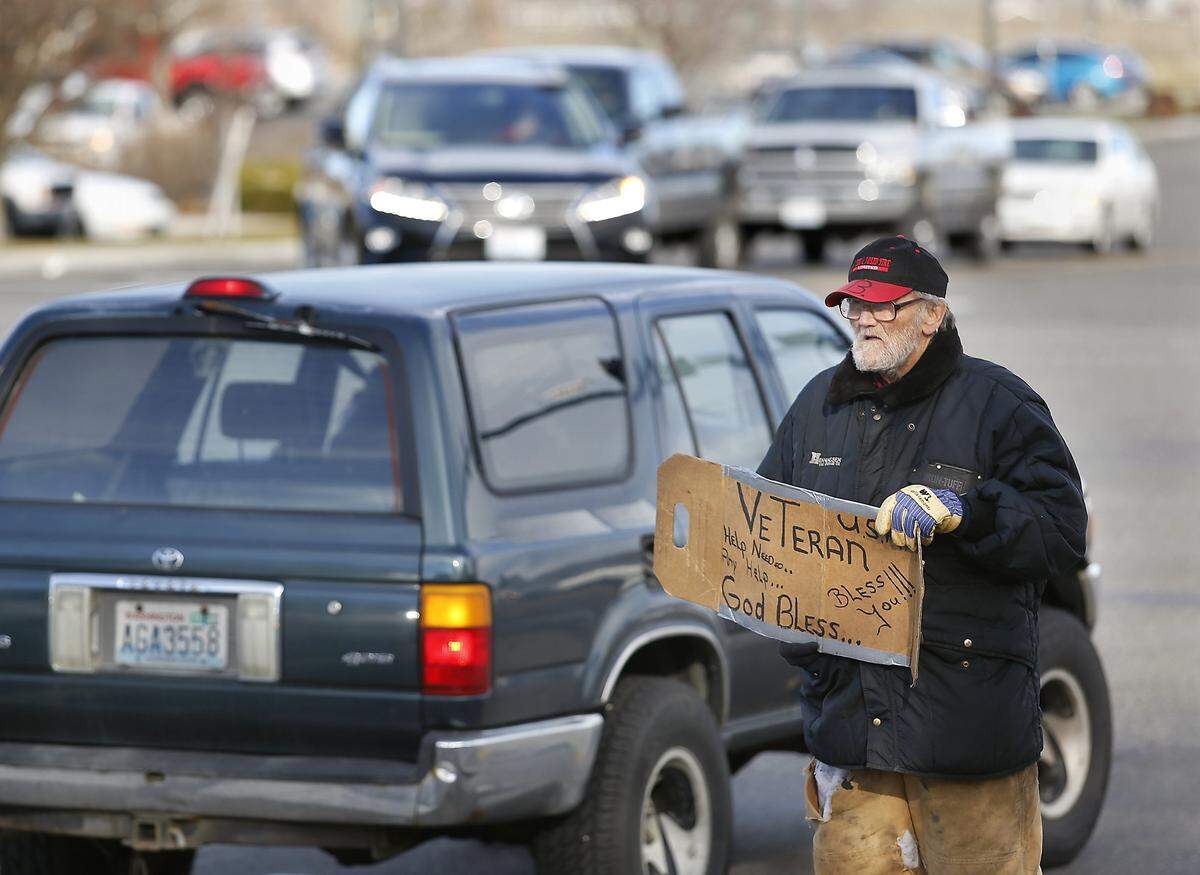
“The cost of building is so high, the level the funding is not sufficient,” said John Parvensky, acting executive director at the National Coalition for the Homeless.
He noted that the 6% increase would not be enough to cover rising rents in many cities.
While it’s critical to spend to keep already-housed people in place, current funding levels make it difficult to help people now on the streets or in emergency shelters, Parvensky said.
“The bottom line is that current HUD funding is very effective for those who are targeted — which are generally some of the more vulnerable and chronically homeless people and some families,” said Michael Ullman, National Homeless Information Project coordinator.
But stopping the flow of new people into homelessness, and the streets or shelters, is much more complex, he said. Ullman urged a “complete rethinking of the problem and the definition of homelessness.”
“The white upper class policy maker cannot fathom living 10 or 50 to a large room — maybe it’s not great, but it’s not homeless. And two-thirds of the people currently defined as homeless live in congregate housing,” he said.
Homeless in Washington state
The “unsheltered” population has been surging in Washington state for years.
A total of 9,599 people were without shelter in January, according to the state homeless survey. That’s down from 10,621 last year but up from 8,591 in 2017 and 5,902 in 2014, according to data from the National Alliance to End Homelessness, a nonpartisan advocacy group.
Eight percent of unaccompanied Washington youth were without shelter, the second highest percentage in the nation after California.
State officials cite successes in reducing homelessness in certain areas.
Tedd Kelleher, senior managing director for housing assistance at the state Department of Commerce, pointed to the state’s management system, which allows officials “to really know where the money is going,” he said.
“We’re still early in the journey,” Kelleher said, “but we think we’re making the best use of the resources we have.”
What’s needed, advocates say, is more political pressure.
“We know this approach works and our country has seen the success of these efforts,” Joseph Horiye, Western region program vice president at the Local Initiatives Support Corporation, which promotes community programs, told Congress earlier this year.
“We know that progress can be made when the federal government provides adequate resources.”
This story was originally published December 17, 2019 at 6:00 AM.