‘Massive’ ancient trash heaps reveal people traveled to feast together in the UK
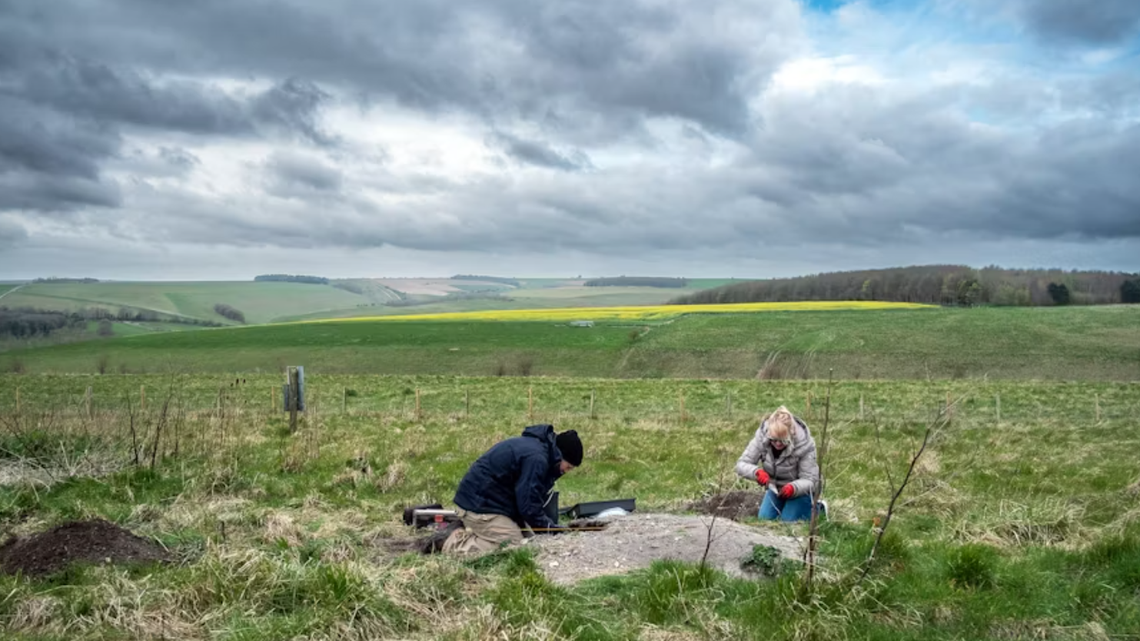
In the largest study of its kind, archaeologists have analyzed six “massive prehistoric” trash heaps in the United Kingdom and revealed that ancient people traveled great distances just to eat together.
These trash piles — called “middens” — became part of the landscape over time and were the byproduct of “vast feasts” that took place during the late Bronze Age, according to a Sept. 10 study published in iScience and a Sept. 10 news release from researchers at Cardiff University.
Experts said the feasts, attended by “vast numbers of people and animals,” were “arguably the largest to take place in Britain until the medieval period.”
The largest midden, called Potterne in Wiltshire, is about the size of five football fields “and is packed with feasting remains,” with as many as 15 million bone fragments, experts said.
Researchers used multi-isotope analysis to determine where the bones came from. They learned that many of the animals, such as pigs, cattle and sheep, were raised hundreds of miles from the midden sites where their bones were found.
At others middens, livestock was reared locally, according to the study. The ancient trash piles are estimated to be 2,500–2,900 years old, according to the study.
Researchers said middens represent the location where people would meet “to forge relationships and alliances, share and perpetuate knowledge, make artifacts,” and of course, feast.
“An important sense of place was created by seasonal occupation and a long history of accumulation,” researchers said. “Middens became landmarks where people met and engaged in acts of conspicuous consumption and display.”
The research team included Carmen Esposito, Angela L. Lamb, Morten B. Andersen, Marc-Alban Millet, Edward Inglis, Federico Lugli, Alexandra J. Nederbragt and Richard Madgwick.
This story was originally published September 11, 2025 at 1:46 PM with the headline "‘Massive’ ancient trash heaps reveal people traveled to feast together in the UK."