
Dig at ancient king’s throne room unearths 26,000-pound carving. ‘Spectacular’
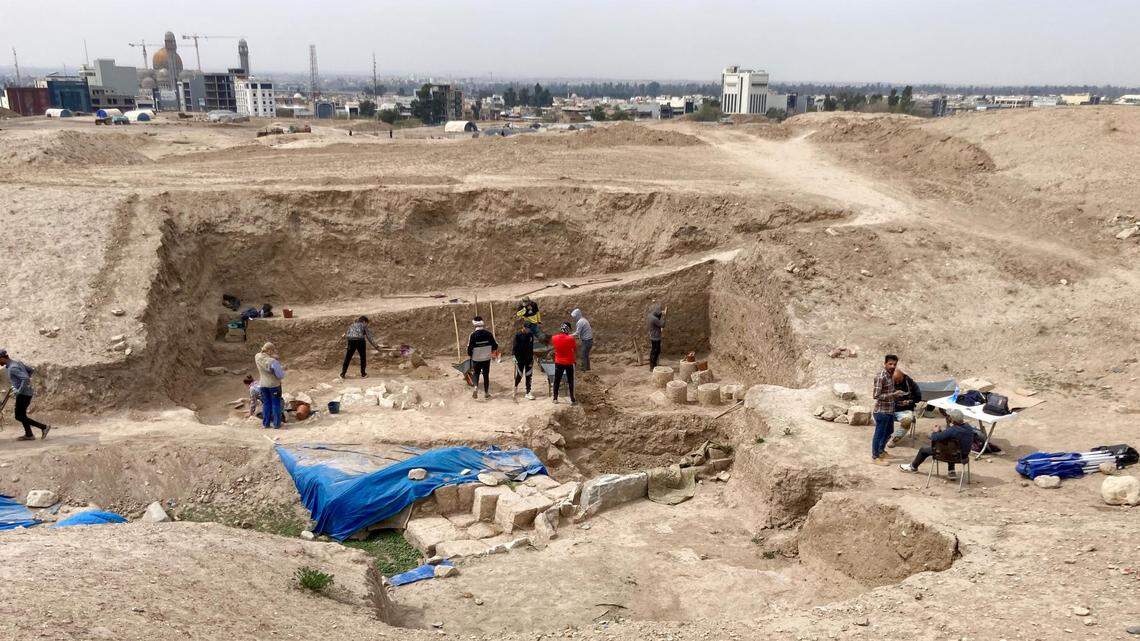
Sifting through the tan dirt of northern Iraq, archaeologists looked at the remnants of an ancient empire’s capital city. They sifted carefully through the king’s once-grand throne room — and unearthed an “extraordinary” 26,000-pound carving.
A team of archaeologists began working at the ancient palace of King Ashurbanipal, “the last great ruler of the Assyrian empire,” in Nineveh in 2022, Heidelberg University said in a May 13 news release. The palace, located near modern-day Mosul, had been partially excavated in the late 1800s by British researchers, and their finds were put on display at the British Museum in London.
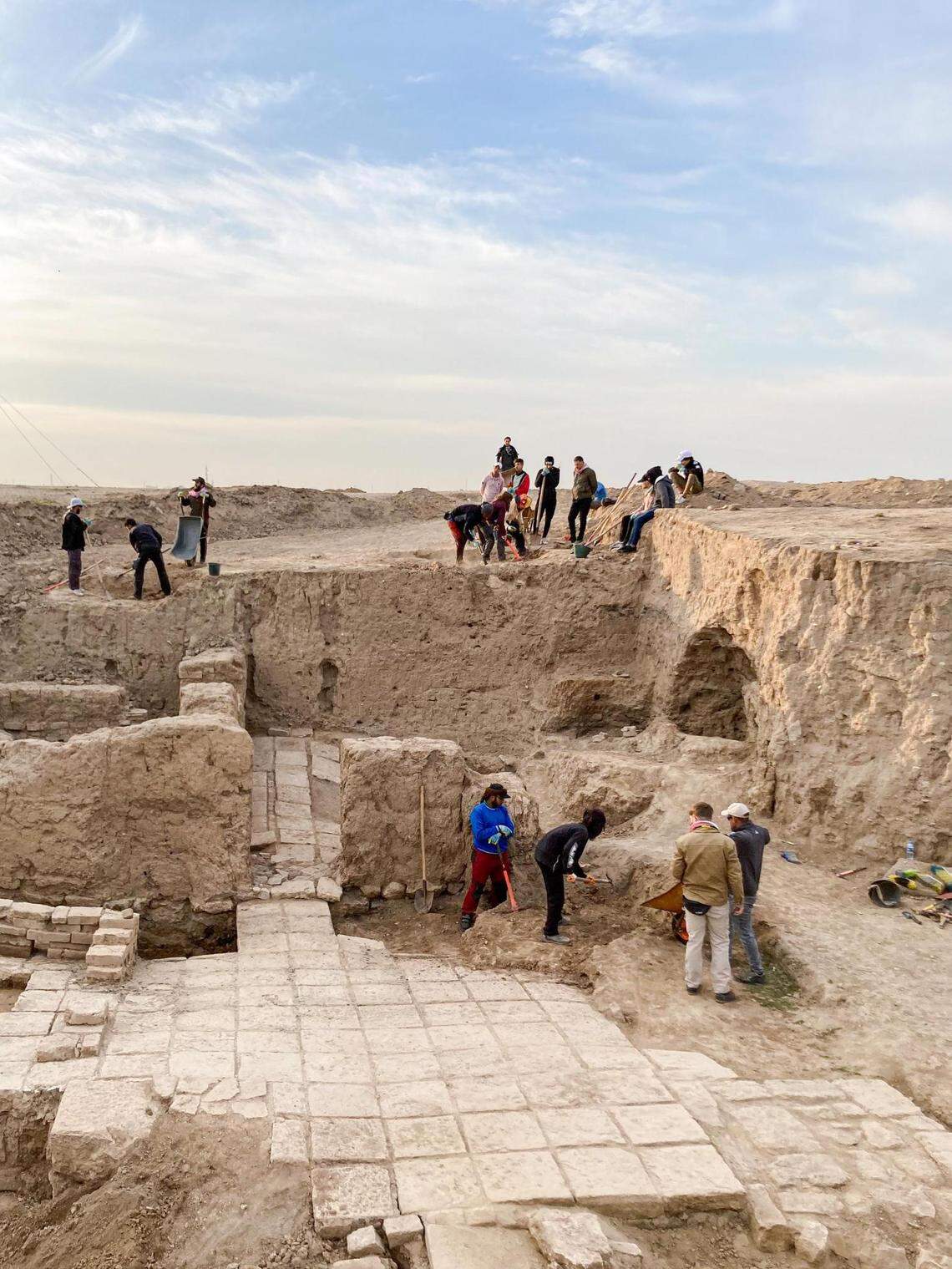
While working at the king’s throne room, “the most important place in the palace,” the team found a “niche across from the main entrance” with “an earth-filled pit” behind it, the university said. Inside the pit, they unearthed a massive ancient carving.
The stone sculpture measured about 18 feet long and 10 feet tall, weighing roughly 26,455 pounds, archaeologists said. A photo shows the “spectacular find.”
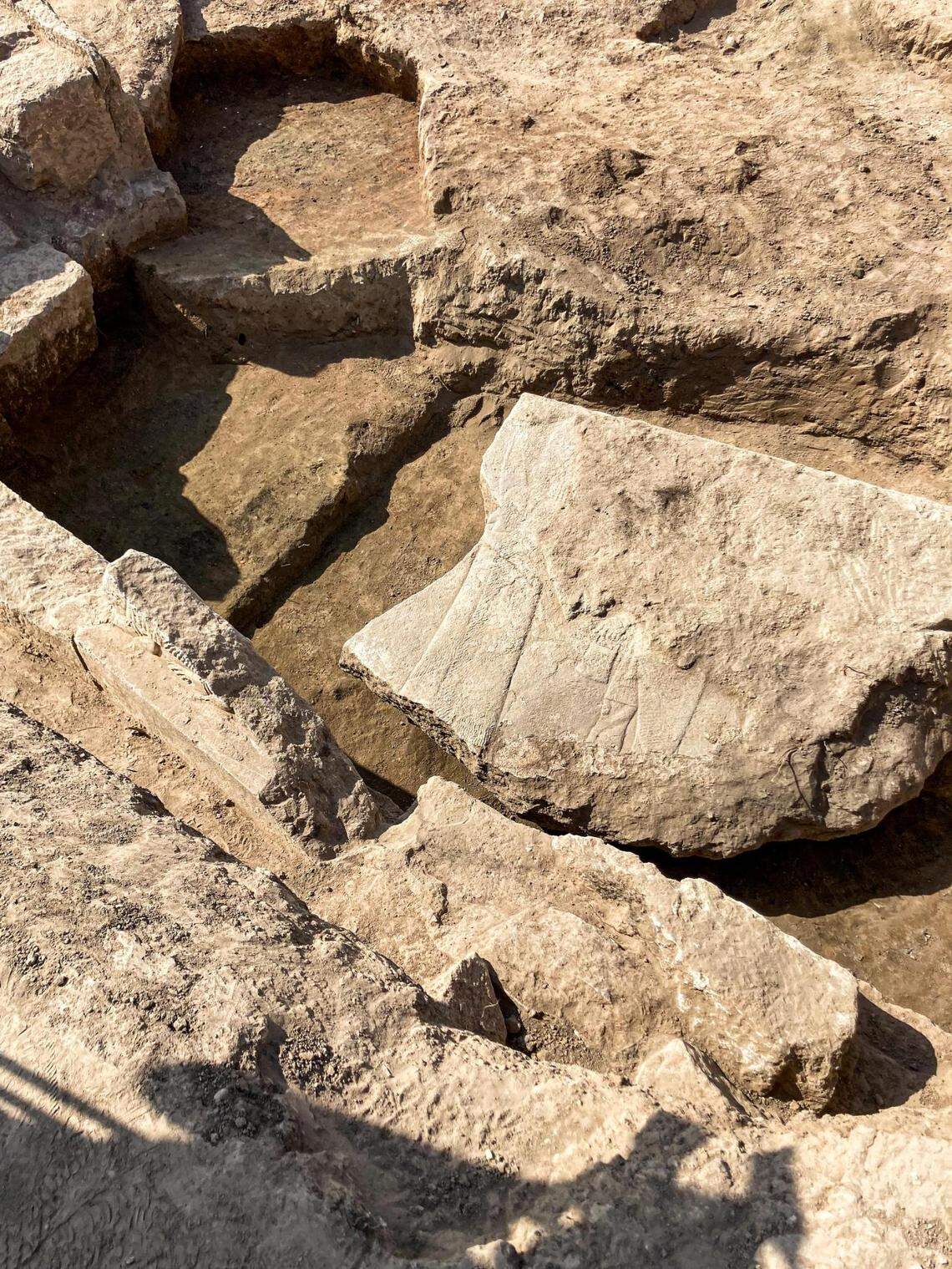
Done in a flat “relief” style, the carvings depict King Ashurbanipal with several “important” Assyrian deities, the university said.
The king is in the center “flanked by two supreme deities: the gods Ashur and Ishtar, patron goddess of Nineveh,” archaeologists said. “They are both followed by a fish genius, who grants the gods and the sovereign salvation and life, as well as a supporting figure with arms raised, most likely to be restored as a scorpion-man.”
A diagram shows the first-of-its-kind design and a reconstruction of what the missing sections might have looked like.
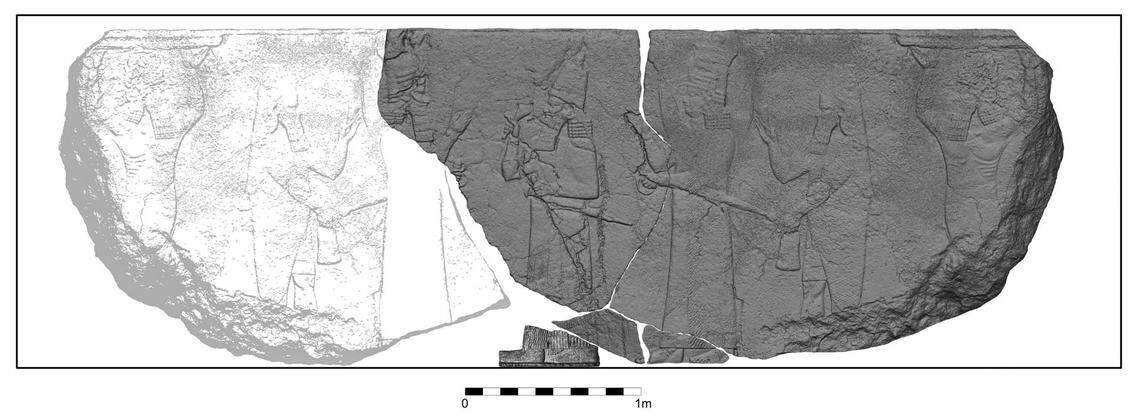
“Among the many relief images of Assyrian palaces we know of, there are no depictions of major deities,” Aaron Schmitt, a professor with the university and the excavation leader, said in the release. “These figures suggest that a massive winged sun disk was originally mounted above the relief.”
Archaeologists did not say how old the carvings were but linked them to the reign of King Ashurbanipal in the seventh century B.C., or about 2,600 years ago.
King Ashurbanipal was known for his “religious zeal,” patronage of the arts and creation of “the first systematically organized library in Mesopotamia and the ancient Middle East,” among other achievements, according to Britannica.
“He adorned his new and restored palaces at Nineveh with sculptures depicting the main historical and ceremonial events of his long reign,” per Britannica. “The style shows a remarkable development over that of his predecessors, and many bas-reliefs have an epic quality unparalleled in the ancient world, which may well be because of the influence of (the king’s) active and vigorous personality.”
Archaeologists plan to continue analyzing the carvings, publish their findings in a study, and eventually “place the relief on its original site and open it to the public.”
Nineveh is near modern-day Mosul, a roughly 250-mile drive northwest from Baghdad and near the borders with Syria and Turkey.
This story was originally published May 14, 2025 at 1:38 PM with the headline "Dig at ancient king’s throne room unearths 26,000-pound carving. ‘Spectacular’."
