
Lost penis pendant found inside Roman wall in UK. See phallic good luck charm
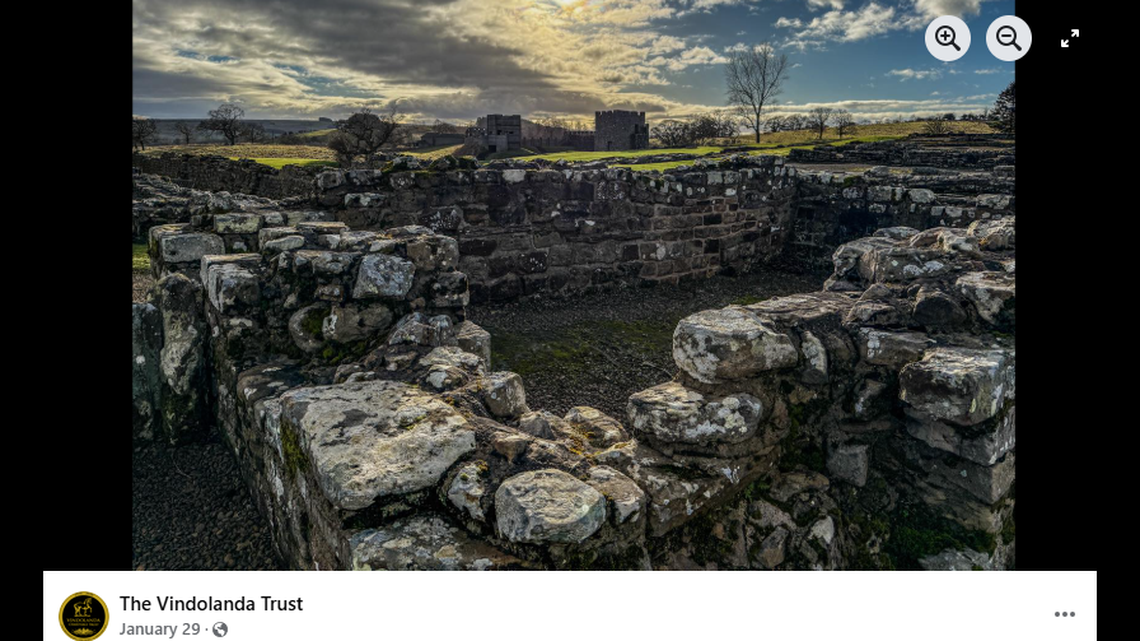
Hadrian’s Wall — a 73-mile construction across northern Britain that marked the frontier of the Roman Empire — is no stranger to penis imagery.
The nearly 2,000-year-old example of Roman engineering is covered in penile carvings, thanks to the ancient citizens and soldiers leaving their marks, the Vindolanda Charitable Trust said.
Nearly five dozen phalli have been found along the wall and at military installations, according to Heritage Daily, including at the Vindolanda Fort along the wall in Hexham, England.
Now, another phallic-shaped art piece has been discovered, this time for a more personal use.
A small, carved penis pendant was found in Vindolanda on April 25, the Vindolanda National Trust told McClatchy News in an email.
“It was found dropped into the rubble fill or core of a stone wall. Quite (possibly) dropped there by the soldier or mason who built the wall,” Andrew Birley, archaeologist and director of excavations at Vindolanda, told McClatchy News.
“Wall building is hard manual work and all manner of personal items find their way into wall cores because they get knocked or dropped by their owners,” Birley said. “In the past we have found belt buckles, rings, pottery and other items in wall cores.”
%20The%20Vindolanda%20Trust%2025.4.25%20(1).jpg "Carved phallus (c) The Vindolanda Trust 25.4.25 (1).jpg")
It was found in a barrack wall dated to the early fourth century, Birley said, making the piece around 1,700 years old.
The pendant was made from jet, a type of lignite gemstone or the lowest rank of coal, the archaeologist said.
“Jet is increasingly common as a material used for (jewelry) from the early third century onwards and small good luck charms or pendants like these would have been worn by many of the soldiers at places like Vindolanda,” Birley said.
This particular penis would have been worn as a pendant, likely around the neck instead of being carried, according to Birley. Jet feels warm to the touch, so it was likely kept close to the skin.
The pendant is small but “rather fine,” Birley said, likely “made by a skilled artisan rather than someone unused to working in that material” and could have been worn by a soldier or someone else in the community.
%20The%20Vindolanda%20Trust%2025.4.25.JPG "Carved jet phallus with scale (c) The Vindolanda Trust 25.4.25.JPG")
“You can see that the pendant is quite smooth, not just because of the material used but also no doubt because the wearer touched the charm for good luck,” Birley said.
The charm adds to the growing collection of phallus imagery at the site, a practice Birley said both men and women participated in.
While uncovering rubble in 2022, a volunteer discovered a stone face with a carved phallus and letters, believed to be inscribed as a personal insult, according to the trust.
In 2024, researchers found another carving of a penis, this time in a stone on the ground and considered a message of good luck from soldier to soldier, McClatchy News reported.
The year previous, archaeologists uncovered a large wooden phallus in a ditch at Vindolanda, first thought to be a knitting tool, McClatchy News reported. Later investigation revealed it instead could have been part of a statue, a pestle or, alternatively, a sex toy.
Vindolanda is located in Hexham in north-central England.
This story was originally published April 30, 2025 at 12:17 PM with the headline "Lost penis pendant found inside Roman wall in UK. See phallic good luck charm."
