‘Horned’ creature — found singing from rock crevices — is new species in China. See it

The spring season brings bright colors and new life into the natural environment.
This time is called Lì Chūn in China and marks the first of a 24-part solar term over the course of a year.
In the eastern, coastal hills of Fujian Province, the Lì Chūn term is ushered in by the song of a tiny toad, according to a study published Oct. 18 in the peer-reviewed journal ZooKeys.
The animal is about 1.4 inches long and was just discovered as a new species.
During field studies in Fujian, researchers found the small toads under forest leaf litter and on “flowing montane seeps,” wetlands that form from the groundwater of mountains, according to the study.
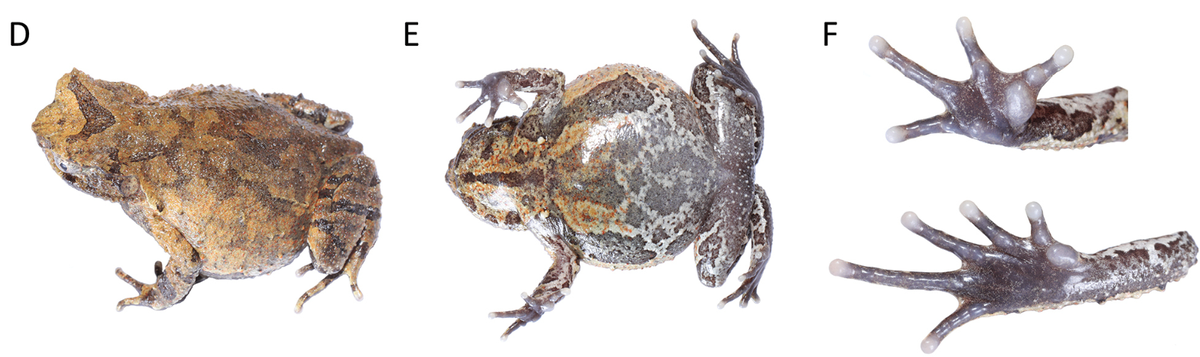
The toads have a “yellowish-brown” body with “irregular dark-brown patches”, a “dark-brown X-shaped marking” on the center of their backs and a “dark-brown triangular marking between (the) eyes,” researchers said.
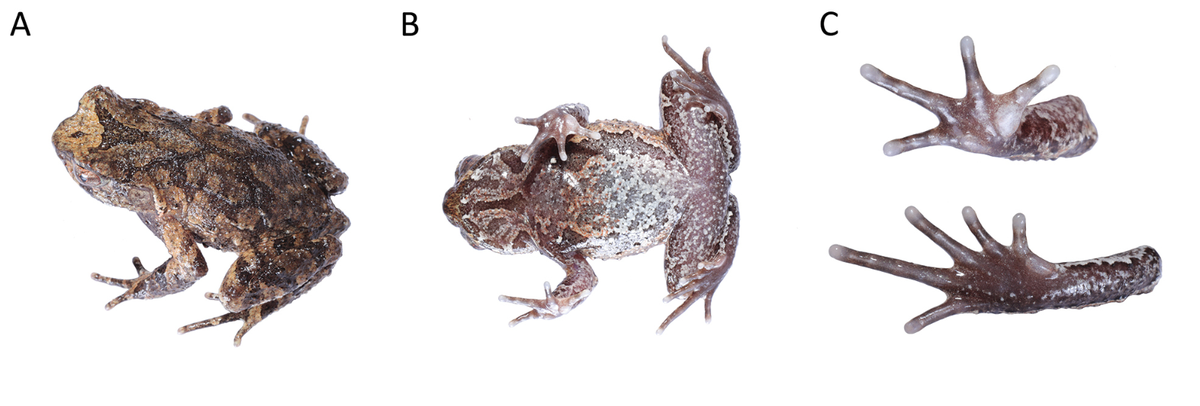
Most notably, the toads have a “single horn-like” protrusion from the upper edge of their eyelids, which confirmed to researchers that the toad belonged to a group known as horned toads, according to the study.
The Lichun horned toad, or Boulenophrys lichun, was named after its breeding season, researchers said, as “the song of the new species heralds the spring of a year.”
“Advertisement calls of males were heard from February to May,” researchers said. “Males were found calling in rock crevices.”
Horned toads occupy small ecological niches, researchers said, which can make it hard to develop conservation strategies and protections.
“The development of tourism infrastructure, stream diversion and tea leaf cultivation have gradually affected and threatened the habitats of the new species,” researchers said. “Thus, more data (i.e., distribution, population size, potential and existing risk factors, etc.) from long-term extensive surveys are urgently required to make an assessment of their endangered status.”
There are 68 recognized species of Chinese horned toads spread throughout subtropical and tropical areas of east Asia, including southern China, Vietnam, Laos, Myanmar and Thailand, according to the study.
Fujian Province is in southeastern China, along the South China Sea.
The research team includes Shi-Shi Lin, Hong-Hui Chen, Yuan-Hang Li, Zhao-Ning Peng, Zhao-Chi Zeng and Jian Wang.
This story was originally published October 22, 2024 at 8:49 AM with the headline "‘Horned’ creature — found singing from rock crevices — is new species in China. See it."