‘Large’ sea creature with 240 tentacles discovered as new species off coast of Japan
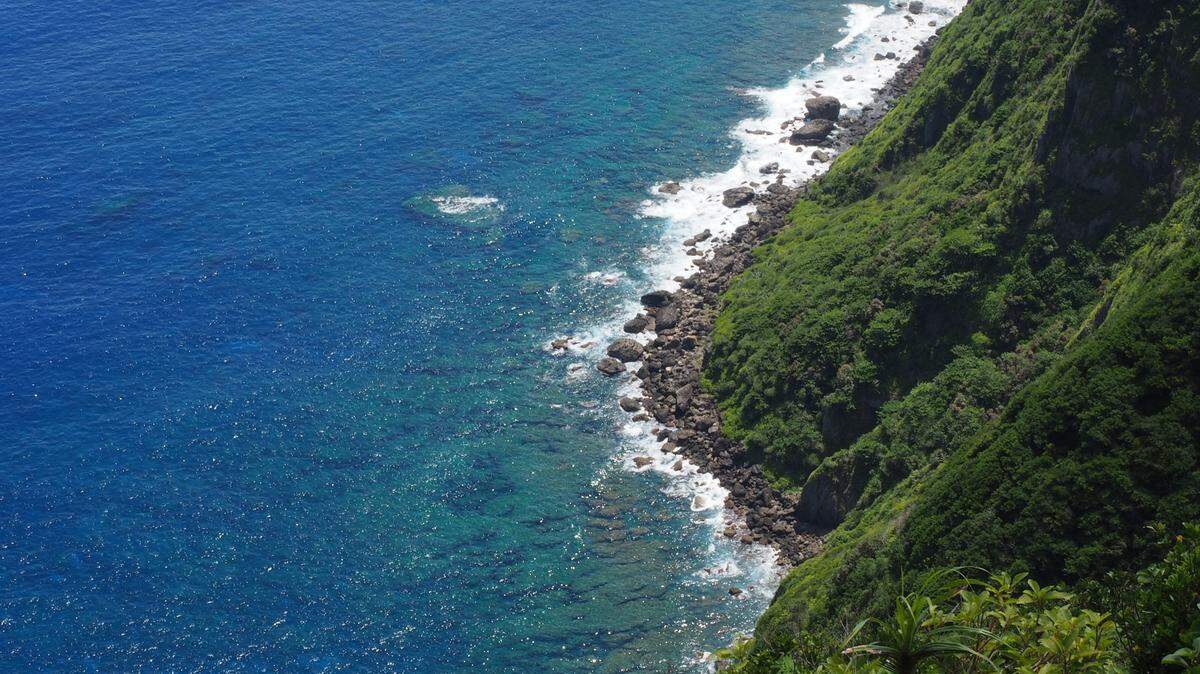
From a research vessel on the surface, scientists piloted a remote-controlled submarine around a volcanic crater off the coast of Japan. Something disrupted the blue expanse and caught their attention.
The “large” jellyfish had a visible, uniquely shaped stomach and tons of tentacles, according to a study published Nov. 20 in the journal Zootaxa.
Researchers had never seen an animal like it — and they wouldn’t again for almost 20 years.
The “curious” and “mysterious” jellyfish was first captured in 2002, the Japan Agency for Marine-Earth Science and Technology said in a Nov. 20 news release. Researchers thought it was a new species but couldn’t be certain until they found another.
Researchers spend hundreds of hours searching for the jellyfish, the study said. Finally in 2020, they found a second one in the same volcanic crater.
Studying the two jellyfish, researchers confirmed their initial assessment. They’d discovered a new species: Santjordia pagesi, or the St. George’s cross medusa jellyfish.
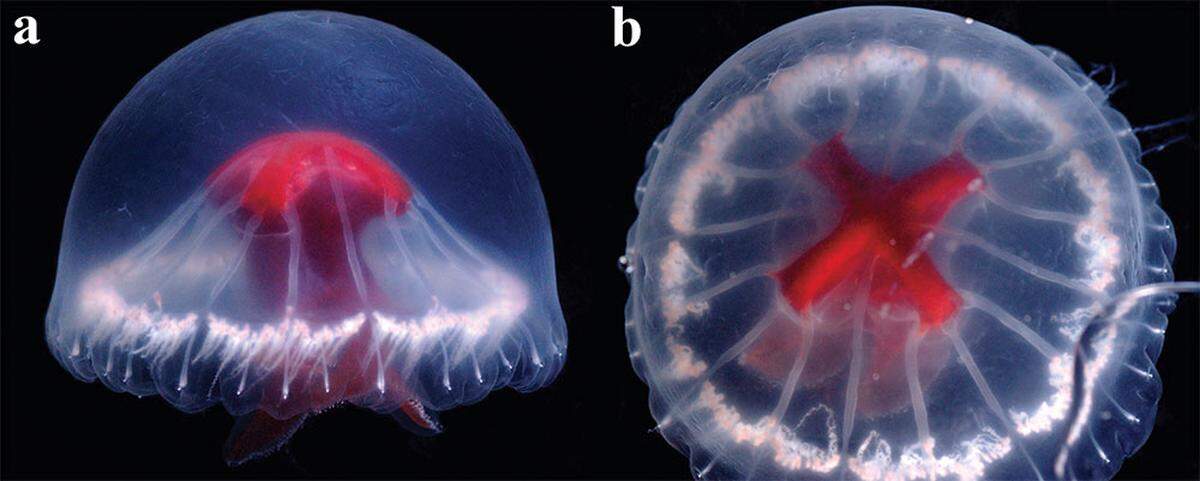
The St. George’s cross medusa jellyfish is considered “large,” measuring about 4 inches wide and about 3 inches tall, the study said. It has a circular body shape and about 240 tentacles. Its most distinctive feature is its bright red, “cross-shaped” stomach.
Photos show the St. George’s cross medusa jellyfish in an aquarium. Its body looks almost like a see-through cushion. It has a thick white ring running along its lower edge. Smaller vein-like structures stretch from its prominent central stomach to the outer ring. From the top, its stomach looks like a cross or plus sign.
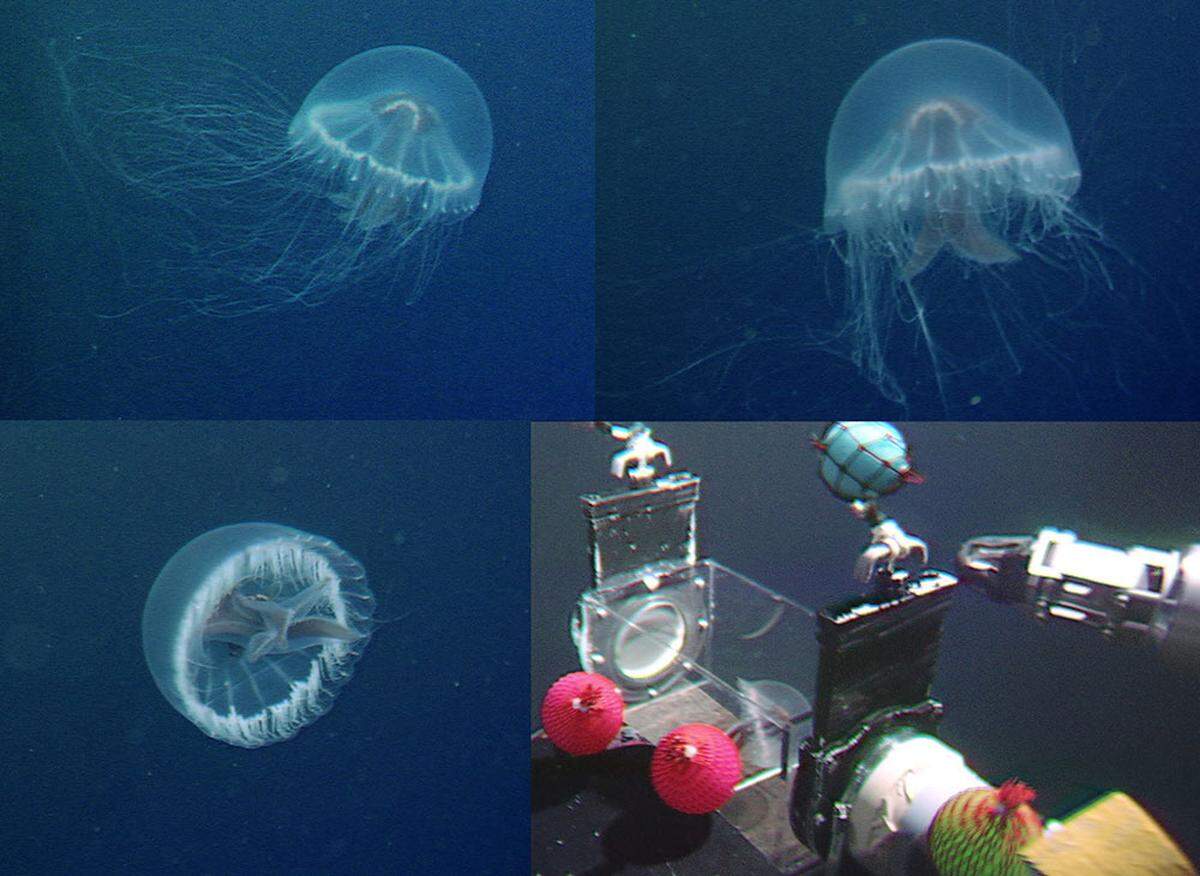
Another set of photos shows what the jellyfish looked like in its natural habitat. Its tentacles trail out behind it and, from one angle, look like a white fringe.
The St. George’s cross medusa jellyfish “is so different from other species” that it is “highly likely to possess a new cnidarian venom,” the news release said.
Researchers said they named the new species Santjordia, meaning Saint George in Catalan, after its cross-shaped stomach and pagesi after Francesc Pagès, a cnidarian researcher.
A video shared on YouTube by the Japan Agency for Marine-Earth Science and Technology shows the St. George’s cross medusa jellyfish swimming. It moves by pulsing its body, opening and contracting the outer white ring.
The jellyfish has been found at depths of about 2,700 feet to 2,800 feet down, the study said.
So far, the St. George’s cross medusa jellyfish is considered “rare” and has been found only in the Sumisu Caldera near the Ogasawara Islands, about 600 miles southeast of Tokyo.
The new species was identified by its tentacles, body structures, stomach and DNA, the study said. DNA analysis found the new species had enough genetic divergence to be placed into its own new subfamily.
The research team included Dhugal John Lindsay, Mary Matilda Grossmann, Javier Montenegro and André Carrara Morandini.
This story was originally published November 29, 2023 at 8:12 AM with the headline "‘Large’ sea creature with 240 tentacles discovered as new species off coast of Japan."