
Tropical Storm Arthur degenerates, but still a Gulf Coast flood threat
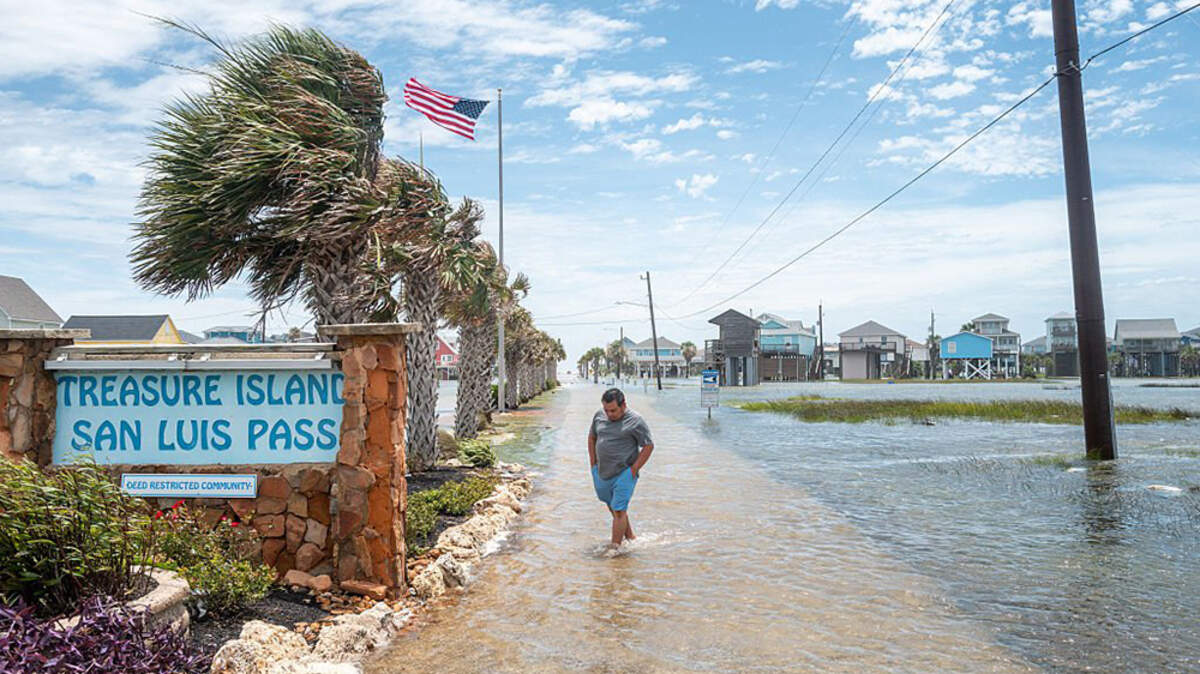
ORLANDO, Fla. - The National Hurricane Center on Wednesday said Tropical Storm Arthur formed off the Texas coast, making it the Atlantic season’s first named storm, but it had fallen apart by Wednesday night into a post-tropical cyclone.
As of the NHC’s 11 p.m. Eastern advisory, the center of the remnant low of what had been Arthur was located about 35 miles north-northeast of Galveston, Texas, and 85 miles west-southwest of Lake Charles, Louisiana with maximum sustained winds of 35 mph moving northeast at 9 mph.
All watches and warnings were removed, and the NHC won’t be producing any more advisories on the storm.
“A northeastward motion at a faster forward speed is expected tonight, followed by a turn toward the east-northeast Thursday through Friday,” forecasters said. “On the forecast track, the remnants of Arthur should move farther inland over southeastern Texas and western Louisiana tonight, then cross the southeastern United States Thursday through Friday.”
Following heavy rains earlier in the week, a teenager appears to have drowned in a flooded retention pond outside Houston, authorities said Tuesday evening. A group of teens was playing near a construction zone and an adjacent retention pond when a 15-year-old boy entered the water, the Montgomery County Sheriff’s Office said on social media. Rescue workers found his body using sonar technology following an extensive search.
“This incident serves as a solemn reminder of the dangers associated with floodwaters, particularly following periods of heavy rainfall,” the post said.
With the storm so spread out, forecasters weren’t particularly concerned with when and where the center would make landfall.
“A lot of the winds have already been occurring along portions of the coast of Texas and Louisiana,” NHC operations chief Dan Brown said. “And there’s also been a lot a heavy rainfall that’s kind of preceded both the development of the storm and center of the storm.”
Flooding was likely through Friday over parts of Texas, Louisiana, Mississippi, Alabama, Georgia and the Florida Panhandle, the hurricane center said.
New Orleans Mayor Helena Moreno and other city officials urged residents to take the storm seriously during a news conference Wednesday afternoon. Police were preparing boats and setting up barricades in known flood areas, and city workers were setting up locations for residents to collect sandbags.
Although Arthur isn’t the type of major hurricane that New Orleans has been hit by in the past, officials characterized it as a good chance for both city officials and residents to review and update their emergency response plans.
“We are asking the people of New Orleans to really do what the city government has done, and that is to just be prepared, stay weather alert, and we’ll see what comes our way,” Moreno said. “But whatever comes our way, we’ll be ready to deal with it.”
The system was forecast to drop 5-10 inches of rain with some areas getting up to 20 inches through Thursday from the mid to upper Texas coast and much of Louisiana as well as portions of Mississippi and Alabama and the western portions of Georgia and the Florida Panhandle.
“This could generate dangerous to life-threatening flash flooding,” forecasters said
The system could also produce tornadoes threatening areas from the upper Texas coast across southern Louisiana, Mississippi, Alabama and the the Florida Panhandle, forecasters warn.
This was the first potential tropical system being tracked by the NHC in the Atlantic basin since the start of hurricane season.
The eastern Pacific had already been busy with three tropical storms, but so far the Atlantic basin had been quiet.
Hurricane season officially began June 1 and runs through Nov. 30. The height of hurricane season runs from mid-August into October.
The National Oceanic and Atmospheric Administration expects this season to be below normal with the official forecast released in late May calling for 8-14 named storms, of which 3-6 would become hurricanes. Of those, 1-3 would become major hurricanes reaching Category 3 status or above.
An average season has 14 named storms, seven hurricanes and three major hurricanes.
Copyright 2026 Tribune Content Agency. All Rights Reserved.