
39-foot sea creature poses mystery as it washes up on California beach. What killed it?
.jpg "A sea creature washed up on a beach in California.")
A 39-foot sea creature washed ashore a California beach, and now researchers want to know how it died.
On Feb. 1, a gray whale was seen floating in the water before it eventually got stranded on Dockweiler State Beach the following morning, John Warner, CEO of Marine Mammal Care Center Los Angeles, told McClatchy News in a phone interview.
“It’s a female gray whale with no immediate indication of cause of death by looking at it. She was skinny, skinnier than she should’ve been and definitely had a lot of lice, something that usually happens to whales when they are in bad health,” Warner said.
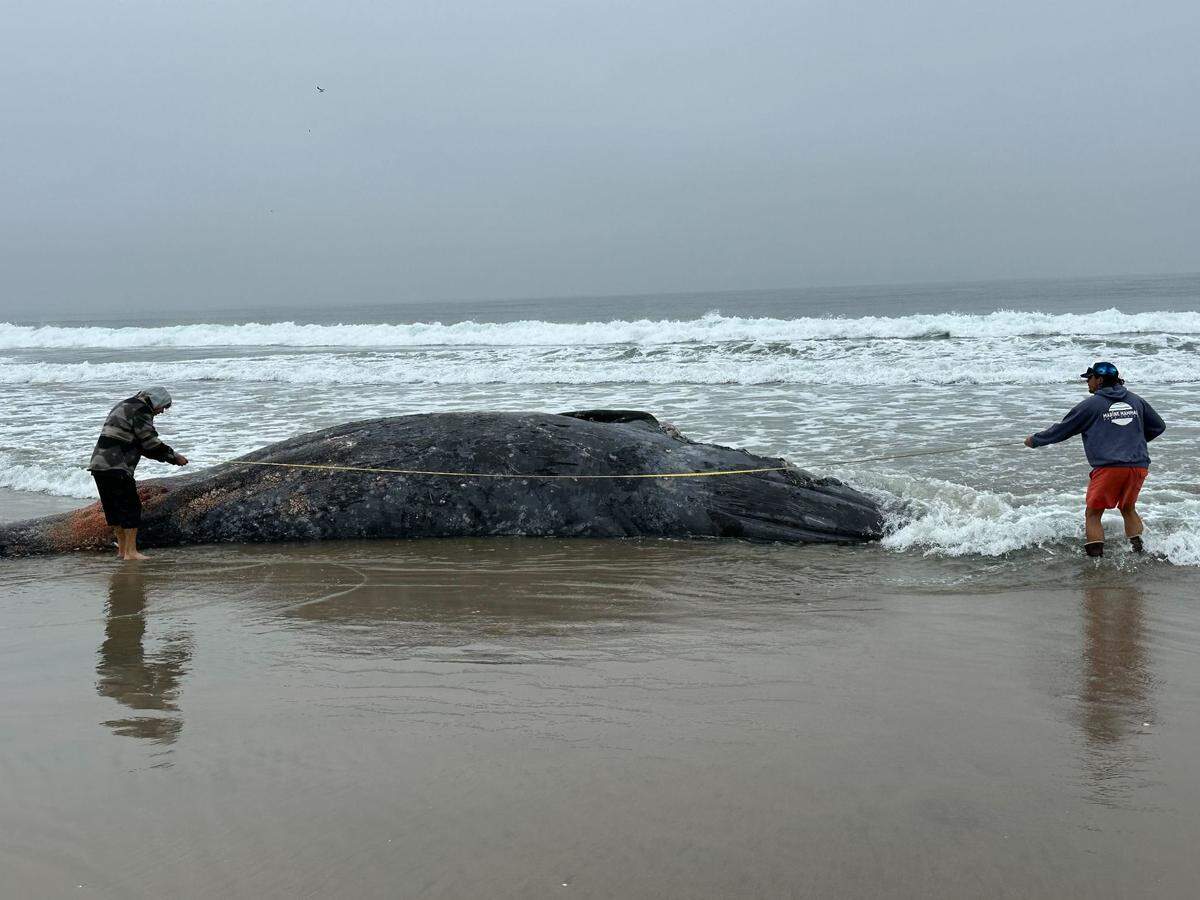
Blood samples and tissue samples were taken, but researchers won’t know the cause of the death until those samples are looked over further in the lab, he said.
“We’ll see toxin levels and anything like that, but those results will take time and will either identify a cause of death or at least show us what this whale has been going through,” Warner said.
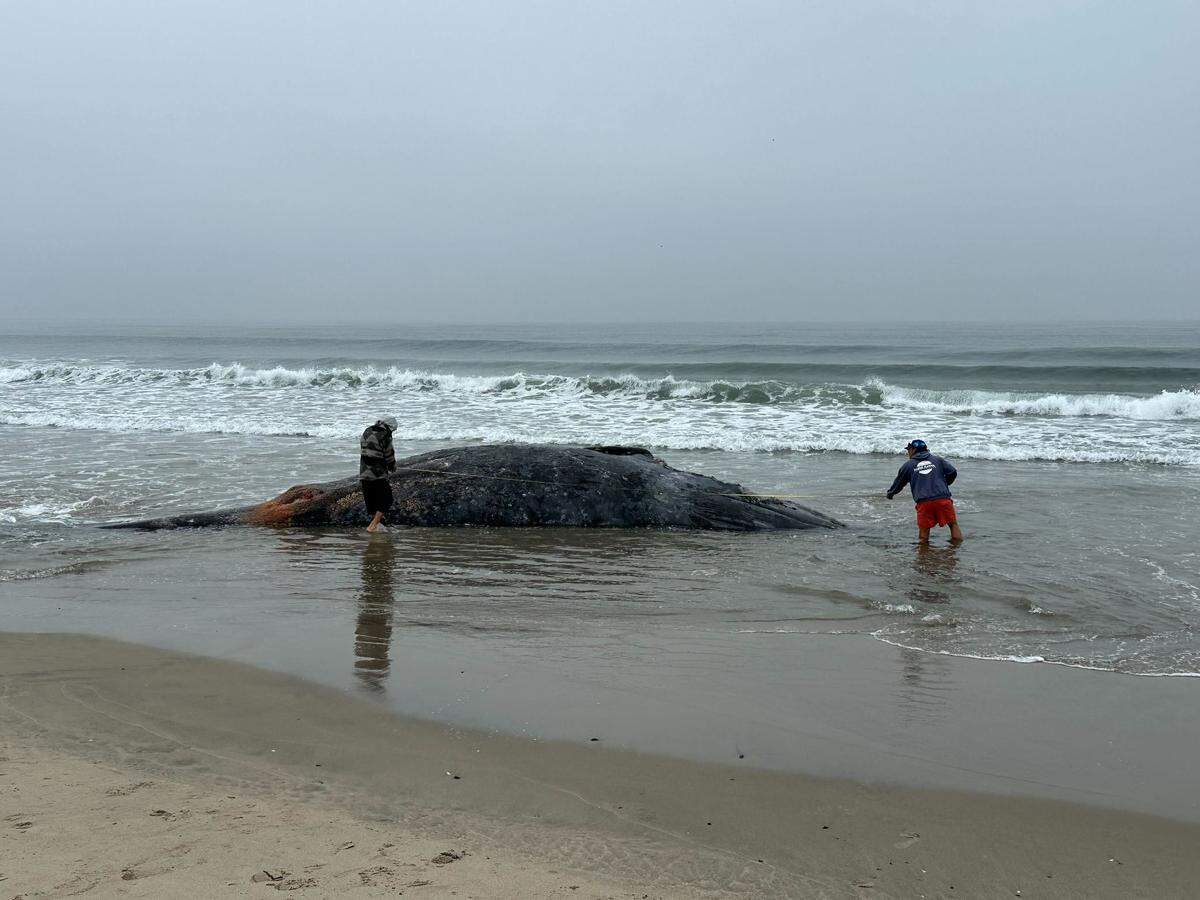
Although there were bite marks above the whale’s tail, they “can’t determine whether that was from sharks,” he said.
“There were reports of orcas, but they could’ve just been in the area,” he said. “It’s not surprising that a dead gray whale would have predators take advantage of that, but we don’t have any indication that that was the cause of death.”
Gray whales are a “species of concern” as they fall under an “unusual mortality rate,” Warner said.
They have the longest migration compared to any other whale species, and they gorge in Alaska, but as the ice shelf decreases, their food goes away. In recent decades, researchers have seen them die from starvation on their way down to Mexico, he said.
“When these animals are weak from a lack of food, it’s like people with the flu, you’re just not feeling well, not as responsive to the things around you, so when a whale isn’t at its best, it’s more prone to a gauntlet of risks,” he said.
Due to their need to feed during their migration, gray whales will get close to shore in search of food in shallow waters, but “these areas have lots of sediment with nasty stuff from decades and decades of pollution,” Warner said.
“These are majestic animals and their migration is like no other. You can see the joyfulness in them, so the fact that these animals are struggling for reasons really associated with actions by humans is devastating,” Warner said.
Warner wants an unfortunate event like this to be used as a reminder that “Southern California is one of the most diverse ecosystems you’ll find anywhere on earth, from blue whale congregations, to largest pods of dolphins ever recorded” and to treat the ecosystem with respect.
“We keep throwing one thing after another at this really rich and dynamic ecosystem, but it’s still here,” he said. “I just think, ‘What if we stopped throwing things at it?’ If we could just be better by 10% imagine what that would do for these animals to stay resilient during a changing environment. It’s not all doom and gloom, it’s time to get to work.”
This story was originally published February 4, 2025 at 12:51 PM with the headline "39-foot sea creature poses mystery as it washes up on California beach. What killed it?."