
$90M Richland science center will ‘widen the frontiers’ for tackling climate change
One of the most advanced scientific research centers in the world was dedicated Friday in Richland with a goal of helping the nation and the world transition to a clean energy future.
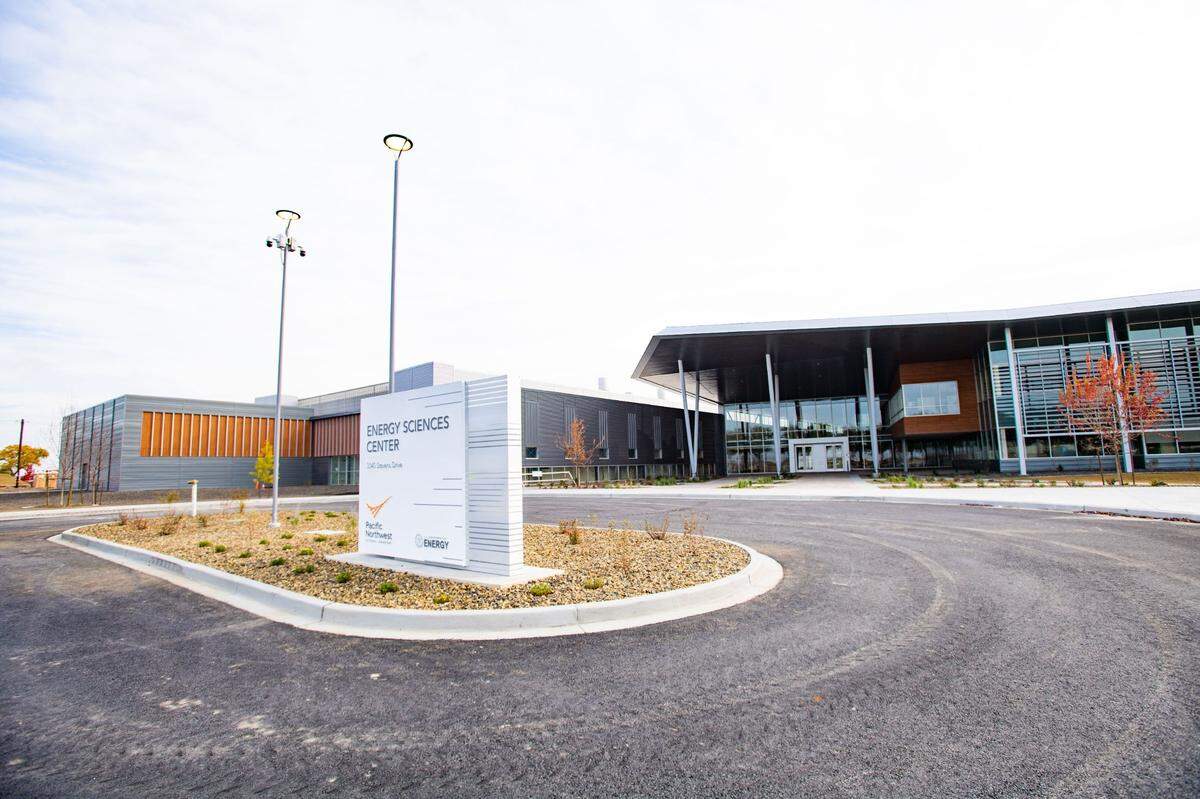
The $90 million Energy Sciences Center at Pacific Northwest National Laboratory will “widen the frontiers of energy science,” said Energy Secretary Jennifer Granholm, speaking at the virtual dedication ceremony.
It’s advanced scientific instrumentation will “attract some of the world’s brightest minds ... to knock down some of the obstacles standing in our way to a net zero (carbon emissions) future,” she said.
It will provide a crucial missing link in the development of clean energy technology, said Washington Gov. Jay Inslee, who also attended the ceremony.
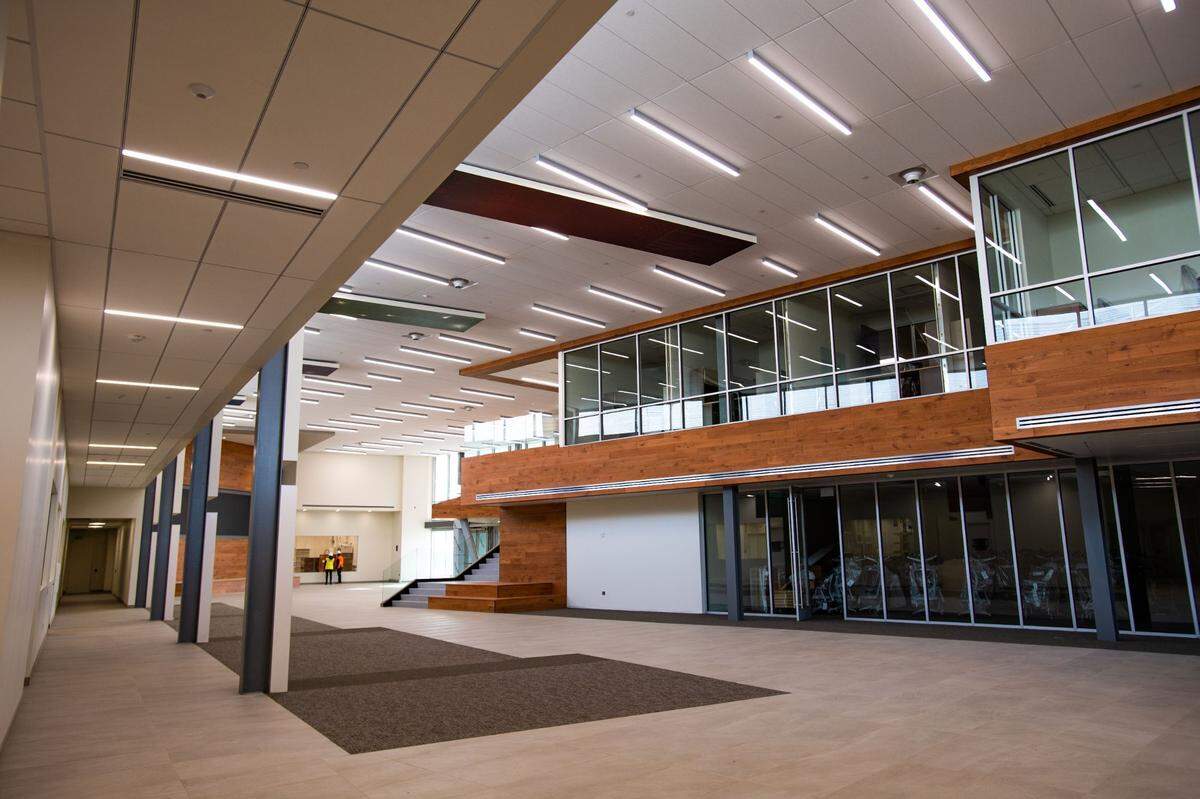
The center pulls together the Department of Energy lab’s expertise in chemistry, materials science and computing to drive progress toward the nation’s climate change goals, said PNNL Director Steven Ashby.
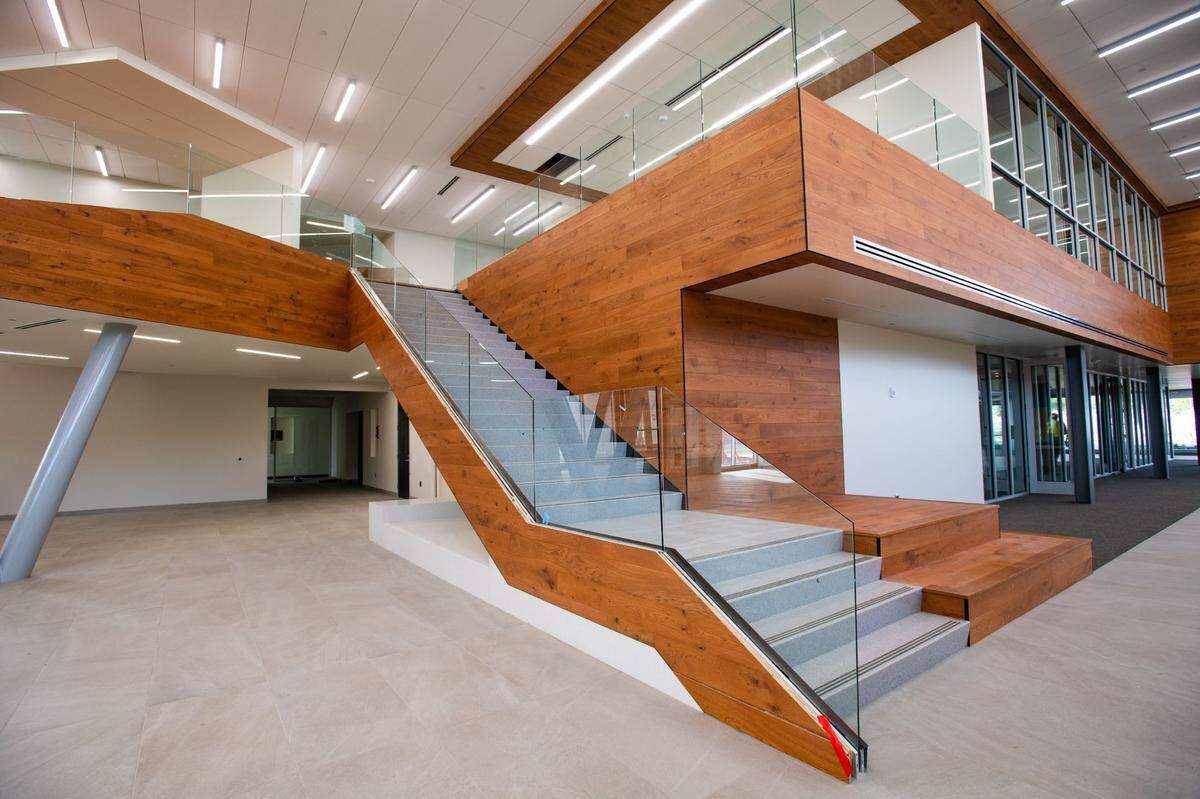
It is planned to encourage collaboration and the sharing of ideas among researchers across a range of disciplines who are not spread among different buildings across PNNL’s Richland campus.
And it will provide space for visiting researchers and create a hub for collaboration with academia, including the University of Washington and Washington State University, and also with industry and other national laboratories.
The center’s focus will be on fundamental science research to provide the basic building blocks of knowledge needed to develop new energy storage technology, reduce vehicle emissions, provide more efficient manufacturing methods, and turn waste into fuel and other useful projects more economically.
“The discoveries in basic science that our researchers will make today will offer who-knows-what possibilities tomorrow. We can’t even imagine, “ Granholm said.
Discoveries at the new center should help decarbonize the nation’s energy system faster and solidify the continued competitiveness of the nation across a range of industries, she said.
“We know to a moral certainty that if we are going to restrain climate change, if we are going to save ourselves, it depends on the development of net zero industrial capacity,” Inslee said. “And that is going to be developed, you can take it to the bank, right here in this energy center.”
The new center is the largest investment in PNNL in over a decade, said Roger Snyder, the site manager for the DOE Pacific Northwest Site Office.
Congress approved $90 million for the building’s design and construction in March 2018.
The state of Washington, through its Clean Energy Fund, contributed $8 million for scientific instrumentation and Battelle, which manages and operates PNNL for DOE, provided $5 million.
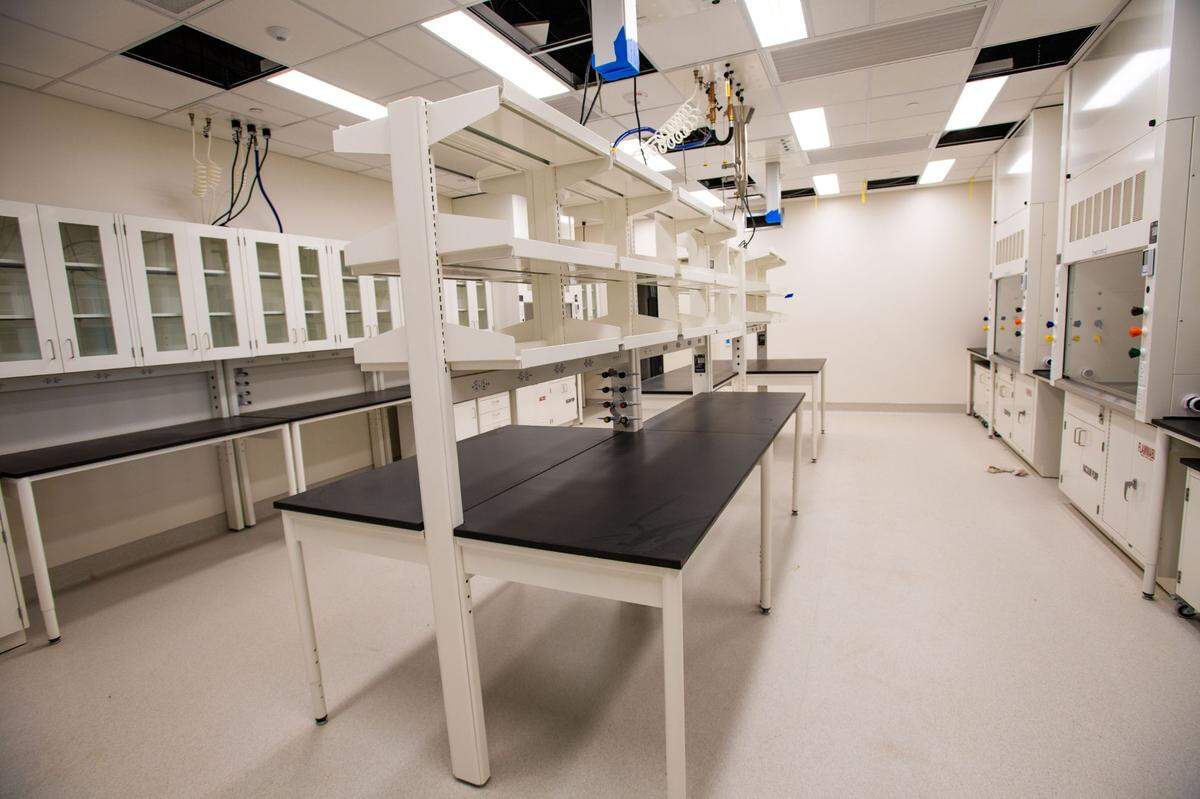
The 140,000-square-foot building at 3340 Stevens Drive has 52 laboratories, flexible space for collaboration, conference rooms and offices for 250 staff and visiting researchers.
It was built and designed by Houston-based team of Harvey Cleary Builders and Kirksey Architecture, which employed 250 local construction workers.
The building uses an energy- and water-reducing design that incorporates natural light and includes a system to collect and distribute the waste heat energy generated by high-performance computers and research equipment housed in an adjacent building.