
Tri-Cities geoscientist John Zachara dies, leaving a legacy of exploring what’s beneath Hanford
NOTE: A version of this remembrance was first published and broadcast by Northwest Public Broadcasting and the public media Northwest News Network.
John Michael Zachara liked to store kisses in mason jars for each of his children at bedtime before big work trips.
“The longing and missing him so much when he would go away,” remembers Heather Andrews, John’s second-eldest daughter. “His travel was hard on us, even though it shaped the scientist he’d become.”
Heather recalls her father putting his mouth close to the jar at bedtime the night before one particular big trip. He’d call out each kiss before capturing it under the silver lid.
“This is a brown-sugar kiss, this is a maple kiss and this is a chocolate kiss,” Heather remembers her father saying. “You can open this up and take one out if you miss me.”
John, who died at age 69, on June 1, will be remembered as a preeminent geoscientist, leader, Battelle Fellow, runner, skier, hiker, golfer, horticulturist, epicure, fiddle player, photographer, and above all, a loving father and doting grandfather — who did not suffer fools.
John hit Earth Nov. 12, 1951, in a hospital near the family home in Ridgewood, N.J. He was born first in a set of fraternal twins.
His mother, homemaker Janet Irene Zachara, was put on a Jello diet by her doctor during the time of her pregnancy, John’s daughter Heather says. No one knew Janet was having twins and the doctor thought she was gaining too much weight. John’s father Francis Michael Zachara, was a vice president of investments at the Dean Witter office in Ridgewood, New Jersey.
Twin Peter Zachara, of Shoreline, Wash., remembers that he and John were apt to get in a lot of trouble as boys.
“We were kind of a handful for my mother,” he says. “Once, we fell into the foundation of a half-built house that was full of water and almost drowned. We were able to climb out using a tire against the wall.”
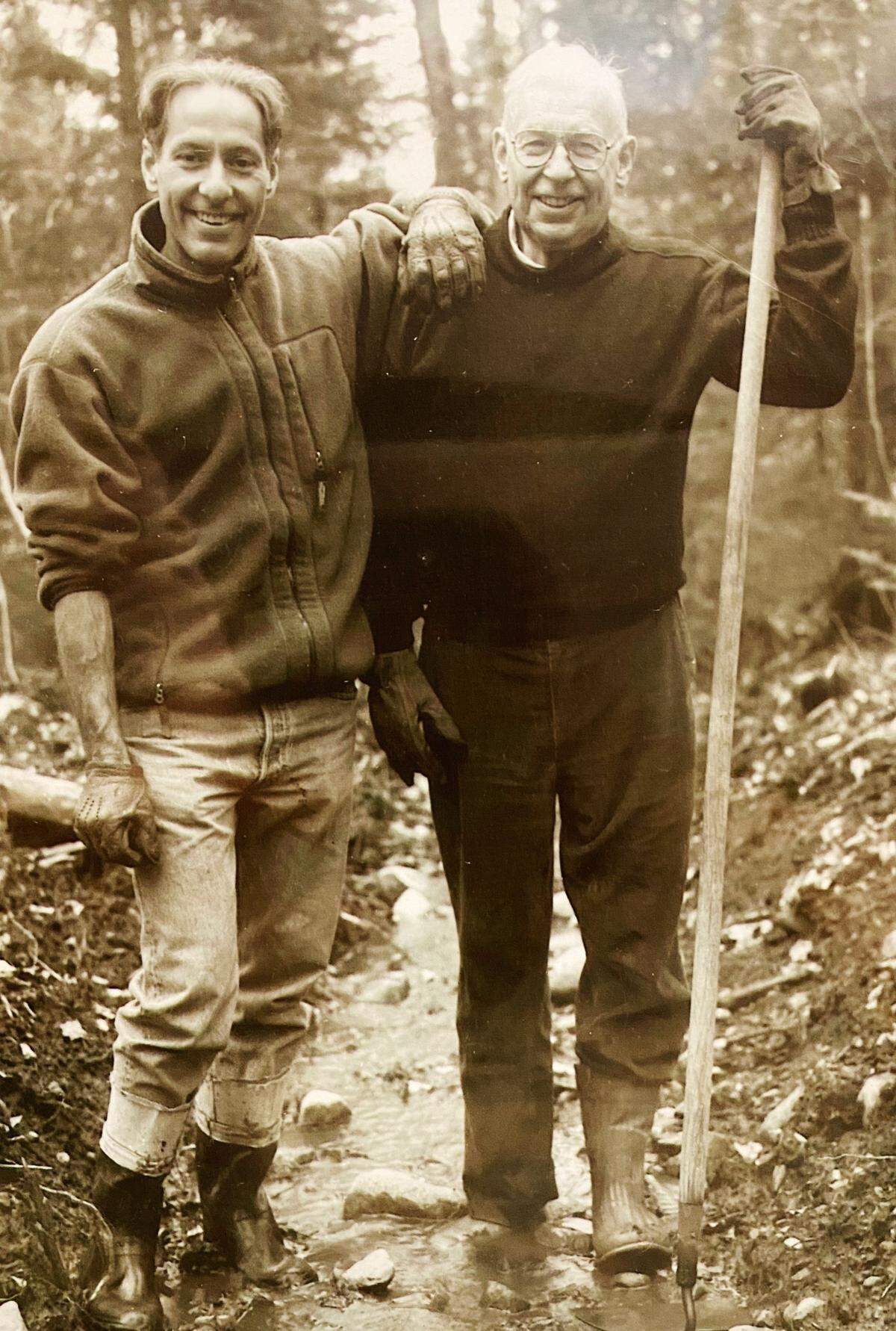
John went to Ridgewood High School in New Jersey — where he earned the junior club championship at Ridgewood Country Club.
John earned three degrees: A bachelor’s in chemistry from Bucknell University, in Lewisburg, Pa., a master’s degree in soil chemistry and watershed management from the University of Washington in Seattle, and a Ph.D. in soil chemistry from Washington State University in Pullman.
Early in his career at the Pacific Northwest National Laboratory, while finishing his Ph.D. at WSU, John met Jim Fredrickson, who would become his life-long best friend and close scientific colleague at PNNL. The two connected early over science and their love of running, on John’s frequent trips to Pullman from the Tri-Cities.
The “Smoids”
John had four children with ex-wife Katherine “Kitsie” (Orbison) Morris: Amy Zachara, 40, Heather (Zachara) Andrews, 38, Dillon Zachara, 36, and Peter Zachara, 29.
As a father, John called his band of kids the “Smoids,” and the “team,” — especially as he continued to raise the children mostly on his own after his divorce. John’s science career was important, but his family was always his top love.
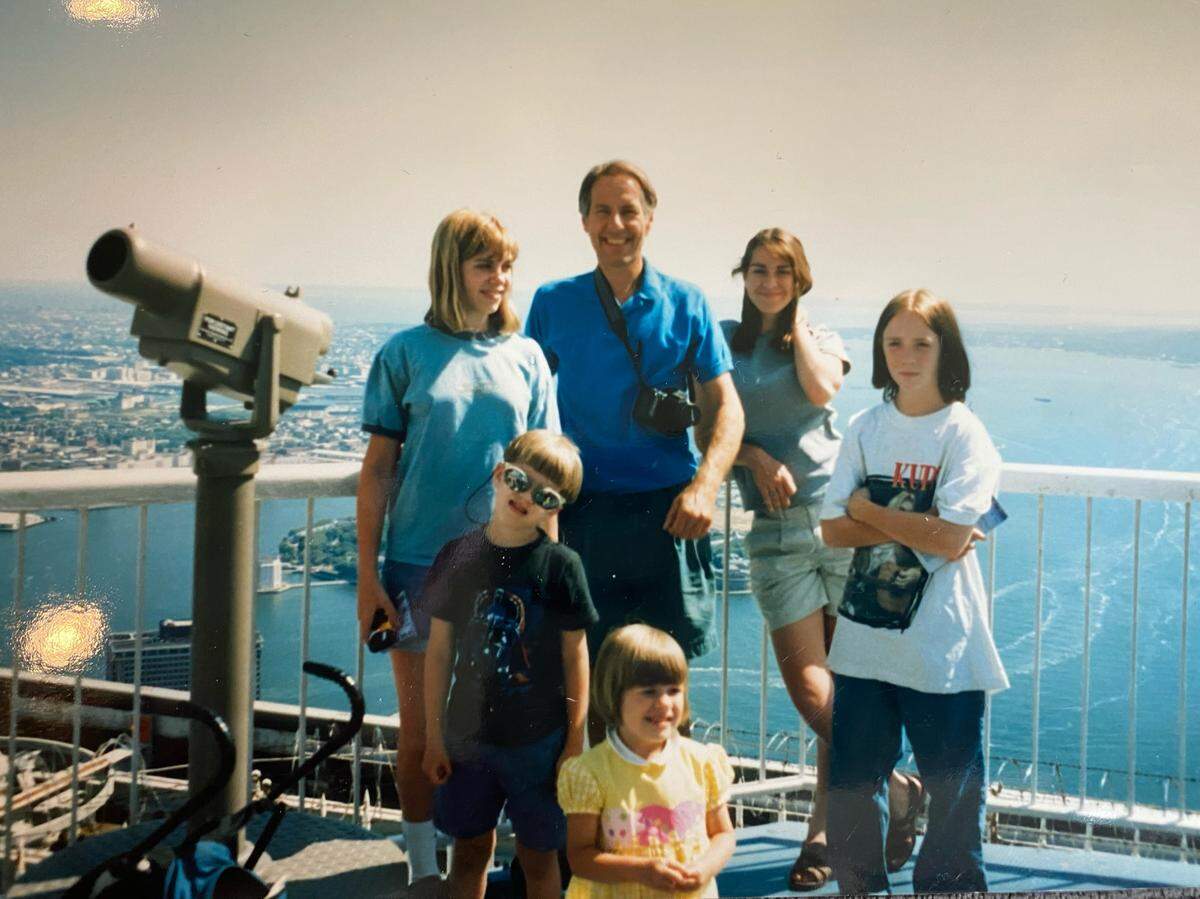
John was proud of his children, who have all successfully carved their own paths: Amy, a psychiatric nurse practitioner, is married, has two children and lives in Bothell, Wash.; Heather, a trained registered nurse, has three children and lives in Auburn, Wash.; Dillion lives, works in music management, has two children and Los Angeles; and Peter who lives in Seattle, Wash., has just landed a new job as a winery manager.
Unearthing profound questions for science
John spent his entire scientific career — from 1979 until his retirement in 2016 — at the Pacific Northwest National Laboratory, and consulted until 2018. As his career developed, he became a leader of larger and more complex projects and was called upon to consult on important science by the U.S. Department of Energy and by colleagues across the world.
John has three brothers, his fraternal twin Peter, and younger brothers James and Michael.
In between his bachelor’s degree and his master’s degree in Seattle, John took a gap year to ski in Salt Lake City, Utah. There, he worked for a French restaurant that was below his spartan apartment, with one chair. This experience became pivotal to the rest of his life, cementing early his love of deft knife skills and eating well.
“He was always very precise in the measurement and size of what he cut up,” says Dawn Vargo Zachara, John’s wife.
“Of all the awards and fellowships I earned, my highest honor was being able to work with John and have him take me in,” Jim said, his voice cracking a bit. “If you were one of the lucky people, he would review your paper, or he brought you on as a collaborator — that was a high honor. It was career changing when he would take you under his wing.”
“I never wanted children,” twin Peter says, remarking that they were different, even though close brothers. “But he became an incredible father. He saved the kids. That really is, for me, his finest hour.”
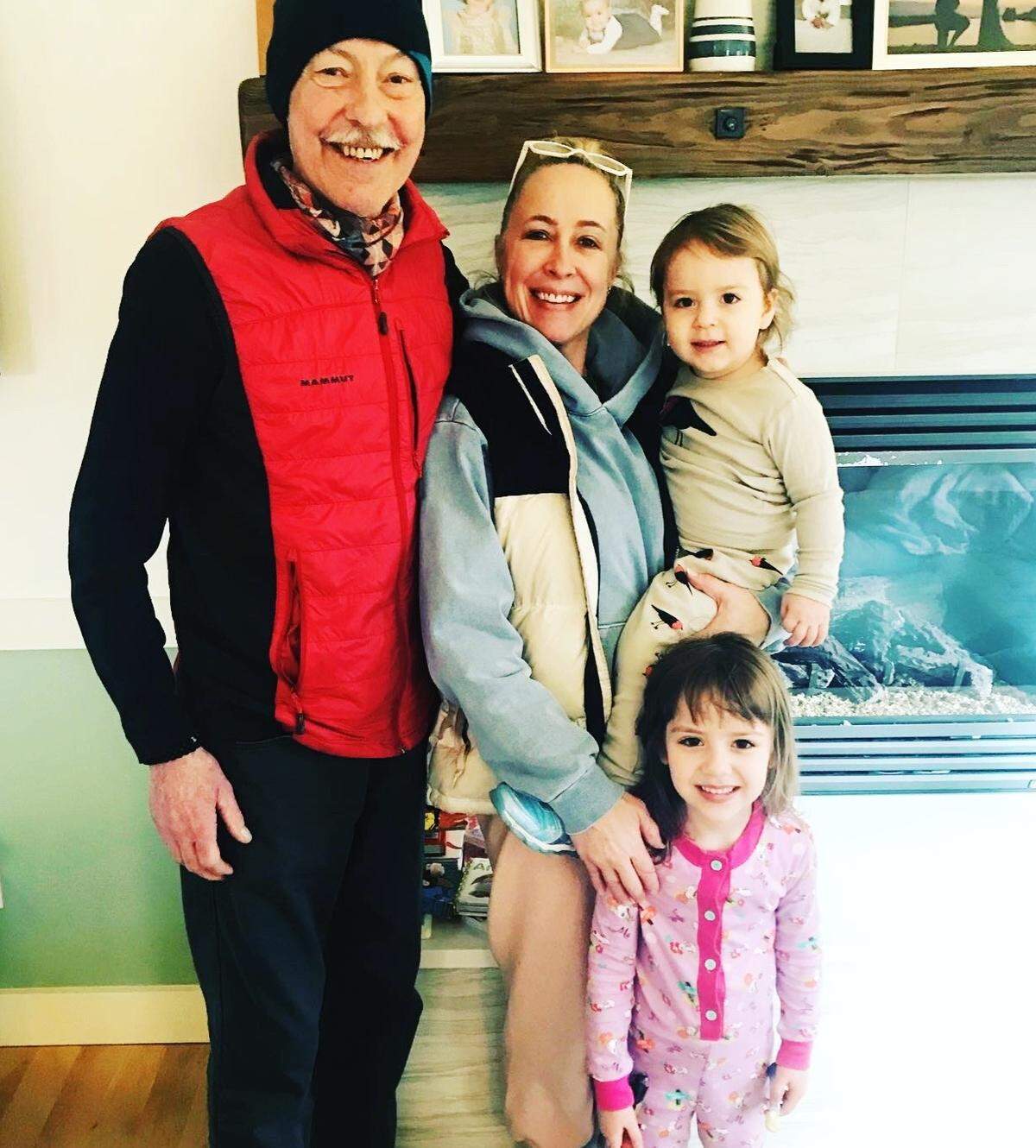
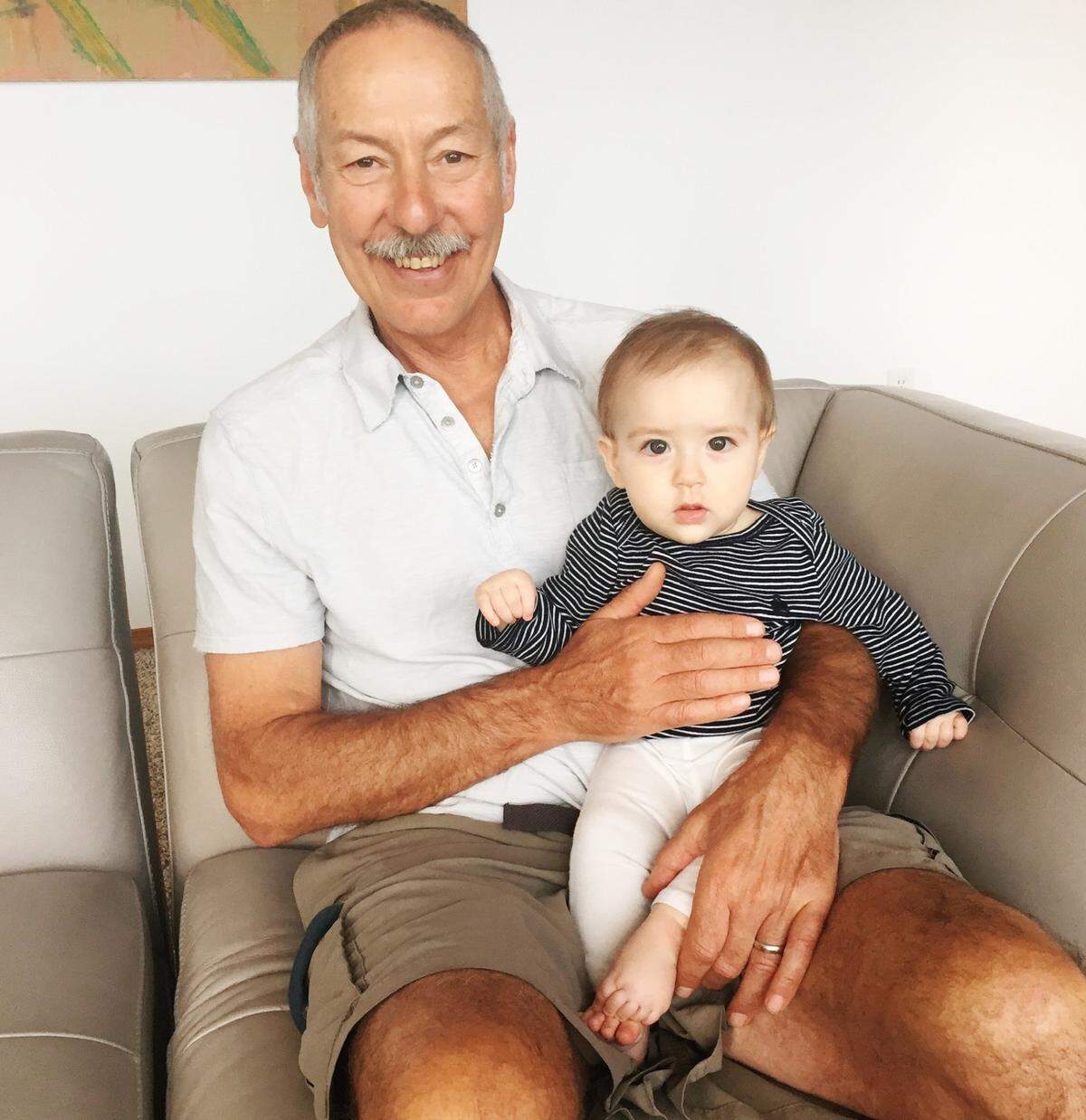
Later in life, John relished the task of Amazon shopping for his grandchildren at Christmas and FaceTiming with them often to catch up when they couldn’t be together.
“To the very end that was his biggest sadness — they weren’t going to make more memories. He had big plans for what they would do with each other, and the memories they’d make,” Heather says. “They (grandchildren) were so special to him, they were an extension of us (his children).”
John was a fellow of PNNL and of the American Association for the Advancement of Science. He became a prestigious Battelle Fellow in 2010. The title recognizes scientists who have “dramatically changed the conduct of their fields,” according to a PNNL website. “They are recognized authorities who have far-reaching impacts.” Less than one-half percent of PNNL researchers hold this rank, according to the lab.
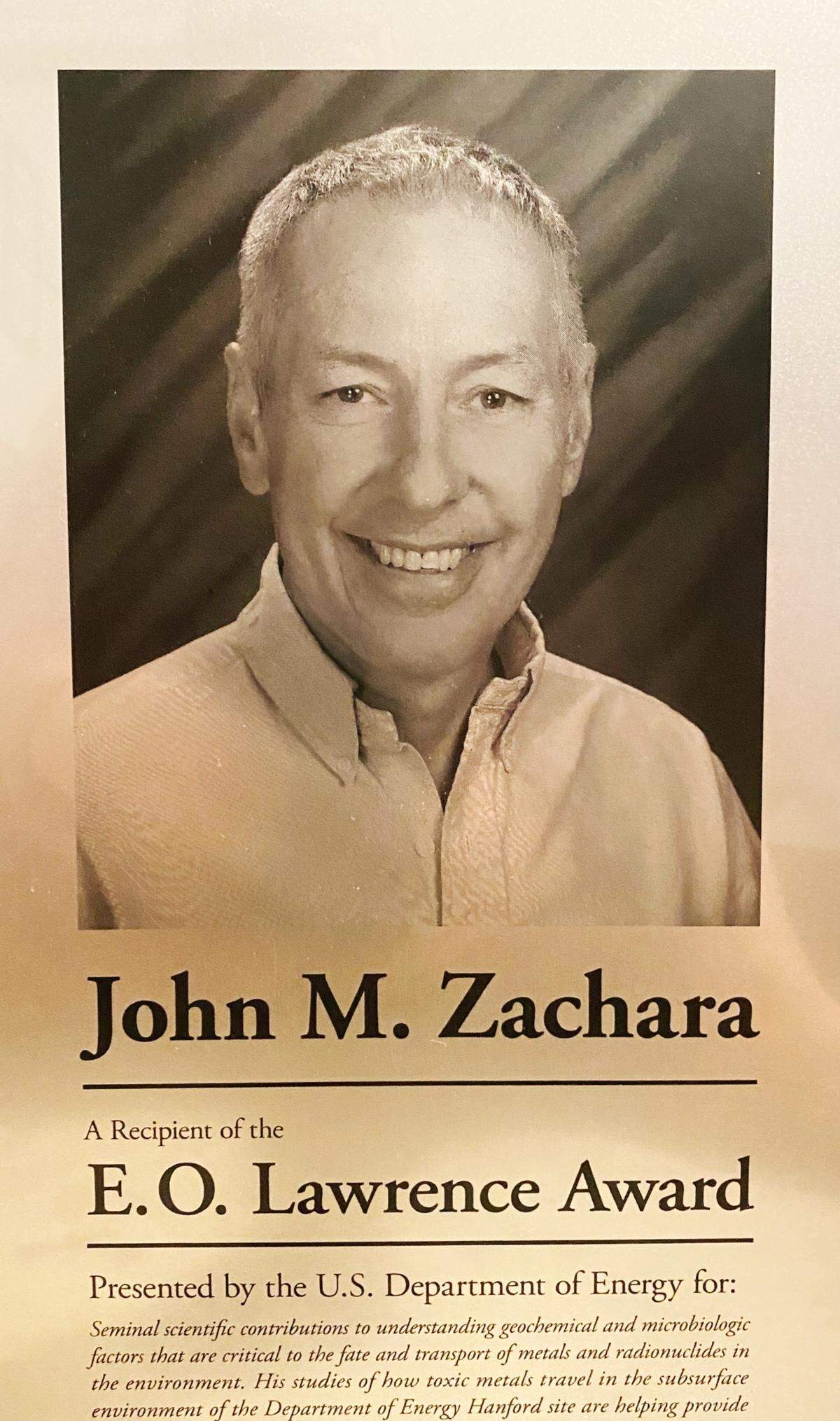
John was also awarded the E.O. Lawrence Award in 2007, one of the most prestigious awards given by DOE’s Office of Science.
Much of his work centered squarely on the problem of the diverse constituents found in the groundwater beneath Hanford’s heavily contaminated 300 Area in southeast Washington, near the shore of the Columbia River.
Most notably, among John’s more than 300 scientific papers published, he determined the chemical behavior of radioactive cesium and uranium in the ground and groundwater under Hanford. Another heavily-cited paper is “Subsurface transport of contaminants: Mobile colloids in the subsurface environment may alter the transport of contaminants,” in collaboration with John F. McCarthy.
John was also the principal investigator on the important paper, “A New Approach to Quantify Shallow Water Hydraulic Exchanges in a Large Regulated River Reach,” which showed how groundwater and surface waters interact and linked the local processes to larger-scale processes.
In yet another major project, John and Jim Fredrickson led a major research project under the U.S. Department of Energy called a “Grand Challenge” effort to understand the molecular mechanism where bacteria gain energy through interaction with iron and other minerals.
“He was the single most important scientific mentor in my career,” says John’s postdoc and colleague Eric Roden, a geomicrobiologist at the University of Wisconsin, Madison. “Not only was he the smartest guy in the room, but he was a great person and we got to enjoy both aspects of him.”
People from a wide variety of disciplines came to John for help with whatever their problems were, Roden explained. John would work on science from geomicrobiology to the most complex mineral solubility or radioactive-contaminant mobility problems.
“There were at least a few times in my career that I would have problems, and asked John to look at them with me,” Roden says. “In the end he was the guy you wanted to ask your question to. And although he didn’t always didn’t have the answers, he was like an oracle — or somebody that could point you in the right direction.”
John was also known for asking exacting questions during scientific presentations or even during casual dinner conversations.
“He’s a guy in the room that always asks the right question,” Jim Fredrickson says. “You’ll get a 20 minute talk from a guy — and he could distill that down and ask the right question, at the heart of the moment.”
Xingyuan Chen, an earth scientist at PNNL, was one of John’s top mentees. She came to the lab in 2010, and says John’s rigor in science and his ability to ask important questions in science was what she admired most — he taught her how to think deeply. They wrote about 10 papers together.
“He would tell me if the work wasn’t good enough yet, but he would always say, ‘Let’s work together on that,’” Chen says.
She went further to say, John has left behind a legacy of science on the Hanford 300 Area, that will last perhaps generations into the future — and that his science will affect other fields of study.
“Knowing how to ask the right question is the most important thing about being a great scientist, and that’s the most important thing I have learned from John,” she says. “We (scientists) not only recognize him as a great scientist, we recognize him as a great leader — we all love him.”
A taste of fine love
Wife Dawn and John met in 2004 at a private winery party at Hedges Family Estate winery.
Dawn spotted John across the finely-appointed French-style tasting room and asked a close friend, “Who is that guy?” she remembers.
“I kind of had my eye on him,” Dawn says. “I thought that guy is so good looking. He had something special. His eyes and his smile -- there was just something about him. I thought to myself, I’m gonna get that guy.”
The couple were married in 2009 at Terra Blanca winery in Benton City, Wash.
“The cake fell on the floor and Dori (Luzzo Gilmore) had to put it back together,” Dawn remembers.
It rained — considered good luck — that day. So Dawn and John moved the after party to their own home’s basement.
“We had a band, we had a whole dance party,” Dawn remembers. “Heather wore my dress to her wedding and Georgia (Dawn’s sister Mary’s daughter) wore it to her wedding too.”
In one happy adventure, Dawn and John went to St. Barts several years ago.
“That trip stuck out, because it was really beautiful there,” Dawn remembers.
John loves a good beach, she says. He loves to stroll on beaches.
“We are both really good swimmers and that was actually something we were going to do when we were done (with treatment),” Dawn says. “We wanted to go to Maui, we wanted to dive in the ocean.”
In their marriage, Dawn says John was the strong leader too. But near the end of his life, she began to take over directing much of his treatment and care. They were still a strong team — but she learned to step forward and take charge when he couldn’t lead anymore.
Frigid glaciers and peaks
John had a deep love of nature and plants — and collected things important to him.
In the family’s garage, there’s a large plastic clear bin filled to the brim with ziplock baggies containing tiny native seeds. Each one is catalogued with a sharpie marker of what they are, where the seeds were taken from and the date.
“To others it might look like junk,” Dawn says. “To John it was these special little seeds that could be planted.”
John planted a wine grape vineyard, and nurtured native shrub steppe and alpine plants in pots at their home in Benton City, Wash.
Besides his love of plants, John found his church in the mountains.
His family maintains a cabin in Olmstedville, in upstate New York’s Adirondack Mountains. Growing up vacationing there, he developed a love of skiing, hiking and later, photography.
Some of John’s closest friends were husband and wife Howard Dawson and Joan Knowles. The couple guesses they have done hundreds of climbs and hikes together with John since they met while attending UW in Seattle.
The Anacortes, Wash., couple remembers one particular time when they set out with John to climb with a group on Mount Purity in the central Selkirks of Canada. They all clamored aboard a helicopter to reach a remote base camp for a full week. But Howard developed a hip problem.
Joan had come all that way, and still wanted to climb. But she had lost her right arm in a hiking accident beneath a boulder when she was young, and remembers being hesitant to ask John to help her do the climb. She would need help strapping on her climbing crampons, lacing up her hiking boots, buckling up her harness and clipping into the climbing rope.
John said no problem, and did that diligent work of a good friend the whole way, Joan remembers.
“I didn’t want to be the slowest person that holds everyone up,” Joan says. “It was a bit uncomfortable. I wouldn’t have gone with John, if I didn’t have that lifetime of trust. It was an additional bonding experience.”
For friend Jim Fredrickson, another frequent companion on backcountry outings, one memorable trip was in 2010, up to Battle Brook in Canada — also with Joan and Howard.
A helicopter had transported them all to a campsite high in the Canadian alpine at the base of a glacial moraine.
Jim remembers the horse-flies were biting their camping party badly, including John. And the geoscientist was well known for his sardonic sense of humor.
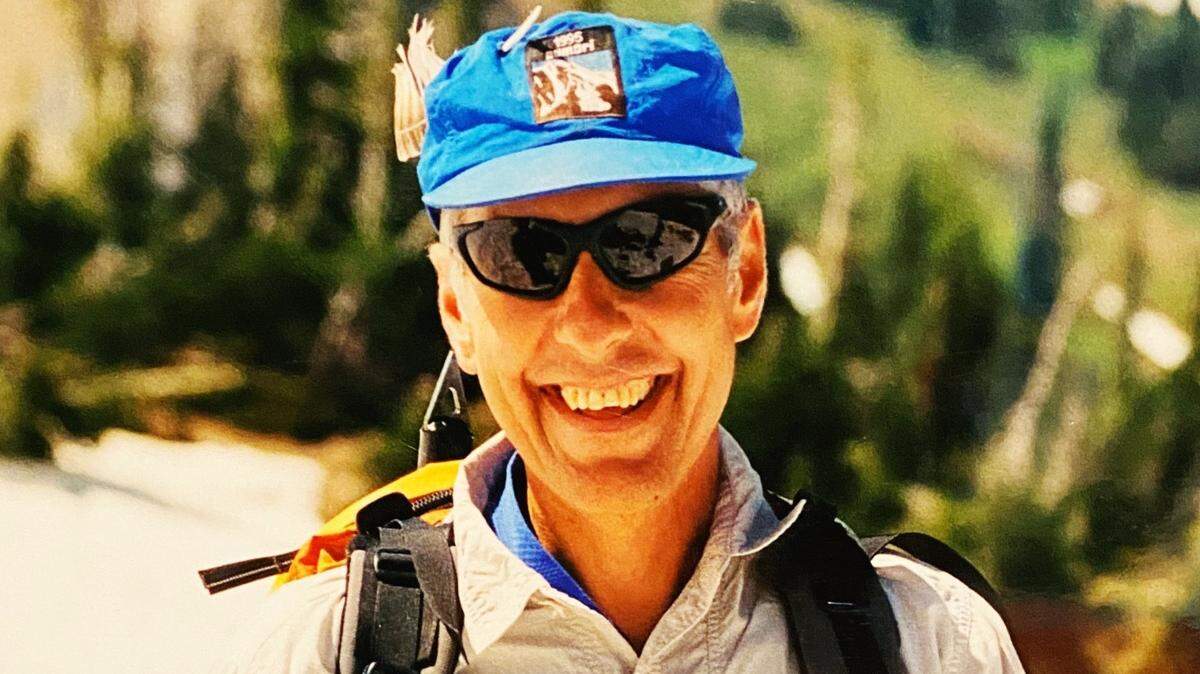
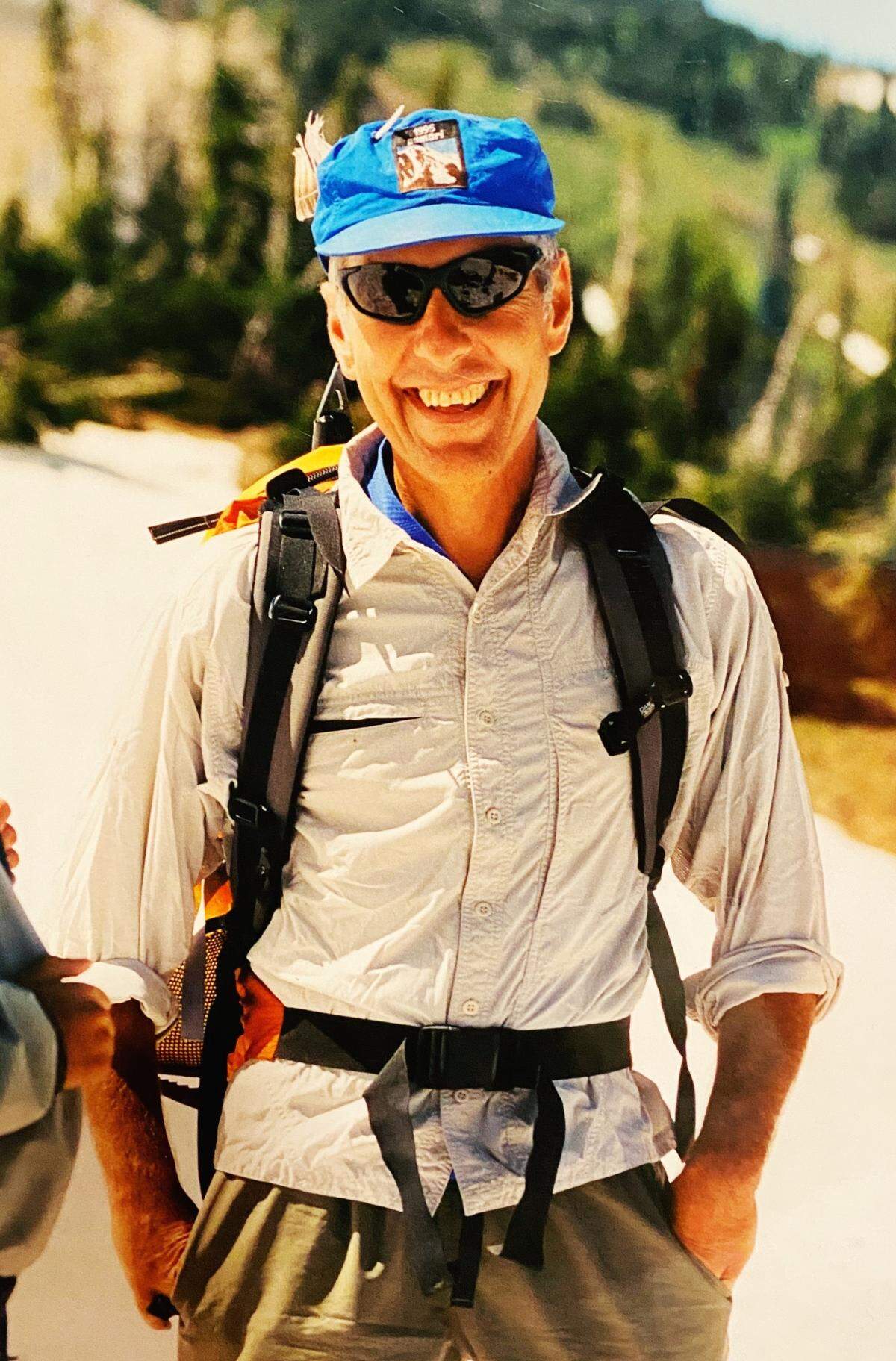
John tied one fly with dental floss to a button on the top of his baseball cap. The trapped insect was his pet, he told the group.
“That was classic John,” Jim says. “He had this hard side of science to him, but he had this whimsical part of him too.”
After John’s retirement from PNNL in 2016, Jim said he was thankful he and John were able to take one major adventure that had eluded the friends for many years.
They hiked the Ptarmigan Traverse in the north Cascades in July of that year. They had tried to do this hike several times and had gotten rained out or blocked by major wildfires, Jim says.
“He always wanted to do that,” he says. “I am so glad I got to do that with him.”
Trail’s end
In the end, John’s life was all about the frontier of science too. He fought a rare type of leukemia called BPDCN or blastic plasmacytoid dendritic cell neoplasm.
His intense fight took John, and wife Dawn, to the Mayo Clinic in Minnesota and to MD Anderson Hospital in Texas — in a journey that spanned nearly two years.
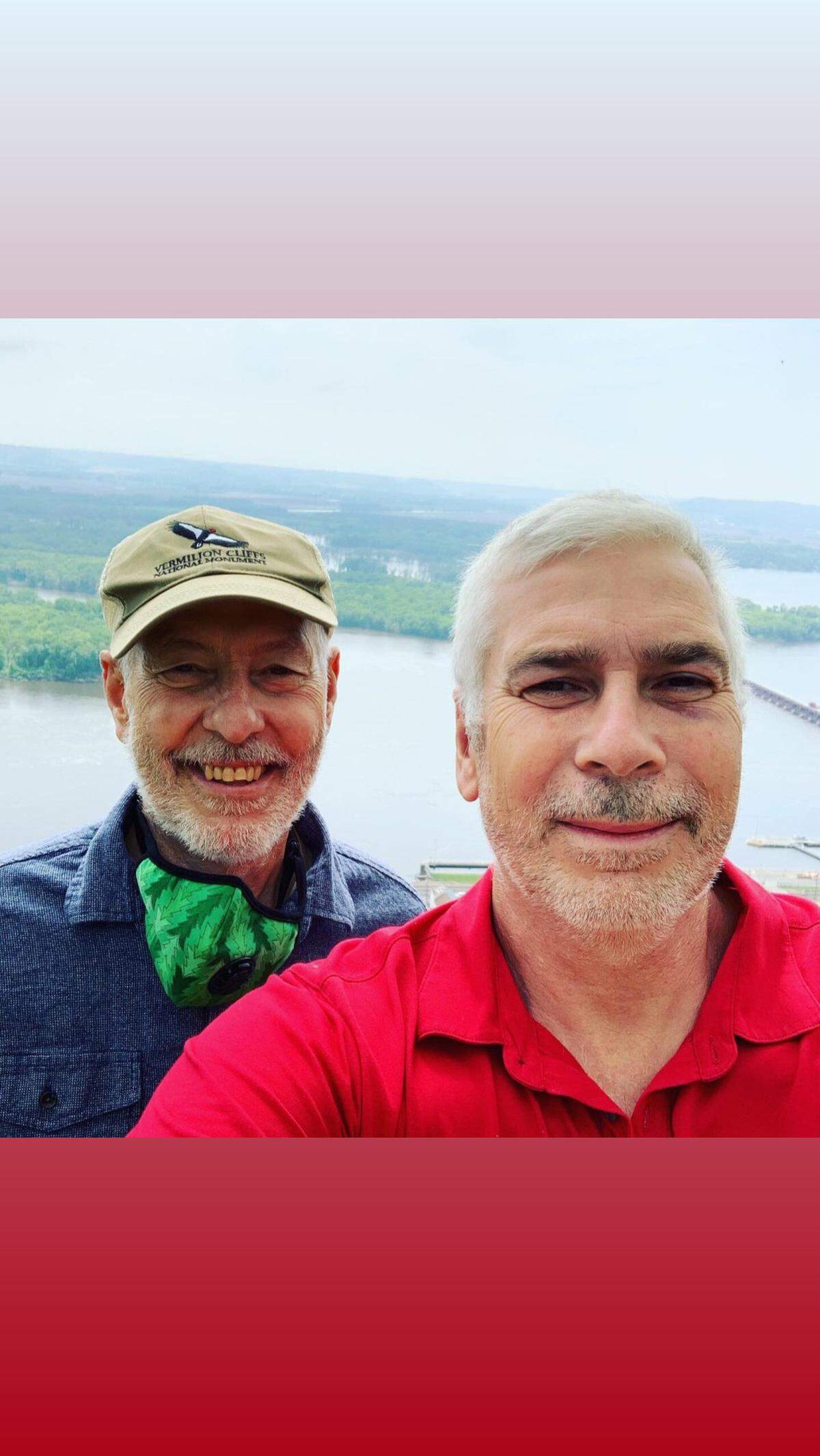
He participated in clinical trials, and underwent a bone marrow transplant — all were very hard on his once-extremely-fit body, Dawn says.
There wasn’t much research on this cancer, daughter Heather says.
“From a scientific side, he understood why it was important for him to go through the trial, the future and the science of the whole thing,” she says.
When the trials failed to heal him and the cancer came back, John and Dawn returned to Washington state. In May, they moved in with Heather and her husband Gabe Andrews and children in Auburn, Wash.
In a goodbye tour for John in late May, the family group loaded up a rented R.V. and took a tour spanning Richland, Walla Walla, Chelan, Winthrop, the North Cascades Highway and Fort Casey on Whidbey Island. The time on the road let John watch mountains, lakes and rivers slip past the vehicle’s large glass windows. He was also able to see friends, colleagues, and family along the way.
After that final trip, John’s health rapidly declined.
Dawn and Heather nursed John together. Near the end, the close in-laws jokingly called each other “Helga and Helga,” cracking jokes with John to keep his spirits up.
End-of-life care at home meant John heard his grandchildren laughing in nearby rooms and could still pet his chill-tempered pup Lenny.
John died in the early morning of June 1, 2021, surrounded by Dawn, Heather and Gabe.
In grief, Heather says it’s terribly hard to lose her father, who cared so deeply about his entire family. And she’ll remember those long-goodnight routines before John’s big work trips — snuggled under her floral-print comforter. Heather says she’ll try to save that Bell mason jar of her father’s sugary kisses forever in her mind — just like when she was a girl.
“I would open and close the lid really fast and try to just let one kiss out,” Heather says. “I didn’t want to waste them.”
*********
John’s survivors include: Mother, Janet Zachara, brothers, Peter Zachara, James Zachara, Mike Zachara, wife, Dawn Vargo Zachara, children Amy Zachara, Heather Andrews, Dillon Zachara, and Pete Zachara, seven grandchildren, Eden and Ivy Zachara, Hallie, Gus & Remy Andrews, Ben and Lola Zachara.
A celebration of life will be held from September 11, from 1-5 p.m. at Sunset Gardens, 915 Bypass Highway, Richland, WA 99352. A reception will follow. Bring a story to share.
In lieu of flowers for John, his widow Dawn and family would welcome donations to the Gift of Life Transplant House in Rochester, Minnesota or the Washington State Trails Association.
To write to the surviving family, email: teamzachara@gmail.com