
$75M energy research lab in Richland gets OK to start. Hopes are high for new jobs
Pacific Northwest National Laboratory can start work on a $75 million facility in Richland that will help ensure reliable and clean electricity for the nation, new Energy Secretary Jennifer Granholm announced on Wednesday.
The project could have important economic benefits for the Tri-Cities and Eastern Washington, if work done at the new Grid Storage Launchpad can spin off into local manufacturing of new grid materials and systems developed there.
The new facility is intended to speed up the development and use of low cost ways to store energy for long durations — not just hours, but days and weeks.
Energy sources such as wind and solar provide intermittent power, but not always when demand is high. But if energy could be stored economically and reliably for long periods of time, electricity would be available when needed.
Grid storage also could be used for backup if delivery of electricity from the grid is interrupted.
Just as homes or businesses now may depend on generators if power is lost, they could eventually also rely on microgrid storage to provide backup in power emergencies, said Steven Ashby, director of PNNL.
“We need to decarbonize our energy system and to do that we need to incorporate more renewables into our electric grid,” he said.
A design and construction contractor for the new facility is expected to be selected this spring, allowing construction to start late this year.
The launchpad would be ready for use as soon as 2023, but possibly not until 2025, depending on how quickly Congress approves funding. To date it has provided $28 million to start the project.
“Deploying new grid technologies means we can get more renewable power on the system, support a growing fleet of electric vehicles, make our grid more reliable and resilient, and secure our clean energy future,” Granholm said.
And Sen. Maria Cantwell, D-Wash., noted that speeding the development of energy storage technologies is “fundamental to the transition to a cleaner and more diverse electricity grid.”
Tri-Cities jobs
“By manufacturing and deploying these technologies here at home we will reduce energy costs, create jobs, and help keep the lights on during extreme weather emergencies,” she said.
The new facility will provide space for about 100 employees.
Immediate jobs would be for the construction of the building, but the facility eventually could attract more research funding and jobs to PNNL.
It also should bring researchers and industry leaders to PNNL, helping boost the local economy as they spend money during their visits.
But the big benefit economically could be in manufacturing.
“We will be expected to bring utilities and materials developers from the region and around the country to develop new materials,” said Jud Virden, associate PNNL director for energy and environment.
“One of my hopes is that we do such a good job of that, that when they start to deploy these materials they actually stay in the region or the Tri-Cities to manufacture them,” he said. “We are a wonderful test bed. We have a lot of innovative companies. We have cheap electricity.”
PNNL was picked for the launchpad by an independent review team in 2019.
The Department of Energy national laboratory in Richland has spent decades working with local and regional utilities, developing an in-depth understanding of the challenges the grid has had in resiliency, reliability and integrating new technologies, Virden said.
To address grid resiliency and security, it has invested in research in grid storage and attracted experts in the field to work at the Richland lab.
PNNL now is widely recognized as one of the, in not the, leading research national laboratories working in energy storage technology, from basic research in chemistry and materials science to the development of prototypes and putting solutions into use, Ashby said.
“The Grid Storage Launchpad will help PNNL continue to lead the way on clean energy storage and adaptation for decades to come,” said Sen. Patty Murray, D-Wash.
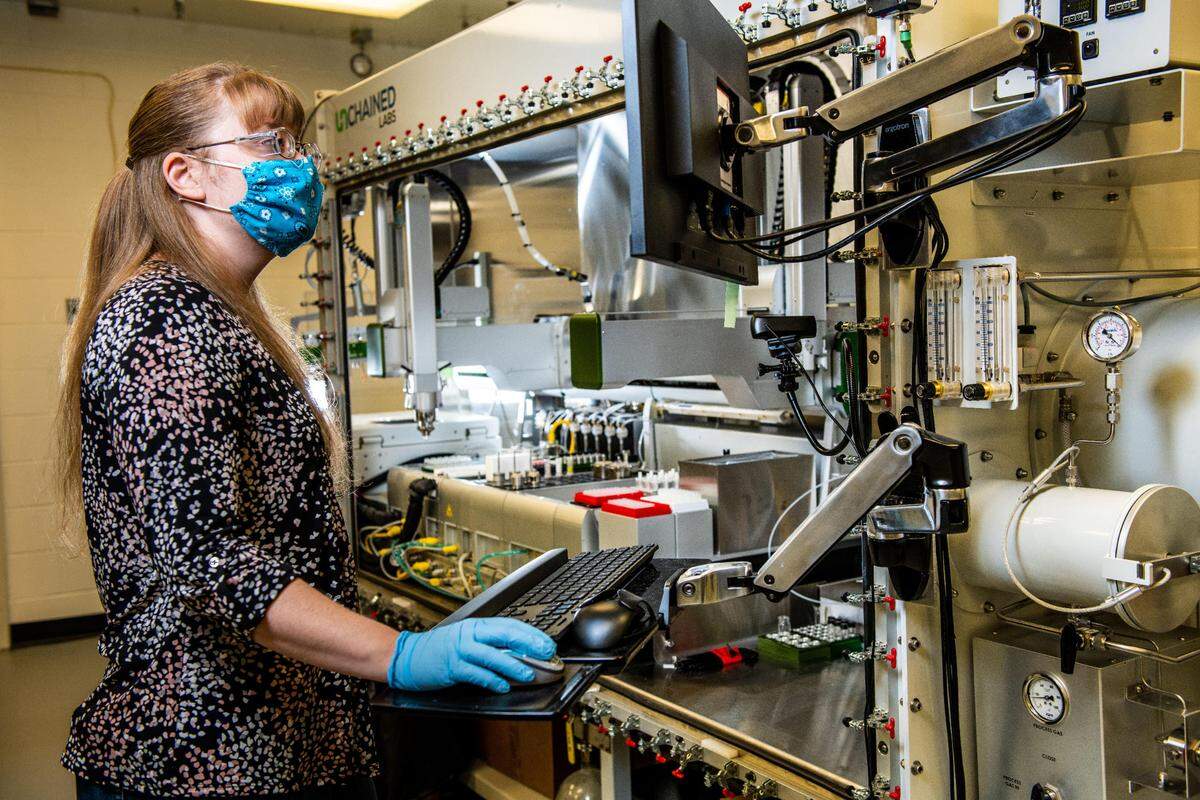
The new facility is planned to be at least 85,000 square feet and will include 30 research laboratories, some of which will be testing chambers capable of assessing prototypes and new grid energy storage technologies under real world grid operating conditions.
Launchpad goals
Goals have been set for three outcomes:
▪ To provide a means of independent testing of next generation grid energy storage materials and systems under realistic grid operating conditions.
▪ To take risk out of development of new technologies and speed their development by establishing rigorous performance measures.
▪ To bring researchers together from the DOE and industry to promote innovation and deployment of grid-scale energy storage.
In addition to federal funding, the Washington state Department of Commerce has committed $8.3 million for advanced research equipment and specialized scientific instruments needed to give insights into the behavior of battery materials during energy storage operations.
The state money was a key factor in the selection of PNNL for the Grid Storage Launchpad, Ashby said.
“The Grid Storage Launchpad will play a pivotal role in improving our nation’s energy grid, and Central Washington scientists and researchers are leading the way,” said Rep. Dan Newhouse, R-Wash.
This story was originally published March 10, 2021 at 12:31 PM.