
17 of the world’s most influential scientists work in the Tri-Cities
Seventeen of the scientists at Pacific Northwest National Laboratory have been named among the most influential in the world.
Each year Clarivate Analytics determines the top 1% of researchers based on how often other researchers cite their work, a measure of their work on the worldwide research community.
“In the race for knowledge, it is human capital that is fundamental and this list identifies and celebrates exceptional individual researchers who are having a great impact on the research community,” said David Pendlebury, senior citation analyst at the Institute for Scientific Information at Clarivate Analytics.
This year researchers in 60 countries made the list, with about 42% of researchers on it working in the United States.
That’s down 2% from the previous year as mainland China’s percent of researchers on the list increased 2% to 12%.
PNNL, a Department of Energy national laboratory, did particularly well in two of its specialty areas — energy storage and earth system science.
Jun Liu, a chemistry and materials science researcher, made the list of most cited researchers for the seventh year in a row and led PNNL for citations in the Clarivate Analytics ranking for the third year in a row, with 43,377 citations over 10 years. He also has more than 60 U.S. patents.
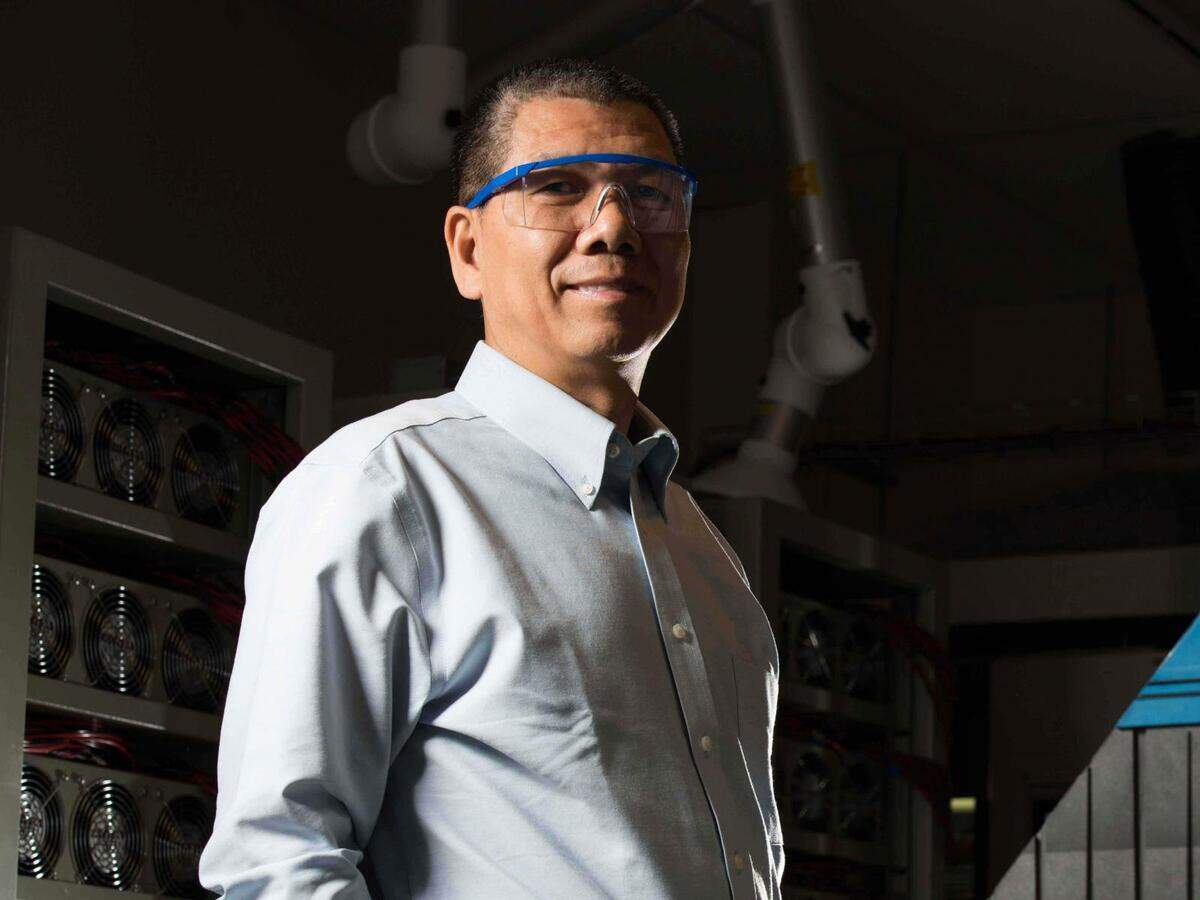
He characterizes and develops new materials for energy applications with a special interest in future energy storage technologies. Liu holds a joint appointment with the University of Washington and is a PNNL fellow.
Other researchers on the list include:
Earth system science
▪ Katherine Calvin develops and analyzes climate models focusing on interactions between land, energy and water.
▪ Jae Edmonds researches long-term, global, energy, economy and climate change.
▪ Mark Engelhard specializes in creatively applying and adapting surface analytical tools to address energy and environmental problems.
▪ Page Kyle addresses technology and mitigation of greenhouse gas emissions, including representations of renewable energy resources, secondary energy production, final energy demand, non-CO2 greenhouse gas emissions, agriculture and land use, and water demand.
▪ Steven Smith researches how long-term socioeconomic scenarios interact with the climate.
▪ James C. Stegen is the lead investigator for research linking microbial communities to subsurface biogeochemistry and multi-scale linkages among soil microbiomes, carbon-cycling and permafrost. He is recognized as an expert in ecological theory.
▪ Philip J. Rasch is internationally known for his work in general air circulation, atmospheric chemistry and climate modeling.
Energy storage
▪ Xiaolin Li has extensive experience with carbon nanotubes, graphene, and is an expert in designing nanostructured functional materials for various applications.
▪ Zimin Nie develops large-scale electrochemical energy storage technologies, which are key to widespread use of renewables such as solar and wind.
▪ Yuyan Shao studies electrochemical energy storage and conversion in transportation and stationary applications, high-performing electrode and electrolyte materials for batteries, fuel cells and electrolyzers.
▪ Chongmin Wang develops transmission electron microscopy tools to enable direct observation of lithium-ion batteries during operation, leading to insights in designing better battery materials
▪ Wu Xu studies novel electrolytes for different energy storage systems including lithium ion batteries, lithium metal batteries, organic redox flow batteries and supercapacitors.
▪ Jie Xiao studies energy storage materials and systems, spanning from micro-batteries for acoustic fish tags to advanced battery technologies for vehicle electrification and grid energy storage.
▪ Ji-Guang “Jason” Zhang develops energy storage devices, including lithium-ion batteries; thin-film, solid-state batteries; Li-S batteries; lithium-air batteries, and electrochromic devices.
Microbiome science
▪ Janet K. Jansson uses molecular approaches, also known as omics, to study complex microbial communities, such as those residing in soil, sediments, and the human gut.
Plant science
▪ Nate McDowell studies the planet’s trees and the many factors that collectively determine tree survival and mortality.