
State notifies DOE of possible lawsuit over Hanford tank vapors
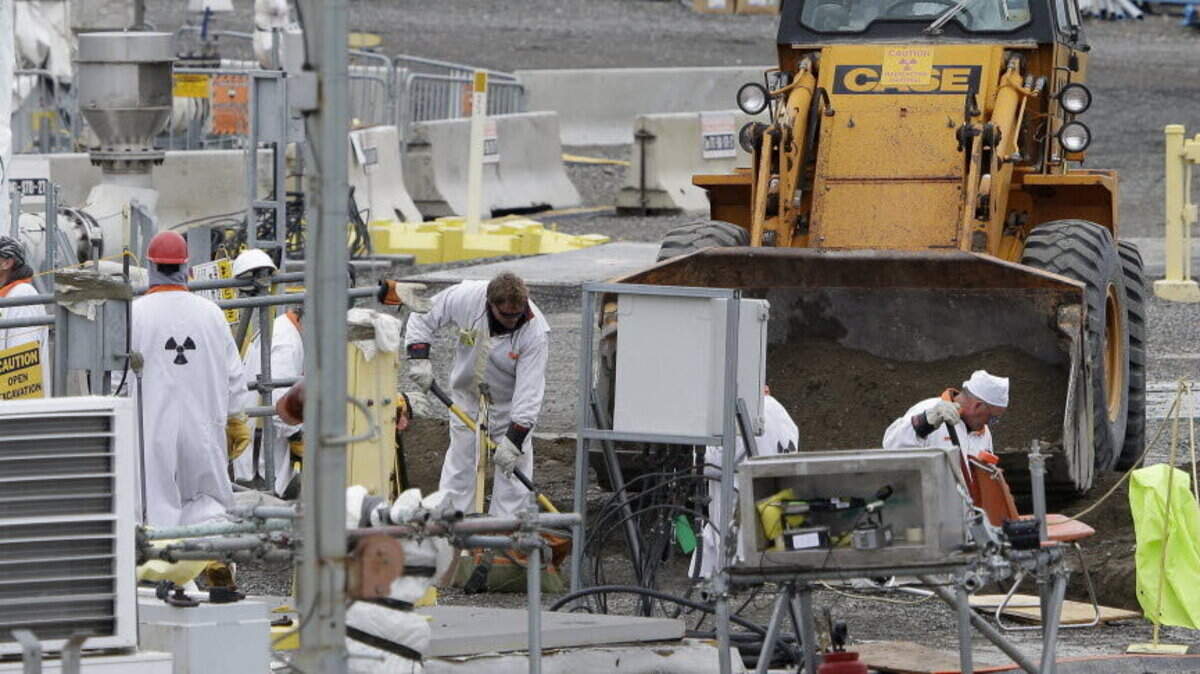
The Washington state attorney general notified DOE and its tank farm contractor on Wednesday that it is preparing to file a lawsuit to protect Hanford workers from chemical vapors.
The state wants to reach a legally enforceable agreement with DOE or get a court order that lays out plans to eliminate the risk to workers from breathing vapors from Hanford waste now held in underground tanks, said attorney general Bob Ferguson at a Seattle news conference.
Despite 20 years of study and multiple reports, DOE has failed to find a solution and workers continue to get sick, he said.
By sending a notice of endangerment and intent to sue, the state starts the clock running on 90 days of talks between the state and federal government that could conclude with an agreement or the filing of a lawsuit.
The state already is asking the federal court to set new deadlines for DOE to empty some leak-prone underground tanks holding waste that can emit vapors and also to start treating the waste at the vitrification plant under construction.
Better protecting workers from vapors should not slow work to empty tanks, Ferguson said.
Washington River Protection Solutions commissioned the most recent study, an independent look at tank vapor concerns led by the Savannah River National Laboratory in South Carolina, which was released at the end of October.
It found that the Hanford tank farm contractor needed to focus on detecting and preventing brief, intense releases of chemical vapors and better protect workers from those unpredictable releases.
“The report was different in our view than previous studies because it recognized a stronger causal link between hazardous tank vapors and worker health than ever before,” Ferguson said. “It is time to take action.”
Since this spring, 54 workers have received medical evaluations for possible exposure to chemical vapors released from Hanford waste, and all have been released to return to work.
Reported symptoms have included nosebleeds, headaches, watery eyes, increased heart rate, coughing, sore throats, dizziness and nausea, Ferguson said. However, some workers have had long-term health problems, including permanent loss of lung capacity, he said.
“The report from this independent panel clearly signals a need for further action to protect workers at the Hanford tank farms,” Washington Gov. Jay Inslee said in a statement. “I have spoken with U.S. Energy Secretary Moniz who has assured me that the federal government’s response to this situation will be vigorous and that steps have already been taken to better protect workers.”
Washington River Protection Solutions began to make changes to better protect workers when it saw an early draft of the report, including increasing its requirements for workers to wear respirators. It also has launched a pilot project to see if optical gas imaging cameras used in the petroleum industry can be modified to detect clouds of vapors before workers are exposed and to sound an alarm.
The contractor said earlier this month that it had begun to implement more than half of the 47 recommendations in the Hanford Tank Vapor Assessment Report.
Washington River Protection Solutions has prepared a draft plan on how it plans to implement all of the recommendations and was presenting it Wednesday to the study team in South Carolina. A final implementation plan is expected to be released in December.
Implementing all the recommendations, which includes some research, could take four to five years and cost millions of dollars, but a more definite cost and schedule will be included in the final plan, according to Washington River Protection Solutions.
The report was commissioned before the state sent a letter outlining its concerns to Energy Secretary Ernest Moniz in June, and Ferguson said Wednesday that the report is a good starting point for improvements.
But the state wants to hold DOE accountable for any future failure to protect Hanford workers, Ferguson said.
A legally enforceable agreement reached with DOE or a court order should allow the state to sue over any future failure to protect workers, he said.
“The federal government has a responsibility to keep these Washington workers safe and I intend to hold them accountable,” he said.
In the notice of the possible lawsuit, Ferguson gave examples of a worker with 40 percent reduced lung capacity after chemical vapor exposure between 1987 and 1992 and an incident in 2003 that resulted in a worker being diagnosed with reactive airway dysfunction syndrome.
Many improvements have been made to better protect workers over the last decade, Washington River Protection Solutions has told workers in recent presentations, but it continues to look for ways to future reduce exposure to vapors.
Now workers are required to immediately evacuate the area if possible chemical vapors are smelled, and the new vapor report suggests having workers carry “escape” respiratory equipment that can be quickly put on to further shorten their exposure.
Implementing the Hanford Tank Vapor Assessment Report’s recommendations will further reduce worker exposure to chemical vapors, the tank farm contractor said.
The state notice of endangerment and intent to sue was sent Wednesday to Washington River Protection Solutions and the Environmental Protection Agency, in addition to DOE.
The state is required under the Resource Conservation and Recovery Act to give 90 days notice before filing a lawsuit. The act allows anyone, including the attorney general, to bring actions if hazardous waste practices endanger public health or the environment.
DOE confirmed that it had received the notice of intent to file a lawsuit Wednesday but said in a statement that it could not comment on its merits.
On Thursday, Hanford Challenge, Washington Physicians for Social Responsibility and Hanford union Local 598 plan to announce what Hanford Challenge calls a “citizen strategy” to protect Hanford workers from chemical vapors.
This story was originally published November 19, 2014 at 10:19 AM with the headline "State notifies DOE of possible lawsuit over Hanford tank vapors."