
Largest U.S. solar and battery project proposed in WA sold to new developer
AI-generated summary reviewed by our newsroom.
- Hecate sold Cereza project rights to Savion before construction began.
- Feds picked the gigawatt-scale Hanford project under Cleanup to Clean Energy.
- Project must return land to current condition when environmental cleanup is done.
The company picked by the Department of Energy to build what could be the largest solar and battery storage project in the nation announced Thursday that it has sold the project before any building began.
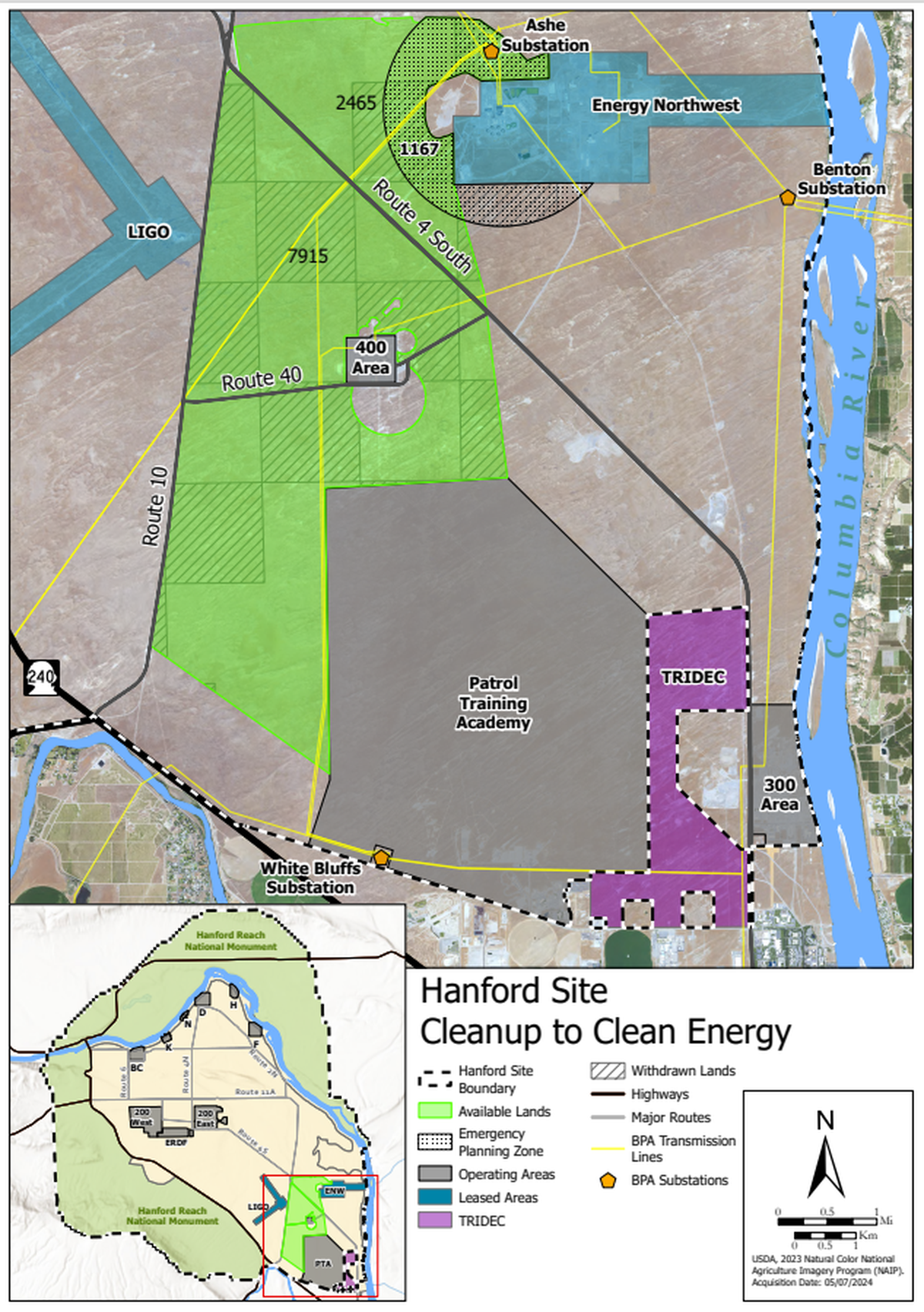
DOE announced in July 2024 that it had picked Hecate Energy based in Chicago, Ill., for a gigawatt-scale project on up to 8,000 acres of unused land on the southeast edge of the Hanford site near Richland in Eastern Washington.
Ray Geimer, DOE Hanford site manager, confirmed last month at a Hanford Advisory Board subcommittee meeting that the project remains in the works.
Hecate said Thursday that it had sold the rights to the project it called “Cereza Solar and Storage Project” to renewable energy company Savion, which will develop the 2 gigawatt project with Hecate’s support.
“The sale of Cereza demonstrates once again Hecate’s ability to develop and monetize large-scale, complex energy campus projects,” said Chris Bullinger, president of Hecate Energy.
The sale comes weeks after Hecate announced a business combination with EGH Acquisition Corp. that would take Hecate public under the ticker HCTE.
Savion, based in Kansas City, Mo., describes itself as one of the country’s largest and most technologically advanced utility-scale solar and energy storage project development companies in the United States. It was founded in 2019.
Geimer said at the Hanford Advisory Board meeting that there could be an issue with getting the intermittent power produced by the Hanford solar project on the Bonneville Power Administration electric grid. However, there could be interest from a data center, he said.
The Biden administration said in 2024 that the solar project could be operating at Hanford in five to seven years.
Hanford land for industrial use
It is planned to be built west of the Patrol Training Academy It would extend from just north of Highway 240 north past the Energy Northwest campus, home to the Northwest’s only commercial nuclear power plant.
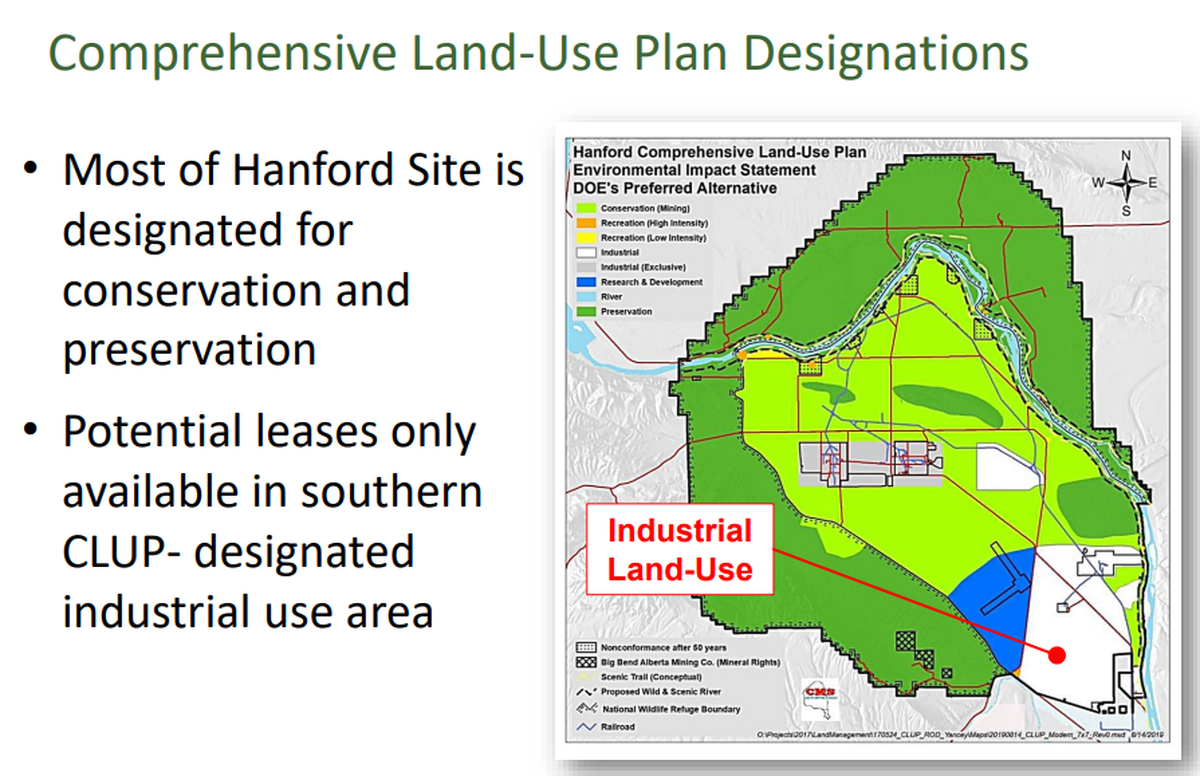
Most of the 580-square-mile Hanford site is now part of the Hanford Reach National Monument or is designated for preservation and conservation once environmental cleanup is completed.
The largest area of land planned for industrial use at Hanford is in the southeast corner of the site and the proposed Hecate project is proposed for more than half of the remaining land there designated for industrial use.
Hanford is undergoing environmental cleanup at a cost of more than $3 billion annually after the site was used from World War II through the Cold War to produce nearly two-thirds of the plutonium for the nation’s nuclear weapons program. Facilities on the nuclear site’s shrubbestep land were widely spaced, leaving land that was never used or contaminated.
The solar and battery project is required by DOE to wrap up and return the land it covers to its current condition by the time environmental cleanup at Hanford is completed decades from now.
The Hanford project was picked as the largest in DOE’s Cleanup to Clean Energy initiative that repurposes parts of DOE-owned land nationwide, including land like that at Hanford previously part of the nation’s nuclear weapons program, for clean energy projects.
Former Energy Secretary Jennifer Granholm, who served under President Joe Biden, said that “DOE is transforming thousands of acres of land at our Hanford site into a thriving center of carbon-free solar power generation, leading by example in cleanup up our environment and delivering new economic opportunities to local community.”
Expanding clean energy generation creates good-paying jobs, protects the environment and supports healthier communities across the country, said Brenda Mallory, Biden’s chairperson of the White House Council on Environmental Quality.