
Aging radioactive Hanford tank was cut into for just 3rd time in 20 years
AI-generated summary reviewed by our newsroom.
- Workers begin emptying Hanford’s 24th tank of radioactive waste
- DOE focuses retrieval on six large A Tank Farm tanks, one emptied so far
- Hanford site in Eastern WA has 149 leak-prone single-shell waste tanks
Hanford nuclear site workers have begun to empty a 24th aging single-shell tank, this one holding about 80,000 gallons of radioactive and hazardous chemical waste.
The work on Tank A-106 has been years in preparation after a pit on top of the tank proved too radioactively hot to insert a pump into the underground tank.
For only the third time in nearly two decades, workers cut into the top of one of the nuclear reservation’s single-shell tanks.
The Hanford site has 149 single-shell tanks storing waste, with 21 emptied to regulatory standards at a rate of about one a year. A 22nd tank is under review to make sure enough waste has been removed to meet regulatory standards.
The tanks are prone to leaking, with three of them known to be actively leaking, and waste is being emptied into 27 newer double-shell tanks until it can be treated for disposal.
Washington state Department of Ecology standards generally require each tank to have waste removed until all that remains is about an inch of waste if it were spread evenly over the bottom of the tank.
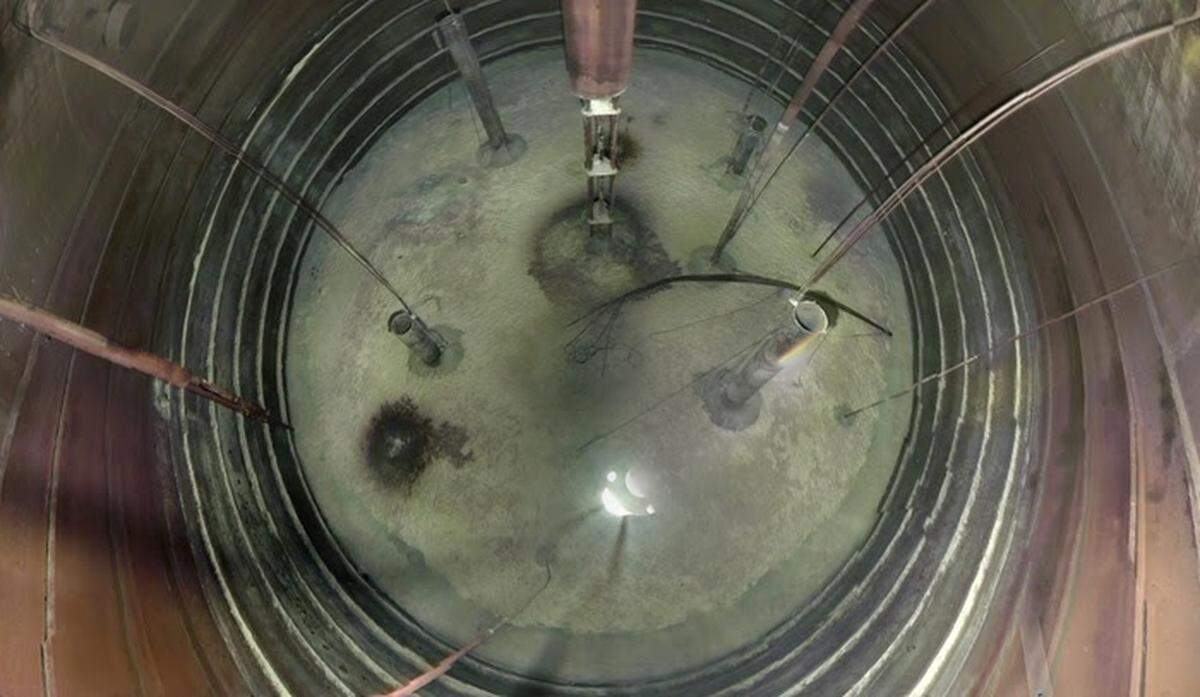
Some 56 million gallons of waste was left from the past Hanford site production of plutonium for the nation’s nuclear weapons program. Uranium fuel irradiated in Hanford reactors was chemically processed to remove 70 tons of plutonium from World War II through the Cold War.
The Department of Energy is now focusing waste retrieval work on a group of six tanks, each large enough to hold about 1 million gallons of waste, called the A Tank Farm. Its tanks have held a mix of low activity and high level radioactive waste, plus hazardous chemicals, for about 70 years.
Cutting into radioactive waste tank
One of its tanks has been emptied so far.
The only way crews can get to the waste in underground tanks is by lowering equipment through pipes extending out of the tops of the tanks through the soil to ground level. Some are as narrow as four inches in diameter.
Before retrieval of solid waste in the A Tank Farm began, Hanford workers drilled a hole in the concrete dome of Tank A-106, which is covered with 10 feet of soil, and installed a pipe, called a riser, to insert a new pump into the tank.
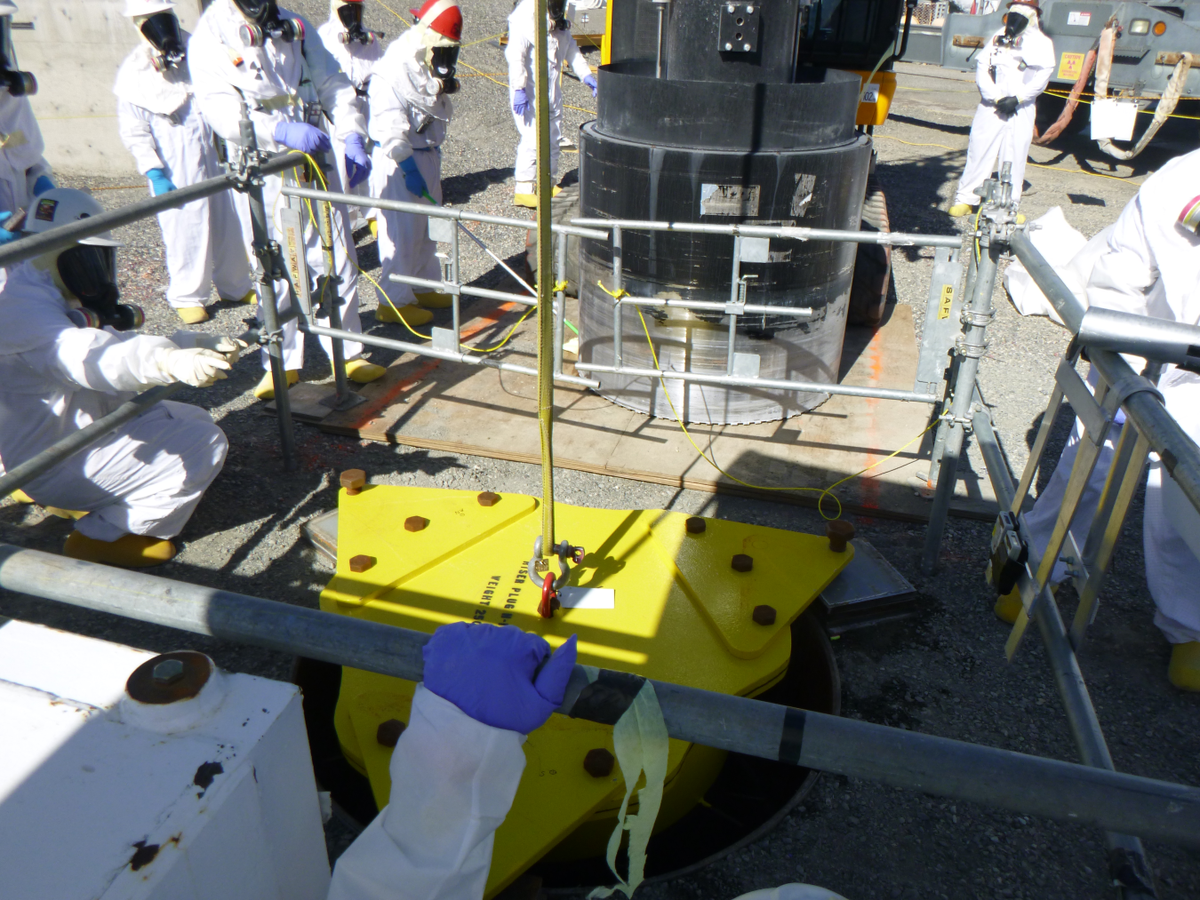
Cutting into the tank is not the preferred option for waste retrieval.
Using existing risers to access the interiors of the tanks is more efficient, less costly and safer for workers. But past work at Tank A-106 had left the concrete pit that can access a pump in the tank too radioactively contaminated for workers to conduct more work there safely.
Before starting drilling into Tank A-106, they prepared by practicing on a mockup tank at Hanford’s Cold Test Facility. The facility just north of Richland is used to design, develop and test equipment and practice tank farm work.
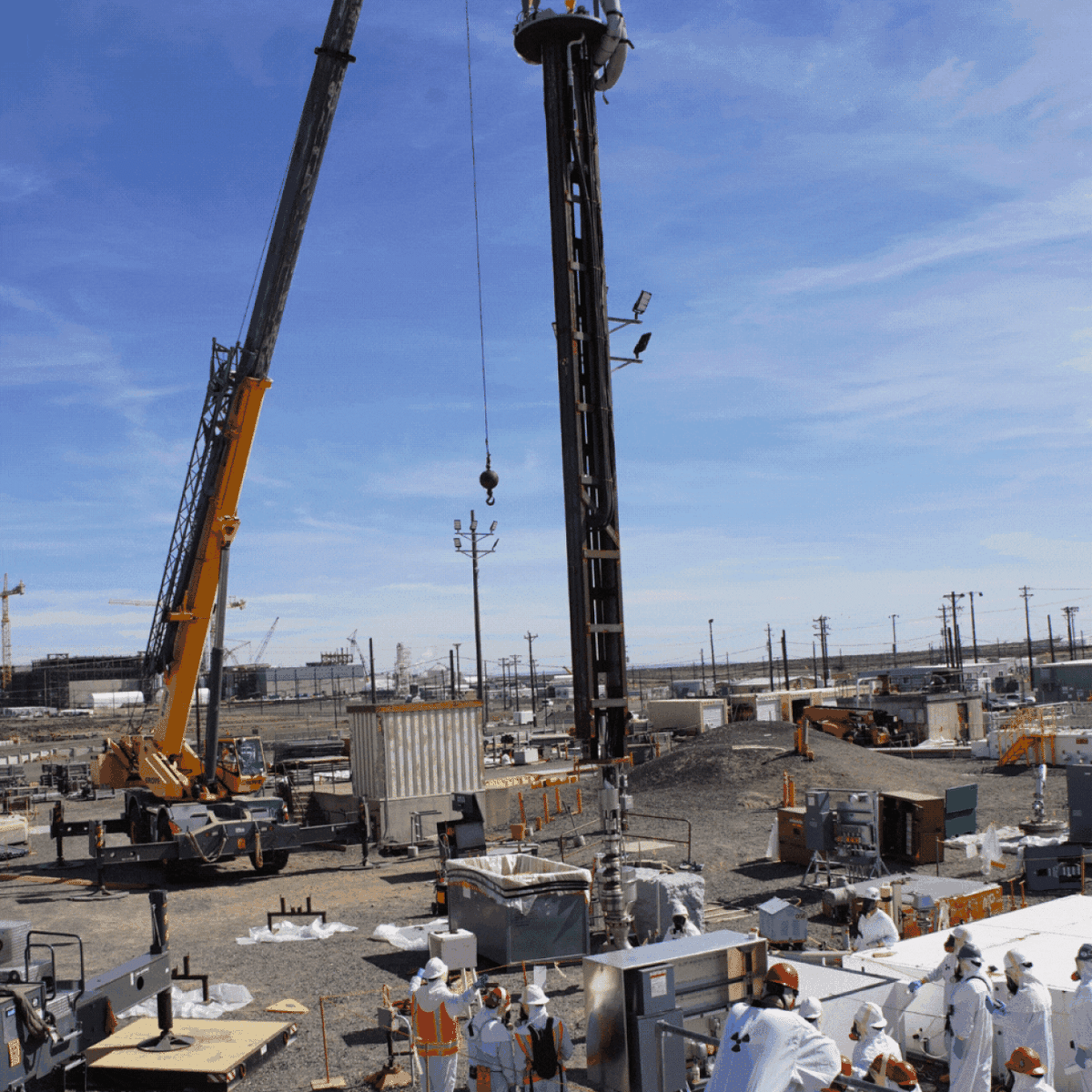
Waste retrieval on Tank A-106 began Jan. 23.
A high-pressure spray nozzle has been inserted in the enclosed, underground tank to break up waste and spray it toward a pump for removal.
It holds both sludge, which is the consistency of peanut butter, and hard salt cake.
Most liquid was previously removed in an earlier tank farm-wide campaign to reduce the chances of single-shell tanks leaking. Dozens of tanks are suspected of contaminating soil in the past with leaks or spills.
Workers for DOE’s tank waste contractor, Hanford Tank Waste Operations & Closure, commonly known as H2C, will be switching back and forth between work to empty Tank A-106 and Tank A-102.
Hanford A Tank Farm progress
Work to empty Tank A-102 began about a year ago and is now paused to add and also prepare to operate a second high-pressure spray nozzle in the tank.
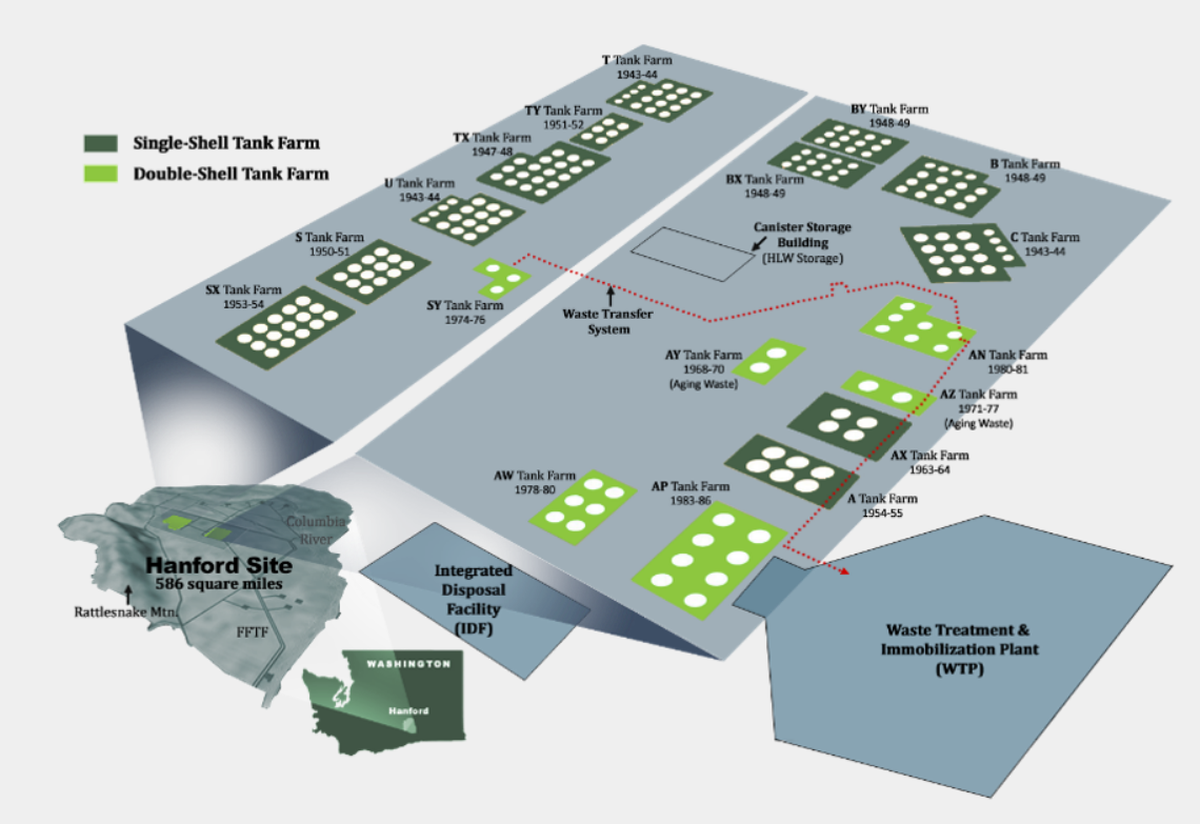
All but 31% of its waste has been removed, and work is expected to switch back to Tank A-102 from Tank A-106 around the end of March. Because of limited double-shell tank space, work is being done on just one tank at a time,
Retrieval activities were complete on the first tank of the six tanks in the A Tank Farm, Tank A-101, in September with the regulatory process to declare it empty now underway.
As work was finishing on that tank, the transfer line moving the waste to a double-shell tank plugged. Extensive work was required to find the plug and remove it.
“Safely cleaning up legacy waste at Hanford is not just a technical challenge, it’s a responsibility that honors our commitment to protection our workforce, our communities and the environment,” said Katie Wong, tank farms program manager for the Department of Energy at Hanford. “Every step forward reinforces our dedication to a safer future for generations to come.”
This story was originally published February 10, 2026 at 6:24 PM.