As Hanford Reach turns 25, Murray says preservation more critical than ever
AI-generated summary reviewed by our newsroom.
- Hanford Reach near Tri-Cities celebrates 25 years as a preserved national monument this year.
- Grassroots advocates and federal leaders emphasize continued need for protection.
- Monument supports 700 plant species, 250 birds and key salmon and trout habitats.
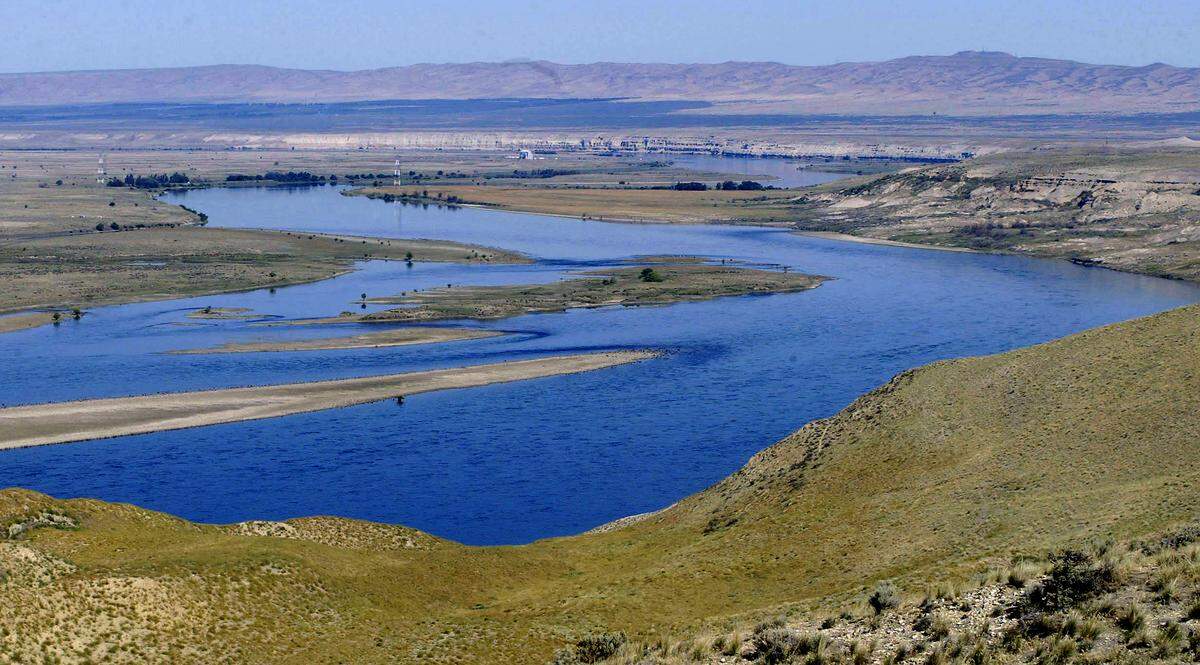
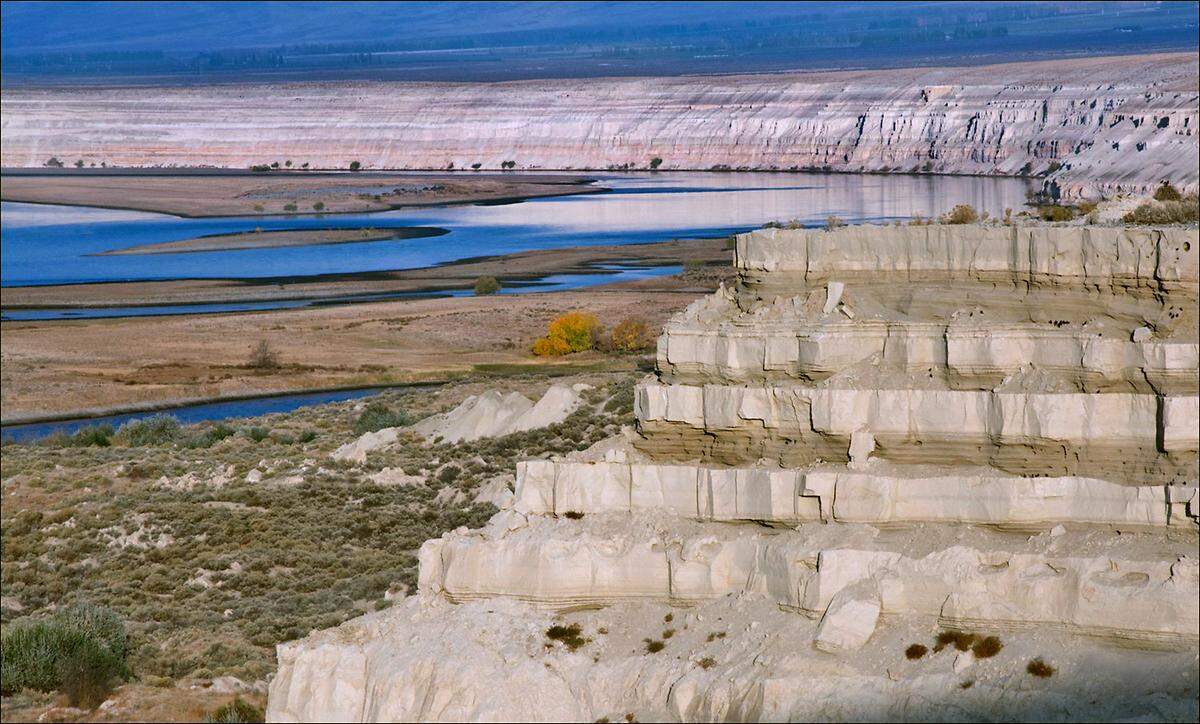
Hanford Reach National Monument — the Mid-Columbia’s beloved horseshoe-shaped wilderness area featuring towering bluffs, rolling sand dunes and pristine shrubsteppe vistas — is celebrating its silver jubilee this year.
Since June 2000, some 196,000 acres of untouched wilderness outside the Hanford nuclear site has been preserved for its cultural, ecological and historical significance. The monument was originally formed by way of a decree by the Clinton Administration through the American Antiquities Act.
On Wednesday, U.S. Sen. Patty Murray, D-Wash., one of the monument’s most steadfast and ardent supporters, rejoiced that there were still plenty of friends and fighters around to preserve it for another quarter century.
“Even though a lot has changed after 25 years — things have changed across Washington state, they certainly have changed in Washington, D.C., to say the least — one thing has not changed: The Hanford Reach. And that is a testament to not just the huge victory that we won that day but also to the hard work this community has done every year since to continue preserving and protecting the Hanford Reach,” Murray said over the calls of osprey and flanked by the Columbia River outside the Reach Museum in Richland.
The anniversary and the preservation of the 51-mile Hanford Reach, the Columbia River’s last free-flowing, non-tidal section, comes at a time when the United States’ public lands are increasingly in the crosshairs of sales and commercialization.
The occasion also comes at a time of transition with the death last year of Richard Steele, the fierce advocate and “riverkeeper” who fought tirelessly for six decades to protect and preserve the Hanford Reach.
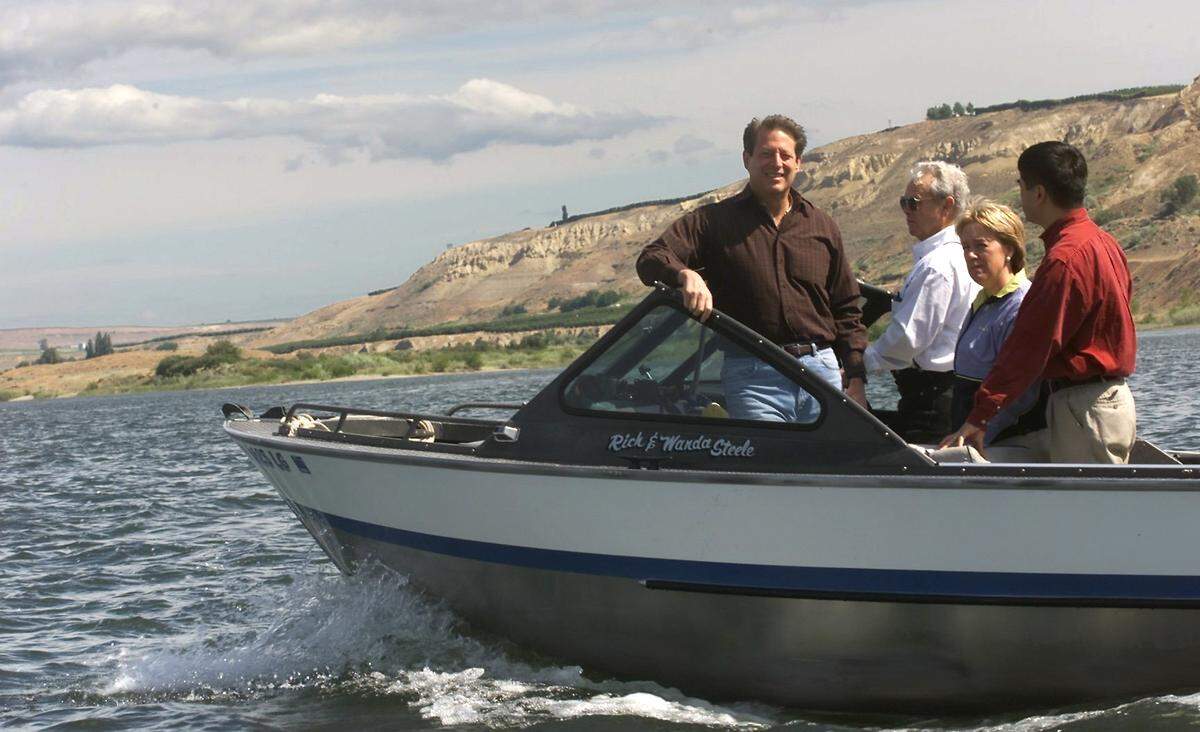
Murray spoke of her first boat trip along the river with Steele, and how unique, natural and historic the Reach was then. It was a motivating factor for the future senior Washington senator.
“It’s a place where, as historian Richard White once noted, ‘Abundant wildlife thrives in the shadows of the reactors and processing plants,’” she said. “Fighting to protect this area, to keep it recognizable as to how my dad and my grandad, and so many other generations of the past would remember it, that was what I wanted to do to give back to this community, even before I had that boat trip with Rich Steele,” she said.
Wednesday’s event was organized by the Hanford Reach Citizens Committee and former Save the Reach activists. There was also a memorial in recognition of Steele’s life and work.
In a statement to the Herald, U.S. Rep. Dan Newhouse said the Reach continues to be a “treasure in our region” worth protecting.
“The monument has something for everyone to enjoy,” he said.
“It reflects the rich history of Hanford while highlighting the natural beauty we are so lucky to have right in our backyard. I have worked over the years to protect the monument and ensure it will continue to be enjoyed by visitors and those of us who call Central Washington home,” the Sunnyside Republican continued.
More than 25 years of history
Don’t let its age fool you: The Reach’s history goes back more than 25 years.
Grassroot advocates labored for 15 years to preserve large swaths of the Hanford Reach in the lead up to its ultimate protection by presidential proclamation.
The push began in the 1980s after conservationist Nick Paglieri found survey stakes in the Columbia River at the reach placed by the Army Corps of Engineers for a proposed barge project that would threatened salmon spawning grounds, according to the Herald archive.
Kathy Criddle of the Lower Columbia Basin Audubon Society detailed the campaign’s work all those years ago handing out “Save the Reach” bumper stickers and organizing letter-writing campaigns.
Through “thousands” of slide show presentations, those preservationists “brought” the beauty of the Reach to Tri-City residents and others.
“Anywhere and everywhere we could get ourselves in front of people, we were out in the community giving presentations,” she said.
The decision to create the monument was somewhat controversial at the time, with former U.S. Rep. Doc Hastings opposing the monument’s creation, but talk in the years since has turned to access, specifically around Rattlesnake Mountain.
Standing on the shores of the Columbia River, then-Vice President Al Gore said at its christening, “These lands are among America’s treasures, and we owe it to future generations to preserve them.
Today, the site still has few utilities, trails and well-kempt roads. Caccooned nuclear reactors line the Hanford site across the river on its western bank.
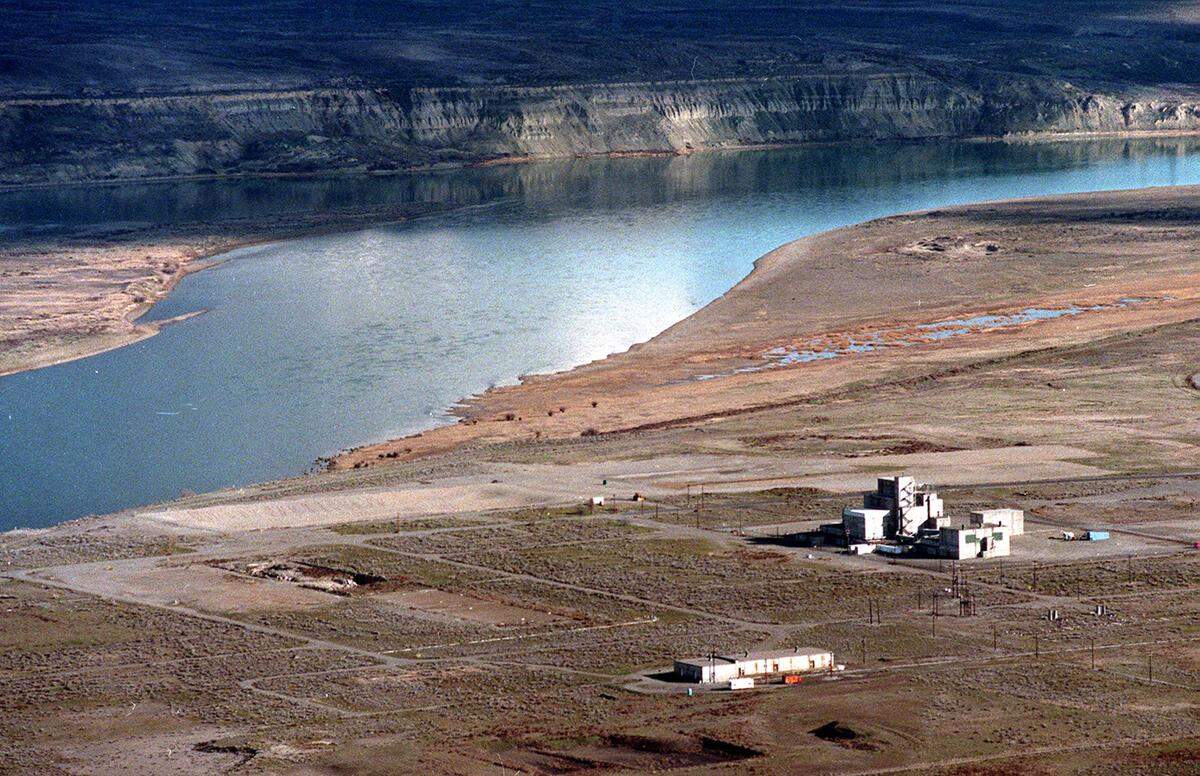
Prior to the Manhattan Project, the Hanford Reach area was largely inhabited by Native Americans and white European farmers who arrived in the late 1800s and early 1900s. Creation of the Hanford site for plutonium production displaced the small communities of White Bluffs and Hanford in the early 1940s.
The lands that encompass the monument were originally maintained as a “buffer area” — a juxtaposition that favored its preservation — for the federal reservation conducting nuclear weapons development, and later environmental cleanup efforts.
The U.S. Department of Energy used the 580-square-mile Hanford site near Richland from World War II through the Cold War to produce about two-thirds of the nation’s plutonium.
But the area was left contaminated from the process and taxpayers continue to spend about $3 billion annually to retrieve, process and dispose of its radioactive waste. Some have dubbed Hanford the “most contaminated site in the Western Hemisphere.”
But next door, advocates say, lies some of the western United States’ most pristine and unblemished natural landscapes.
More than 700 plant species, 40 mammals, nearly 250 birds, nine reptile and more than 1,600 invertebrate species have been documented on the monument. About 40 or so fish species— including threatened and endangered salmon and trout — use the river waters.
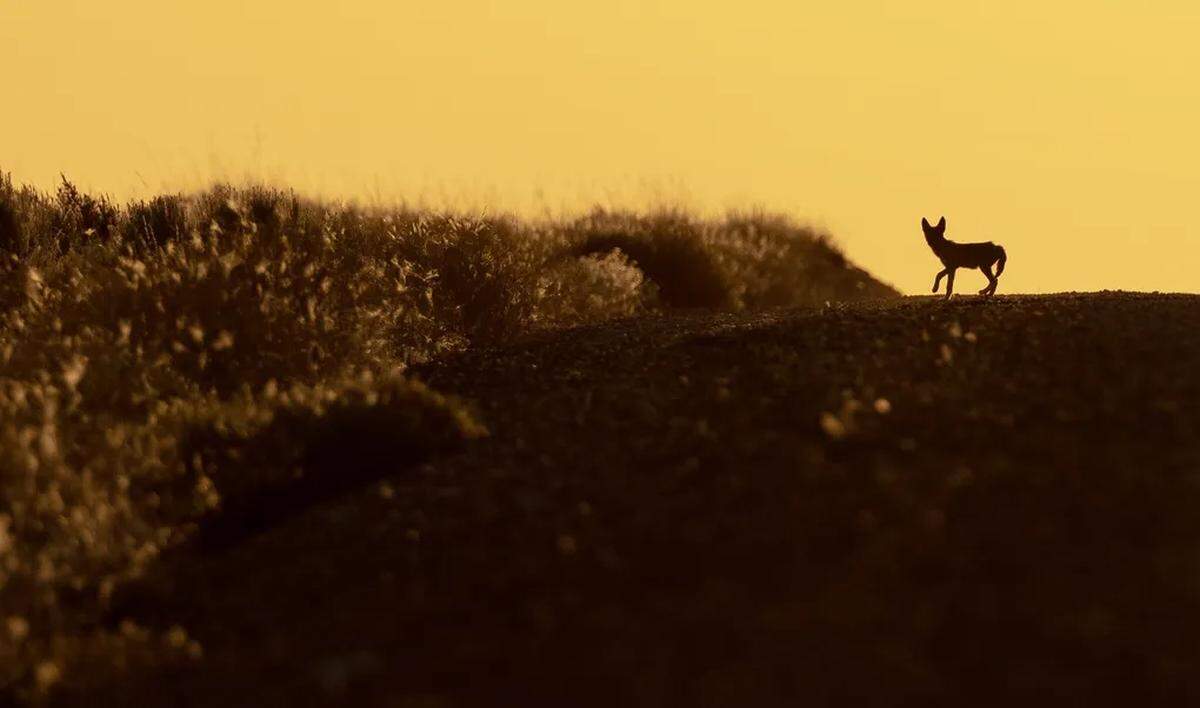
The monument provides imperative and unique habitat for wildlife, including burrowing owls, sage sparrows, loggerhead shrike, ferruginous hawks, black-tailed jackrabbit and sagebrush lizards. Rare native plant communities found on the monument are unmatched to anything found in the Columbia Basin.

The monument today still hosts several archeologically important primitive structures and buildings. It also contains the largest remnant of shrubsteppe ecosystem that had once covered the greater region prior to creation of the 671,000-acre Columbia Basin Irrigation Project.
Juliette Fernandez, assistant regional director of the National Wildlife Refuge System for U.S. Fish and Wildlife, says more than 67,000 acres of the monument is open to the public for hiking, hunting, fishing and horseback riding.
“This landscape has always been alive, but because of your efforts it also now speaks,” she told anniversary attendees. “Thank you for helping it find its voice, and for ensuring that 25 years from now, it’s still telling its story.”
Rise of a riverkeeper’s son
In recognition of the 25th anniversary, the Seattle Times profiled the “riverkeeping” Steele family and their two generations that have ferried the Hanford Reach in advocacy of its preservation and continued protection.
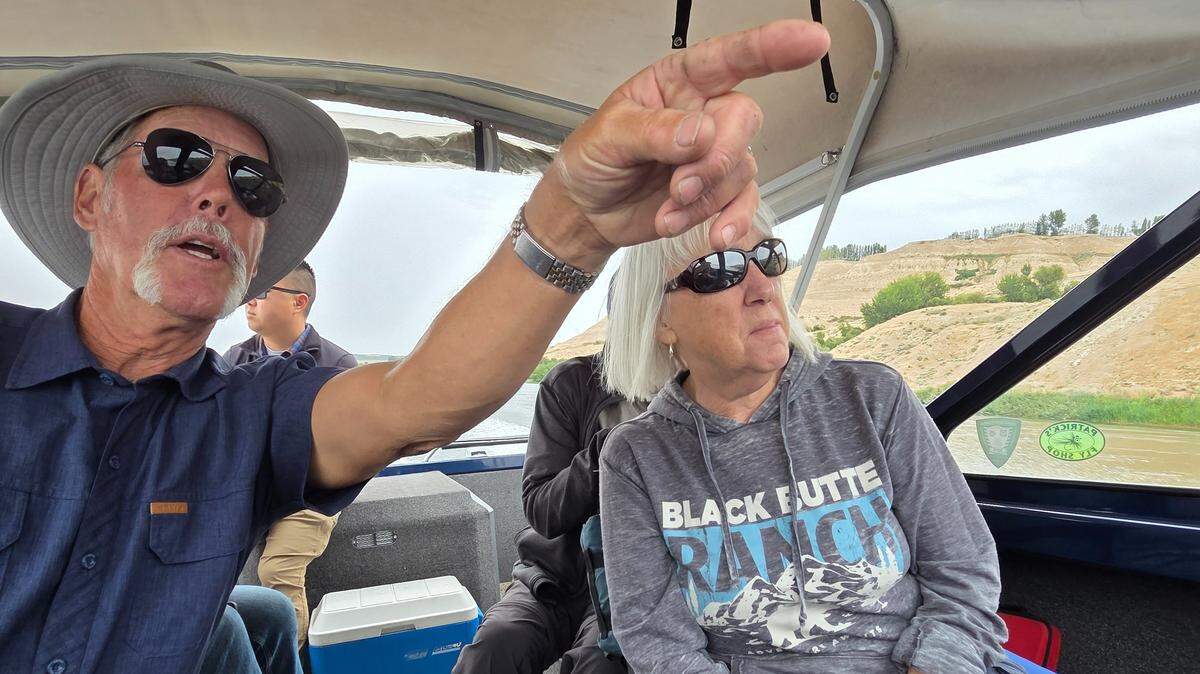
Todd Steele, the 63-year-old son of Richard Steele, took Murray out Wednesday for her first boat ride on the Hanford Reach since 2017.
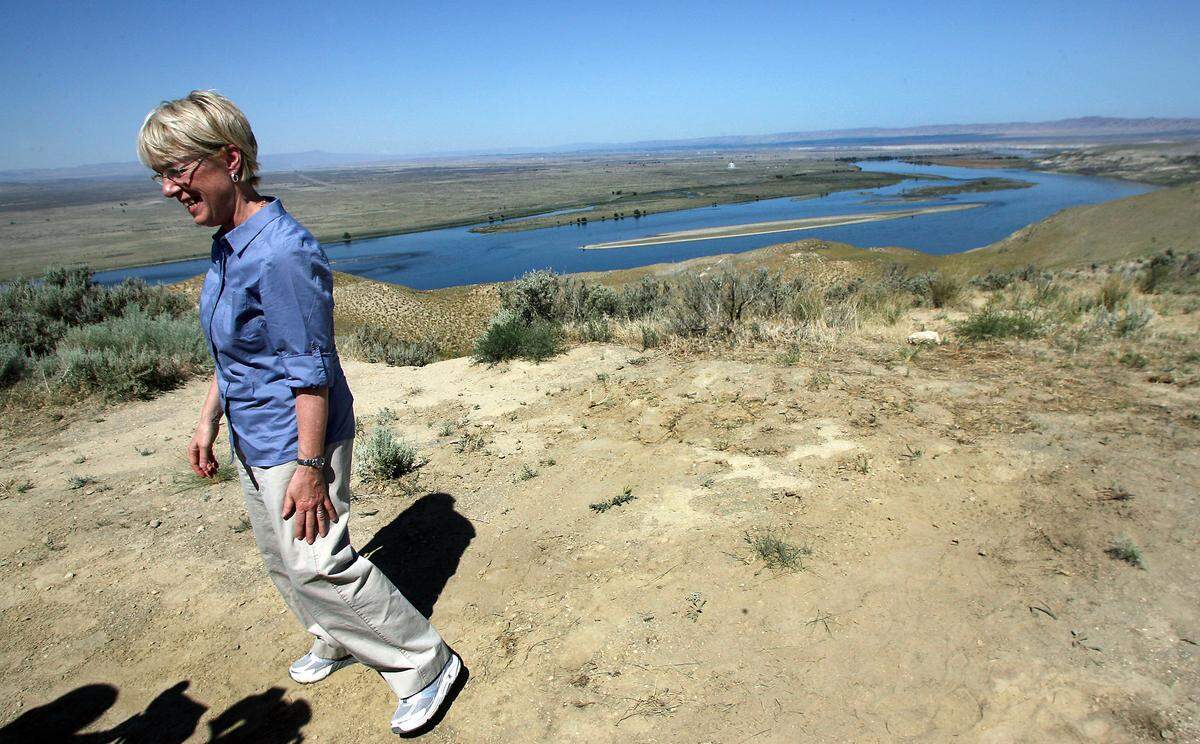
At 10:15 a.m. they hit the water from the Snyder Street boat launch in Richland, and got to Savage Island before they had to turn around on their hourlong cruise. Steele said Murray acknowledged and reacted to the local agriculture tearing apart the bluffs, as well as the new invasive milfoil and star grass.
“And then she got to see the beauty of it, too. That it’s still there, it’s still flowing free, and the wildlife is still there — the vastness of it that doesn’t have houses or industry,” he said.
Steele says his father’s death is still fresh. He grew up riding the river with his father, and although he’s taken up Richard Sr.’s mission to protect the Reach he still doesn’t consider himself a “riverkeeper” yet — he hasn’t “done enough.”
Others have worked much harder and longer than he has to hold that title. He mentioned Mike and Karyn Wiemers, leading members of the Hanford Reach Citizens Committee. But Steele doesn’t mind, at least for the time being, lending a helping hand.
“If I can be a face for that, and if I can assist and take people and try to get something that would more permanently preserve that Reach — a national park — then I’m all for it. I’ll spend the rest of the time I have to do that,” he said.
This story was originally published August 6, 2025 at 8:09 PM.