
$6.5M paid to settle claims Hanford site workers were paid for gaming, TV watching
AI-generated summary reviewed by our newsroom.
- $6.5M paid by Hanford contractor to settle federal claims of work hour fraud
- Federal probe found contractor billed DOE for time when workers were idle
- Whistleblower received $1.4M; DOJ has a similar lawsuit against another firm
The Hanford nuclear site’s recent tank farm contractor has agreed to pay $6.5 million to settle allegations it overcharged taxpayers by paying employees with federal dollars when they had no work to do.
Under a civil lawsuit filed against Washington River Protection Solutions (WRPS), it was accused of inflating worker hours from late 2017 through 2024, shortly before its Department of Energy contract expired. Under the contract, the federal government reimbursed its labor costs.
WRPS was accused of not scheduling or assigning enough work to employees, but billing DOE for their idle time, according to the Eastern Washington District U.S. Attorney’s Office.
The Department of Justice previously joined a similar ongoing lawsuit against another Hanford contractor, Hanford Mission Integration Solutions.
The new False Claims Act lawsuit was filed in 2022 by a WRPS worker, who said workers often were assigned tasks in the morning and then spent afternoons watching television, playing video games or socializing.
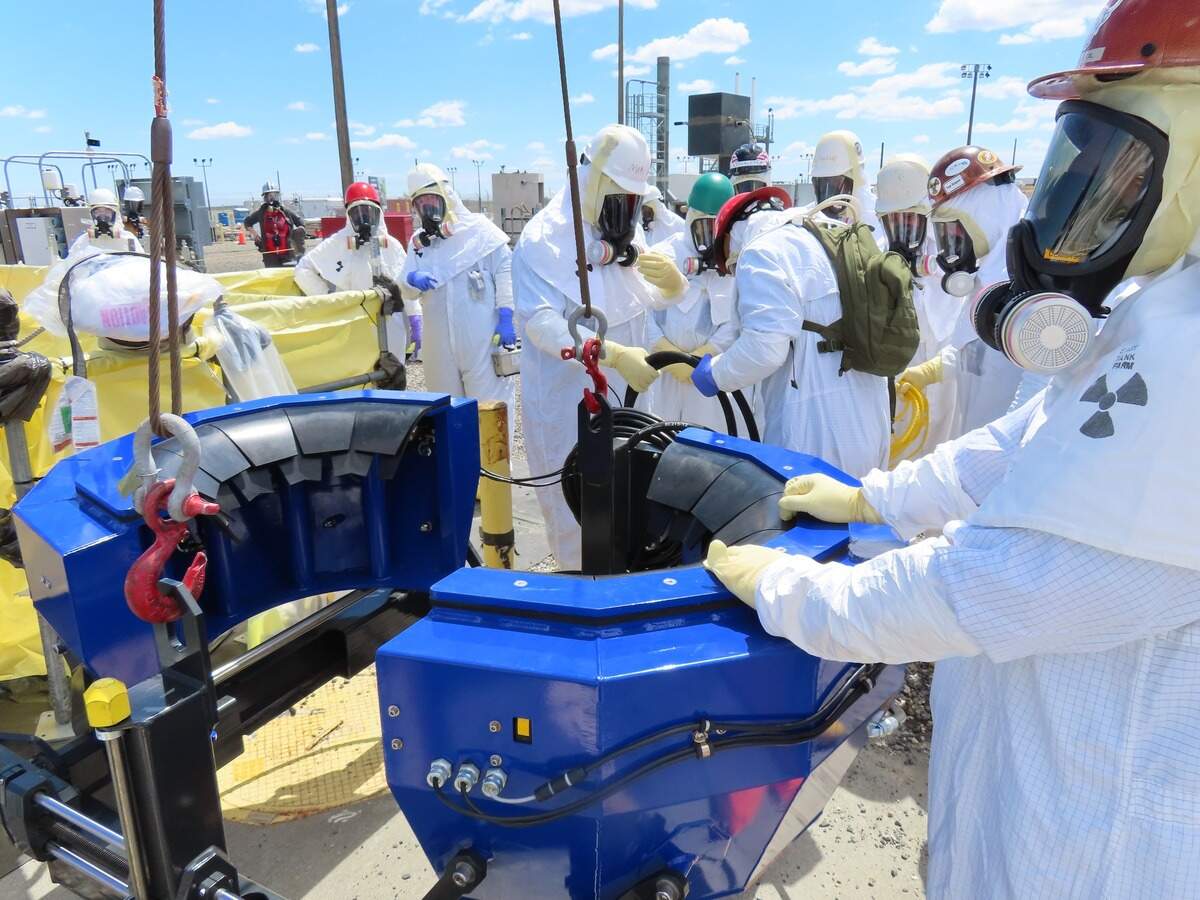
The worker had “serious and credible allegations of fraud that were investigated for years,” said Richard Barker, acting U.S. attorney for Eastern Washington, in a statement.
The lawsuit was joined by the Department of Justice in late May after settlement agreement talks with WRPS.
The employee who initially filed the lawsuit will receive $1.4 million of the settlement and is entitled to have WRPS pay his attorney fees.
The settlement includes $3 million in restitution, meaning that WRPS, which manages radioactive waste stored in underground tanks, will pay more than double the alleged overpayment from the federal government.
Idle time allegations
The worker who filed the lawsuit said he often worked four hours or less out of a 10-hour workday.
However, WRPS managers ordered workers to charge for their full shift to work codes corresponding to the short jobs that had been completed, the lawsuit said.
“Tank farm employees commonly finish their morning tasks early and because they don’t have any other work assignments, begin lunch early and linger for most of the rest of the day without receiving new work assignments,” said the suit.
WRPS management knew that their union craft workers had significant down time and often passed through areas where workers were sitting around after completing all of their assigned work, according to the lawsuit.
“Supervisors often instruct workers to ‘look busy’ if there is a visit from an auditor or DOE official,” the lawsuit said.
The exception was during the spring and summer of 2020, when COVID relief funding was available during part of the pandemic. Until that money was spent, workers were allowed to go home if they were not assigned work, but to charge their time to be paid with federal COVID relief funding, according to the lawsuit.
Despite the lack of work to fill a 10-hour day, overtime was not uncommon, the lawsuit said.
Workers called in for overtime on their days off were instructed to stay for a full 10 hours, often leaving them with significant idle time paid at overtime rates, the lawsuit said.
Craft workers received time-and-a-half pay for their first 12 hours of overtime a week and double time for hours after that.
The lawsuit alleged that much of the overtime could have been done during regular work hours if management had scheduled craft workers to use their time efficiently.
WRPS also lost incentive pay
“This is unfortunately not the first time that WRPS has settled allegations of committing fraud on the tank farms contract,” Barker said.
In 2017, it paid nearly $5.3 million to settle allegations that it submitted false claims to DOE for overtime and premium pay.
In addition, the Department of Justice early this year joined an ongoing lawsuit against another Hanford contractor, Hanford Mission Integration Solutions, with similar allegations. It claims that it also billed DOE for hours, and sometimes entire days, when workers had no tasks assigned.
WRPS also had already lost pay over the current issue.
In its DOE assessment for fiscal year 2024, the federal government withheld $10.2 million in possible incentive pay after claims that workers were too often idle because they had no work assigned.
WRPS was reimbursed for its costs of conducting environmental cleanup at the nuclear reservation in Eastern Washington, and also was eligible for incentive pay. It collected nearly $32.8 million for fiscal 2024 after the reduction for idle workers.
WRPS held the contract, which expired in February, to manage 56 million gallons of radioactive waste stored in underground tanks at the Hanford site, some of them leaking.
The waste is left from the past production of plutonium for the nation’s nuclear weapons program from World War II through the Cold War at the 580-square-mile Hanford site adjacent to Richland.
The new contract for managing the tank farms, plus also some future operation of the Hanford vitrification plant to treat tank waste for disposal, went to Hanford Tank Waste Operations and Closure, or H2C
WRPS is owned by Amentum and Atkins, and H2C is owned by BWX Technologies, Amentum and Fluor.
The WRPS settlement was the result of a joint investigation by the Justice Department and the DOE Office of Inspector General. Assistant U.S. Attorney Tyler Tornabene was the prosecutor.
The Hanford worker who filed the original claim was represented by the law firms Mehri & Skalet, of Washington D.C., and Teller & Associates and Smith & Lowney, both of Seattle.
“This case is a powerful reminder about the importance of speaking up and holding power to account, especially when the stakes are so high,” said Ricard Condit, a partner at Mehri & Skalet.
Workers at Hanford need to know that they have options and legal protections as they do dangerous and important work, said Meridith Crafton of Smith & Lowney.
“It is critical to ensure whistleblowers are fully compensated, not only for exposing fraud, but also for the retaliation they so often suffer when they do the right thing in the face of misconduct,” she said.
HMIS idle time lawsuit
The similar lawsuit against Hanford Mission Integration Solutions continues to proceed toward a trial now scheduled for February 2026. It was filed by the Eastern Washington U.S. Attorney’s Office, rather than a worker.
Hanford Mission Integration Solutions provides support services across the site, including fire protection under a DOE contract.
It alleges that employees spent some days at Hanford taking naps, reading and watching movies and TV shows because important fire protection work and preventative maintenance were not adequately planned and scheduled by management, according to the lawsuit.
Supervisors and managers would tell workers to charge their idle time to the most recent project they had worked on, according to the U.S. Attorney’s Office for the Eastern District of Washington.
For instance, if they had done two hours of preventive maintenance that day, such as servicing two fire hydrants, they would be told to charge the entire day for that work, according to the lawsuit.
Other times they were told to mark down the idle hours as “training,” according to the lawsuit.
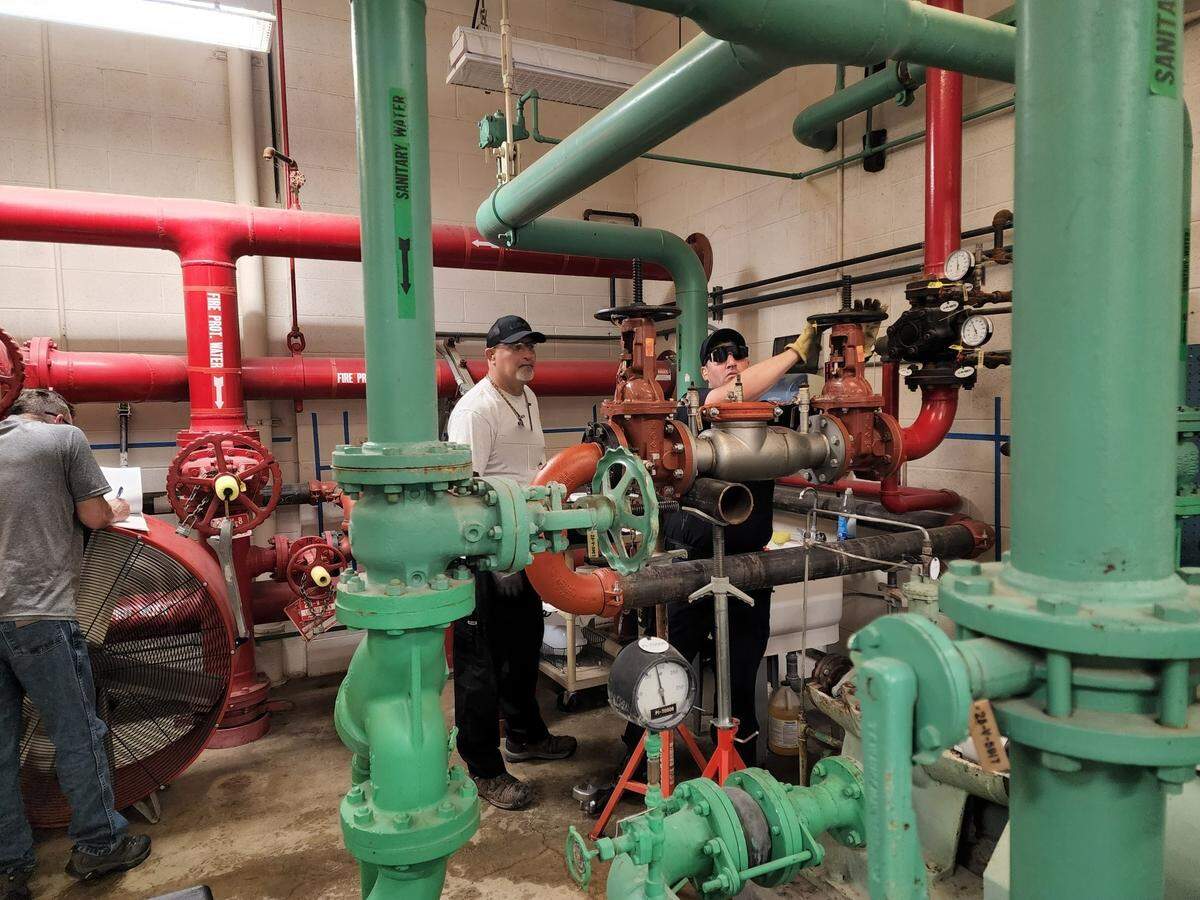
The contractor lost incentive pay for fiscal 2023 due to the issue, earning only $2.9 million of a possible $8.4 million in incentive pay based on a DOE subjective evaluation.
DOE said then that it was unhappy with the contractor’s management of fire system maintenance workers, work activities and associated costs.
Contractor management disagreed with DOE allegations that ineffective work planning and unproductive work execution had gone uncorrected.
This story was originally published June 24, 2025 at 12:08 PM.