
Nuclear peace activist, ex-councilman with courage to be ‘conscience’ of Tri-Cities dies
The man who dared to oppose nuclear weapons in a town where many people made comfortable livings manufacturing plutonium to arm them during the Cold War has died.
Peace activist and former Richland Councilman Jim Stoffels, 86, of Richland, died Dec. 11 after being treated for cancer for several years.
“He was our conscience” and was unwavering in his beliefs, said Ed Frost, a former Kennewick School Board and Kennewick council member. “He would say the things we were thinking but maybe were afraid to say.”
In a city such as Seattle, Stoffels would have been lauded and encouraged for his work to promote peace, Frost said.
But his passion and advocacy for peace took courage in the Tri-Cities, Frost said.
He was a “remarkably kind person” and had “tremendous concern about children all over the world” and about unilateralism and defense spending, Frost said.
World Citizens for Peace
In early 1982, Stoffels was one of a small group of Tri-Cities area residents concerned about the escalating nuclear arms race who began to meet at the First United Methodist Church in Pasco.
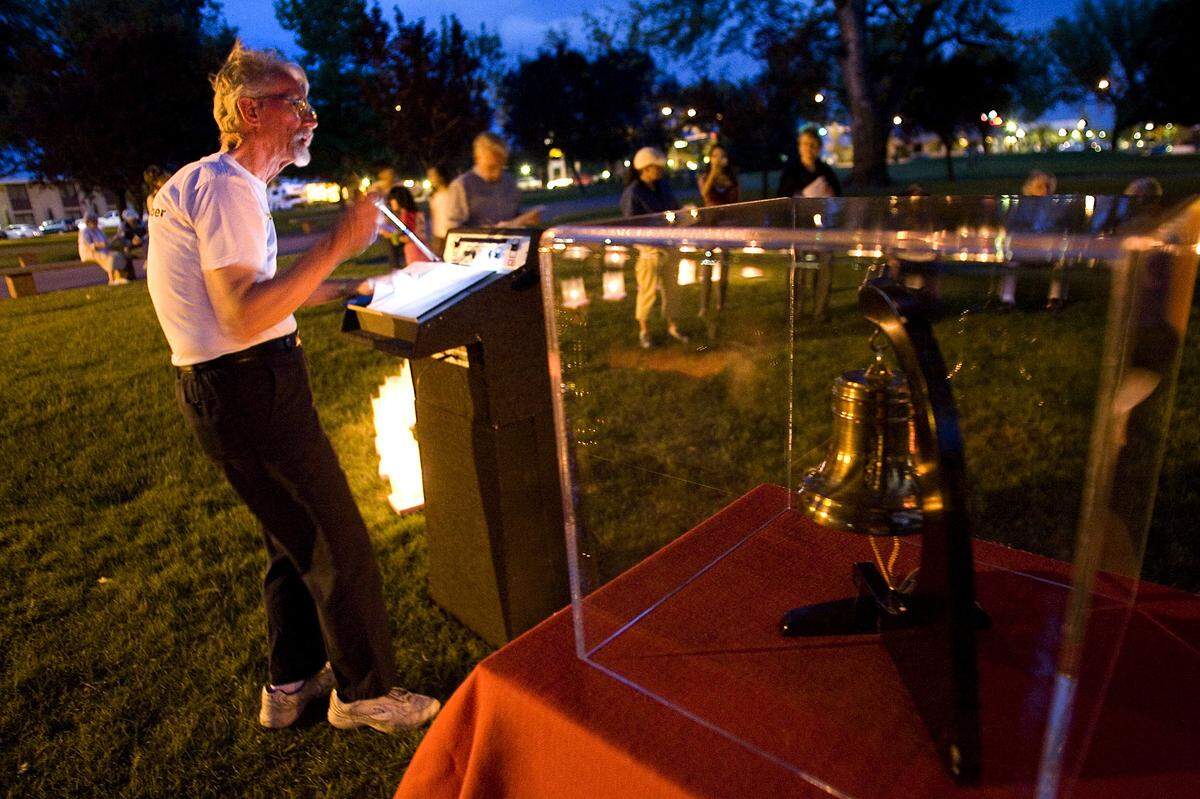
On July 7, 1982, Stoffels and three other founding officers held a news conference to announce the formation of World Citizens for Peace.
For the next 42 years the group was a staple of Tri-Cities life, demonstrating against war and calling for nuclear disarmament.
“The total elimination of nuclear weapons is the only absolute guarantee for all of us to be safe from the threat of nuclear annihilation,” Stoffels wrote in an op-ed for the Tri-City Herald on the group’s 25th anniversary in 2007.
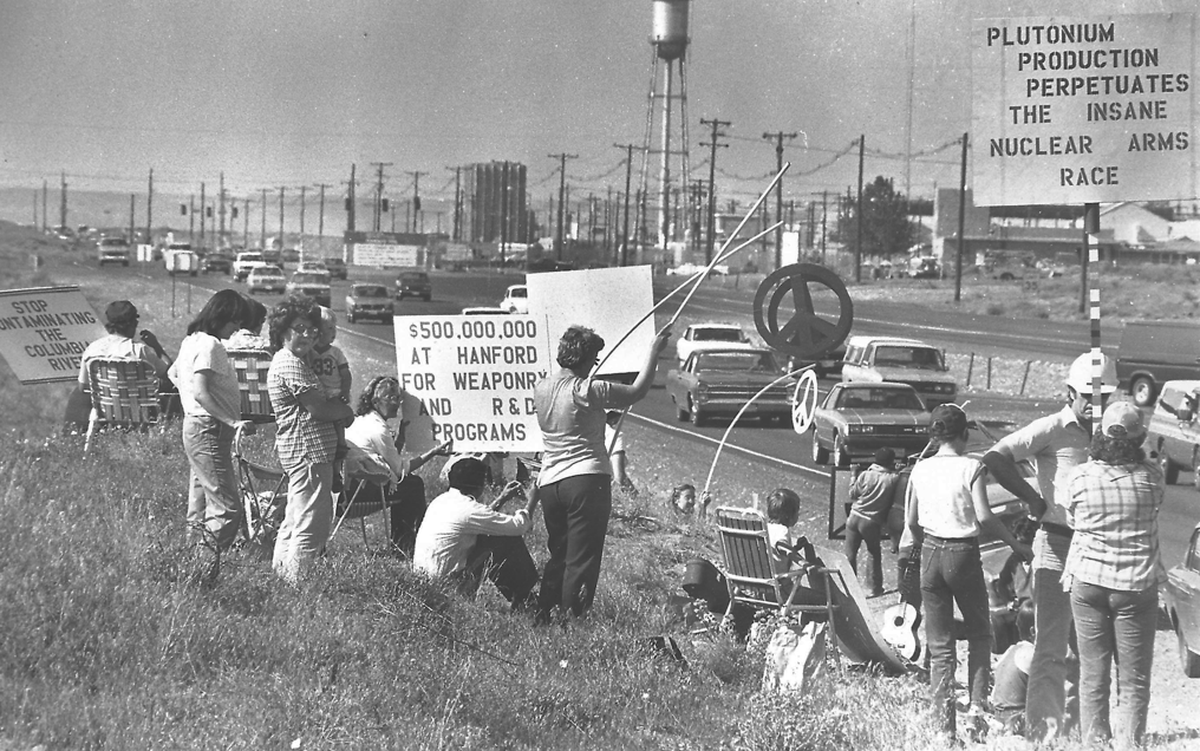
A year after World Citizens for Peace was founded, it held its first public demonstration against the Hanford site’s role in nuclear weapons production as the nation set a goal to produce more nuclear warheads and the sites PUREX chemical processing plant at Hanford was reactivated for plutonium production.
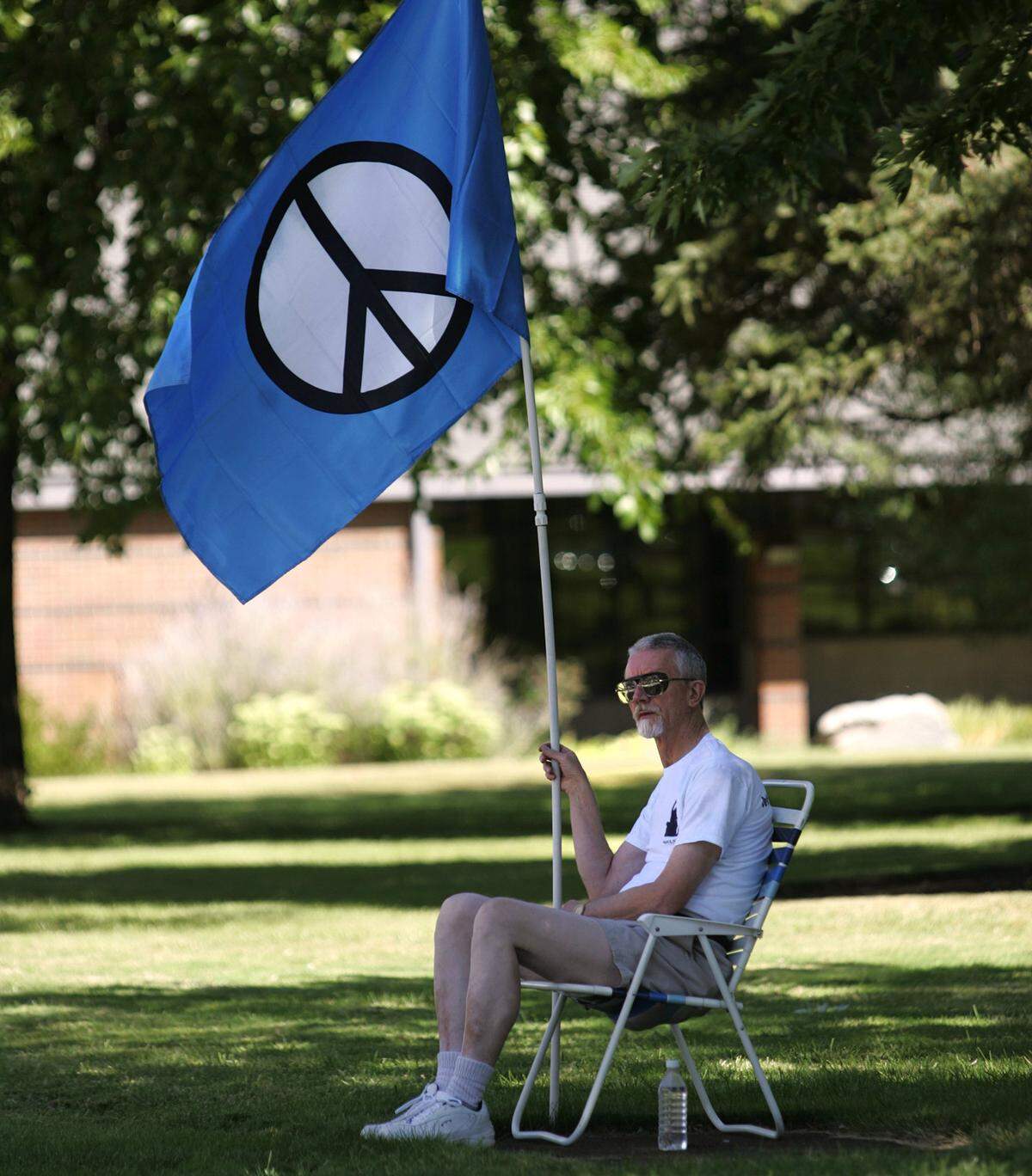
The group protested military retaliation attacks on Afghanistan’s Taliban in 2001, with Stoffels saying that exacting revenge on the Taliban could bring more violence to America.
Gene Weisskopf of Richland wrote in a letter published in the Tri-City Herald in 2001 that he appreciated Stoffels’ efforts to organize an Oct. 14, 2001, rally.
“Although I don’t agree with him on every issue, he is a man who cares about this country, has a true love for life and cares all too deeply about the children of the world who all too frequently end up as victims of the wars inflicted on them,” Weisskopf wrote.
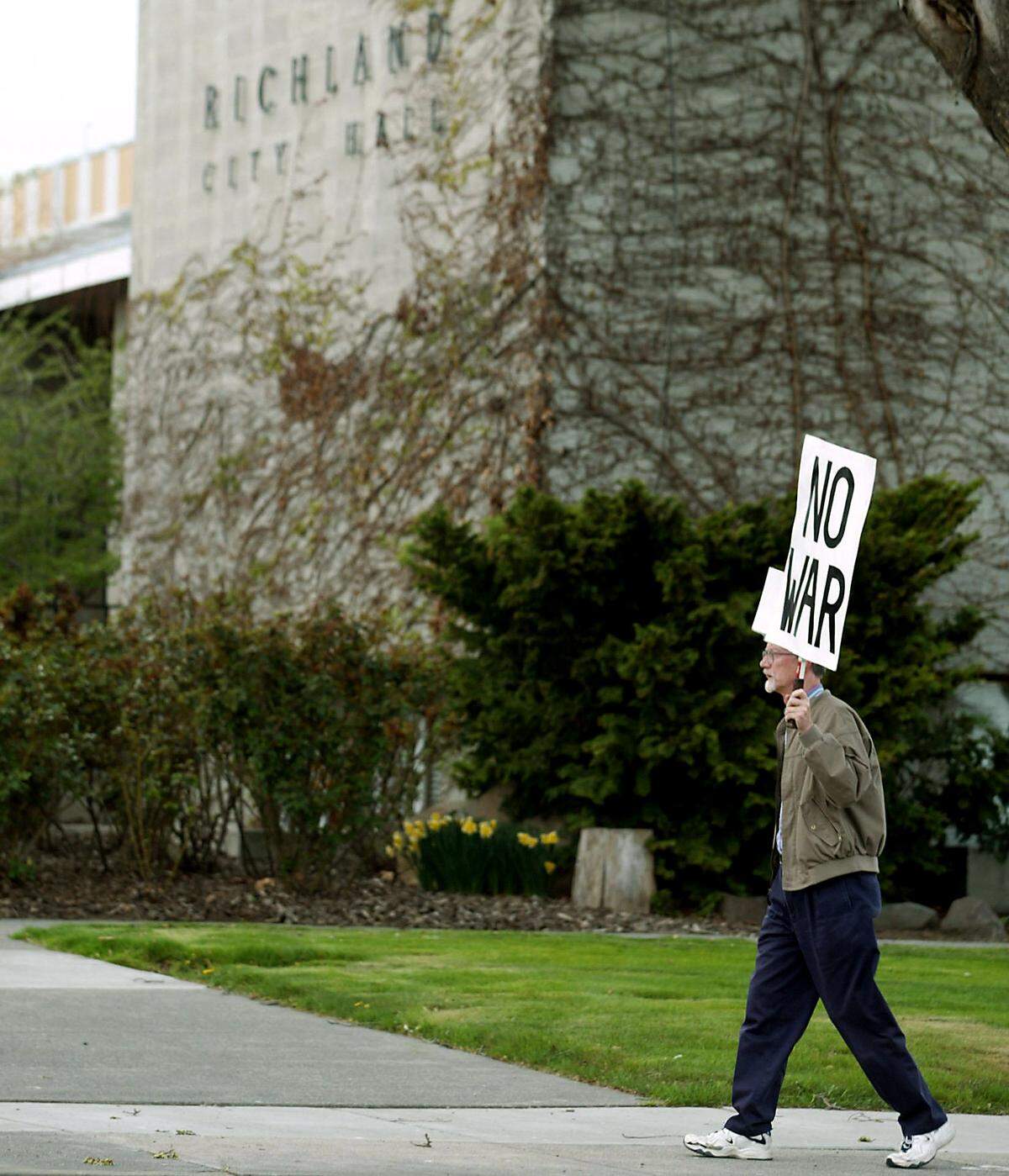
The war in Iraq also prompted protests and candlelight vigils to honor U.S. troop deaths and Iraqi deaths through Spring 2009, with months of daily protests along George Washington Way in Richland in 2003 as evening commute traffic passed by.
Demonstrators supported American troops, but were protesting the use of force to solve political problems, Stoffels said.
Hanford site and Nagasaki, Japan
World Citizens for Peace may be best known for four decades of Richland ceremonies to commemorate the Aug. 9 anniversary of the atomic bomb fueled with Hanford plutonium dropped over Nagasaki, Japan, in 1945, six days before the Japanese surrendered and World War II ended.
The Atomic Cities for Peace Memorials, which began in 1982, remembered both the Americans who died at Pearl Harbor, Hawaii, as well as the Japanese who died in Nagasaki.
In 1985, World Citizens for Peace wrote to the mayor of Nagasaki requesting an object from the city to symbolize reconciliation.
Mayor Iccho Itoh responded with a model of the “Bell of Peace” for the city of Richland. The original bell was recovered from ruins of the Urakami Catholic Church and was rung every day to console the survivors of the bombing.
The replica has been rung at annual Richland commemorations of the WWII bombings since then, often by Stoffels, and more recently at commemorations organized by the National Park Service in Richland.
Stoffels was elected to the city council in 1971 and served for four years.
Although he said it was not an office he particularly enjoyed holding, he would return in the coming years to ask the council to consider proposals made to further peace and oppose racism.
In 1995, Stoffels called for reconciliation between Richland and Nagasaki, proposing a “sister city” relationship.
“Reconciliation simply means we recognize the hurts on both sides of that war,” Stoffels said. “It means simply we can all be sorry there was war ... and it was war we didn’t choose.”
But the Richland council would not agree to the proposal, concerned that memories of WWII remained strong among veterans and that the proposed relationship might imply an apology to Japan.
At the time Stoffels was also working toward preserving the Hanford site’s historic B Reactor as a founding member of the B Reactor Museum Association.
The reactor, which produced plutonium for the atomic bomb dropped on Nagasaki, is now part of the national park system.
Stoffels also led one of the unsuccessful campaigns to convince the Richland City Council to rename Lee Boulevard in Richland, which honors Robert E. Lee, a U.S. Army Corps general turned Confederate rebel.
Stoffels linked the Confederacy’s Civil War mission with historic mistreatment of Black Hanford workers. Those who came to Hanford during WWII, were forced to live in segregated housing or in East Pasco, where streets were made of dirt, there was no indoor plumbing and water had to be carried from communal pumps.
‘Wish you peace’
Stoffels wrote and distributed a newsletter covering international peace issues until May 2024 when he dissolved the organization.
“We used to have 130 members,” he said in emails sent to the newsletter distribution list. “Now we have about 30. So we have gradually been dying a natural death.”
I “wish you peace,” he wrote.
A Sunset Gardens obituary said he worked as a senior researcher for the Atomic Energy Commission’s Hanford Laboratories, now Pacific Northwest National Laboratory, for 33 years before retiring in 1995.
A memorial Mass will be held at 1 p.m. Friday, Jan. 10, at Christ the King Church in Richland.
His family, friends and colleagues ask that in lieu of flowers donations be made to any of the many charities Stoffels supported. They included United Way of Benton County, Tri-Cities Union Gospel Mission, Save the Children, Second Harvest, Catholic Charities, Special Olympics and Center for Victims of Torture.
This story was originally published January 7, 2025 at 5:00 AM.