
New court documents show why feds want this company to get $45B Hanford site contract
A federal judge found that a Department of Energy decision to award a contract valued at up to $45 billion for Hanford site cleanup was reasonable and the winning bidder should be allowed to quickly start work.
The opinion was issued by U.S. Judge Marian Blank Horn a month ago but only unsealed this week in a redacted form, which shows her reasoning.
Horn said in her opinion, “... it is in the public’s interest to have the agency (DOE) avoid the delays associated with another competition towards a new award decision.”
Delays could put legal deadlines for environmental cleanup at risk and slow progress to treat radioactive waste, some in leak prone tanks, for disposal, she found.
However, the judge’s decision remains in limbo after the losing bidder filed a motion for the judge to reconsider her decision. The motion is sealed, but arguments on it are set for Thursday, Oct. 10, in the U.S. Court of Federal Claims in Washington, D.C.
The September decision by Horn was on a second appeal by the only other bidder on the contract, Hanford Tank Disposition Alliance, or HTDA, owned by Atkins Nuclear Secured, with Jacobs and Westinghouse. Jacobs government services business has recently has been merged with Amentum.
The winning bidder for the new Hanford contract was Hanford Tank Waste Operations & Closure, or H2C, led by BWXT Technical Services with Amentum and Fluor.
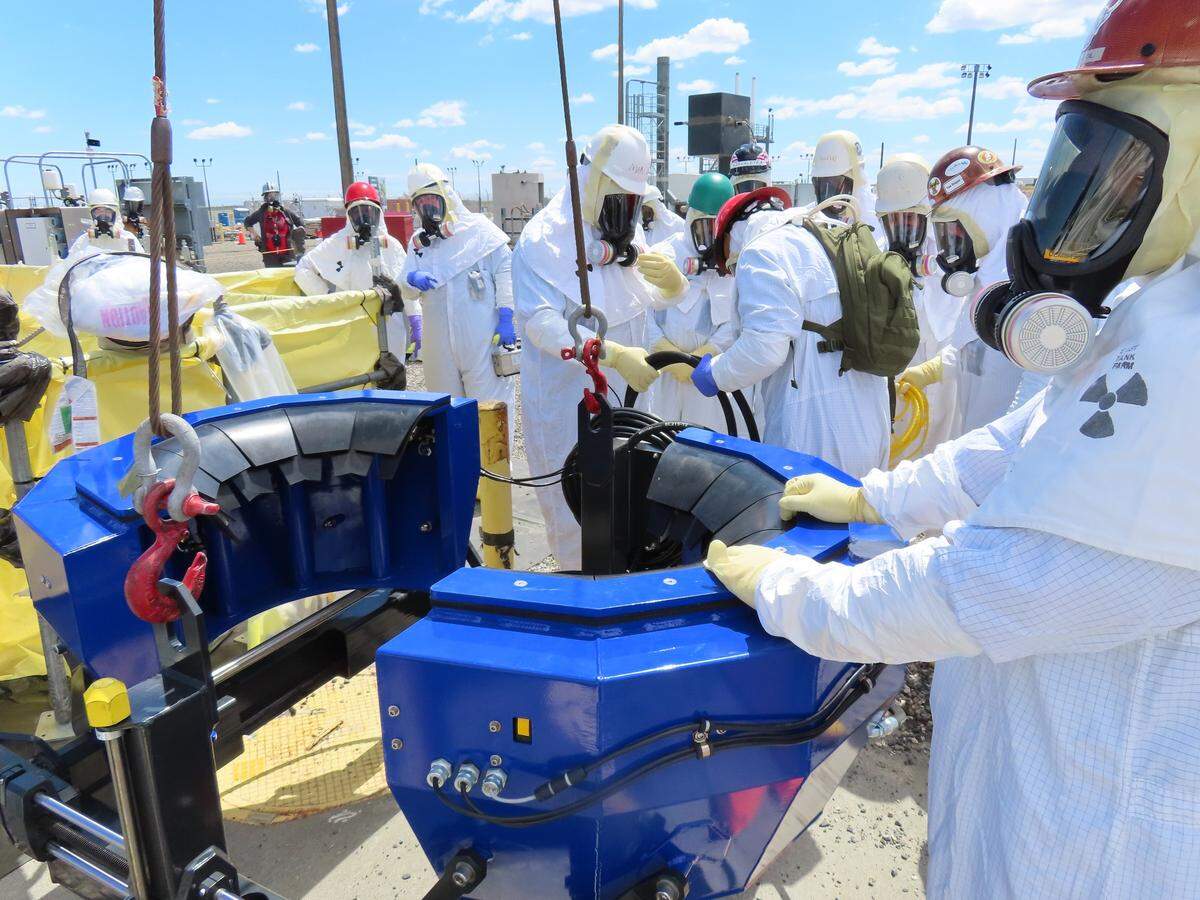
DOE asked for bids three years ago for a contract to cover environmental cleanup at the Hanford nuclear reservation tank farms in Eastern Washington, where 56 million gallons of radioactive waste is in underground tanks, and the initial operation of the Hanford vitrification plant to treat some of the waste for disposal.
The contract is for 10 years and also could include work ordered under the contract that could last longer than 10 years.
Best value for Hanford site
HTDA argued in its most recently decided appeal of the award that DOE had changed regulations to qualify H2C to win the award and violated DOE regulatory obligations of impartiality and fairness.
DOE had changed its federal acquisition regulations after HTDA said that H2C had allowed its registration to lapse. New regulations say a bidder must only be registered when submitting an offer, which H2C was.
Horn found that H2C’s lapsed registration did not preclude the contract award under the current bid protest, according to the newly public decision.
And she found that HTDA had not shown that DOE’s evaluation and and analysis of the bid that provided the best value for the taxpayer was arbitrary or capricious.
Horn pointed out that an analysis done to select the contractor found that H2C offered “a clearly superior proposal.”
H2C’s price was as much as 12% higher than HTDA’s but H2C still offered the best value to the government, according to the analysis.
H2C offered the better leaders for the project and a slightly better management approach, which together would “likely exceed performance expectations significantly,” the analysis said. The leaders for the H2C proposal have not been made public.
On the first appeal by HTDA after H2C was awarded the contract in April 2023, Horn ordered the contract to be set aside after finding that H2C had allowed its mandatory registration to bid on large federal projects lapse.
DOE then asked for revised proposals and evaluated them to again award the contract to H2C in February 2024.
The radioactive tank waste to be treated under the new contract is left from the past production of nearly two-thirds of the plutonium for the nation’s nuclear weapons program from World War II through the Cold War at the Hanford site adjacent to Richland.
Washington River Protection Solutions, owned by Amentum and Atkins, now holds the expiring contract for tank farm work. After the first award to H2C was contested, its contract was extended until up to summer 2025.
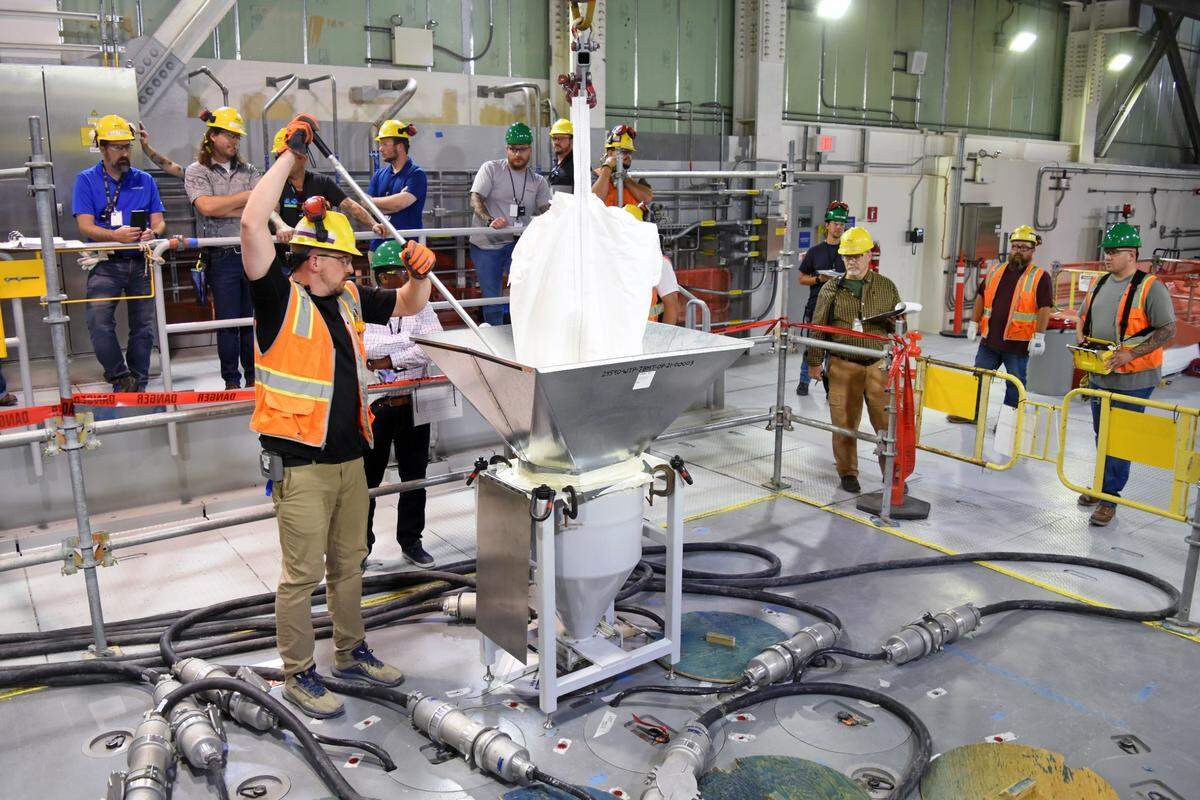
Bechtel National is now commissioning the part of the vitrification plant that will initially be used to treat the least radioactive waste. That commissioning is expected to be completed in 2025.
This story was originally published October 9, 2024 at 5:00 AM.