
Hanford site national park B Reactor tours extended before closure. Seats could go fast
Another month of tours of historic B Reactor on the Hanford nuclear site will be offered before tours close at least through 2025.
Once construction starts, possibly as soon as August, tours will not be possible.
Decisions on tours are being made month by month, with the most recent decision made Monday June 3 to extend tours through July.
At the start of the 2024 tour season, the Department of Energy was only certain that tours would be offered through June.
Almost all seats on June tours have been claimed, and seats on July tours could go fast. The tours will be offered every day in July except Sundays, with tours starting at 8:30 a.m. and 11:45 a.m.
To register, go to manhattanprojectbreactor.hanford.gov. Those without internet access may contact the tour center at 2000 Logston Blvd., Richland, by calling 509-376-1647.
Buses for the tours leave the Richland visitor center for a drive to the reactor near the Columbia River and then about two hours are spent within the reactor. Tours take about four hours total.
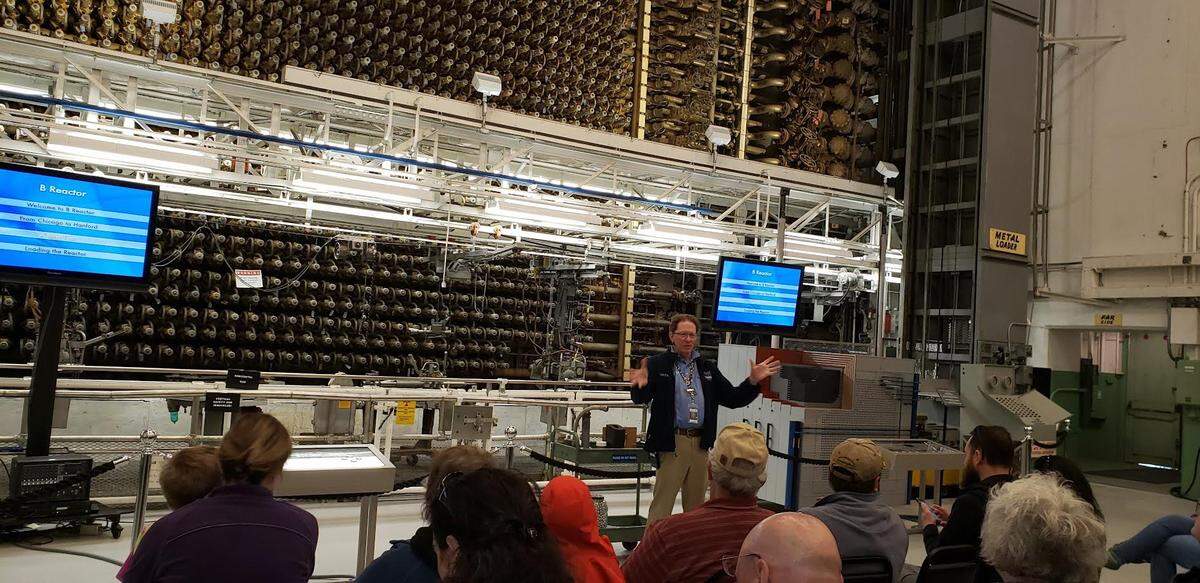
Tours are open to all ages and nationalities. They are free, and donations are not accepted.
The law that created the park in 2015 gave DOE the authority to accept donations, including money, in kind goods or labor, but that authority has not yet been passed down from the energy secretary to DOE’s national park locations, including Hanford.
A decision on whether tours will be offered in August is scheduled to be announced July 1 and a decision on whether tours may be offered in September could be announced on Aug. 5.
Historic B Reactor
B Reactor was built in less than a year as the Allies raced to develop an atomic bomb before Nazi Germany.
The reactor produced the plutonium used to fuel the first detonation of a nuclear weapon, the Trinity Test in New Mexico, as moviegoers have seen re-enacted in “Oppenheimer.”
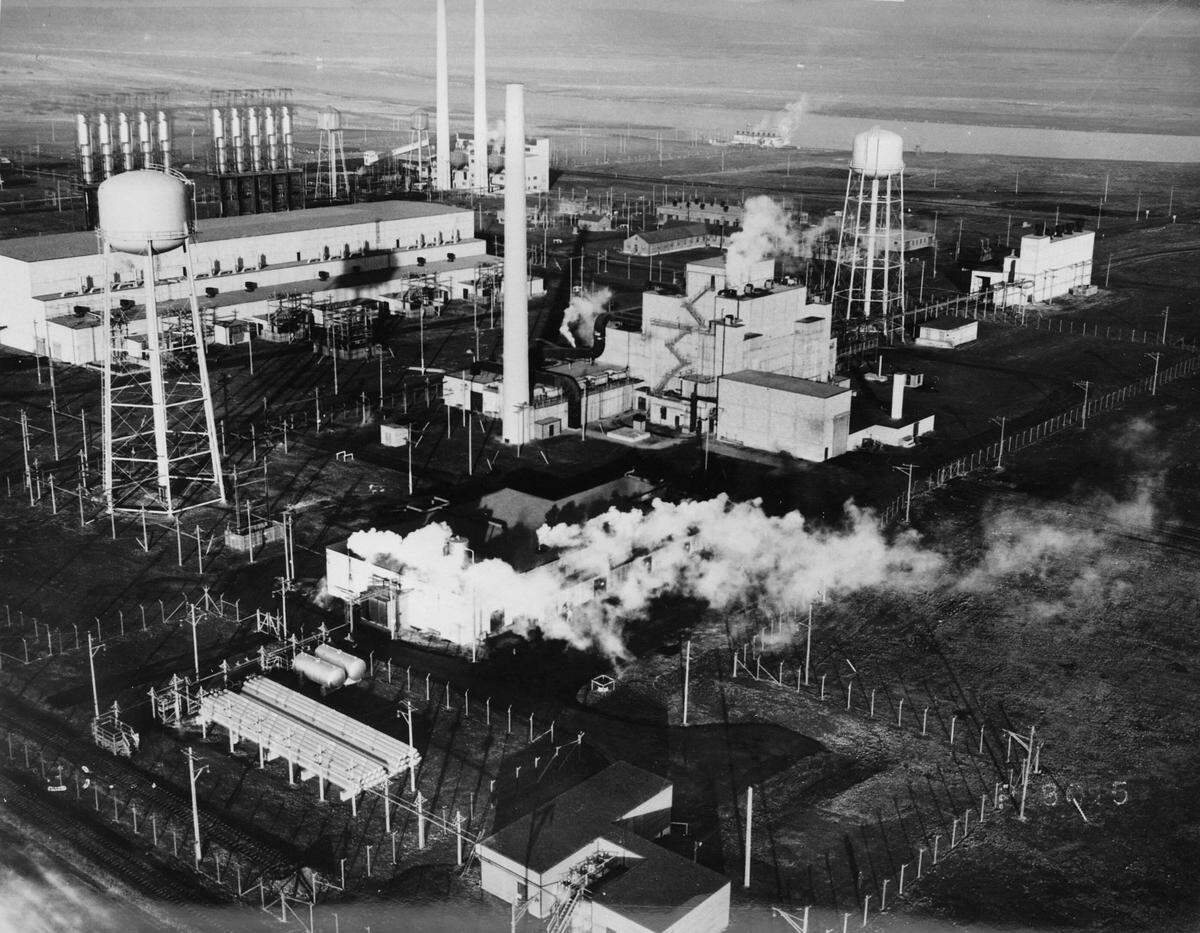
B Reactor also produced plutonium for the atomic bomb dropped on Nagasaki, Japan, Aug. 9, 1945, just weeks after the Trinity Test. Japan surrendered Aug. 15, 1945, ending World War II.
There was nothing like B Reactor before it was built and nothing has been the same since, DOE officials have said.
It launched the Atomic Age, including the atomic weapons build-up of the Cold War. It also signaled a new way to make clean energy and created the field of nuclear medicine and the nuclear technology industry.
Visitors to B Reactor now can walk through the reactor that looks much as it did during WWII.
They can gaze up at the towering face of the reactor where fuel was loaded for the first time in 1944, and they can sit at the controls that started up the reactor for the first time in 1945. Those gathered in the control room were unsure if a reactor would produce plutonium or would create a runaway chain reaction that would blow the planet up.
B Reactor planned work
Supporters of B Reactor worked for more than a decade to get Congressional appropriations to allow DOE to assess the condition of B Reactor and make repairs.
DOE co-manages the national park with the National Park Service and continues to own the reactor and provides public access.
Planned projects for this year and 2025 include:
▪ The roof will be replaced after leaks were detected, including at the front face of the reactor and the control room. The leaky roof is the issue that started concerns about the reactor building’s condition.
▪ Mortar will be replaced between the reactor’s exterior concrete masonry blocks.
In some places as the building was expanded or was repaired, grout rather than mortar was used. That grout will be drilled out and replaced with mortar that will seal out water and help with building stability.
▪ The WWII era electrical system for operating the reactor will be replaced with a smaller, more energy efficient and easier-to-maintain system appropriate for maintaining the facility and providing public access long term.
▪ A semi-permanent restroom will be added outside the reactor.
While the reactor is closed to tours for repairs, an online, virtual tour of B Reactor is planned that will include updates on progress on work at B Reactor.
Pre-war historic Hanford tours
The Manhattan Project National Historical Park also offers seasonal tours telling the history of life before early residents and settlers were forced to leave their farms, homes and businesses to make way for the top-secret production of plutonium.
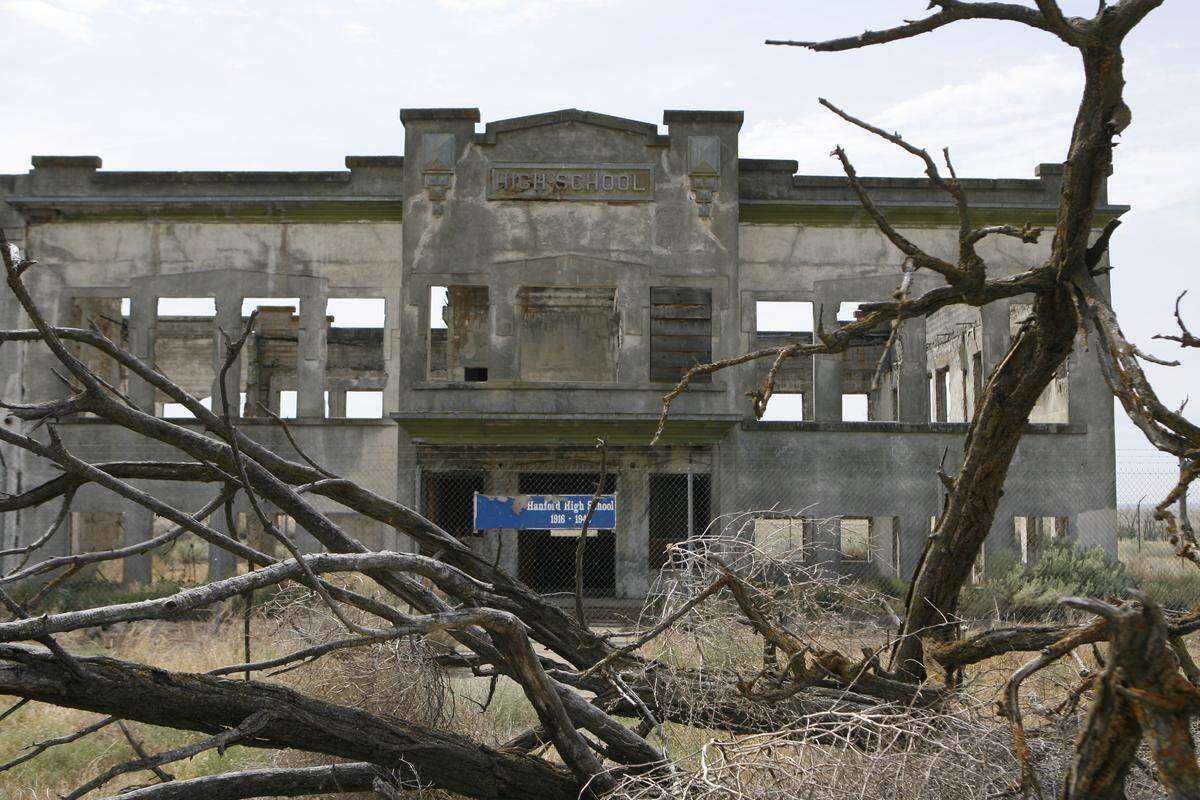
The tour includes a look at the few buildings remaining from the farms and orchards along the Columbia River and the small towns of Hanford and White Bluffs.
Buildings include the stone Bruggemann Warehouse, the remains of the 1916 Hanford High School, the tiny First Bank of White Bluffs and the 1908 Hanford Irrigation District Pump House.
As B Reactor tours close for construction work, the pre-war Hanford tours are expected to add a stop outside B Reactor.
The pre-Manhattan Project tours, which take about four hours, include bus transportation and a short walking tour at each site.
To register for tours through September go to tours.hanford.gov/HistoricTours or call the visitor center at 509-376-1647. Almost all tour seats for June are already claimed.
This story was originally published June 3, 2024 at 12:38 PM.