
‘Richland’ documentary about Tri-Cities nuclear legacy set to play at local cinemas
Update: Screenings at the Richland Fairchild theater have been extended until Nov. 9. See list of screenings at richlandfilm.com/screenings.
-------------------
Tri-Cities residents have a second chance to see the feature-length documentary “Richland,” this time in comfortable theater seating, on a bigger screen and with the theatrical sound mix.
After showing at the Tri-Cities International Film Festival in Richland and at the Wanapum Heritage Center this past weekend, it has been booked at the Fairchild Cinema at Queensgate in Richland.
It will be shown with start times from afternoon through early evening from Friday, Oct. 20, through at least Wednesday Oct. 25, according to the current Fairchild schedule at bit.ly/RichlandatFairchild.
Filmmaker Irene Lusztig spent years visiting Richland, Wash., to produce the feature-length documentary “Richland,” a film promoted as examining “the habits of thought that normalize the extraordinary violence of the past.”
It premiered at the Tribeca Festival in New York City in June and began being shown in Washington state this month.
Lusztig first visited Richland in 2015 when she was working on the documentary, “Yours in Sisterhood,” based on letters to Ms. magazine, and was startled by the large mushroom cloud rising above a capital letter R on the wall of Richland High School.
“In the months and years that followed, I couldn’t stop thinking about Richland,” she said.
What she found when she returned was a town where many residents are proud of its nuclear company town heritage and the atomic bomb it helped create.
The small farming community of Richland was turned into a government town in the 1940s as land was seized for a secret World War II project. Workers at the Hanford nuclear reservation site raced to produce plutonium to create atomic bombs ahead of the Nazis during World War II.
The plutonium that was produced at what was a 670-square-mile site in Eastern Washington was used first for a test explosion of an atomic bomb in the New Mexico desert and then the bomb dropped on Nagasaki, Japan, during World War II.
Taxpayers continue to provide more than $2.5 billion a year on environmental cleanup of contamination left from plutonium production that continued through the Cold War.
‘Richland’ regrets
Along with pride she heard in Richland’s role in history, she also dug into regrets about the role Richland workers had played — regrets about cancers that people believed were linked to emissions from producing plutonium, about the contaminated environment left behind during the Hanford site’s production years or about the suffering in Nagasaki.
Lusztig said she worked to build relationships and listen to the Richland community during her visits to film footage for the documentary.
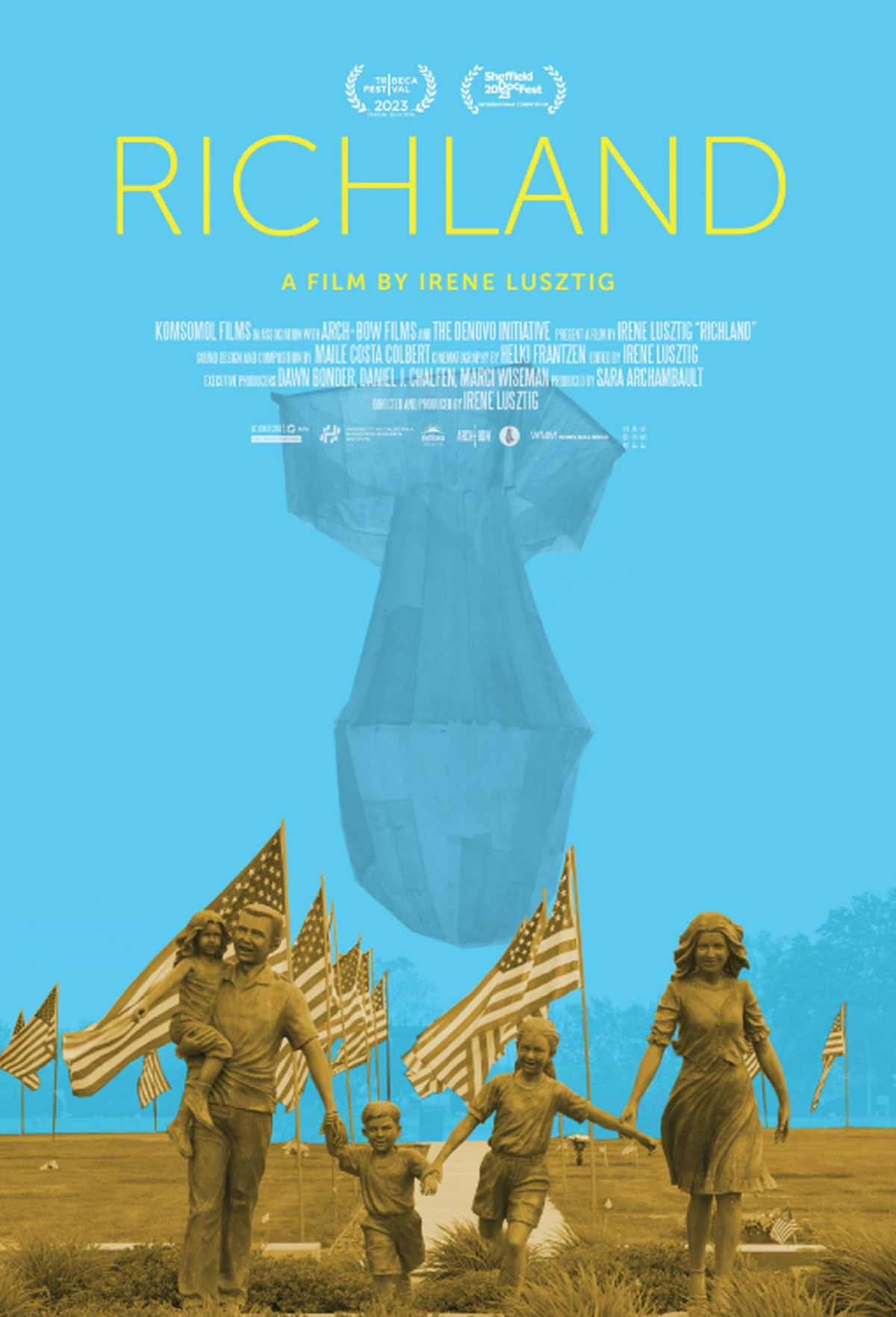
She said she didn’t want to shy away from “the tremendous environmental and human costs of nuclear arms manufacturing, but, at the same time, I also wanted to represent the stories of Hanford workers — people whose politics often diverge drastically from my own — with dignity and generous listening.”
The film includes encounters with nuclear workers, community members, archaeologists, Native Americans and a Japanese granddaughter of atomic bomb survivors.
Lex Briscuso wrote in a review for The Wrap that the documentary “is unafraid to lay bare how people embrace destruction if there is a place for them inside it. It is also unafraid to counter that mindset with the truth about the cost of dancing with the devil — and that’s what gives the film its power.”
This story was originally published October 17, 2023 at 6:29 PM.