
Nuclear parts of USS Enterprise carrier were headed to Tri-Cities. What changed?
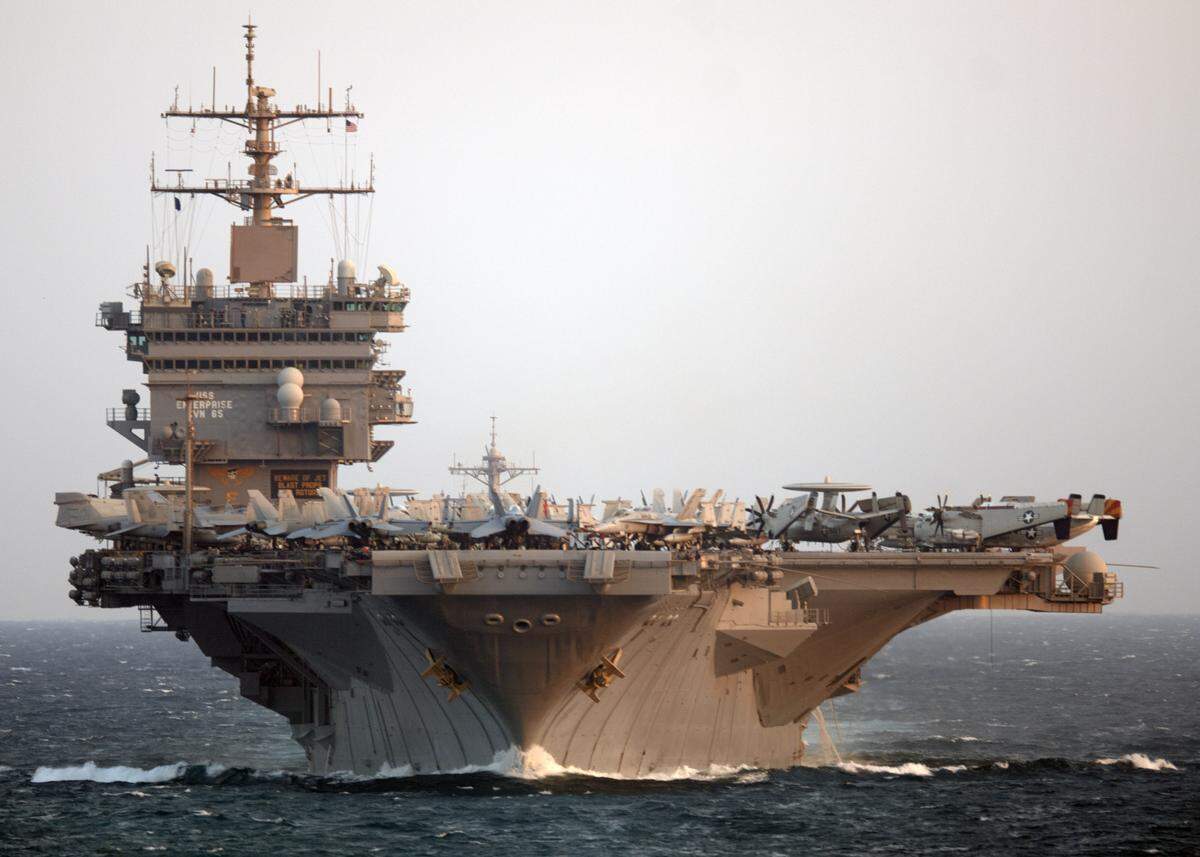
The U.S. Navy is proposing a new plan for dismantling the decommissioned USS Enterprise that would not use the Hanford site next to Richland for its nuclear reactor compartments.
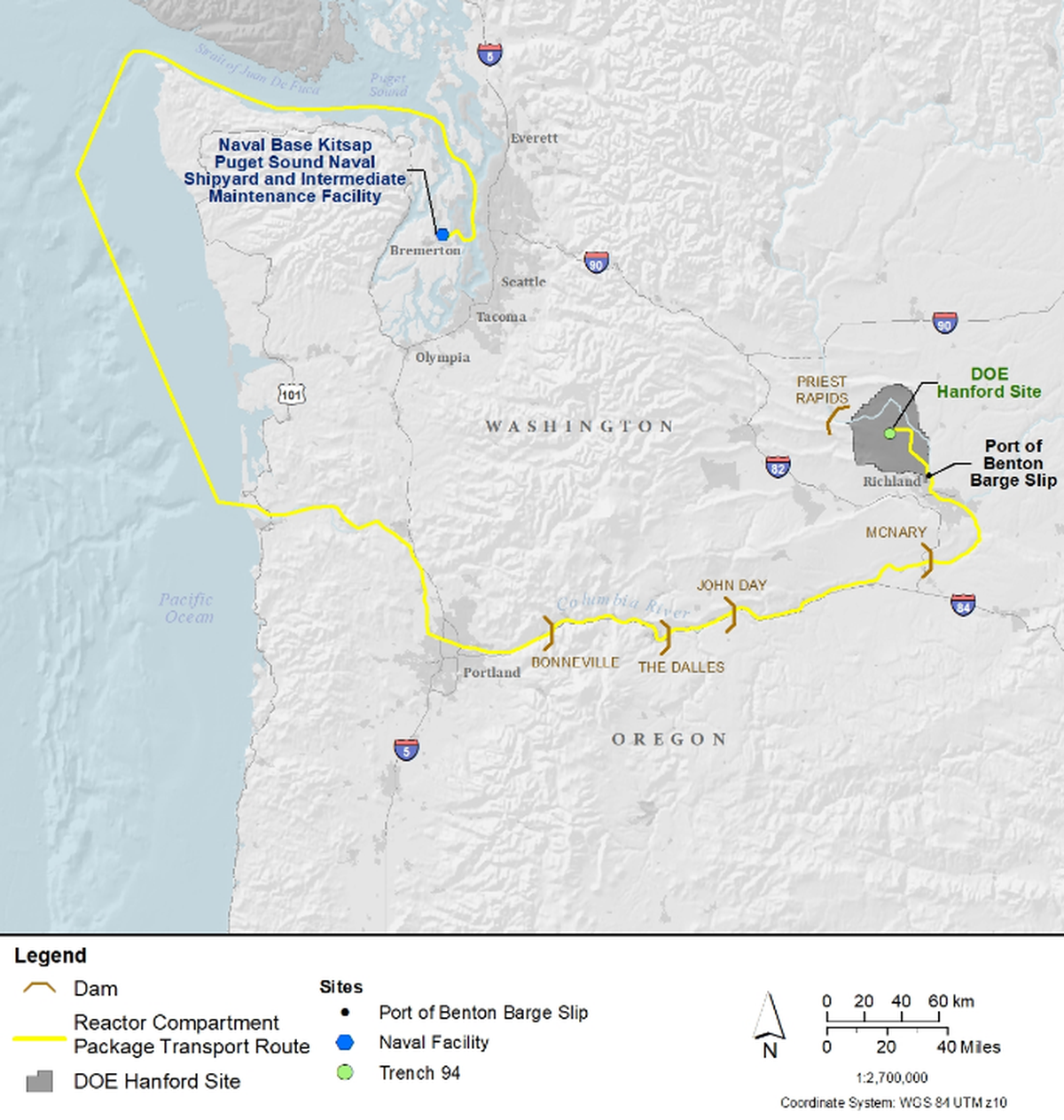
Trench 94 in the center of the nuclear reservation has been used since 1986 to dispose of reactor compartments and other reactor components after fuel is removed from Navy submarines and cruisers.
A decade ago the Navy concluded an environmental study and found there would be no issues with the reactor compartments of the USS Enterprise, the world’s first nuclear-powered naval aircraft carrier, being sent to Hanford.
Like other nuclear-powered Navy vessels, the plan was to remove the reactor compartments at the Puget Sound Naval Shipyard and Intermediate Maintenance Facility.
They would be barged through the Puget Sound, along the Pacific Coast and then up the Columbia River to the Port of Benton in Richland, Wash., to be unloaded for the trip across Hanford.
Hanford was used from World War II through the Cold War to produce plutonium for the nation’s nuclear weapons program, and low level radioactive waste from work there is being disposed of in lined landfills in the center of the 580-square-mile site.
Trench 94 already held 138 reactor compartment packages as of a year ago, according to the Navy.
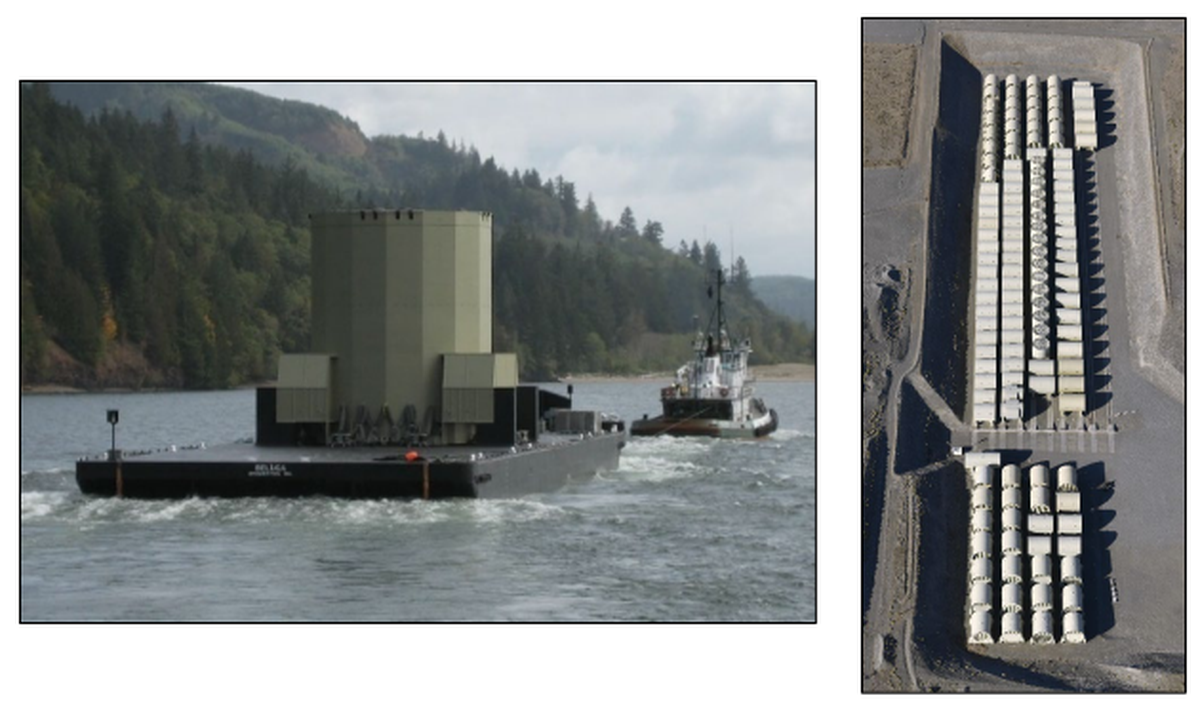
The only issue when the initial plan was proposed for the ex-Enterprise was the size of the packaged compartments, which at up to 47 feet tall could make clearance potentially tight under the cable bridge between Kennewick and Pasco, and weight could require modifications at the Port of Benton.
But now the Navy is concerned about doing work at the Puget Sound shipyard.
Navy changing course
Using a commercial facility to dismantle the ex-Enterprise would allow the Puget Sound shipyard to prioritize limited infrastructure and and work force for active fleet maintenance, according to a new draft environmental impact statement on what to do with the decommissioned Enterprise.
The shipyard is “challenged to execute their current and projected workload with existing and planned facilities,” the new study said.
Commercial dismantlement would allow the Navy to keep its trained and qualified workforce at the Puget Sound shipyard focus on high priority fleet maintenance work and on submarine inactivations that are already part of its workload, the study said.
It proposes towing the ex-Enterprise from where it is stored at Newport News Shipbuilding in Newport News, Va., to facilities in the Hampton Roads Metropolitan Area of Virginia, Brownsville, Texas or Mobile, Ala., to be dismantled by a contractor.
The reactor compartments and any other low level radioactive waste would then be be sent to a disposal facility already used by the Department of Energy for similar waste.
It could be sent to the DOE Savannah River Site in Aiken, S.C.; EnergySolutions in Clive, Utah, or Waste Control Specialists in Andrews, Texas.
The Navy began looking at commercial dismantlement of the aircraft carrier in 2019 as a less expensive alternative than using a military shipyard.
USS Enterprise history
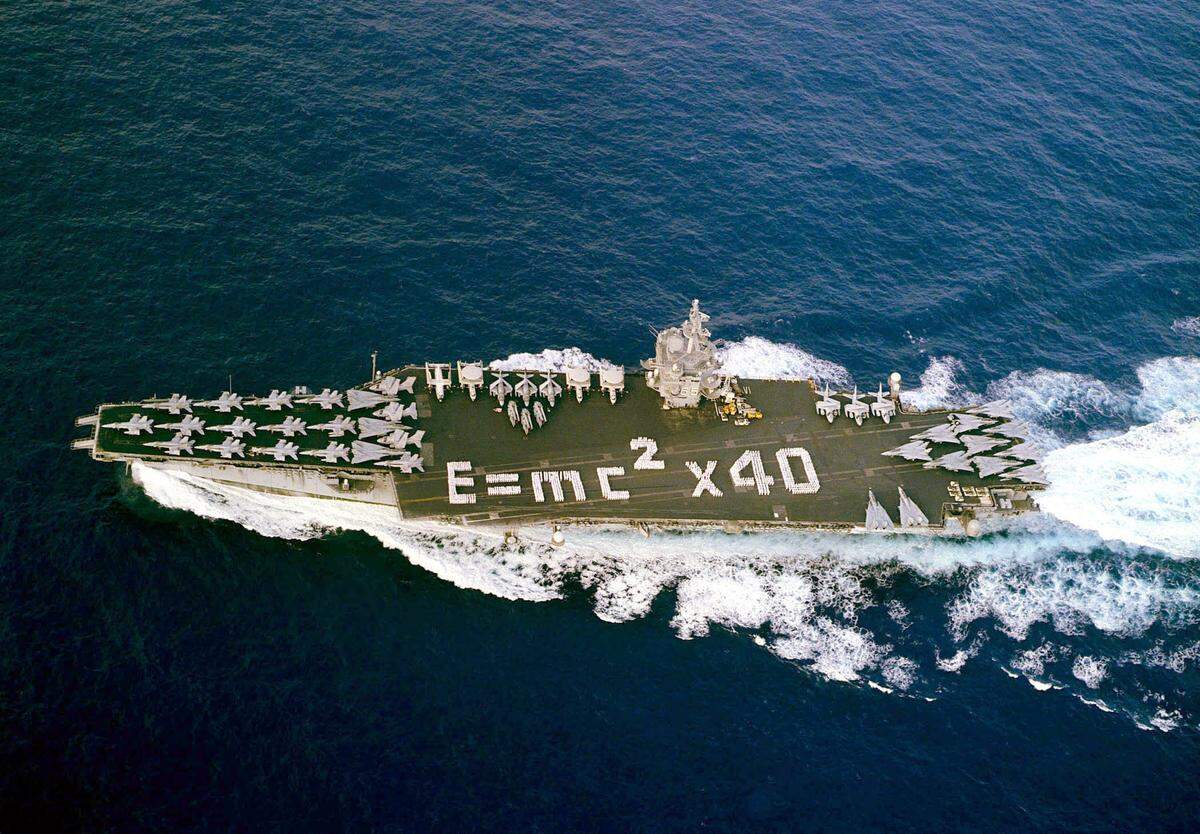
The USS Enterprise was commissioned in 1961 as the nation’s first nuclear-powered aircraft carrier and the eighth Navy vessel to be named “Enterprise.”
Nicknamed Bit E, the aircraft carrier operated for more than 50 years, serving during the Cuban Missile Crisis, the Vietnam War and the Iraq War, becoming the oldest operating ship in the Navy.
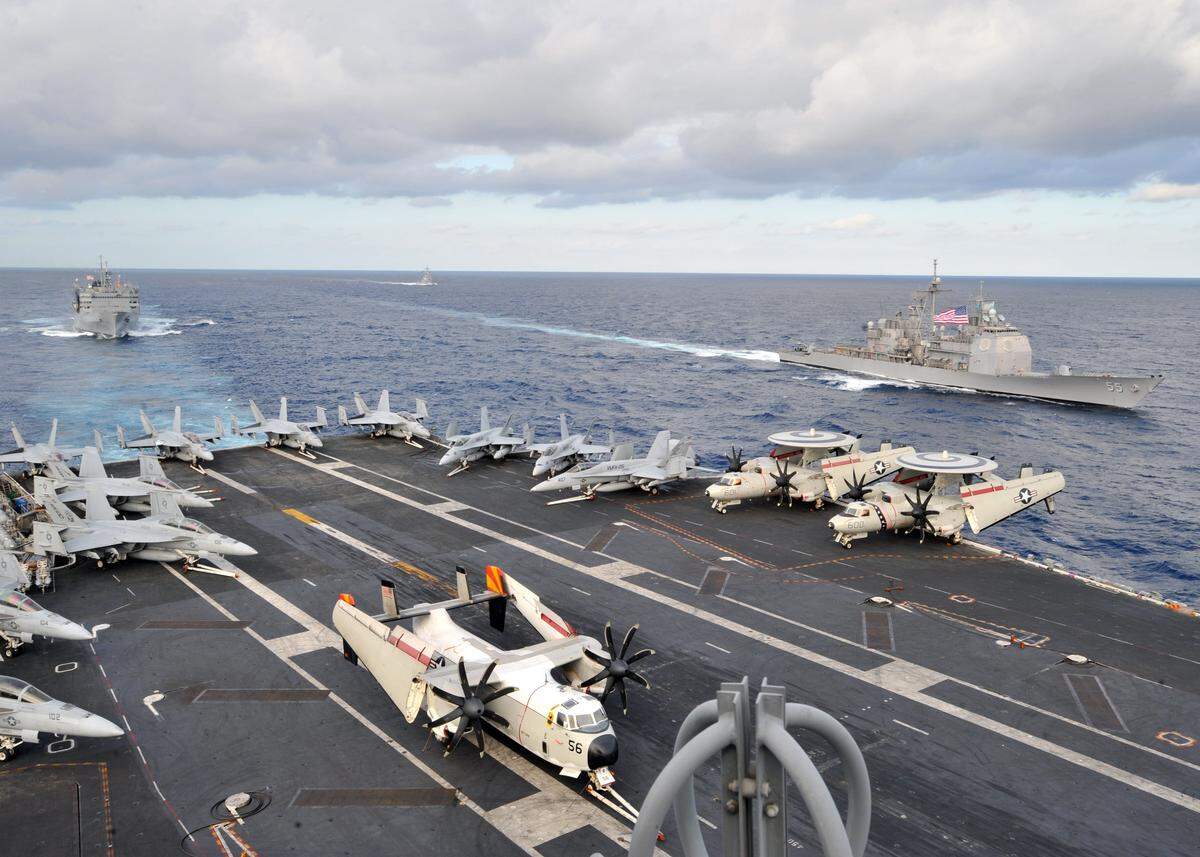
At 1,123 feet long, it could hold up to 90 aircraft, but normally carried fewer.
It was decommissioned in 2017.
USS Enterprise was built with eight naval reactor plants housed in rugged compartments within the ship, unlike the Nimitz class aircraft carriers that were built next with two nuclear reactors.
Comment, attend Navy hearings
Public hearings are scheduled to discuss whether the ex-Enterprise should be dismantled in the Puget Sound and its low level radioactive waste sent to Hanford as originally proposed or whether the Navy should pursue its newer proposal to have it dismantled elsewhere.
Virtual meetings are planned 2 to 3 p.m. Pacific Time Sept. 20 and 22. Visit carrierdisposaleis.com/vpm for instructions on how to join.
Questions may be submitted in advance of the meetings to info@carrierdisposaleis.com.
Public comments also may be submitted at carrierdisposaleis.com or by mail to Office of Congressional and Public Affairs; Attn: Ex-Enterprise CVN 65 Draft EIS/OEIS; Pugent Sound Naval Shipyard & Intermediate Maintenance Facility; 1400 Farragut Ave, Stop 2072; Bremerton, WA 98314-2072.
This story was originally published September 6, 2022 at 5:00 AM.