
Biden budget proposes cutting Hanford nuclear waste cleanup, but much less than Trump wanted
The Biden administration has proposed a fiscal 2022 budget for the Hanford nuclear reservation that is 96% of current spending and slightly more than the previous fiscal year.
It is $104 million less that the current budget, compared to a cut of $748 million proposed for the current budget by the Trump administration.
Congress sets the final budget, using the administration’s request as a starting point, and last year Congress rejected the proposed spending cut.
The federal budget proposal released Friday includes a slight increase for environmental cleanup of all of the nation’s nuclear weapons sites with $6.8 billion.
Of that almost $2.5 billion would be for the Hanford site, not including spending for security and some other costs.
The administration’s budget request includes $46.2 billion for the Department of Energy, a 10% increase over the current budget, according to the Energy Communities Alliance.
It emphasizes investments in clean energy, including $1 billion for a new Advanced Research Projects Agency for Climate, or ARPA-C, and $2.1 billion for the Office of Nuclear Energy, according to the alliance.
At Hanford the proposed cut would be to the DOE Office of River Protection, which is responsible for 56 million gallons of radioactive waste in underground tanks and the $17 billion vitrification plant being built to treat much of the waste.
The Hanford waste is left from the production from World War II through the Cold War of two-thirds of the nation’s plutonium for its nuclear weapons program.
The proposed budget includes $1.5 billion for the Office of River Protection, down from $1.6 billion as work transitions to prepare the vitrification plant to treat the least radioactive tank waste following completion of facility construction needed for the start of waste treatment.
DOE has a deadline set in federal court to start treating low activity radioactive tank waste by the end of 2023.
Funding for the vitrification plant would drop to about fiscal 2020 levels, from $861 million in the current year to $716 million in the upcoming fiscal year. It is still above the $690 million initially proposed as an annual budget to build and prepare the plant to operate.
Tank waste budget
The Office of River Protection budget also includes $825 million for work at the tank farms, where the 56 million gallons of waste are stored and a new system to separate out low activity radioactive waste from the tanks to prepare it for treatment at the vit plant.
The new Tank-Side Cesium Removal system allows waste to bypass the vitrification plant’s Pretreatment Facility, which was planned to separate waste into low activity and high level waste streams for separate treatment. The Pretreatment Facility is not required to be operating together until 2033 after technical issues needed to be resolved related to high level radioactive waste.
The tank-side system is close to being ready to operate after crews spent the last month running water through the system to simulate tank waste and verify operations.
The proposed budget also would continue to pay for a tank integrity program to monitor the condition of underground tanks, some of them holding waste since WWII.
In March, DOE confirmed that one of its underground tanks was leaking waste into the ground, making it the second tank known to be currently leaking.
Budget for other cleanup
The DOE Richland Operations Office at Hanford would receive $926 million under the proposed budget, the same as current spending.
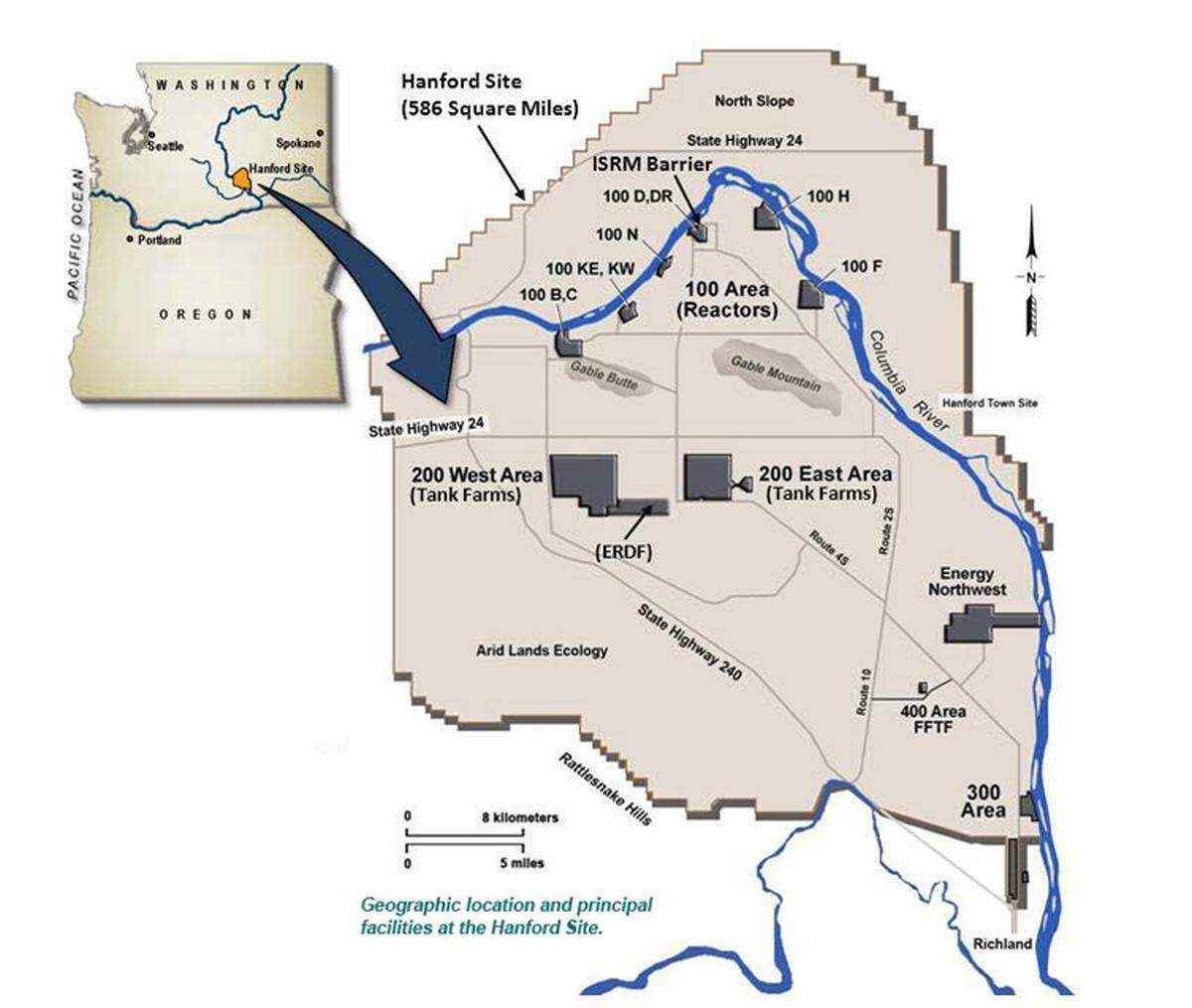
It is responsible for all environmental cleanup at Hanford, other than tank waste, and operates the 580-square-mile site in Eastern Washington.
DOE said in a fact sheet that the money would be used on a project to dig up a highly radioactive waste spill beneath the 324 Building, which is just north of Richland and by the Columbia River.
It would allow continued construction to transfer radioactive cesium and strontium waste capsules from an indoor pool at risk in a severe earthquake to dry storage.
It would also be used to prepare the K West Reactor Basin, where radioactive sludge has been removed, for demolition and to enclose the K East Reactor as a way to safely store it while radioactivity decays to lower levels.
The Biden budget proposal did not break down dollar amounts by projects beyond spending at the vitrification plant, the tank farms and for the remainder of Hanford operations and environmental cleanup.
This story was originally published May 29, 2021 at 5:00 AM.