
Ex-Hanford contractors to pay $6M to settle fraud lawsuit — but still come out ahead
A settlement agreement has ended a Department of Justice civil lawsuit alleging former Hanford site contractor Mission Support Alliance and its previous owner defrauded the federal government out of tens of millions of taxpayer dollars.
Defendants in the case will pay $6 million in restitution to the federal government.
However, Mission Support Alliance will be paid $37 million in profit that the federal government earlier withheld or required it to pay back.
Defendants include Mission Support Alliance, its former owner Lockheed Martin, and Frank Armijo, a former Mission Support Alliance president and also a vice president of Lockheed Martin Corp.
They deny the accusations against them, as they have since the lawsuit was founded, and said in a settlement agreement they had strong defenses against the claims if it proceeded to trial.
The settlement agreement also said that the document is not a concession by the Department of Justice that its claims are not well founded.
The parties settled to avoid the delay, uncertainty, inconvenience and expense of protracted litigation, according to the settlement agreement.
“MSA has always been committed to ethical business conduct, integrity and compliance throughout all levels of the corporation,” it said in a statement Monday.
“We maintain that no wrongdoing occurred related to this matter and are pleased with its resolution on what we view as favorable terms that avoid the cost of further litigation,” it said.
Lockheed Martin declined comment as the federal court case has not been closed.
The Department of Justice did not immediately comment.
Claims of inflated billing
The lawsuit filed in February 2019 alleged that from 2010 to 2015 the defendants inflated billing rates charged to the Department of Energy, the effort estimated to be needed to complete work and the anticipated additional profit for the subcontractor.
Mission Support Alliance held a site-wide support services contract for the Hanford between 2009 and 2021. It was valued at $3.2 billion when it was awarded and employed about 1,900 people when the contract expired.
The Justice Department accused Mission Support Alliance in 2019 of using half-truths, omissions, kickbacks and outright lies before its purchase by Leidos to get the Department of Energy to consent to a $232 million subcontract to a company with which it had ownership ties.
When Mission Support Alliance was awarded the contract it subcontracted information technology to a Lockheed Martin subsidiary, Lockheed Martin Services Inc. Lockheed Martin was a primary owner of Mission Support Alliance before it sold its interest to Leidos in 2016.
The lawsuit said that estimates of costs for payment rates were inflated in some cases by basing them on far more employees to perform work than Lockheed Martin Services Inc. included in its internal budget.
In some cases DOE was billed by both Mission Support Alliance and Lockheed Martin Services Inc. for the same labor, the lawsuit said.
The profit paid for Lockheed Martin Services Inc. work was in addition to money Lockheed Martin Corp. was already earning on the same work through its partial ownership of Mission Support Alliance, according to the Justice Department.
DOE repeatedly made clear that the subcontractor, Lockheed Martin Services Inc., could not earn profit on top of what its owner was already being paid through Mission Support Alliance, the lawsuit said.
Hanford fraud disputed
But Lockheed Martin has contended that federal law allowed it to collect profits both as a Mission Support Alliance owner and as a subcontractor.
Mission Support Alliance previously called the lawsuit “a textbook case of overreach.”
DOE approved a subcontract that paid fixed prices or rates for services, which means the subcontractor either makes money or loses money on its work, Mission Support Alliance argued in court documents.
“The government approved a commercial subcontract that inherently carried profit potential, and all of the rates charged to the government were fully disclosed,” said Mission Support Alliance.
It cannot then attack the amount of profit earned by Lockheed Martin Services Inc. as the product of fraud, it argued.
The Department of Justice had asked the federal court to award triple damages and penalties under the federal False Claims Act, plus civil penalties under the U.S. Anti-Kickback Act.
In January 2020 U.S. Judge Rosanna Malouf Peterson dismissed claims of kickbacks, finding that Lockheed and Mission Support Alliances intertwined financial roles meant they could not pay kickbacks to each other.
She also dismissed a claim of unjust enrichment filed against Armijo.
However, she did not dismiss the other claims against the defendants.
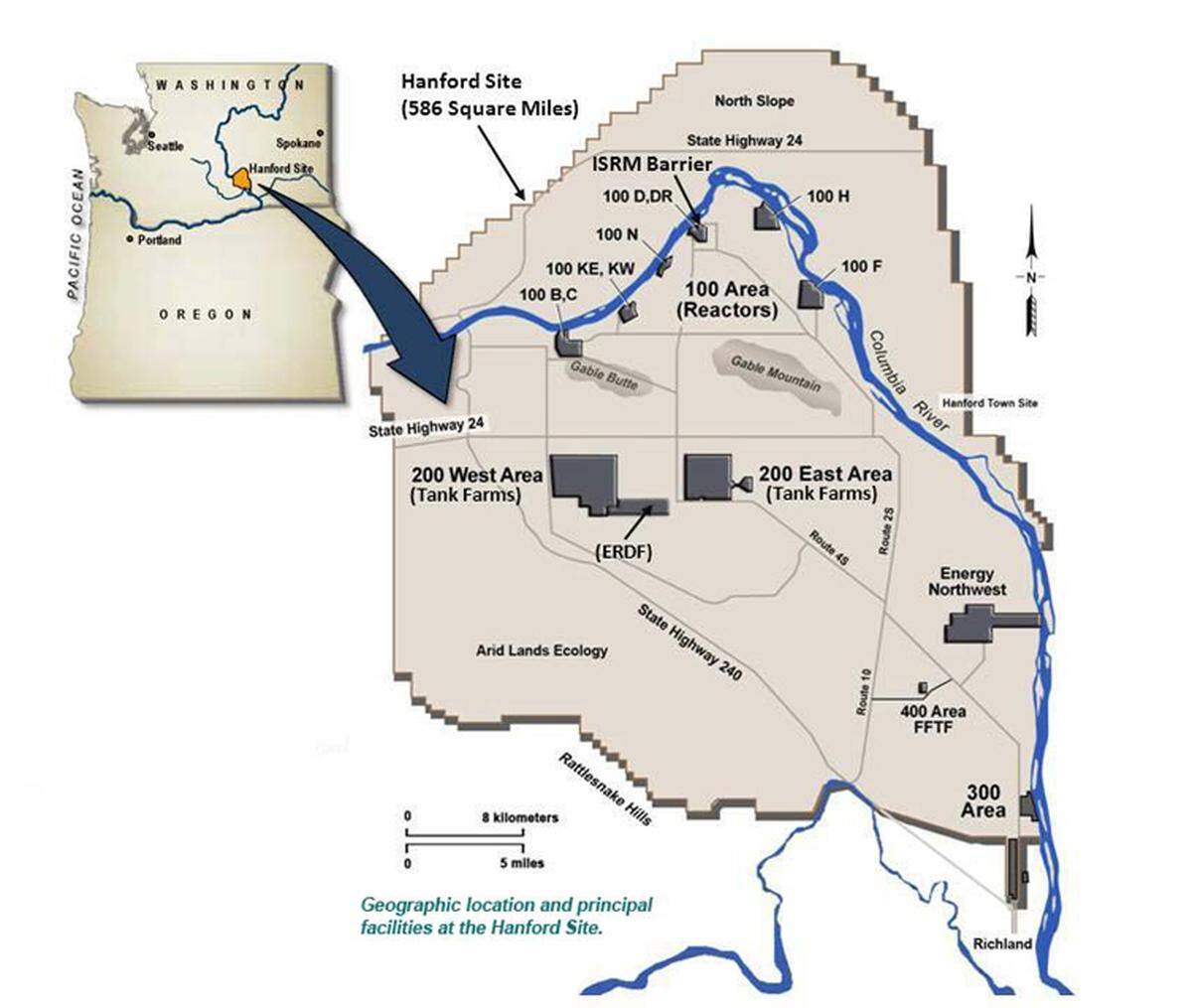
The Hanford site was used to produce plutonium for the nation’s nuclear weapons program during World War II and the Cold War.
The nation now is spending about $2.5 billion a year on environmental cleanup of the Eastern Washington site, which is massively contaminated with radioactive and hazardous chemical waste.
Most of the work on the project is done by contractors hired by DOE.
The site-wide services contract is now held by Hanford Mission Integrated Solutions.