
This way to treat Hanford radioactive waste could save $210 billion. But is it safe enough?
Grouting rather than glassifying a large amount of radioactive waste at the Hanford nuclear reservation could save taxpayers $73 billion to $210 billion, according to a new Department of Energy report.
Turning millions of gallons of waste into a concrete-like grout form also could cut 10 years off the time needed to treat radioactive waste now stored in underground tanks and permanently dispose of it, the DOE report estimated.
DOE recently submitted a report to Congress on potential opportunities for different ways to treat waste now held at Hanford and other DOE nuclear sites.
The report was required three years ago by the 2018 National Defense Authorization Act to look at the feasibility, costs and cost savings of reclassifying high level radioactive waste to allow it to be treated and disposed of in ways not allowed for high level waste.
“Let’s trust the science and move forward,” said Washington state Sen. Sharon Brown, R-Richland, who has advocated for classifying some tank waste as low level waste to allow more efficient treatment.
The cost savings identified in the report “are a big step in the right direction, and would assist both DOE and its regulators in focusing on the mission of protecting those mist impacted — local citizens and tribal members,” said Richland Councilman Bob Thompson, chairman of Hanford Communities, a coalition of Hanford area local governments.
“We need the Hanford Site cleaned up, and I’m concerned that it will be very difficult to achieve given current cost estimates,” he said. “We should be exploring alternatives that can reduce costs and expedite the cleanup while maintaining safety and effectiveness.”
The latest cost estimate for the remaining environmental cleanup at the Hanford site, which was released two years ago, said taxpayers will need to spend $323 billion to $677 billion.
The 580-square-mile Hanford nuclear reservation in Eastern Washington was used from World War II through the Cold War to produce two-thirds of the plutonium for the nation’s nuclear weapons program.
But Hanford Challenge, a Seattle-based watchdog group, found the report “shocking,” said its executive director, Tom Carpenter.
The report discusses reclassifying up to 80% of the 56 million gallons of Hanford tank waste to allow it to be stabilized in a concrete-like grout form, rather than vitrifying, or glassifying it.
That could open the door to grouting waste in tanks rather than emptying the tanks, Carpenter said.
Reclassifying waste
Any waste produced when fuel irradiated at Hanford reactors was chemically processed to remove plutonium is classified as high level radioactive waste under U.S. law.
But internationally, waste classification is based not on how waste is produced as it is for high level waste in the United States, but on its radiological risk.
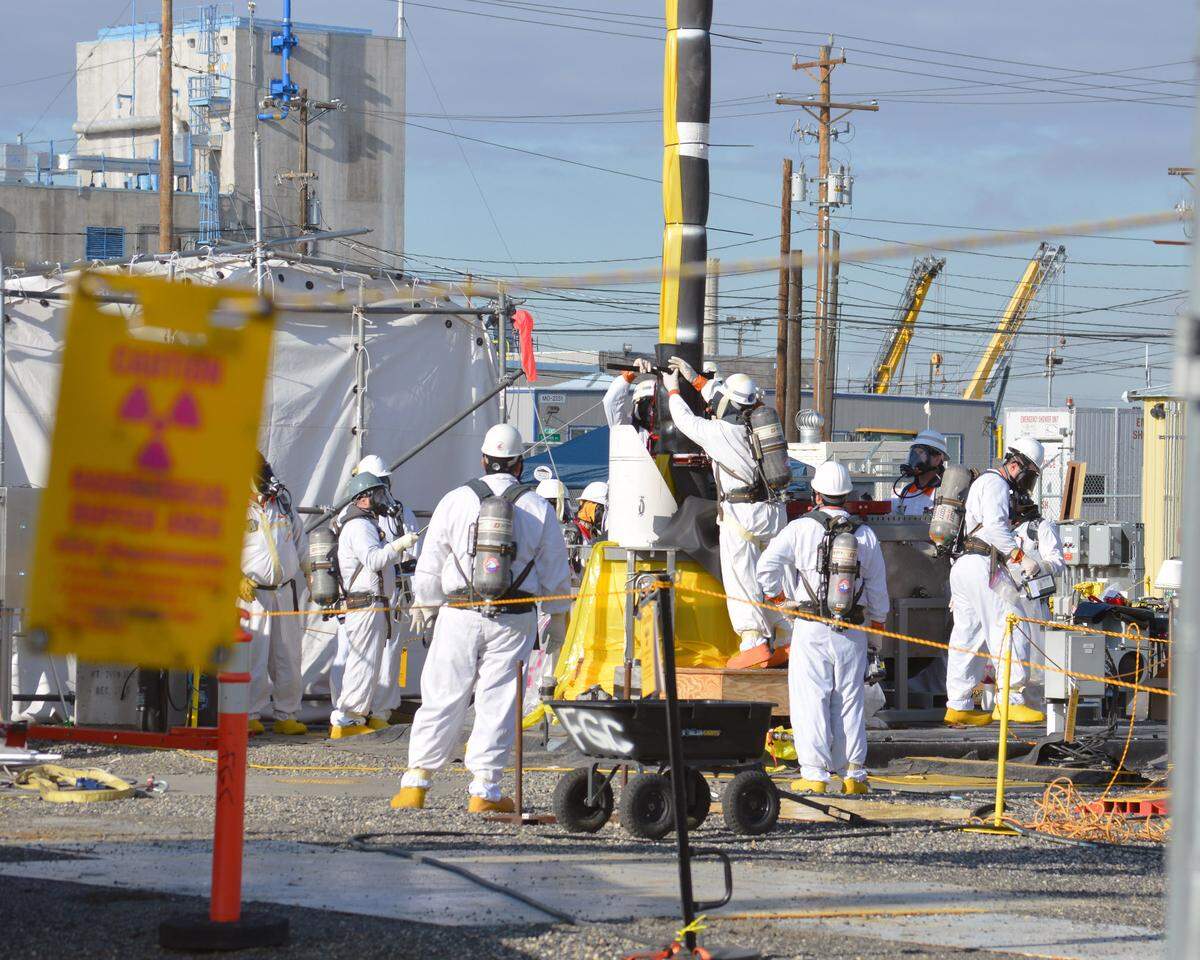
“It makes sense to me that we would manage and treat Hanford’s waste based on its physical characteristics, rather than how it was produced,” said David Reeploeg, the Tri-City Development Council vice president for federal programs.
Already much of the tank waste at Hanford, while by definition is high level, is referred to as low activity radioactive waste and managed as it if is low level rather than high level waste by agreement between the state of Washington and the federal government.
In 2019, DOE adopted a new policy that allows it to reclassify radioactive waste if it determines it does not exceed certain radionuclide concentrations for low level waste or does not need to be disposed of in a deep geological repository, such as the one proposed at Yucca Mountain, Nev.
However, Congress has banned the new policy from being used in Washington state under the two most recent National Defense Authorization Acts.
High level waste can still be reclassified but under a more involved process that relies on the Nuclear Regulatory Commission.
The new DOE report to Congress stresses that reclassifying tank waste for grouting is not a proposal, only a look at potential opportunities.
Before any action is taken DOE would need to gather more data, do more analyses and discuss the proposed change with those interested in Hanford, the report said.
Grouting tank waste
The report looks at the possibility of reclassifying much of the waste stored in underground tanks in part of central Hanford, the 200 West Area, and then grouting it for disposal rather than turning it into stable glass logs at the $17 billion vitrification plant under construction.
Hanford has 56 million gallons of radioactive waste stored in underground tanks, split between the 200 East Area and the 200 West Area, which are about seven miles apart.
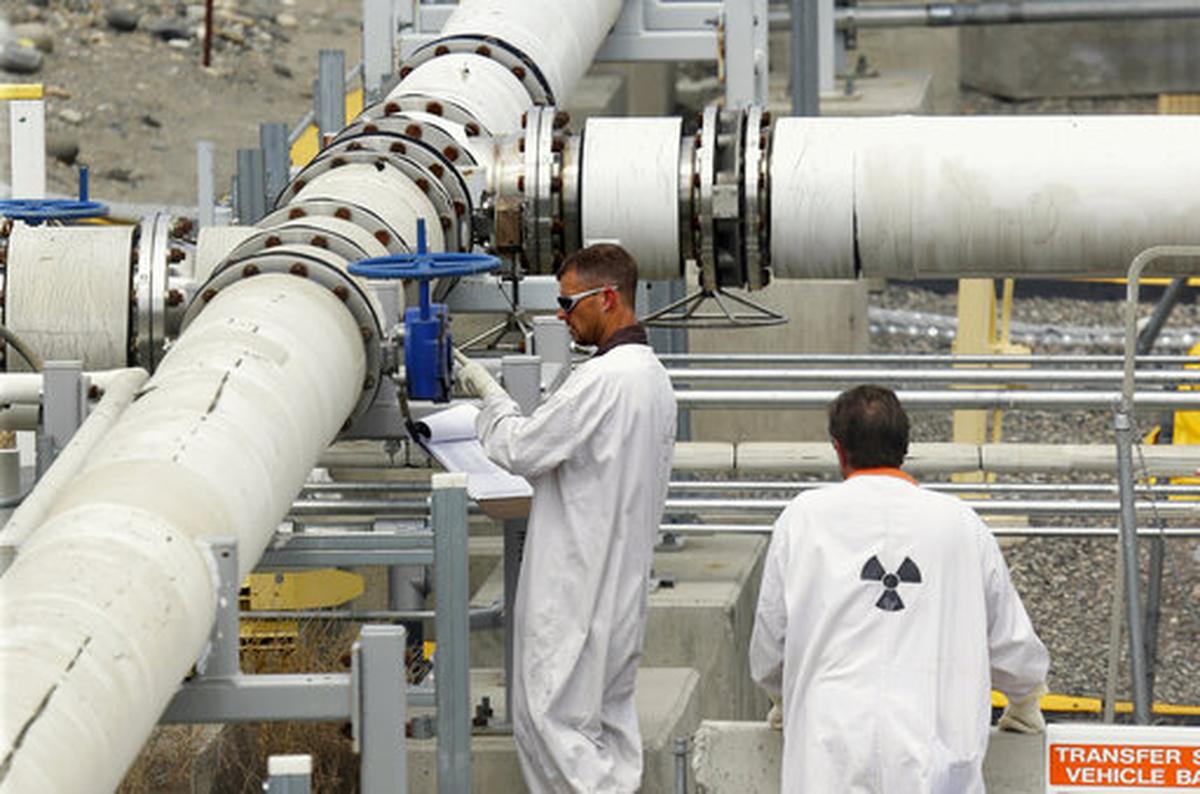
The underground tanks include 149 single shell tanks which are prone to leaking. They are being emptied into 27 newer double-shell tanks for more secure storage until the waste can be treated for permanent disposal.
Most of the double-shell tanks — all but three — are in the 200 East Area.
In addition to the three double-shell tanks, the 200 West Area also has 83 of the Hanford site’s single-shell tanks, some of them with a capacity of 1 million gallons.
Grouting 80% of the 200 West Area tank waste would allow the waste to be treated in a less-complex, lower temperature and lower risk method, the DOE report said.
The vitrification plant heats waste and glass forming materials to 2,100 degrees Fahrenheit to produce a stable glass form.
Some of the cost savings of grouting could come from not having to expand the vitrification plant, according to the DOE report.
The plant was never planned to be large enough to treat all of the low-activity tank waste at Hanford.
Grouting large amounts of the 200 West Area tank waste also could eliminate the need to replace or repair seven miles of cross-site transfer line, according to the report.
The pipe would move the waste from the 200 West Area to the 200 East Area for storage in double-shell tanks and treatment at the vitrification plant, which is in the 200 East Area.
Grouting the waste also could allow the waste to be sent off of Hanford for disposal, leaving less waste permanently disposed in the Eastern Washington nuclear reservation, the DOE report said.
Now the low-activity waste glassified at the vitrification plant is planned to be disposed of in a lined landfill in central Hanford.
But the state of Washington objects to waste being buried there unless it is vitrified or can be shown to be as protective of the environment as glass.
Hanford grouting test
DOE has grouted three gallons of radioactive waste in a test, using an engineered grout form that is protective of the environment, it said.
The waste was sent from Hanford to nearby Perma-Fix Environmental Solutions in Richland to be encapsulated in a specialized grout. It then was sent to a Waste Control Specialists disposal cell in Texas that was built for low-level radioactive waste from federal government sites.
Congress has already appropriated money to continue the demonstration of the grouting project on more waste, said Gary Petersen, president of Northwest Energy Associates, a nonprofit, Hanford advocacy group formed by Tri-Cities area business leaders.
He questions why the second phase of the test, which would involve grouting 2,000 gallons, has not started.
The 200 West tanks are a great place to demonstrate the grouting project because DOE currently does not seem to have a plan for treating the waste in tanks that is far from the vitrification plant, he said.
Hanford Challenge concerns
However, Hanford Challenge is skeptical that it is practical to grout millions of gallons of waste and ship it off site, saying the more likely outcome of reclassifying so much tank waste would be to grout the waste within the tanks and leave it in the ground at Hanford.
The grout could fail within a matter of decades, he said, which would put more groundwater at Hanford at risk of contamination.
Although reclassifying tank waste is not currently allowed in Washington state, it is being used successfully already at DOE’s Savannah River, S.C., nuclear site, Brown pointed out.
The first use of DOE’s new reclassification policy resulted in eight gallons of recycled wastewater from vitrification at Savannah River being grouted and sent to the Waste Control Specialists repository in Texas.
Just as reclassification of waste was done at Savannah River, it “can be successfully utilized in a safe manner as well at Hanford,” Brown said.
This story was originally published January 7, 2021 at 12:54 PM.