
‘Game changer.’ Could Tri-Cities be the future home of an advanced nuclear reactor?
Energy Northwest is the partner in two projects picked for a new Department of Energy program to demonstrate new advanced nuclear power reactor designs.
It raises the possibility that one might eventually be built near Richland.
“The selection of these projects is an absolute game-changer for our state and makes it official: Tri-Cities, Washington, is a global leader in nuclear energy innovation,” said Rep. Dan Newhouse, R-Wash.
The Department of Energy last week announced that X-energy of Rockville, Md., and TerraPower, of Bellevue, Wash., partnered with GE Hitachi Nuclear Energy, were each awarded $80 million under the new Advanced Reactor Demonstration Program.
The companies developing the reactors will match the grants.
The awards are intended to build two, first-of-kind advanced reactors that can be operational within seven years.
“The awards are the first step of a new program that will strengthen American leadership in the next generation of nuclear technologies,” said Energy Secretary Dan Brouillette. “These partnerships will help maximize DOE’s investment in advanced reactors, which play a vital role in our clean energy strategy.”
Energy Northwest said on the X-energy project it will assist with the licensing of the design, and if the design is determined to be a viable option for development in Washington state, Energy Northwest expects to own and operate the plant.
Only one site for a plant is listed in grant applications, the one near Richland where it already operates the Columbia Generating Station, according to the Seattle Times.
Energy Northwest said the electricity used would go to its public power partners, which include Tri-Cities area electric utilities.
“The X-energy design is a promising future component of our resource portfolio,” said Brad Sawatzke, chief executive of Energy Northwest.
“Energy Northwest’s partnership in the development of this concept will provide Energy Northwest with the opportunity to pursue appropriate advanced reactor designs once experts and regional leadership are confident in the technology’s viability,” he said.
For the TerraPower reactor, Energy Northwest will provide licensing and operating experience to help with development of the concept, including the potential for future operation and maintenance of a commercial plant.
Energy Northwest’s involvement raises the possibility that the reactor could be built near Richland. However, PacifiCorp and Duke Energy also are providing utility expertise to the project.
Carbon-free Washington
“This award opens the door to a whole new chapter of nuclear leadership for our community,” said David Reeploeg, vice president for federal programs for the Tri-City Development Council.
DOE’s selection of partners of Energy Northwest for grants to develop new types of advanced reactors is a testament to the long legacy of the Tri-Cities area’s advancements in nuclear technology, he said.
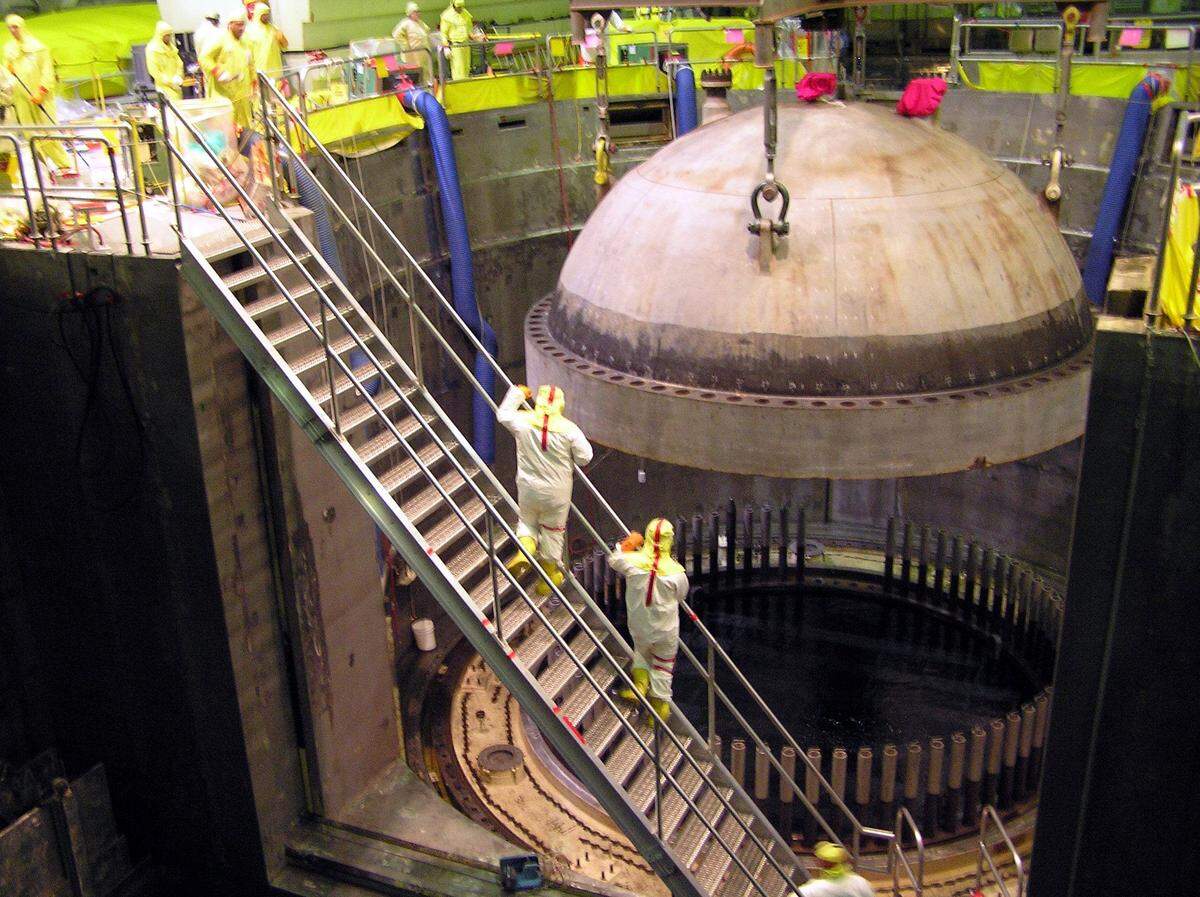
The region has been home to historic B Reactor, the world’s first full-scale nuclear reactor; N Reactor, with dual weapons programs and power production use; the Fast Flux Test Facility research reactor and the Columbia Generating Station, the Northwest’s only operating nuclear power plant.
Both projects funded emphasize design features that improve safety and lower costs, both to build and operate, according to TRIDEC.
“These advancements give the United States a competitive edge in global markets, especially as countries around the world are increasingly turning to advanced nuclear power to reduce carbon emissions,” TRIDEC said in a statement.
There is no question about the need for safe, reliable nuclear power for the United States as it heads toward a clean energy future, Newhouse said.
A carbon-free electric grid is both possible and affordable in Washington state with an an integrated energy system that includes renewables, storage, hydropower and existing nuclear energy, as well as new advanced nuclear technologies, according to Energy Northwest.
Proposed reactors
Under the 2019 Clean Energy Transformation Act, all electric utilities in Washington state are required to transition to 100% carbon-free electricity by 2045. The law requires the phase-out of natural gas and coal-fired power plants.
Columbia Generating Station near Richland provides virtually carbon-free electricity and has a gross output of 1,207 megawatts, or enough energy to power Seattle and part of its metro area.
The TerraPower project will demonstrate the 345-megawatt Natrium reactor, a sodium-cooled fast reactor, with co-developer GE Hitachi Nuclear Energy and engineering and construction partner Bechtel.
The Natrium reactor’s high operating temperature, coupled with thermal energy storage, will allow the plant to provide flexible electricity output that would work to help stabilize the grid as it receives generation from sources dependent on weather, such as solar and wind generation.
“TerraPower’s work on Natrium is phenomenal in terms of developing low-cost, large-scale energy technology that will meet the rising energy demand while reducing greenhouse gas emissions,” said Bill Gates, chairman of TerraPower’s board of directors.
“The reactor is designed to integrate into grids with high penetrations of wind and solar and offers a significant improvement in cost over conventional nuclear technologies,” he said.
X-energy is designing a reactor plant that can be scaled up to include four 80-megawatts units.
It is a high temperature gas-cooled reactor that can provide flexible electricity output, providing either constant, base-load power or to help grid’s with intermittent wind and solar power.
It also produces process heat that can be used for industrial applications, such as desalination and hydrogen production.
Both projects also include development of fuel fabrication facilities for the new types of reactors.
This story was originally published October 18, 2020 at 2:12 PM.