
What the visiting U.S. energy secretary committed to at Hanford
Progress on the most high-profile and costly project at Hanford, the vitrification plant, was the focus of Dan Brouillette’s first visit to the nuclear reservation since becoming energy secretary eight months ago.
Even he joked at a news media briefing about how long work has been ongoing on the plant.
“It seems like just yesterday we were starting this project — 20 years ago,” he said.
Brouillette is the sixth energy secretary since 2000, when design of the $17 billion plant began. Ground was broken in 2002.
On Thursday Brouillette celebrated progress on the project, cutting the ribbon for the Analytical Laboratory, one of the four major buildings planned for the vitrification plant two decades ago.
It is the first of the major facilities with construction completed.
Work is transitioning there to startup of the laboratory in preparation for treatment beginning by the end of 2023 on some of the least radioactive of 56 million gallons of waste in underground tanks. The treatment will prepare it for permanent disposal.
Construction on the major facilities needed to start waste treatment is 96% complete and would be finished were it not for delays caused by the COVID-19 pandemic, said Paul Dabbar, Department of Energy under secretary for science, in an interview with the Tri-City Herald late last week as he and the energy secretary were at Hanford.
Delays caused by the pandemic should not prevent DOE from meeting the federal-court enforced deadline to start treating waste at the plant at the end of 2023, he said.
“I think that’s a monumental step for this community,” Dabbar said.
Hanford, just north of Richland, was used from World War II through the Cold War to produce plutonium for the nation’s nuclear weapons program, leaving behind radioactive and other hazardous chemical contamination and waste.
But while top DOE officials have their attention at Hanford focused on the tank waste now, other Hanford waste also presents a risk to workers, the public and the environment.
Cleanup commitment
The budgets proposed by the Trump administration have not reflected a commitment to timely cleanup beyond the start of tank waste treatment.
The administration requested $700 million less in the coming fiscal year for Hanford than the approximately $2.5 billion that Congress approved for the current fiscal year.
“At the end of the day Congress makes the decision and we execute to that decision,” Brouillette said.
Despite administration proposals to cut the Hanford budget, the last three budgets implemented for Hanford and also Pacific Northwest National Laboratory in Richland have been robust, Brouillette said.
Congress has set and passed the final budget levels and the president has signed them into law, he said.
A DOE report, “Environmental Management Vision 2020-2030: A Time of Transition and Transformation” also has raised questions about DOE’s commitment to cleanup beyond treatment of tank waste.
The report said cleanup of the high level radioactive waste spill just north of Richland and near the Columbia River would be put on hold.
It also said it would “evaluate” transferring capsules of high level waste out of underwater storage. A major earthquake could damage the aged concrete pool where they are stored, spreading radioactive waste.
Despite what the document says, DOE is “absolutely moving forward” on cleaning up the spill beneath the 324 Building, Dabbar said.
Brouillette said he can assure the Tri-Cities community that DOE is committed to timely action on the 324 Building spill and moving radioactive cesium and strontium capsules from the pool where they are now to dry storage. Work has been underway on both projects for several years.
“This site, in particular, has contributed to the nation’s security for ... almost eight decades and we have a moral obligation to do everything we can do to ensure we leave this place in a position that is as good or better than when we found it,” Brouillette said. “I don’t have any trouble making that commitment.”
‘Safe, timely and cost-effective’
When tank waste treatment begins, “it will address the largest environmental risk at the site,” Brouillette said.
“While we have achieved much at Hanford, we still have much to do,” he said. ”And as this work continues, the Department of Energy will remain committed to completing the Hanford site cleanup in a safe, timely and cost-effective manner.”
Hanford workers have completed important and complex work in recent years, including demolishing the Plutonium Finishing Plant, moving radioactive sludge once stored near the Columbia River to the center of the site, stabilizing tunnels storing waste and surpassing goals for cleaning contaminated groundwater.
He commended the Hanford workforce for approaching environmental cleanup with the same dedication and professionalism that provided the same technological superiority for the United States to produce plutonium during World War II and the Cold War.
Waste treatment alternatives
Despite progress made toward the start of the low activity tank waste treatment at the vitrification plant, that’s only half of the mission of the plant.
Much of the 56 million gallons of waste in the underground tanks — the oldest of them prone to leaking into the ground beneath them — were planned to be turned into a stable glass form at the site’s Waste Treatment Plant, or vitirification plant.
But when technical issues were raised more than decade into the project on the handling of high level radioactive waste, plans eventually shifted to starting just part of the plant needed to treat low activity radioactive waste first.
So, construction stopped on the 12-story Pretreatment Facility that will separate waste into high level and low activity waste. Most work also is on hold at the High Level Waste Facility, where the most radioactive waste will be glassified.
The Low Activity Waste Facility, the Analytical Laboratory and the Effluent Management Facility, which was recently added to the project to replace some capabilities of the stalled Pretreatment Facility, will be the main facilities needed to start treating low activity waste by the end of 2023.
With the start of treatment of low activity waste in sight, focus is shifting to planning for the high level waste, Dabbar said.
DOE is working on an analysis of alternatives on how to pretreat and then treat the high level waste to have the vitrification plant fully operational by a federal court deadline of 2036.
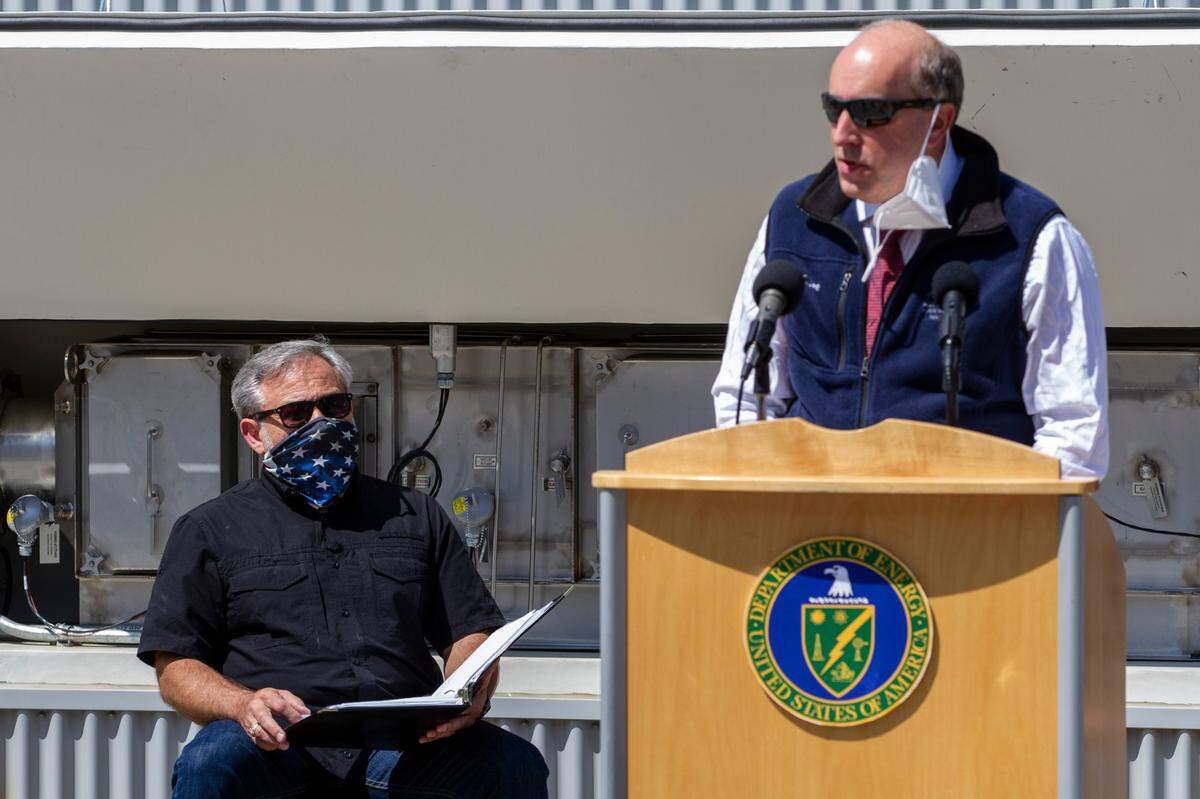
Technology has changed over the 20 years since construction started on the vitrification plant and there could be better alternatives found, just as it was for pretreatment of low activity waste, Dabbar said.
A new tank-side system will be used to prepare liquid tank waste for glassification at the Low Activity Waste Facility — removing dissolved cesium and solids that are high level waste — rather than the massive Pretreatment Plant.
“We found an option that was faster and will reduce risk faster” by getting waste out of tanks, Dabbar said.
The first phase of engineering has been completed for alternatives for high level waste, and DOE is considering having some form of community input on the different alternatives, although it is too soon to say when that could happen, Dabbar said.
‘Cordial’ waste talks
DOE and its regulator for tank waste management and treatment, the Washington state Department of Ecology, have started talks on tank waste issues after the Department of Ecology said legal deadlines for work to empty tanks and treat the waste are at risk of being missed.
It took more than a year for talks to begin, but the two agencies now are working through topics “methodically, point by point,” Dabbar said.
“My impression is that it is going pretty well,” Brouillette said. “The conversations have been cordial. We have been collaborative. We each understand the mission here. We each understand the importance of getting it done quickly.”