
Hanford contractor earns $6 million, as massive Hanford plant takes step toward startup
The first major facility at the massive Hanford vitrification plant has been started up — a key milestone toward beginning to treat radioactive waste at the plant.
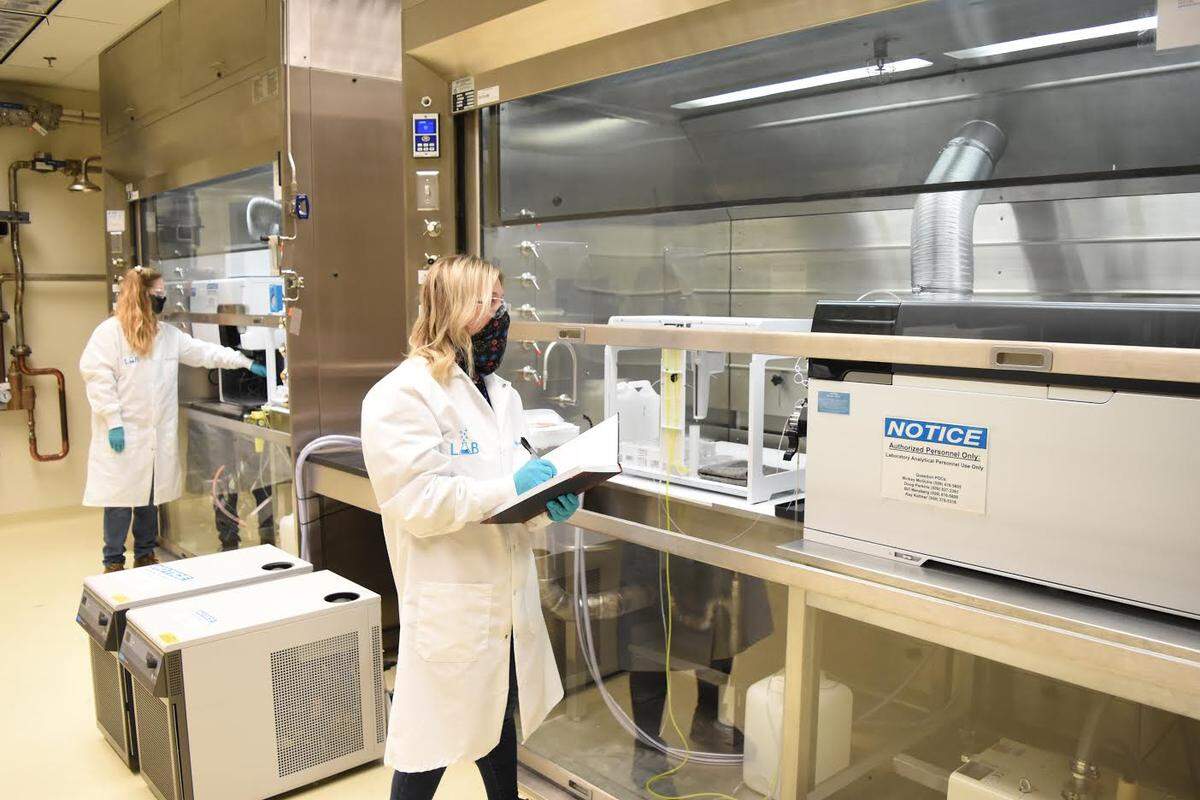
Startup of the Analytical Laboratory, one of the four major facilities handling nuclear waste at the vit plant, also is a contract milestone for the contractor for the vit plant, Bechtel National.
It will receive $6.6 million in incentive pay for completing startup by a deadline set by the Department of Energy.
Bechtel is reimbursed for most costs and makes profit on the project through incentive pay.
Each facility at the plant has four major steps toward completion — engineering, construction, startup and commissioning.
During startup all systems are turned on and tested. Commissioning requires integrating the systems and operating them together for the start of full operations.
“Next, our workforce, along with teams of chemists and technicians, will integrate the training, systems, scientific instruments, and procedures needed to prepare the laboratory to support the treatment of low-activity waste,” said Valerie McCain, plant project director for Bechtel.
Construction on the plant, which will cost $17 billion to complete according to the last verified estimate, began in 2002 with engineering and design done just ahead of each step of construction.
DOE is required by a federal court order to be treating low activity radioactive waste by the end of 2023.
The Hanford nuclear reservation has 56 million gallons of radioactive waste stored in underground tanks, 90% of it estimated to be low activity waste. The waste is left from past production of plutonium for the nation’s nuclear weapons program from World War II through the cold War.
The vitrification plant, or Waste Treatment Plant, will turn much of the waste into a stable glass form for disposal, with the plant ordered to be fully operational, including treating high level radioactive waste, by 2036.
Analytical Laboratory
“The laboratory is critical to making sure tank waste is safely encased in glass and meets requirements for disposal,” said Tom Fletcher, DOE project director.
The Analytical Laboratory will be used to determine the correct glass formulation “recipe” for each batch of waste piped from the Hanford tank farms to the vitrification plant.
Additional samples will be analyzed throughout the vitrification process to confirm production of a high-quality glass product and good process controls.
The tank waste is highly variable and the glassified waste must been regulatory requirements and standards. The glassified low activity radioactive waste will be buried in a lined landfill in the center of the Hanford site.
Laboratory chemists and technicians will analyze approximately 3,000 samples each year during treatment of low activity waste.
The laboratory building is 320 feet by 180 feet and stands 45 feet tall, not including the exhaust stack which reaches 119 feet.
The stack will exhaust emissions from the lab’s ventilation systems, filtering radioactive and chemical contaminants from the air.
It also has an underground hot cell to collect radioactive waste from the plant.
The other major facilities on the 65-acre Waste Treatment Plant campus include the Low Activity Waste Facility, which will glassify waste.
Construction of the two other major facilities, the High Level Waste Facility and Pretreatment Facility, are on hold as DOE evaluates options for pretreating waste, or separating it into high and low activity waste streams, and then glassifying the high-level waste.
The plant also has an additional 14 support facilities and 53 systems, some of which are in the commissioning phase.
DOE has taken the first step toward finding a contractor to operate the plant once commissioning is complete. It asked that companies interested in operating the plant provide information in May to help DOE develop its request for bids.