
$7 billion stimulus plan for Hanford and others could add jobs and kick-start national economy
Tri-Cities area supporters of Hanford nuclear reservation cleanup are asking Congress to provide a one-time boost to Hanford funding to help jump start the national and Tri-Cities economy during the new coronavirus pandemic.
The Tri-Cities Development Council and Hanford Communities joined with other local government, community and industry organizations asking for $7.25 billion in stimulus money for environmental cleanup of Department of Energy sites.
“This funding, which could be spent in the near future, will help reignite the national economy, assist in reviving small businesses and create thousands of new jobs,” said a letter sent May 15 to leaders of the U.S. Senate and House.
“At the same time, it could reduce one of the federal government’s largest liabilities, accelerate the national defense mission, and build a nuclear workforce for the future,” the letter said.
It pointed to the success of an earlier economic stimulus boost, the $6 billion allocated for cleanup of nuclear waste under the American Recovery and Reinvestment Act of 2009.
Nearly $2 billion of the money went to Hanford.
Nationwide DOE reduced its future costs by $13 billion by speeding up cleanup and reducing the area requiring cleanup by 688 square miles.
DOE contractors hired about 20,000 new workers, strengthening local economies, the letter said.
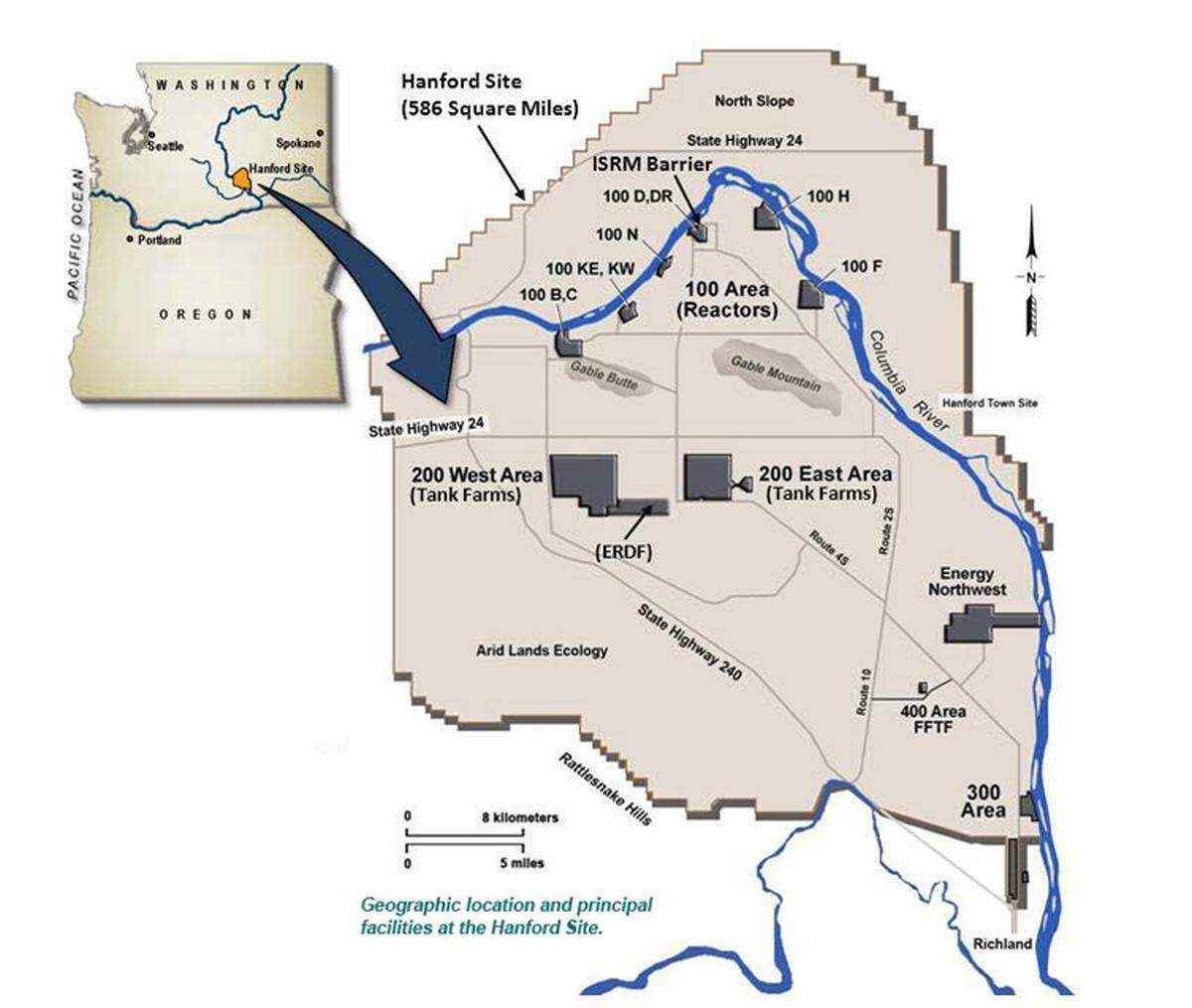
The Hanford nuclear reservation is contaminated from the past production of plutonium for the nation’s nuclear weapons program during World War II and the Cold War. The nation spends about $2.5 billion a year on its cleanup, with the work expected to continue for decades.
Hanford cleanup delays
The $7.25 billion requested now could start and complete dozens of projects at sites in Washington state and at least eight other states, the letter said.
It proposes spending the money at Hanford on projects that include two that a recent DOE report proposes delaying.
The “Environmental Management Vision 2020-2030: A Time of Transition and Transformation” proposes delaying work to move 2,000 capsules of radioactive strontium and cesium from underwater storage to dry storage.
Preparations have been underway for years to move the capsules after concerns were raised about the structural integrity of the pool holding them.
The DOE Office of Inspector General says that the pool, built in 1973, could be at risk in a severe earthquake.
A loss of cooling water could cause the capsules to overheat and break and radioactive contamination could be released into the ground or air.
The same DOE report would put on hold the cleanup of the highly radioactive spill beneath the 324 Building just north of the city of Richland and near the Columbia River.
Extensive work already has been done to prepare to stabilize the building and then cut through the floor to dig up the soil.
DOE officials have said that the radioactive cesium and strontium contamination beneath the building is so radioactive that it would be fatal within a few minutes of human contact.
Other Hanford site work
The requested stimulus money also could be spent to continue environmental cleanup work of the K West Reactor basin after radioactive sludge was removed from underwater storage in the basin last year.
The basin still holds contaminated water and equipment and needs to be cleaned up and removed.
More work also is ready to be done to clean up contaminated soil and groundwater at the nuclear reservation.
Some of the money also could be spent to continue engineering and construction work to glassify high level radioactive waste at the Hanford vitrification plant for disposal.
Now work at the plant is focused on starting to treat low activity radioactive waste by a federal court deadline of 2023 but DOE also has a court deadline to have the plant fully operating by 2036.
Sites ready to start work
The information sent to Congress says that projects across the nation could be completed in three to five years. DOE is ready to begin work immediately on many of the proposed projects, it said.
“We believe we have a rare opportunity to address the legacy of the past, implement DOE’s strategic vision more rapidly and develop the pipeline of nuclear workers and technologies to help us lead in the future,” the letter said.
Among those signing it were regional economic development and community leaders in the Tri-Cities; Savannah River, S.C.; Idaho Falls, Idaho; Paducah, Ky.; West Valley. N.Y., area, and the Oak Ridge, Tenn., area; plus leaders AFL-CIO Metal Trades Department and North America’s Building Trades Union.
It also was signed by the Energy Communities Alliance, an organization of local governments with an interest in DOE environmental cleanup projects.
It includes Hanford Communities, a coalition of Tri-City area governments with an interest in successful Hanford cleanup.
This story was originally published May 18, 2020 at 11:29 AM.