
3 Tri-Cities businessmen start nonprofit to cut Hanford red-tape that’s slowing cleanup
Tri-Cities business leaders frustrated by what they see as skyrocketing taxpayer costs and decades of delays at the Hanford nuclear reservation have launched a nonprofit to advocate for faster environmental cleanup.
“It is long past time for DOE to cut through the bureaucracy and over-regulation that has stopped the cleanup progress for this historic waste,” said Bob Ferguson, co-chairman of the new group, Northwest Energy Associates.
Ferguson, Bill Lampson and Gary Petersen formed the new nonprofit.
Previously, they won a federal lawsuit in 2013 against the Obama administration to force continued regulatory review of Yucca Mountain, Nev., as the site planned as a national repository.
Hanford’s high level radioactive waste is among waste planned to be sent there for disposal.
Lampson is the president of Lampson International crane company, Petersen is the retired vice president of Hanford programs for the Tri-City Development Council and Ferguson has worked in the nuclear industry as an entrepreneur or government manager for decades.
Petersen will serve as volunteer president.
They are concerned that for each of the last six years Hanford budgets have been nearly $1 billion short of the amount needed to pay for planned work and work required to meet negotiated or court-ordered deadlines.
Current budgets are about $2.5 billion a year for cleanup of radioactive and other hazardous chemical contamination on the 580-square-mile site used to produce plutonium for the nation’s nuclear weapons program from World War II through the Cold War.
Budget shortfalls delay work, which increases costs and extends the time needed to complete cleanup as leak prone underground tanks and other highly contaminated facilities continue to deteriorate, said Northwest Energy Associates.
The latest estimate by the Department of Energy for the total cost to complete Hanford site cleanup increased to an estimated $323 billion to $677 billion in 2019, up from $106 billion in the previous estimated in 2016.
Faster waste cleanup
The Northwest Energy Associates will focus on two initiatives, including “Clean Up Hanford Now.”
The initiative will advocate for and support demonstrations of methods to treat waste to supplement the treatment that will done at the vitrification plant.
Construction started on the plant, which will glassify some of 56 million gallons of radioactive waste in underground tanks, in 2002.
It is required by a federal court consent decree to begin operating by the end of 2023, treating some of the least hazardous tank waste.
While cleanup on parts of the Hanford site has progressed, work to empty and treat the waste held in underground tanks has languished under the plan to glassify the waste at the vitrification plant, the advocacy group said.
At the same time, costs have at least quadrupled.
The initial cost estimate to build and prepare the plant for operation was $4 billion, which has now increased to $17 billion and could go higher, according to Northwest Energy Associates.
Work on two facilities at the plant that were planned to handle the most radioactive waste in the tanks — the Pretreatment Facility and the High Level Waste Facility — now are on indefinite hold and the new advocacy groups doubt they will ever be completed as DOE looks at other ways to handle high level radioactive waste from the tanks.
Vit plant can’t treat all waste
Treating all the low activity radioactive waste also is an issue.
About 90 percent of the waste in the tanks is low activity radioactive waste, which the vitrification plant was never planned to be large enough to treat all of it in a reasonable time.
The new group wants to see the Department of Energy and its regulator, the Washington state Department of Ecology, aggressively pursue additional tank waste treatments for low activity tank waste that it says are safer, faster and less costly than vitrification.
It particularly likes a proposal to stabilize some of the low activity waste with concrete-like grout and then ship it off site for disposal.
A Government Accountability Office report has said the option could be five times less costly, safer and decades faster than treating the waste at the vitrification plant, Northwest Energy Associates said.
But both the state and federal government are moving too slowly on that proposal, it said.
“Cleanup of Hanford tanks by vitrification already is many years behind schedule,” Petersen said. “Yet the DOE has not even filed an application for the state permit needed to implement the demonstration of a well-proven, faster and cheaper method to clean up the tank waste.”
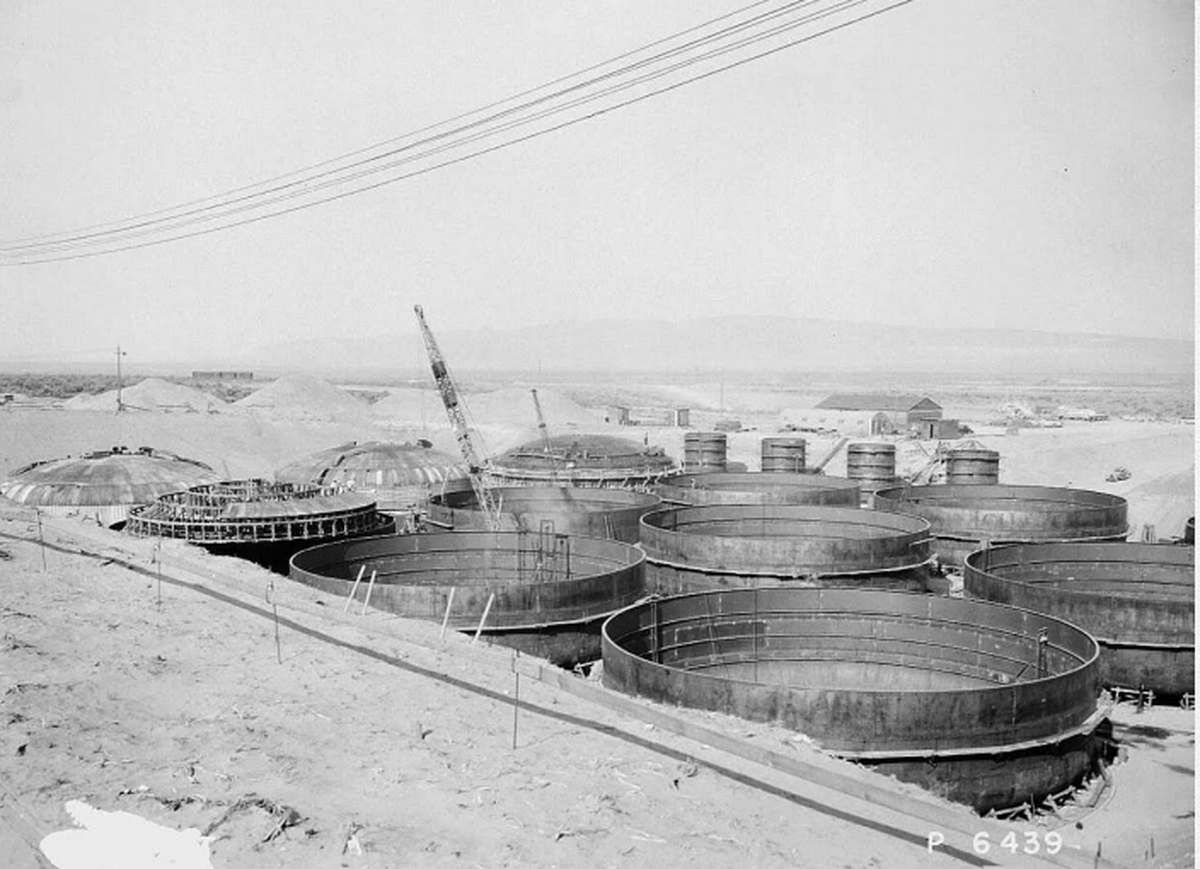
Lampson and Ferguson said that the public needs to remember that Hanford’s oldest, leak-prone tanks storing the waste until it can be treated for disposal were built as long as 75 years ago.
Clean energy park
“We owe it to our community as U.S. taxpayers to get this site cleaned up and use the money saved to transition Hanford’s wartime mission to the new war on global climate change,” Lampson said.
The second initiative the new nonprofit is working on, Clean Energy Advocates, will push to transition Hanford from its original plutonium production mission to a clean energy mission.
A clean energy research and development park on the site would bring new jobs and more educational opportunities to the region, it said.
Among options for the park is a small modular nuclear reactor complex.
Northwest Energy Associates said it welcomes participation, questions and suggestions at its future website, cleanuphanfordnow.org.
This story was originally published May 13, 2020 at 2:37 PM.