
DOE worker barred from federal jobs after giving Congressional candidate Hanford tour
A Department of Energy employee has been barred from working for the federal government for three years after she violated the Hatch Act.
The employee allowed Christine Brown, a candidate for Congress, to join a tour of the Hanford nuclear reservation radioactive waste treatment plant. The tour was closed to the public.
A $17 billion vitrification plant is being built at Hanford to turn radioactive waste into a stable glass form for disposal.
The Hatch Act limits the political activities of federal employees to ensure that federal programs are administered in a nonpartisan way.
On Nov. 8 the Office of Special Counsel filed a Hatch Act complaint against the DOE employee, saying her violation of the act had been “flagrant” because she knew DOE had already denied the request for a tour.
The Office of Special Counsel is an independent federal investigative and prosecutorial agency focused on federal employee matters.
The candidate involved also was not named by the Office of Special Counsel, but sources told the Herald it was Brown, who ran unsuccessfully against Rep. Dan Newhouse, R-Wash., in 2018.
The Herald also learned that Joni Grindstaff, who as recently as December was the mission integration office director for the DOE Hanford Office of River Protection, allowed Brown on the tour.
The statement said that the Office of Special Counsel reached a settlement agreement with the unnamed DOE employee.
Brown and Grindstaff could not be reached by the Herald about the incident.
DOE employee admits violation
As part of the agreement, she admitted to violating the Hatch Act and agreed to be barred from federal employment for three years. She voluntarily resigned from DOE as of Jan. 4, the statement said.
The Office of Special Counsel said the candidate for Congress wanted the tour to gather information for her campaign.
“The candidate had repeatedly sought a tour of the plant to demonstrate her familiarity with the project to potential voters,” the statement said.
In denying her requests, DOE cited potential Hatch Act violations.
The Office of Special Counsel in guidance to federal employees says they may not engage in activity directed at the success of a candidate for a partisan office while the employee is on duty, at a federal facility or using any federally owned or leased vehicle.
The statement said just three days before the DOE employee gave the candidate the tour, the DOE employee had received a reminder about how such a tour could violate the Hatch Act.
“Despite having this information, the employee unilaterally used her official authority to give the tour,” the statement said.
Information and photographs from the tour were used in Brown’s campaign. For example, photographs taken during the tour were posted to the campaign’s social media pages, according to the Office of Special Counsel.
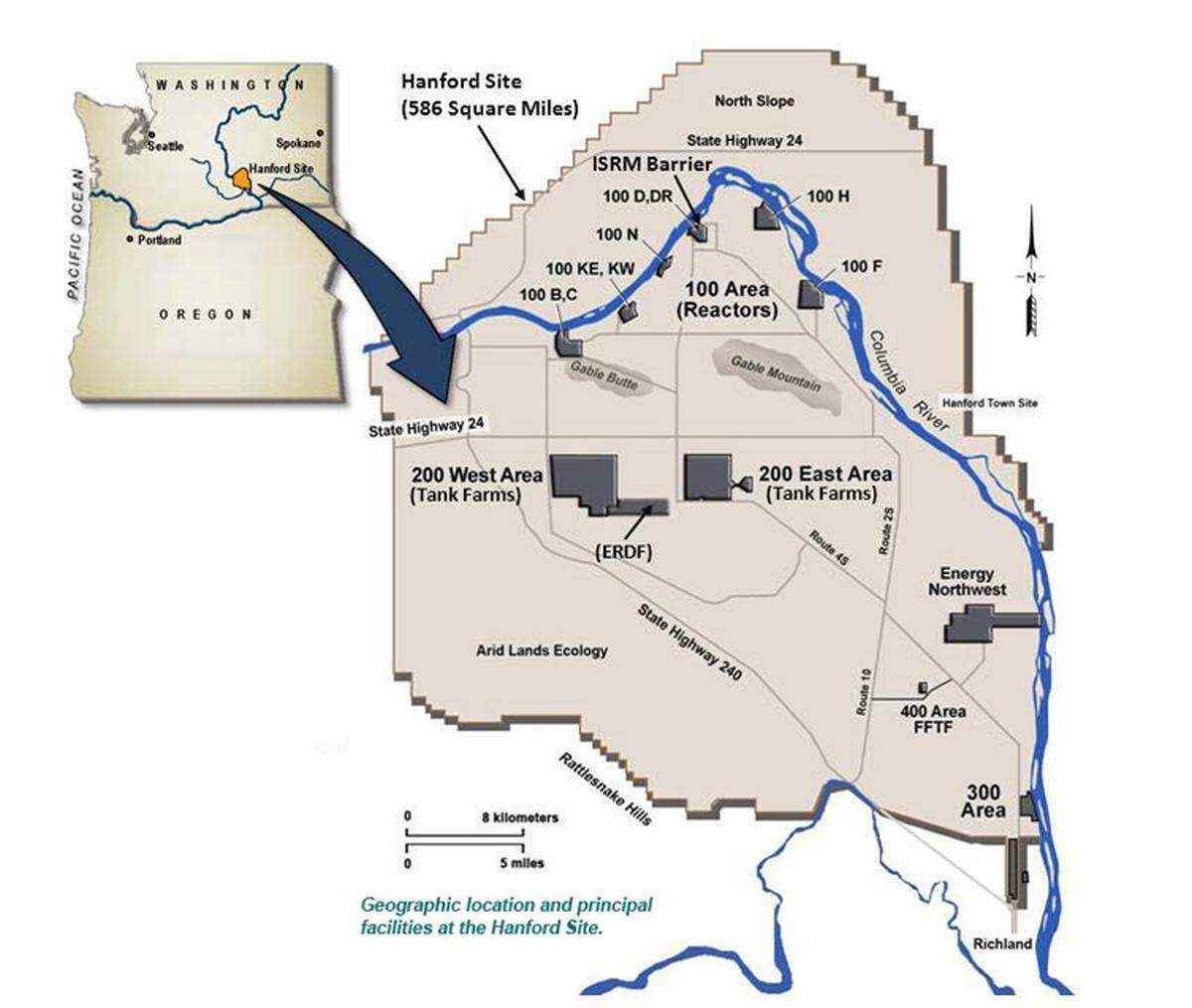
The Hanford nuclear reservation, a 580-square-mile site in Eastern Washington, produced plutonium for the nation’s nuclear weapons program from World War II through the Cold War.
Currently about $2.5 billion a year is being spent on environmental cleanup of radioactive and hazardous chemical contamination and waste at Hanford.
This story was originally published January 17, 2020 at 10:10 AM.