
Geek out with the latest alerts from Richland’s galactic observatory. There’s an app for that
Fans of the galactic observatory near Richland have the easiest way yet to keep up with the latest discoveries.
Now, you can get an alert nearly as quickly as the astronomers following LIGO Hanford so they can search the skies too.
A new free app called “Chirp” provides alerts when LIGO Hanford and three other observatories detect a potential gravitational wave pulsing through the Earth from a violent event in space.
The app was developed by Laser Labs, with roots in the Gravitational Wave Group at the University of Birmingham in the United Kingdom, with a goal of bringing science to the masses.
It’s not the first app to provide Laser Interferometer Gravitational-wave Observatory alerts, but “Chirp” has the bonus of being reasonably user friendly for non-scientists.
Chirp’s release this month was timed to coincide with the end of the month-long shutdown of the observatory on the Hanford nuclear reservation.
The observatory and two others took a month-long break for maintenance and upgrades.
LIGO Hanford is one of four in the world that look for evidence of past events, such as the collision of black holes and neutron stars that create gravitational waves, or ripples through space and time.
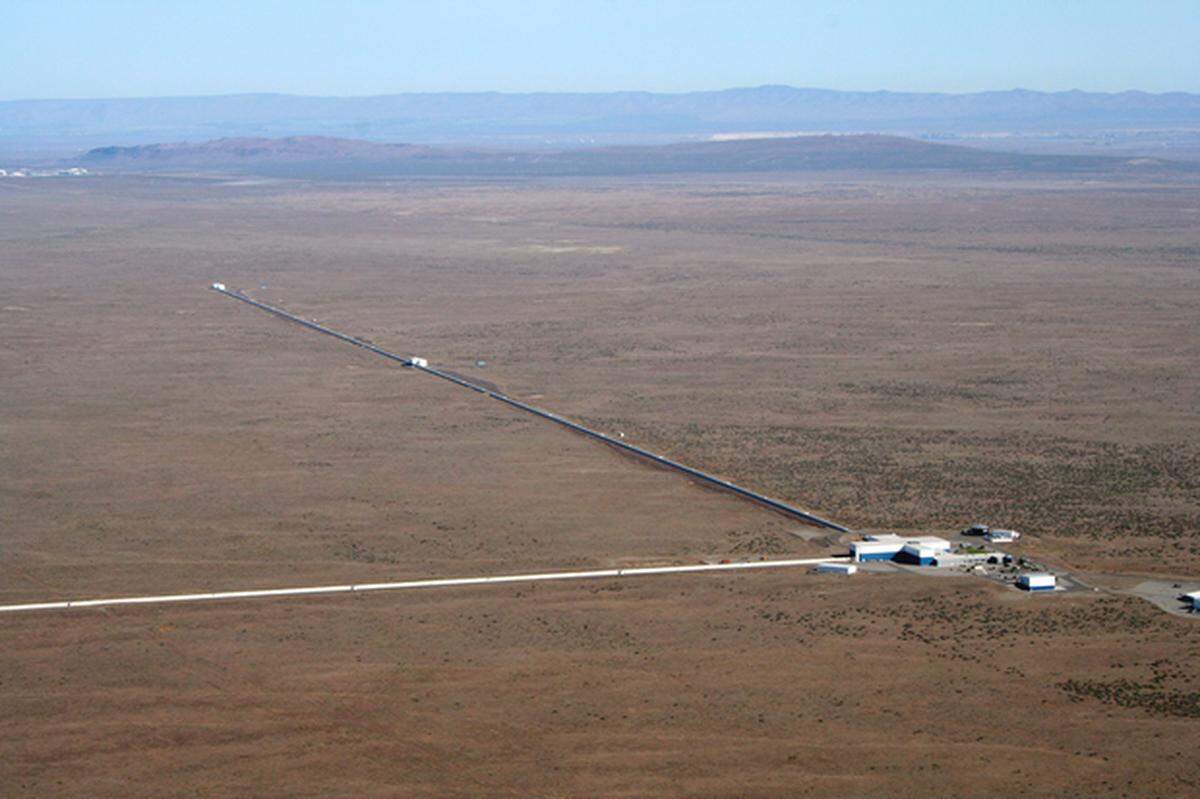
The waves create a slight movement in the Earth as they pass through, which the gravitational-wave observatories work to detect.
Scientists must sift out the “noise” that can be caused by other movements as subtle as vibrations detected at Hanford from ocean waves across Washington state on the Pacific Coast.
LIGO opened new scientific field
LIGO Hanford and its twin observatory in Louisiana made scientific history in August 2015 when it detected gravitational waves for the first time, nearly 100 years after Albert Einstein predicted their existence.
Although black holes do not emit light that can be detected at more traditional observatories, the collision of two neutron stars detected in August 2017 was also detected by observatories searching for different forms of light, including gamma rays and ultraviolet light. They had been alerted that gravitational waves had been detected.
The detections opened the new field of “multi-messenger” astronomy.
To allow observatories searching for light to start looking as soon as possible, LIGO Hanford and its collaborators are releasing information as soon as they suspect they may have detected gravitational waves.
LIGO Hanford’s collaborators include the Louisiana LIGO, the Virgo observatory in Italy and KAGRA, which is just being commissioned in Japan.
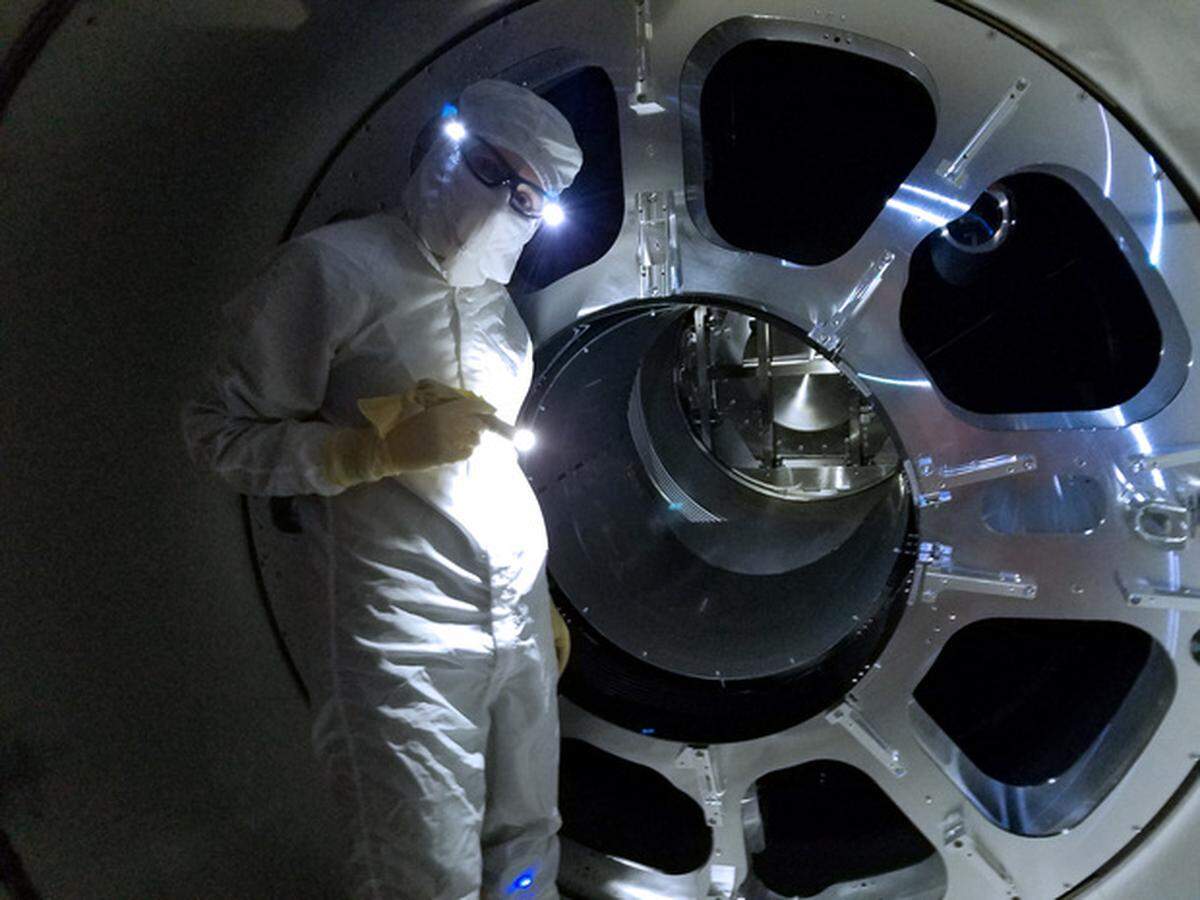
Chirp sends out the alerts for their possible detections, before full background studies are done, so there are some retractions.
Fred Raab, LIGO associate director for operations, says LIGO aims for a rate of about 90 percent alerts that are eventually verified and 10 percent retracted.
App for mobile or web
That gives them a reasonable chance of searching for the best candidates without spending too much money making searches for observations that turn out to be false alarms.
The new app includes a graphic showing the region of the sky believed to contain the source of the gravitational wave observatory.
Users can see which of the four observatories reported possible findings and the most likely origin, such as two black holes colliding, the merger of two neutron stars or a black hole swallowing a neutron star.
Users can get a hint of how likely the observation is to be confirmed by looking at the false alarm rate.
“A smaller false alarm rate has a higher probability to stand up to further scrutiny,” Raab said.
In other words, a false alarm rate of 1 per 10 years or more has a higher likelihood of being confirmed as gravitational waves than a false alarm rate of 1 per 6 months.
Users also can check to see if LIGO Hanford and the other obervatories are observing. The hours and minutes of observing time are shown in green and the times not operating are shown in red.
To find the chirp mobile app, search for Lase rLabs Chirp in your mobile device’s app store. Information also is displayed on the web at chirp.sr.bham.ac.uk/.