
Hanford’s key role in historical world events detailed in Tri-Citian’s new book
A new look at the history of the Hanford nuclear reservation is being released by two well-known Tri-Citians.
“Something Extraordinary — A Short History of the Manhattan Project, Hanford and the B Reactor” is the result of the collaboration between Robert Ferguson and C. Mark Smith.
Ferguson, of Richland, brought firsthand knowledge to the book. He was a physicist based at Hanford reactors starting in 1957, the beginning of a 60-year career in the nuclear industry that included serving as deputy assistant secretary for nuclear programs for the Department of Energy.
Smith, of Richland, was the regional director of the federal Economic Development Administration for eight Western states.
Their book takes a broader look at Hanford than some previous books, putting Hanford’s role in the context of world history.
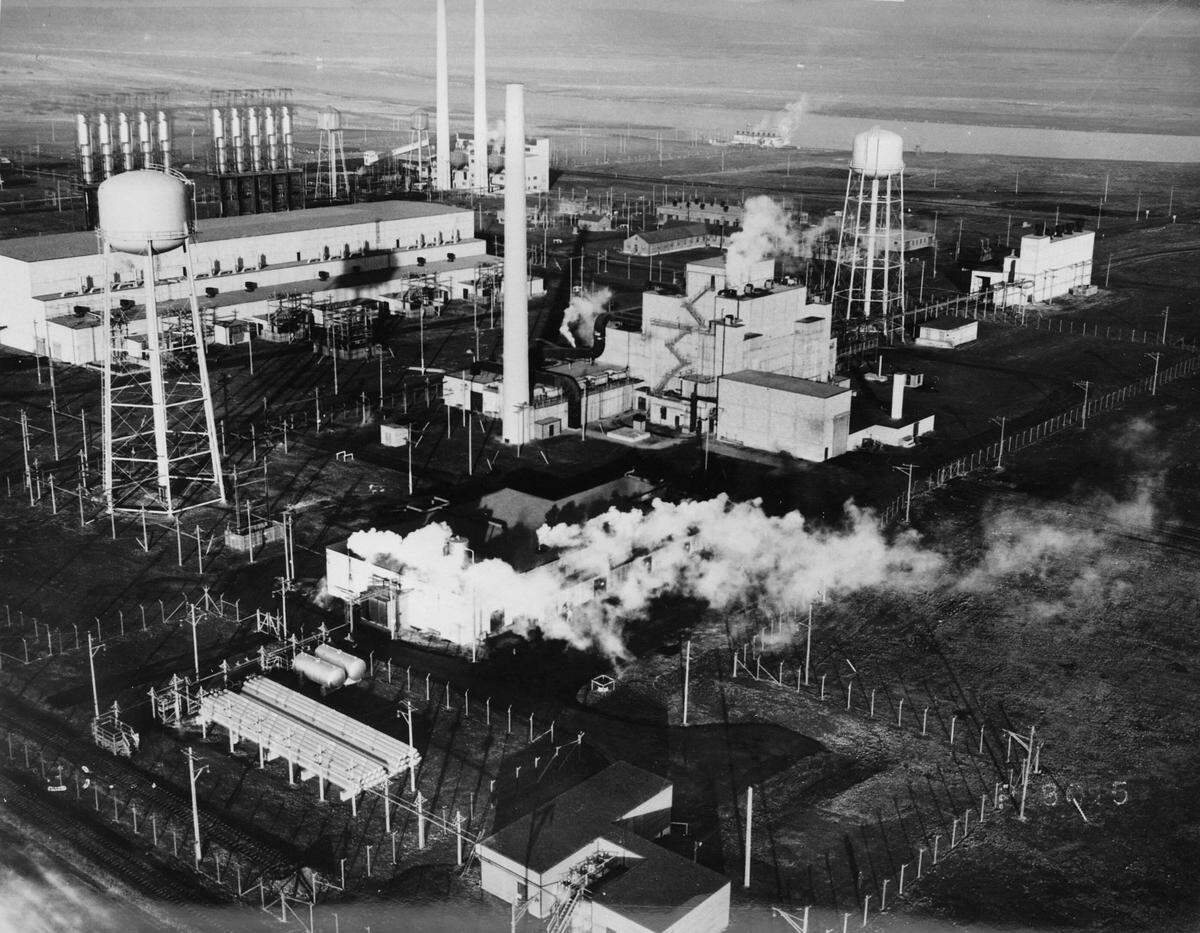
Hanford has “just a remarkable story of science and the ability to do that in such a short period of time,” Ferguson said.
In 1942, the first sustaining nuclear reaction was achieved as part of the Manhattan Project to build an atomic bomb before Nazi Germany did.
Ferguson: B Reactor ended WWII
By 1944 the world’s first full-scale production reactor, B Reactor, started up at the Hanford nuclear reservation in the Eastern Washington desert.
Plutonium produced at Hanford was used in the atomic bomb dropped over Nagasaki, Japan, helping end World War II in 1945.
“World War II never would have ended without B Reactor,” Ferguson said.
If the Japanese thought the United States had only one atomic bomb — the bomb dropped over Hiroshima, Japan, fueled with uranium 235 rather than plutonium — it would not have surrendered, he said.
The Allies would have lost another 1 million men, and prisoners of war held by the Japanese would have been killed, he said.
“Something Extraordinary” also covers the Cold War years when Hanford ramped up plutonium production, and it includes a chapter on the current environmental cleanup mission at the site.
Its release was timed to coincide with key Hanford anniversaries.
Eighty years ago, WWII broke out in Europe. Seventy-five years ago, B Reactor went critical for the first time.
Thirty years ago, the Tri-Party Agreement was signed, providing a framework for cleanup of the massive amounts of contamination left at the site from the production of plutonium.
The authors write that the book tells the story “of the triumph of physics, chemistry, engineering, construction, and, most of all, the human willpower of the scientists, soldiers and companies that developed the bomb and built the facilities to produce it, and . . . (those) who have had to deal with the aftermath.”
It costs $19.95 and is available at bookstores and online retailers. It was published in cooperation with the B Reactor Museum Association and the Washington State University Tri-Cities Hanford History Project.
This story was originally published September 13, 2019 at 12:34 PM.