
Hanford’s $17 billion vit plant is at ‘serious risk’ of not being finished on time
The Department of Energy is at risk of missing deadlines to have the Hanford vitrification plant fully operating by a federal court deadline of 2036.
DOE notified the Washington state Department of Ecology on Wednesday that the 2036 deadline and nine other deadlines to get ready for full operations are at “serious risk” of being missed.
It told the state that it was giving them notice out of an abundance of caution.
The court case that led to a 2016 court consent decrees with new deadlines for the massive plant under construction in the center of the Hanford site north of Richland requires notifying the state if the risk is serious.
“The state is already well-informed of the multiple factors that constitute the risk, and much of this information has also been shared previously with the stakeholders and the Hanford community,” DOE said in a statement after sending the letter.
DOE and the Department of Ecology have been in talks after the state told DOE in late May that it wanted to open a “frank discussion” about challenges it believed DOE was facing in meeting legal deadlines related to tank waste and its treatment.
Maia Bellon, the director of the Department of Ecology, said the state wanted to work with the federal agency to identify a “realistic path forward for Hanford’s tank waste, one that addresses all aspects of the tank waste mission and, ideally, does not need to be revisited every few years.”
But she said the state would not be budging on key terms.
Deadline concerns raised
Hanford has 56 million gallons of radioactive and hazardous chemical waste stored in underground tanks from the past production of plutonium for the nation’s nuclear weapons program.
Workers are transferring the waste from leak-prone single-shell tanks to newer double-shell tanks until it can be treated for disposal.
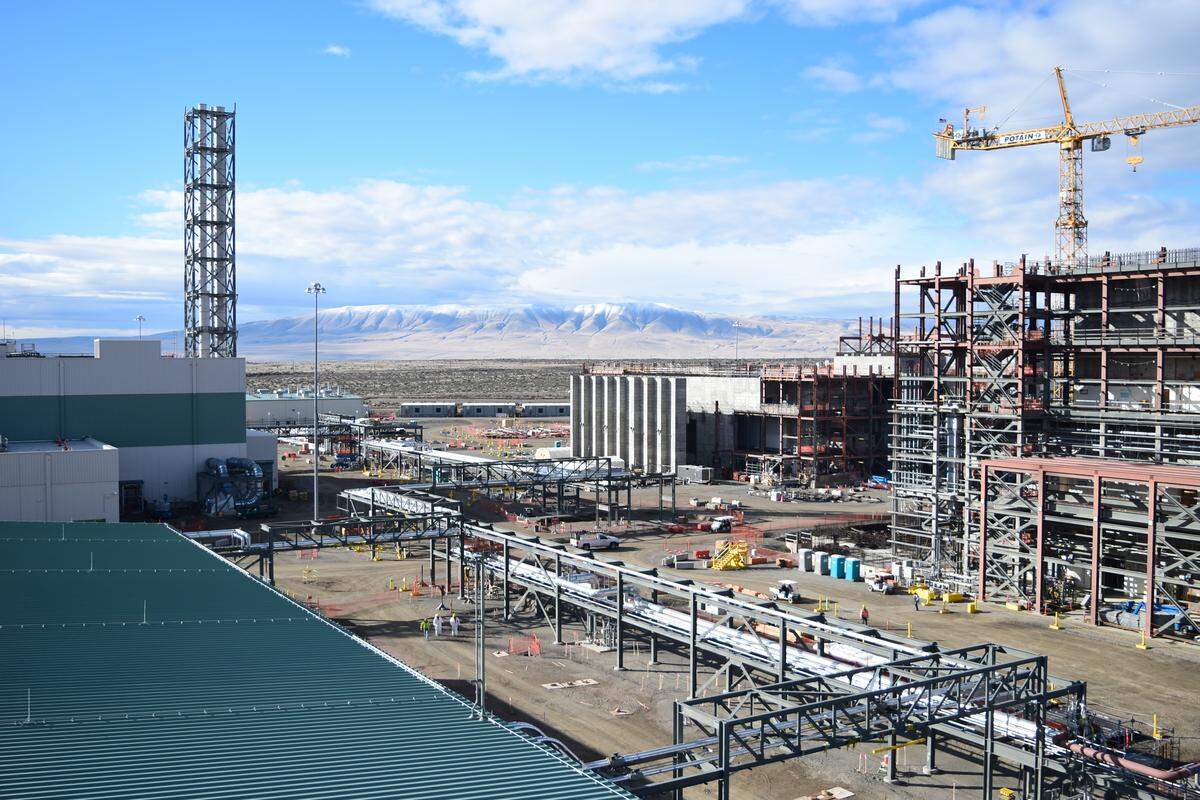
Much of the waste is expected to be glassified at the $17 billion Hanford nuclear reservation vitrification plant, which has been under construction since 2002.
Bellon raised multiple concerns about DOE meeting deadlines, including treating some of the least radioactive waste — low activity radioactive waste separated out of the tanks — by a consent decree deadline of 2023.
She also said that high level radioactive waste treatment at the vitrification plant must start on a time frame as close to the current deadlines as possible, she said.
“DOE remains firmly committed to, and is on schedule to meet, its commitment to begin waste treatment by December 2023,” DOE said in a statement.
It is the later deadline related to treating high level radioactive waste that DOE said Wednesday may be at risk.
The earliest of those deadlines is finishing construction of the High Level Waste Facility at the vitrification plant by 2030.
Then there are additional deadlines, including construction work at the vit plant’s Pretreatment Plant, to keep work on pace to meet a 2033 deadline to start treating high level waste and to have the plant fully operational by 2036.
DOE said in the letter sent Wednesday that it needs time to come up with the best plan for treating high level waste.
DOE looking at options
Technical issues were raised by then Energy Secretary Steven Chu in 2012 about parts of the plant that would handle high level waste — the High Level Waste Facility, which will turn high level waste into a stable glass form for disposal, and the Pretreatment Facility, which was designed to separate waste into low activity and high level waste streams for separate treatment.
The original issues have only recently been resolved, delaying construction on those two vit plant facilities.
Now, DOE is questioning if there might be a better way to prepare the high level waste for treatment than sending it to the vit plant’s Pretreatment Facility.
It already has worked out a way to separate some low activity waste from the storage tanks without sending it to the unfinished Pretreatment Facility to allow some waste treatment to begin by 2023.
Earlier this spring, DOE started an analysis of alternative approaches to treat high level waste. After last month’s decision to expand the alternatives under consideration, DOE now expects to have the analysis done in July.
The results of the analysis, plus other variables before deadlines are reached in the next 11 to 17 years, could affect the schedule for the High Level Waste and Pretreatment facilities, DOE said in the letter to the state.
“Accordingly, the department cannot project with certainty when the (two) facilities will be completed,” the letter said.
Variables include how much money Congress approves for the vitrification plant each year, technological advances, contractor efficiency and practical experience with vitrification — both as Hanford begins treating low activity waste and DOE’s Savannah River facility in South Carolina also vitrifies waste.
“We will continue to work collaboratively with Ecology to assess our challenges and identify the best path forward for addressing the waste in Hanford’s tanks as soon as practicable,” DOE said.
It seeks a realistic solution that is safe, affordable and considers risk, it said.
This story was originally published September 4, 2019 at 4:45 PM with the headline "Hanford’s $17 billion vit plant is at ‘serious risk’ of not being finished on time."