
New national park website to draw tourists to Tri-Cities
Seventy-five years after three secret cities were built to produce the world’s first atomic bombs, their communities have come together to help attract national and international visitors.
Visit Tri-Cities, along with the tourism associations of Oak Ridge, Tenn., and Los Alamos, N.M., announced a new website to attract visitors to the three-site Manhattan Project National Historical Park.
The new website comes as the commemoration has begun for the 75th anniversary of the Hanford nuclear reservation near the Tri-Cities this year and next year.
In 1943, residents who lived in the small farming communities of White Bluffs, Hanford and Richland along the Columbia River and the Native Americans who relied on the land were ordered to leave as the federal government took over what is now Hanford.
More than 50,000 men and women came to Eastern Washington from across the country to help build the complex that would create plutonium at an industrial scale over the next year. Hanford’s B Reactor, the world’s first full-scale reactor, went critical on Sept. 26, 1944.
The reactor is open to visitors as part of the Manhattan Project National Historical Park, established in 2015. Visitors also can take a tour of sites that tell the stories of those forced to leave their homes and land for the military project.
But it will take more than national park resources to take full advantage of the park, tourism associations realized.
The three associations hired Tombras Group of Washington, D.C., at a combined cost of $100,000 over three years to develop a website, along with its maintenance and marketing strategy, to build interest in the three branches of the park.
“Convenience is king,” said Michael Novakovich, president of Visit Tri-Cities.
The website at manhattanprojectnationalpark.com is needed to create interest in the park nationally and internationally, he said. It also can encourage visitors who visit one of the three park sites to check out the others.
Visitors to the national park spend money on hotels, restaurants and other attractions, contributing to the tax base and lowering the local tax burden, Novakovich said. They also help keep the restaurants open that Tri-City residents enjoy and help attract new businesses.
Hanford produced plutonium for the atomic bomb dropped on Nagasaki, Japan, and Oak Ridge produced the enriched uranium for the atomic bomb dropped on Hiroshima, Japan. Together the bombs helped end World War II.
Scientists at Los Alamos collaborated on the designs for the nuclear weapons using materials produced in Washington or Tennessee.
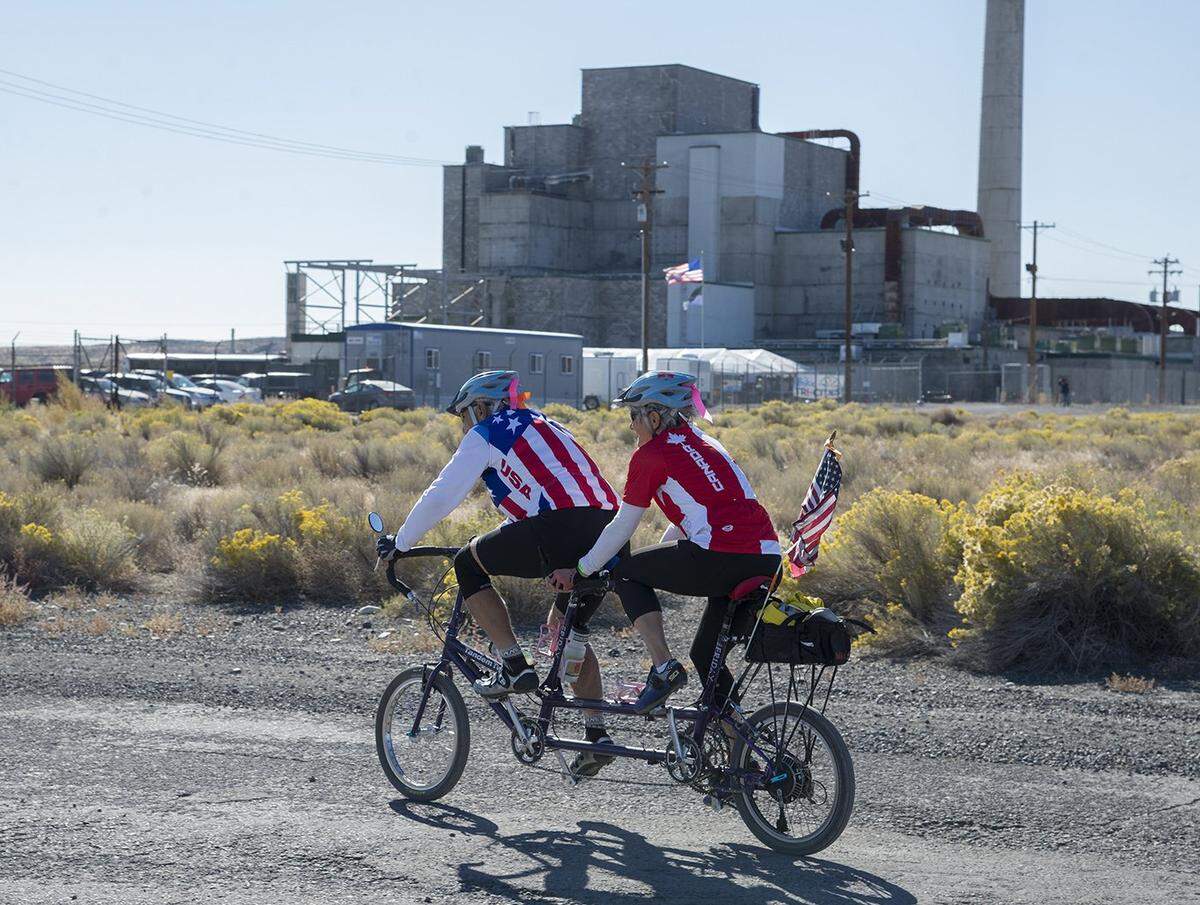
Much of the initial work of the park service at the Hanford portion of the historical park has been in developing relationships with schools, including sending volunteers into schools and encouraging classes to tour B Reactor.
But the Tri-Cities should be hearing more about the Hanford portion of the park over the next year.
The Hanford History Project at Washington State University Tri-Cities and the Hanford History Partnership are encouraging local groups to help commemorate the sites’ 75th anniversary by posting related events at an anniversary website, www.hanford75th.com.
On Thursday, Leidos, the primary owner of Hanford contractor Mission Support Alliance, plans a “fireside chat” with experts on Hanford’s past and future to mark the anniversary.
Registration is closed, but participants can add their names to a waiting list for the event at the Reach museum in Richland by going to the events calendar on the anniversary page website.
Other planned events include “Ride the Reactor” on Sept. 22, a reactor tour, lunch and mountain bike ride near the reactor on the closed nuclear reservation.
The Mid-Columbia Mastersingers also plan their third annual concert, this one with the theme of “Democracy,” at B Reactor in late September. Tickets are not yet at mcmastersingers.org.
To register for a free tour of B Reactor go to manhattanprojectbreactor.hanford.gov. To register for a free tour highlighting pre-war life and residents’ sacrifices, go to tours.hanford.gov/HistoricTours.
This story was originally published July 16, 2018 at 5:57 PM.