WA’s teacher of the year from Tri-Cities says: ‘I don’t let kids give up’
AI-generated summary reviewed by our newsroom.
- A Pasco High alumn, Gabriela Whitemarsh bridged math access for multilingual students
- She won Washington 2026 Teacher of the Year and will join a statewide residency
- She’s the second-ever Tri-Cities educator to earn the distinction.
It’s 20 minutes until class and Gabriela Whitemarsh is moving at dizzying speeds, but she’s hitting her stride.
The bilingual math teacher just grabbed a few boxes of markers from Pasco High School’s front office before her first-period precalculus class and is now walking back to her temporary classroom in the outside portables.
Her kids are graphing rational functions, and there’s a test next week. Whitemarsh has a proven strategy – a poster-graph project – that has helped this group memorize core concepts before.
“On the test, they blew it out of the water. They did so good,” she gushes about her students before contemplating which hallway to take to dodge the Tri-Cities rain.
It’s always the little things — a million of them — to get done, to consider, to fix or to be thankful for throughout the day.
That’s just life as a teacher in the 21st century. But despite that controlled chaos, Whitemarsh says she’s living her dream teaching mathematics to multilingual learners at her alma mater.
“Being able to have an idea as a 17-year-old, and then go experience life, change careers, and then come back and serve the place that gave you so much? That’s just the coolest thing ever,” the 2003 Pasco High graduate told the Tri-City Herald.
That dream — to bring advanced mathematics classes to students learning English — also led her to be chosen as Washington’s 2026 Teacher of the Year.
She’s the second Tri-Cities educator to ever win the honor and the first since 2018 from Eastern Washington.
Life changing award
Since earning the distinction in September, Whitemarsh said her life has been quite different.
“It’s been quite the whirlwind, it’s been hard to get my dates straight,” said the 41-year-old educator. “I still have moments of shock.”
She’ll leave the classroom come January to start a multi-month residency as part of the Teacher of the Year program, though those details are still being buffed out and might be scaled back due to budget reductions.
But she’ll still take advantage of new professional development opportunities, leadership retreats, speaking engagements and have space to benefit for her students on the state level during her time
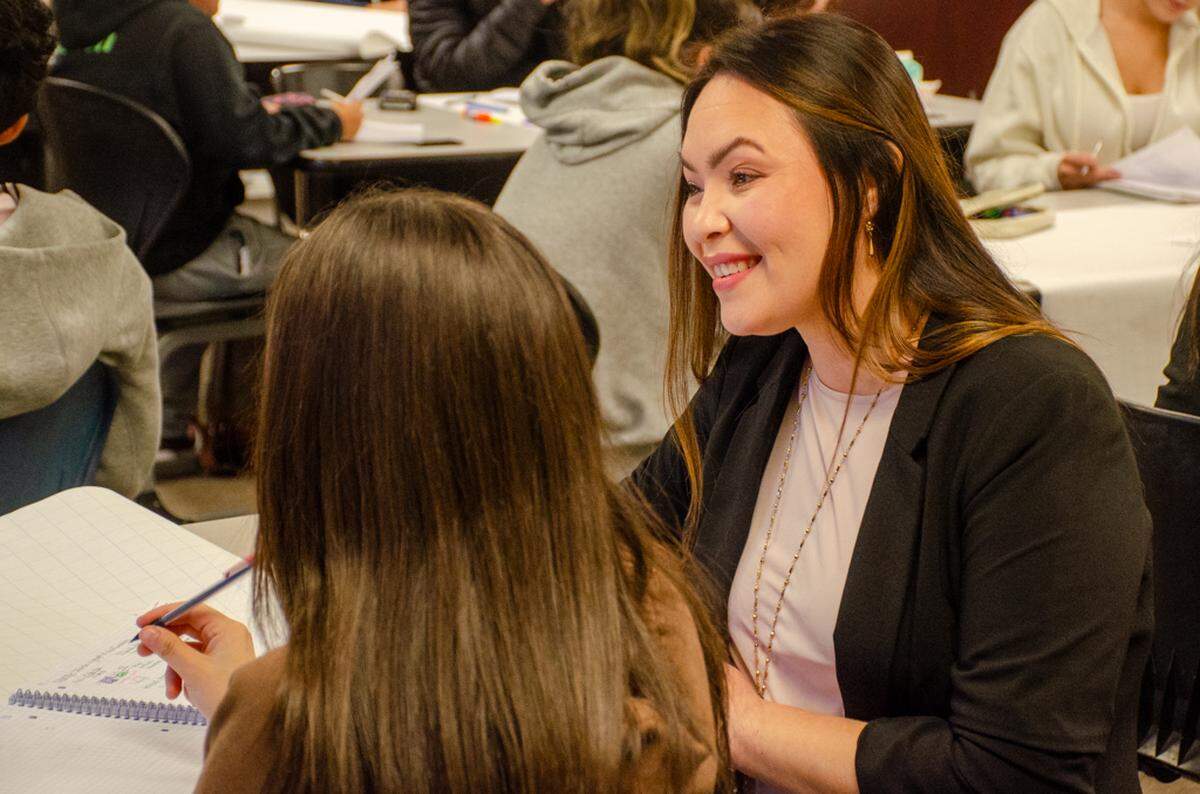
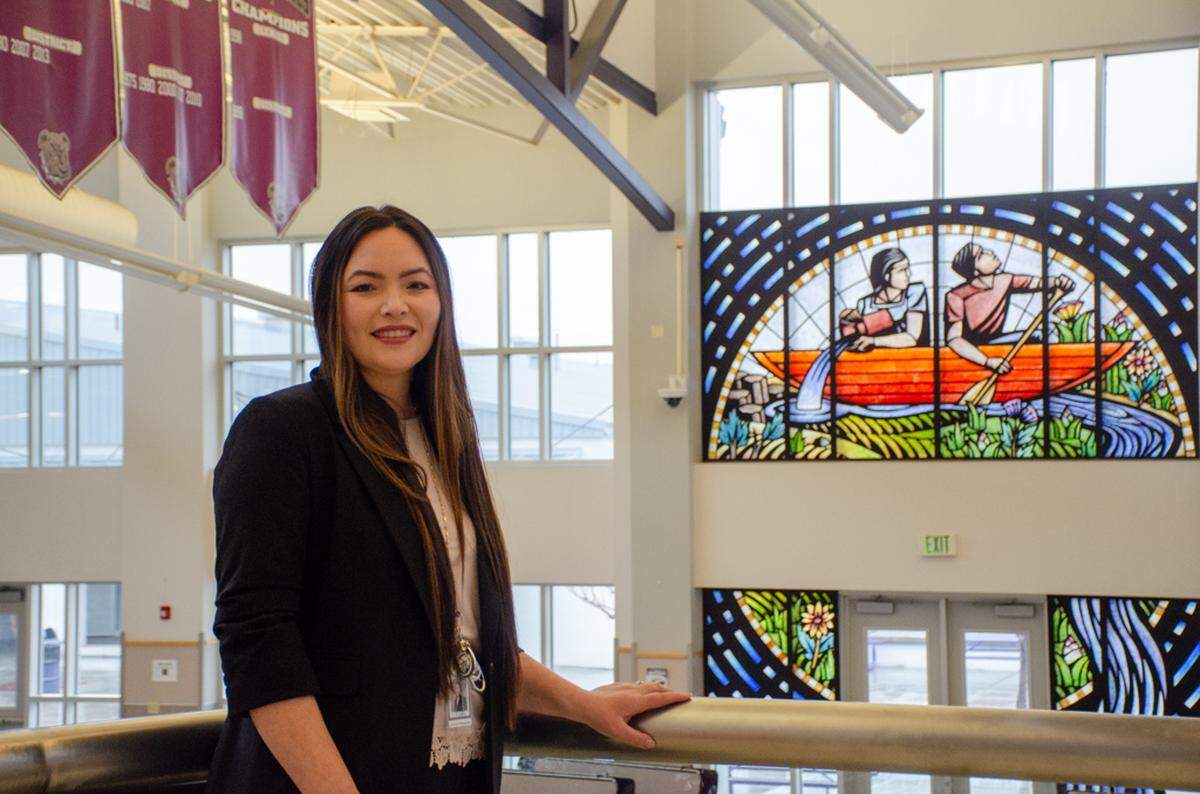
The Herald shadowed the ever-moving Whitemarsh during a hectic half-day of teaching in an effort to paint the portrait of a distinguished educator.
But she insists she’s no different from any of her other 150 teaching peers at the school of 2,600 students. She instead sees the program as an opportunity to be a diplomat for her community.
“I do not think of myself as the best teacher, and I think that’s something I struggle with in having received this recognition,” she said. “I see so many of my peers here, at the high school, people I know within the district, and the people that I’ve met — the other regional teachers of the year.”
“Any of them could have been on that podium, and there’s so many people here in our community that deserve to be on that podium,” she said. “So, I just really want to honor their work, I want to be able to honor their sacrifices and be able to showcase that I’m one of many. I’m not at the top — there’s a lot of us there.”
Bulldog with education roots
A flurry of students, both English language learners and native speakers, pile into a portable classroom just in time for the first bell. Whitemarsh greets her groggy students with a warm, “Buenos dias. Good morning,” as they settle in for their warmup.
She allows the juniors and seniors to sit wherever they feel most comfortable. One student asks “Miss” for a spare lined notebook.
“Entry task: find the X- & Y-intercepts of the rational function,” her projector reads. “F(X) = x2-8x+15 / x2-3x-10.”
Aside from the shuffling of backpacks and clatter of calculators, the room is dead silent as students work out the answer. Throughout class, Whitemarsh is checking in with kids to register through Central Washington University to get math credit for the class.
Whitemarsh’s temporary class is bare. Aside from a paper poster showing a coordinate plane, a few items on her desk and scribbles on the whiteboard, there’s not much spunk.
Room No. 252, her second-floor class in the main building, is closed off for HVAC repairs.
“I’m not super married to any classrooms,” she said.
While Whitemarsh is used to moving around Pasco High School a lot, having previously served as a department chair, she admits to hoping the space will be her “forever classroom.”
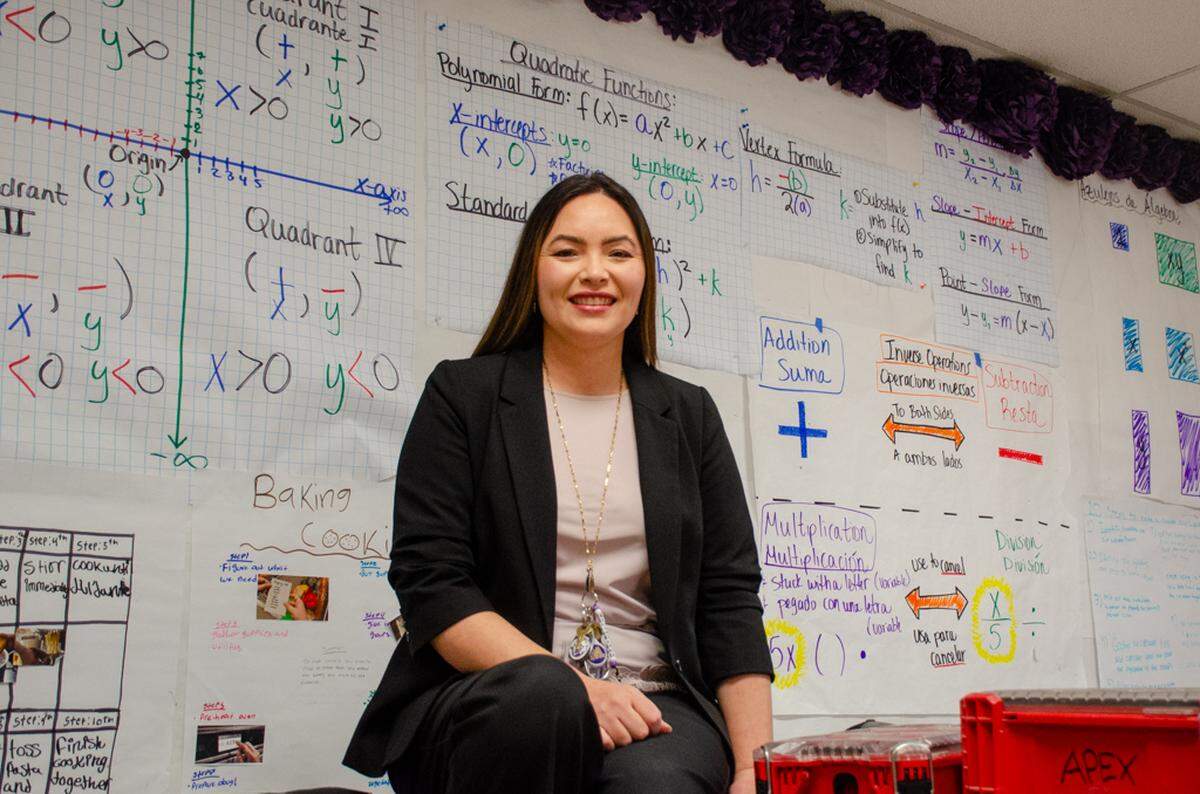
In that room, translucent ribbons frame the back wall. Her “pared de inspiración,” or “wall of inspiration,” includes memorable photographs from Whitemarsh’s career and life alongside biographical poems from students submitted in the fall.
“That’s the first way that I start to get to know them, and try to build in analogies with the things that they like or don’t like — their dreams and things like that — and then see how I can make a connection to math,” she said.
All in the family of educators
It’s clear education runs in her family. Her husband, Eric, teaches at Stevens Middle School, and even her older brother is studying to switch careers to teach.
On her wall, Whitemarsh also includes a photo of Superintendent Michelle Whitney posing with her mother, Maria Nuñez, a retired Spanish teacher at Pasco High.
It was taken in 2022 after her mother won the Tri-Cities Crystal Apple Award, the biggest accolade in education in the Kennewick-Richland-Pasco area. That’s when Whitemarsh learned of the Teacher of the Year program.
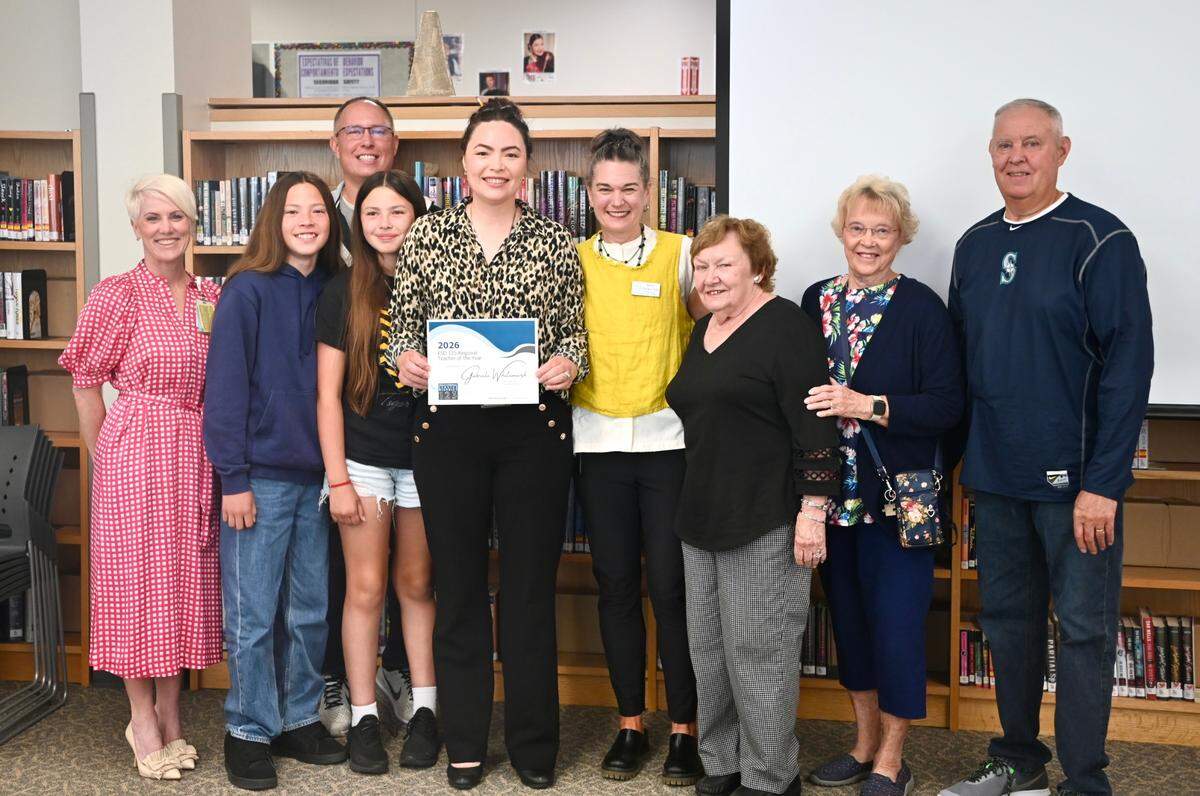
Three years later, she earned that same distinction. She went on this year to be named the 2025 ESD 123 Regional Teacher of the Year, too, which put her in the running for teacher of the year.
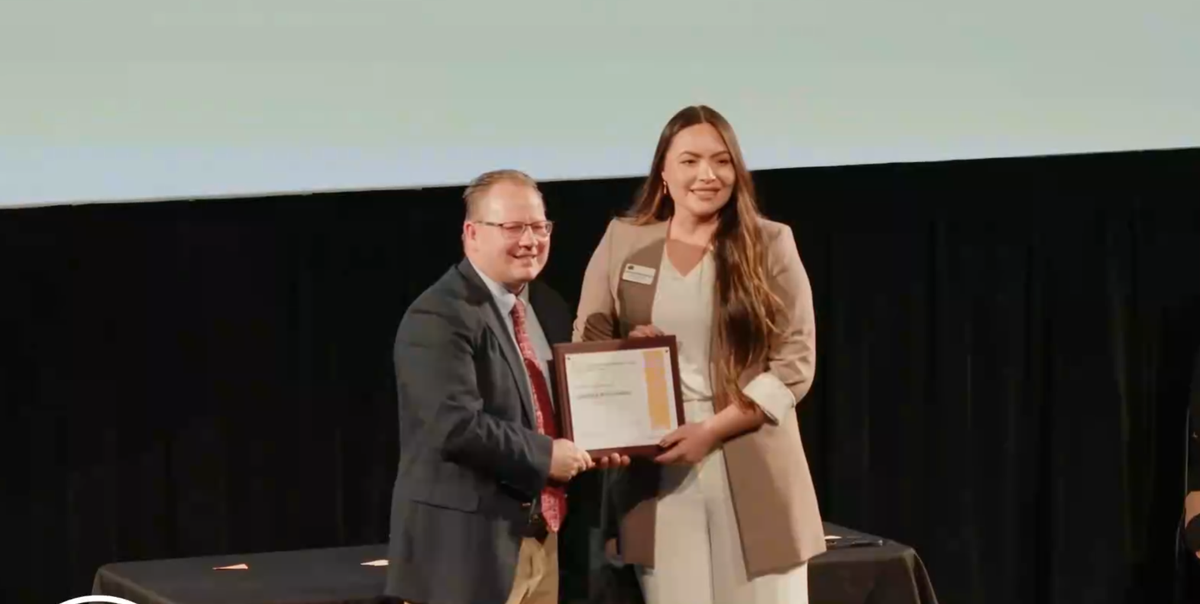
She was named to the top state prize last fall during Washington OSPI’s Educator Awards Ceremony, besting eight other finalists from around the state.
Whitemarsh — who herself was an English language learner in elementary school — says every street corner in Pasco has a memory attached to it.
She grew up on 17th Avenue, between Agate Street and Pearl Street, and attended Robert Frost Elementary.
Whitemarsh holds fond memories of learning to swim in the Snake River, of riding her bike around Edgar Brown Stadium, and of Sunday family get-togethers at Dairy Queen. Upperclassmen at the University of Washington even teased her for still wearing her Bulldog gear in college.
“I am Pasco. I was born here, I was raised here — I love my community,” she said. “I feel just such a devotion and passion to here.”
‘I know I can count on her’
Nearly 25 years ago, as a young Bulldog, she wondered why she was one of a few Hispanic students taking advanced courses. Whitemarsh says while the language barrier played a role for some students, many concepts sounded the same between English and Spanish.
She found out students were also denied opportunities also because of how they were tracked in the education system.
“I just remember thinking, that’s not OK. There should be more of us. I had plenty of Latino friends that were just as capable, but they didn’t have those same opportunities,” she said. “Why isn’t the breakdown of the demographics not reflected in advanced courses?” she said.
In 2018, she founded the Advanced Multilingual Mathematics Program (HiCap L1 Math) at Pasco High School, an initiative that opens the door to college-level mathematics for newcomer students who previously lacked access.
By the end of this school year, the program will have served 126 kids with advanced level mathematics classes. Of those students, 61 will have earned some sort of college level credit.
Prior to the program, English language learners had almost no chance at college level classes, outside of world language courses.
“When I started teaching my newcomer students in algebra, I saw how some were just so ready and eager for more. And others, even though they didn’t have the math foundation from the interrupted education, they had this incredible work ethic,” she said.
“Then, I started figuring out what we could do to change the system, so this opportunity could be presented to them,” Whitemarsh continued.
Principal Veronica Machado previously told the Herald that Whitemarsh has an “indelible impact on her students, her colleagues and Pasco High School.” Whitemarsh credits the support of Machado, as well as former Principals Raul Sital and Jake Stueckle, for their support institutionalizing the program.
Nidia Tu Vasquez, a junior at Pasco High, who came to the U.S. from Guatemala, described her former teacher as “intelligent, admirable and a good person.”
“I would hate for someone to lose the opportunity to get to know her,” Nidia said through a translation. “The program has helped me so much during my time at Pasco High. She’s a great person, and intelligent, and I feel that it’s not just myself who feels that way, but others.
“Whether she’s my teacher or not, I know I can count on her for help,” she continued.
For the love of math
Whitemarsh met Nidia as an 8th grader from Stevens Middle School. She was among the first kids to be bused to Pasco High to learn algebra with Spanish supports.
By the end of this year, Nidia will have earned 20 college credits through the program. She’s considering a career in mechanical engineering. Nidia knew sitting in English-language classes would be difficult when she came to the U.S.
“I was afraid I was going to have to stop doing the things I enjoyed, like math,” she said.
But thanks to Whitemarsh, Stevens Middle School teacher Miguel Taboada, and a pipeline the program established for newcomers, students like Nidia are able to thrive and find success in a foreign academic landscape.
“When I got to Pasco High and I got to meet her, I thought she was going to be like the rest of the teachers,” she said through a translation. “But as I got to know her more and more, I admired her and the way that she taught...
“I thought numbers were numbers, and that they didn’t really apply to anything. But now I know that numbers have more meaning, and since I’m now good with numbers I feel like I’m going to have a bright future,” Nidia continued.
Whitemarsh’s passion for her career rubbed off on Nidia.
‘Our students are so capable’
Her second-period algebra 1 class, taught in Spanish to newcomer students, mostly freshmen, is a bit more chatty than her first class.
At least, so far, no one’s made a “6, 7” joke.
In between one-on-one instruction, Whitemarsh fetches an extension cord to plug in a pencil sharpener. She also helps one student pop a lens back into the frames of their glasses.
“You never know what the day is going to bring,” the mother of two later told the Herald.
Whitemarsh is in her 10th year in the K-12 system. Prior to coming to Pasco High, she worked nine years at Columbia Basin College as a program director, most notably with the Math Engineering Science Achievement program, which aims to increase the number of first-generation, economically disadvantaged students pursuing STEM degrees.
She also taught mathematics as an adjunct professor.
The last few years, lawmakers in Olympia have tried passing a bill that would ensure all high schoolers in Washington state graduate with financial literacy education.
On this particular day, Treasurer Mike Pellicciotti had held a news conference with a lawmaker to reintroduce the legislation in the gear up for the 2026 session.
Whitemarsh sees the need statewide. It could help students make the connection to apply math in their daily lives. Thankfully, she said, they already require students to take a financial literacy class to graduate at Pasco High.
“Actually, just the day before, in that sixth-hour class, a student brought up credit cards, and they brought up interest and whether it was good to max out your credit card or not... We had a ‘life talk’ during the middle of the entry task,” she said.
‘I don’t let kids give up’
Next year, Whitemarsh will have the chance to speak in front of several state education organizations, as well as lawmakers and policy experts, about her experience teaching.
“One of the things is, I just want to show that our students are so capable, and they’re so resilient, and they’re so inspiring,” she said.
“So many of them deal with adult things when they’re still children, and they still figure out a way to get here, and they still figure out a way to put their best foot forward,” she continued.
She also wants to show them that “changing the system is possible” for fellow educators, especially to help newcomer and migrant students get a running start on their college education.
“No one’s here for a hand out — everyone’s here to earn, and to accomplish their goals. And anything I can do to help facilitate that, I try to have that be my purpose,” she said.
What keeps Whitemarsh up at night is the fear that many of her kids live with. She wants her classroom to be a refuge away from those real-world problems, and a space for her kids to thrive.
Her students don’t follow a singular track, she said. After earning their high school degree, they head into the workforce, into technical programs and community colleges, and even four-year universities.
They have different goals, and Whitemarsh says it’s her job to help them bridge the language gap to prepare them for their goals after high school.
“My goal is, always, that kids feel like in their life there is an adult that believed in them no matter what. I don’t let kids give up, I don’t let kids fall behind. It’s not in me to just see it happen and let it happen,” she said.
Whitemarsh’s achievement puts her into automatic consideration for the 2026 National Teacher of the Year program. That winner will be named in the spring.