How Richland is helping hundreds of students ‘move forward’ after school shooting
AI-generated summary reviewed by our newsroom.
- Project SERV grant covered clinicians and training; Richland commits local funding.
- Lutheran Community Services and Tri-Cities Chaplaincy led long-term trauma care.
- Trauma-focused CBT and wraparound supports aided students; demand remains long-term.
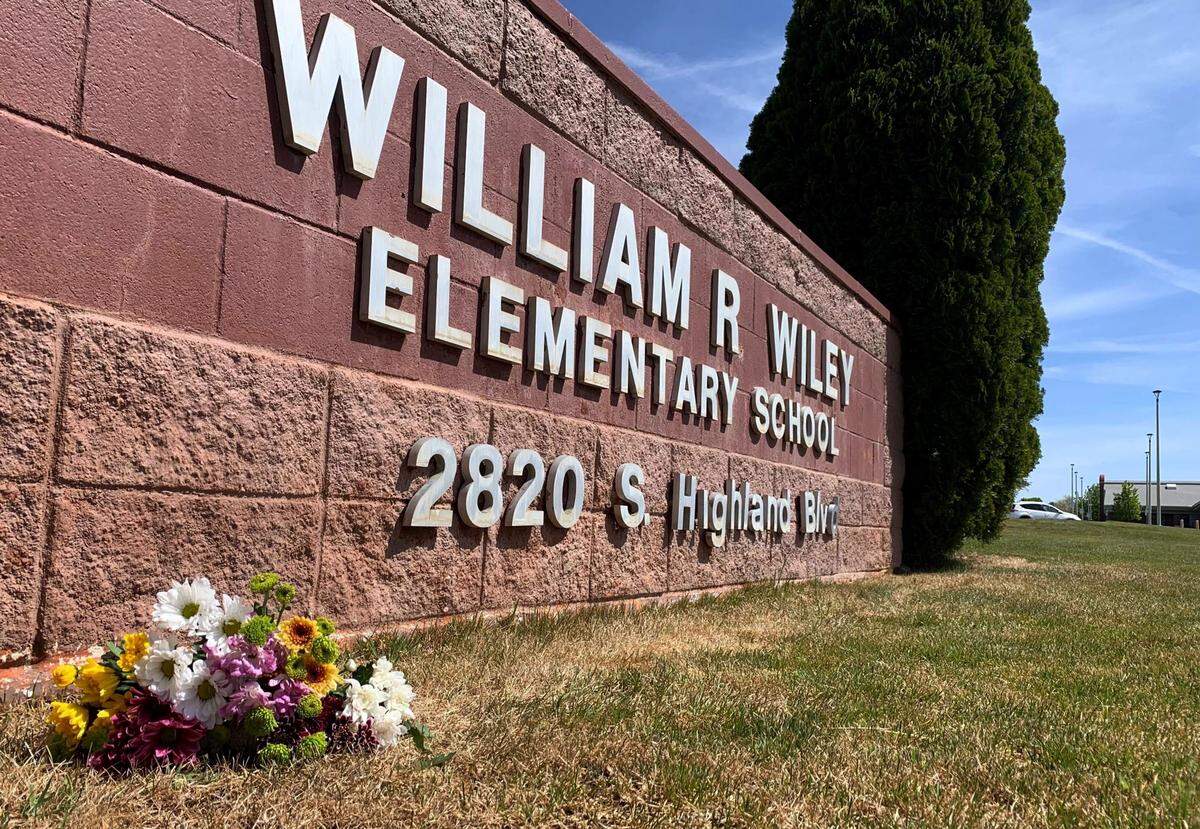
When an ex-cop shot and killed his former wife outside a West Richland elementary school 1 1/2 years ago, mental health professionals converged to help hundreds of students and staff left in shock.
At least 30 kids, parents and school employees directly witnessed the shooting, show documents. But in the first few weeks, more than 200 students came to a mental health room for their trauma and fears.
Rates of both suspensions and office discipline referrals nearly doubled at the school of 520 students.
After nearly 20 months of intensive recovery, mental health professionals and Richland School District officials say that need is still ongoing.
A federal grant used to hire clinicians to work with students and train staff was set to lapse this month. And when it came time to renew it, nobody at the U.S. Department of Education could be reached because of the federal government shutdown.
But the school district is vowing to continue paying for those crucial services even if the federal agency stops paying.
“It’s a huge priority,” Richland Superintendent Shelley Redinger told the Tri-City Herald.
“Research has shown that it takes time and lots of wrap-around supports, not just for the students that witnessed the situation but also those who hear about it... We just have to make sure we continue to keep our finger on that pulse of how they’re doing,” she said.
The federal Project SERV (School Emergency Response to Violence) grant helps schools rehabilitate their community after events of traumatic violence.
It’s been used in schools following a number of high-profile attacks, including shootings at Sandy Hook Elementary in 2012 and at Robb Elementary School in Uvalde, Texas, in 2022.
The U.S. Department of Education awarded Richland about $175,000 in November 2024 for its continuing work to address grief at William Wiley Elementary School and the two closest middle schools.
School districts and their specialized programs are reliant on regular funding from the feds. But that relationship has become complicated with recent federal layoffs at the agency, proposals to pull billions of dollars from local schools and plans by the Trump Administration to shutter the education department.
Staff at the Washington state Office of Superintendent of Public Instruction says there is no equivalent state grant program to Project SERV.
Mental health services for youth
Amber Rodriguez, a 31-year-old paraeducator at Wiley, was shot several times by her ex-husband, Elias Huizar, 39, outside the school building as students were getting out for the day in April 2024.
She was with a kindergarten class being released from P.E., just outside the 4th- and 5th-grade classrooms, shortly before being ambushed. Their 9-year-old son was a student at the school and also was outside.
Huizar was a former Yakima officer who had been working in the Richland district as an emergency substitute teacher. He fled and later died by suicide during a police chase in Oregon.
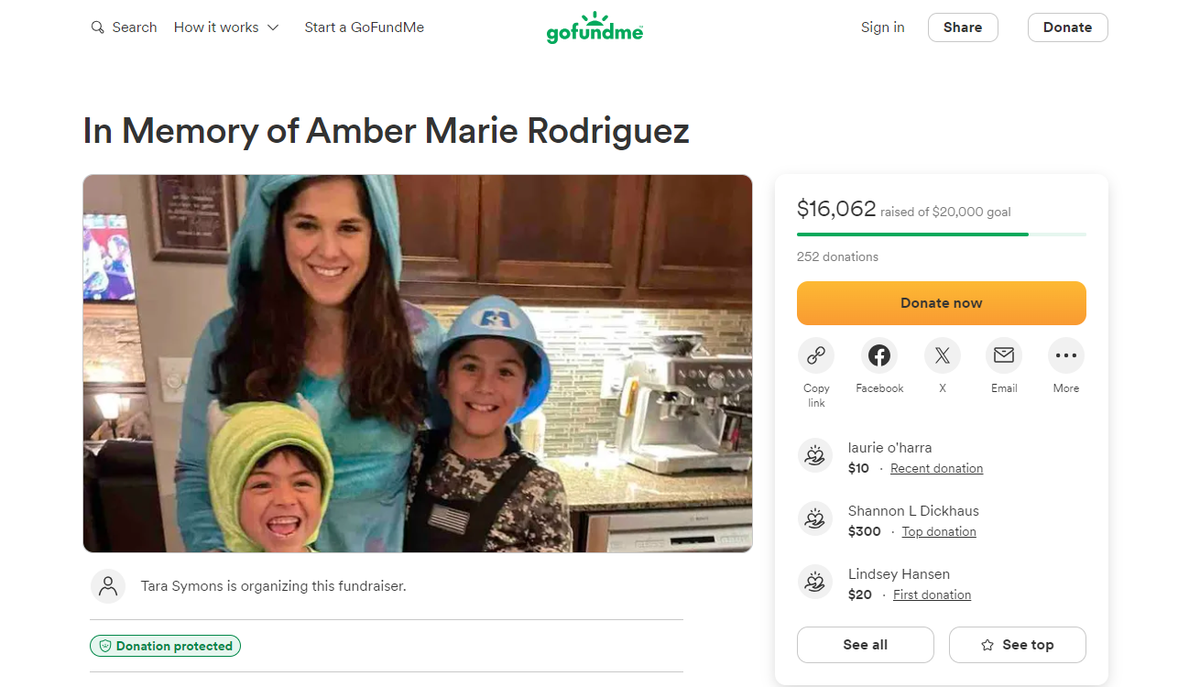
Investigators soon found he’d also killed his 17-year-old girlfriend, Angelica M. Santos, inside his West Richland home and took their 1-year-old son in his car during the chase.
In the days after the shootings, mental health professionals, support organizations and groups rallied to support those who saw the violence at the school, and to get help for students and families who might struggle to receive mental health services.
That effort ensured that all students could get treatment, and that their education could continue.
Two organizations have been at the forefront of the Richland district’s long-term trauma response.
The federal grant allowed Lutheran Community Services Northwest to place two clinicians in Richland schools – one at Wiley Elementary and another split between Enterprise and Leona Libby middle schools.
And Tri-Cites Chaplaincy provided separate staff training and opened its Cork’s Place grief center to families needing counseling.
Andrea Peyton, program manager at Lutheran, said at-risk Tri-City youth have struggled for years with a lack of quality and timely services, leaving many to go undiagnosed. But she says that’s improving.
Since 2022, her organization has partnered with the district to give students better access to mental health resources and individualized care.
That relationship was established in response to an increase in youth suicides and impacts from isolation during the COVID pandemic. It initially placed two clinicians in Richland’s high schools and made available a case manager to all 22 schools in the district.
The Project SERV grant allowed Lutheran Services to build on that in-school system.
The clinicians do assessments, clinical work, therapy work, classroom observations, follow up with school staff on struggling students and provide employees an “overarching psychoeducation” about what anxiety looks like.
“It’s not just one-on-one therapy with young people,” Peyton explained. “We really worked hard with the district to really integrate these people into their school buildings so they feel a part of the school.”
That work has allowed teachers and school counselors to lean into their education-focused work, knowing that a dedicated professional was available for students. The cost to hire the clinicians was about $160,000 total.
These workers are also more easily available to students and families since they’re in schools. Peyton says getting to therapy is often the hardest part for clients.
The workers are helping Wiley students through trauma-focused cognitive behavioral therapy, an evidence-based treatment for children living with post-traumatic stress disorder, Peyton said.
“A lot of it is ways to manage through a traumatic event and come up with skills to calm, to process those things,” Peyton said. “It’s new strategies to calm your nervous system and bring you back down into a baseline so you can go back into the classroom and learn.”
About 20 Wiley students have graduated out of the therapy. Still, student and family needs can fluctuate over time.
Peyton agreed when asked if these clinicians should be a staple in all school. Students don’t need to have experienced a singular traumatic event to benefit from long-term mental health supports, she said.
“Especially post-COVID, a lot of schools really started to identify that we have young people struggling, and just coming back to school wasn’t the fix,” she said. “Young people struggle no matter what. Being young is hard.”
Kiersten Uffenorde, Lutheran’s case manager for the school-based mental health team, helped coordinate a community response for four straight weeks after the shooting.
Uffenorde built a spreadsheet of nearly 80 kids who were identified as needing substantial mental health assistance. Then, she contacted eight local agencies to ensure families had referrals for care within 48 hours.
Peyton, Uffenorde and other professionals also organized countless hours of around-the-clock, on-campus therapy sessions.
Responding to the needs of the Wiley community was “life changing,” Uffenorde said in a statement, and was “one of the greatest privileges of my career.”
‘Remember, but then move forward’
While the Wiley Elementary shooting shook the wider Tri-Cities region and made national headlines, Richland schools had been struggling with mental health issues well before that.
The district saw a “concerning trend” of 11 people who’d died by suicide in recent years, according to the Project SERV application. Seven were students, three were recent graduates and one was a high school teacher.
“The communities of Richland and West Richland, Washington have limited access to mental health services,” the application reads. “Factors contributing to this include a shortage of mental health professionals, long wait times for appointments, and inadequate resources for addressing diverse and complex mental health needs across different age groups and cultural backgrounds.”
Quality mental health is one of the many foundations students need to receive a quality education. Schools that promote student mental health through education, prevention and early intervention can improve class behavior, student engagement and peer relationships, the U.S. Centers for Disease Control and Prevention reports.
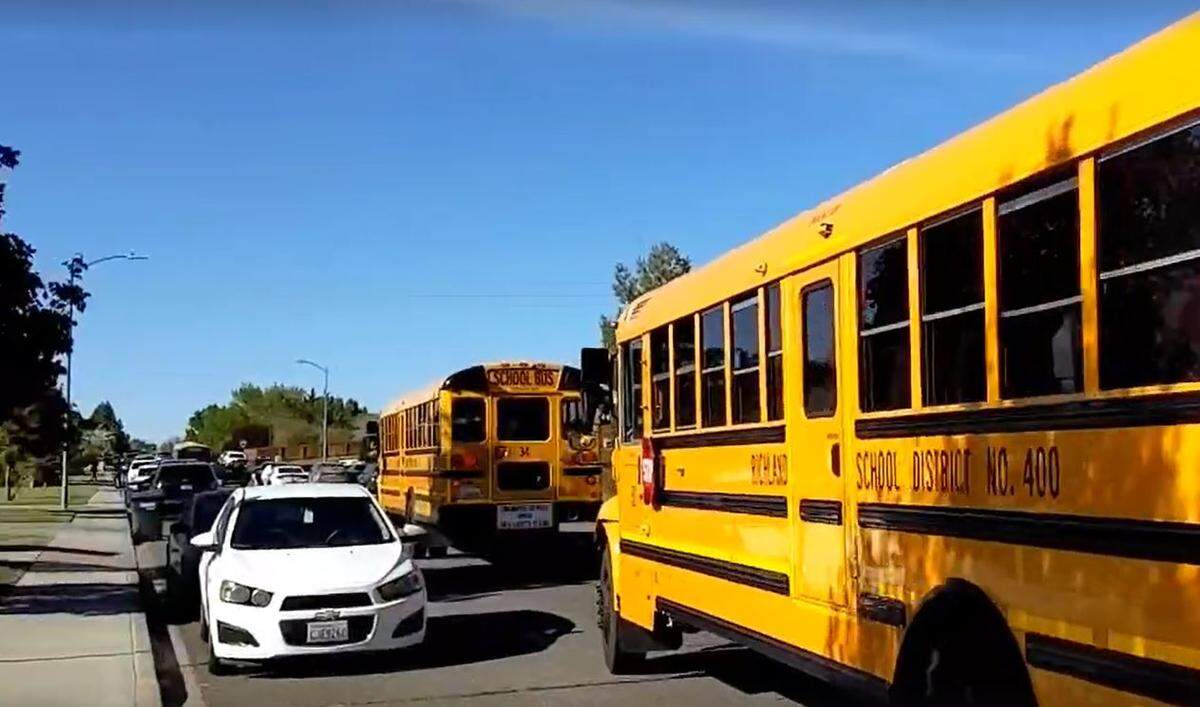
The shooting triggered a lockdown that impacted Wiley as well as three nearby schools, and lasted more than two hours as police searched for the suspect and ensured the campus and surrounding areas were clear. That included 106 students and seven family members who participated in the shelter and reunification process.
School was closed the next day for students and staff, and police to investigate the crime scene. School reopened to additional resources and mental health supports.
Six rooms received in-class support from Richland staff who are trained to assist students and teachers impacted by the event.
Wiley teachers and staff in the weeks after continued to struggle with emotional distress and worry about their safety. Sirens and intercom announcements sent some into a panic, said school officials.
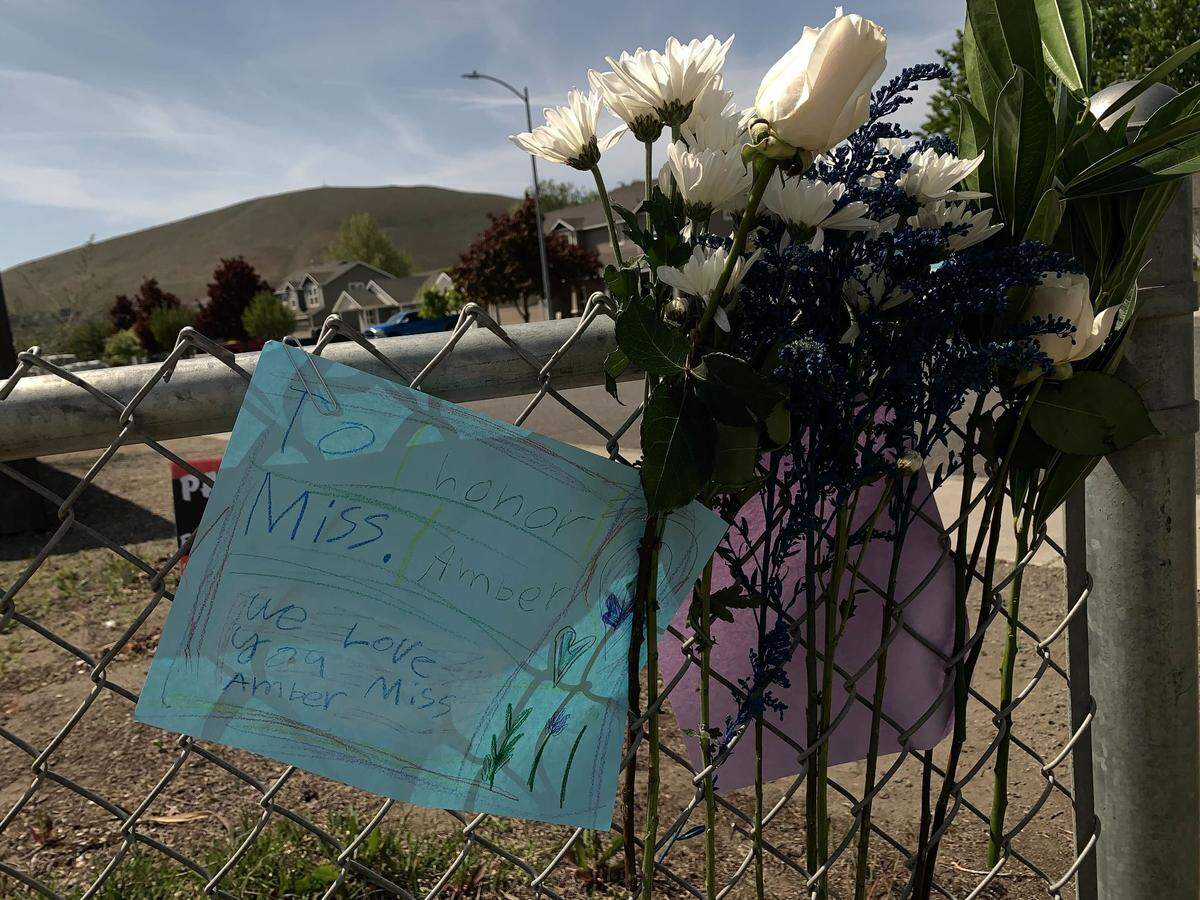
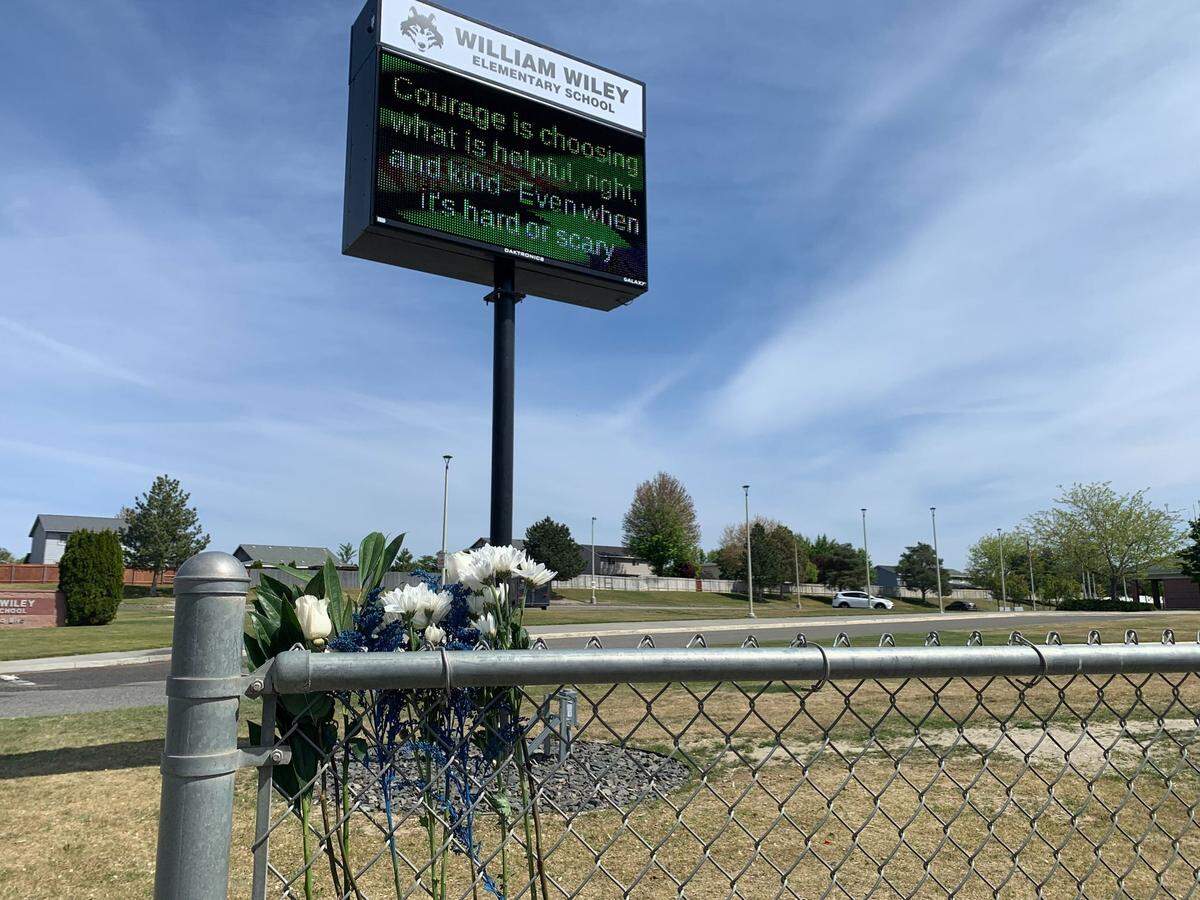
Last April, on the anniversary of the shooting, the district held an informal recognition event for individuals to mourn at the school for an hour. The school also gave some private time to Rodriguez’s family and gathered memorial items for them to take.
Redinger says they were in “uncharted territory” with the commemoration. Their goal was to not cause intentional harm, and to follow guidance from national trauma experts.
“It allowed time to really remember, but then move forward,” Redinger said.
Rodriguez, who grew up in Sunnyside, was remembered in her obituary as a bright light and loving mother. The paraeducator and real estate agent was “beautiful, genuine, kind and had an infectious laugh that could move mountains.”
‘Not enough light in the day’
Richland also used $10,000 of the Project SERV grant for Tri-Cities Chaplaincy to do a full-day training with about 100 school counselors, nurses, therapists and psychologists. They learned how to assist with grief in school and how to address it.
Nicole Marshall, bereavement supervisor at Tri-Cities Chaplaincy, said the money went right back into Richland schools for hands-on materials — grief monsters, memory boxes, resilience shields and books for staff.
The organization’s free youth grief center, Cork’s Place — named after the renowned Tri-Cities pharmacist, Robert “Cork” Simmelink — has also helped families process trauma.
It’s the only support facility of its kind in the Tri-Cities designed to serve children, teens and families. This is provided free to the community — no co-pays or insurance needed.
Kids participate in activities related to their grief, make connections with their peers and receive guidance from staff and trained volunteers. Cork’s Place has more than a half-dozen different spaces — from a paint splatter room to a teens corner — for kids to bond and find activities to express their emotions.
Parents receive separate guidance, meet with adults going through similar experiences, and learn about the affects grief has on their kids and how they can talk with them about that.
“The biggest challenge we face is there’s just not enough light in the day to have enough groups,” Marshall said.
She was unable to say how many Wiley families they’ve served since they don’t ask for that information, but they do serve between 30-50 kids during a five-week session. Most clients do two sessions.
“If you’ve had a loss, that’s what we’re here for. We don’t put any timeline on it,” she said. “My goal for any family who comes here is to, one, validate how they’re feeling, but, two, give them the tools and resources to go home and create this space at home.”
Chaplaincy also offers critical incident stress management to serve local businesses, organizations and schools. The free service allows workers to take the first step toward recovery after a traumatic event.
Marshall is a former teacher who also serves on Richland School District’s Mental Health Assistance Team. She’s not shy to regular lockdown drills and mass casualty trainings.
She thinks Cork’s Place is unique in part because talking about death and grief can be an uncomfortable topic.
“I think death is still kind of a taboo subject, and so I think it’s hard for there to be more resources with it because it’s not something that people want to openly discuss,” she said.
Other resources offered to Wiley students, parents
Redinger says Richland School District was “well-prepared” for the crisis response that occurred during and after the Wiley shooting, but was less sure how to support families, staff, teachers and students in the days afterward.
University of Washington’s School Mental Health Assessment Research and Training Center, or SMART Center, helped them navigate the difference between staff and student supports.
“The (Project SERV) grant has been really instrumental in helping us develop structures and systems for the recovery piece. Going forward, I think our system is more educated,” Redinger said.
West Richland police were an instrumental partner in the immediate response, Redinger said. Wiley Elementary now has “First Responder Fridays,” where students play with police and firefighters at recess, to help ease the triggering sights and sounds.
Washington OSPI has been very responsive, as well as supportive of Richland’s grant application. The state education department also waived springtime testing for the school.
All Richland students also have access to Hazel Health, the program that offers six free online therapy sessions to students and families at no cost.