Innovative Pasco program for gifted kids on the fringes draws WA attention
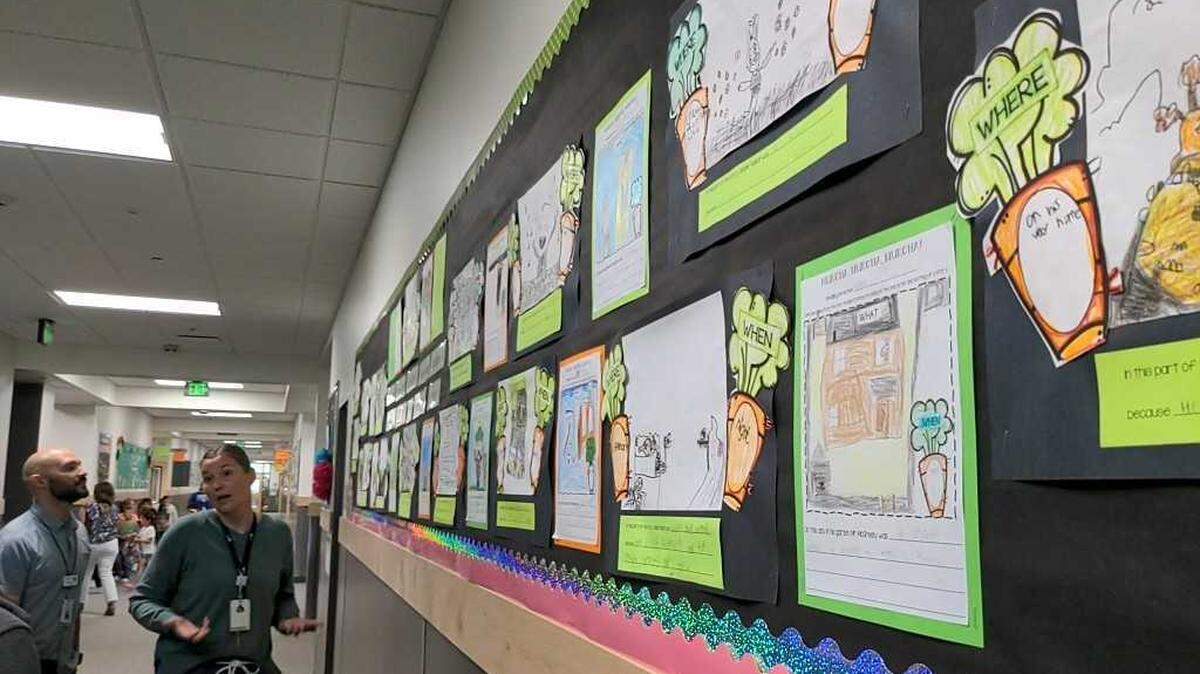
One Pasco school is leading the state to expand and innovate teaching for its soaring group of gifted kids, catching the attention of some top educators.
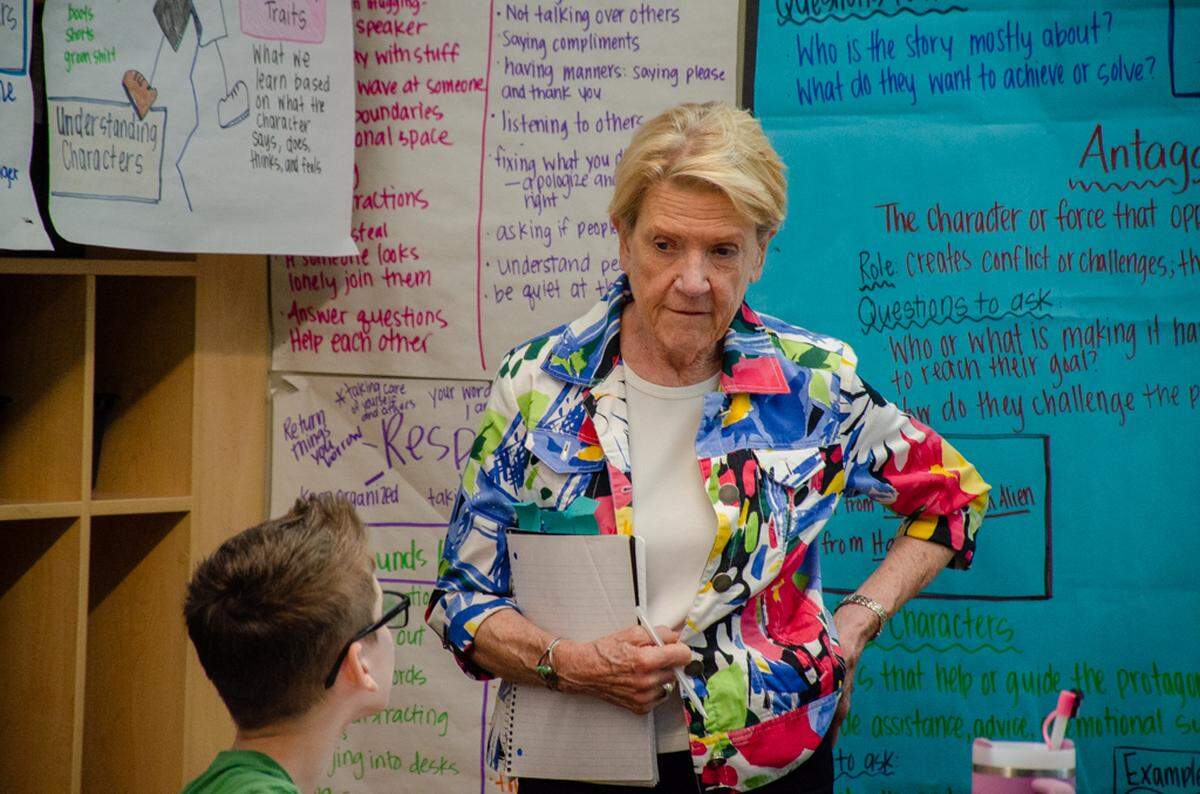
Jody Hess, Washington OSPI’s program supervisor for the Highly Capable Student Program, visited Friday the Pasco School District for the first time in a decade. She called it a “real treat” and said Three Rivers Elementary was running like a “well-oiled machine” during a tour.
“The way that they’re using the strengths of the staff, to me, that’s what professional learning should be,” Hess said. “Here, they just share their practice willingly and that makes me feel terrific because that’s working.”
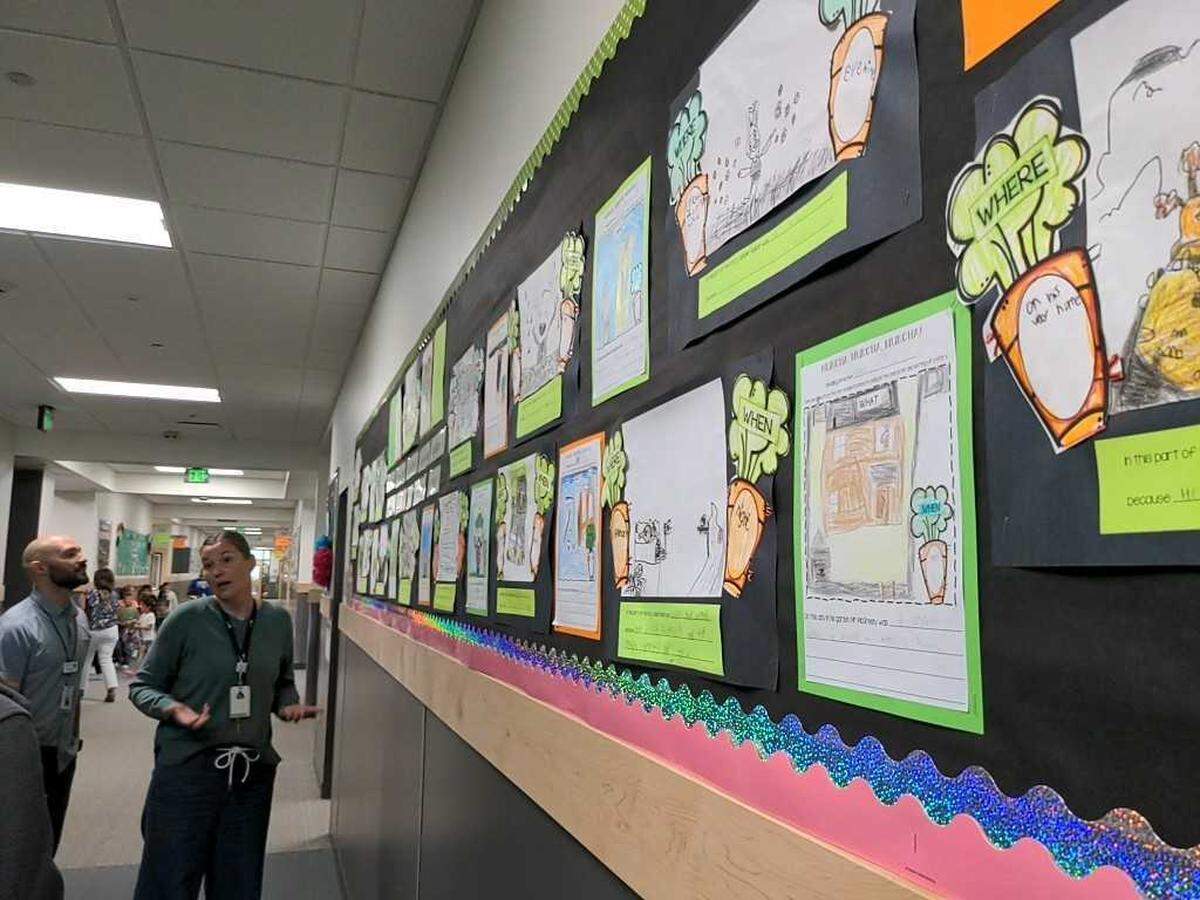
She toured each of the school’s classrooms highlighting the deep engagement and collaborative activities students are undertaking to learn English language arts.
Three Rivers is expanding its teacher training to serve students with targeted, intentional instruction — which will benefit not only its highly gifted learners, but also its English language learners and special education students.
Kids in one fifth-grade classroom were engaged in a group reading assignment, placed into groups with different books based on reading level. Students shared writing assignments with one another, building off each others’ concepts and assessments.
Pasco Hi-Cap booming
More than 3,000 students in Pasco School District are enrolled in Highly Capable, a component program of Washington basic education that provides students with advanced academic abilities support to engage in more demanding work.
The needs of these students are often not met in the traditional classroom setting, but they often learn alongside their general education peers.
It percent of students identified as HiCap, or gifted, has quadrupled in seven years.
About 16% of the 19,000 students it serves are enrolled in the program this year, but that number was at just 4% back in 2018. That growth means a greater workload — and more training — for teachers.
Of the 1.1 million Washington public school students, nearly 8% are identified as HiCap.
Richland has about 1,300 kids, roughly 9% of its student population, while Kennewick has 500, or 3%.
Students are often referred through assessments, classroom observations, parents and teachers. But inequities exist in the process of enrolling kids.
Students of color or those who come from low-income backgrounds are nearly three times less likely to be identified for and in gifted programs, according to the state PTA. The disparity is especially pronounced for Hispanic families.
Hess, a former principal, says gifted education has a reputation of being “very selective,” ousting students who don’t show perfect behavior or language comprehension. Gifted students, she said, don’t live on an “island” — they exist on a spectrum.
“We need to be looking for those kids — I call them the ‘harder-to-find kids.’ Because they’re not going to sit down, take a paper, pencil and test at the 95th percentile,” she said. “That works for some kids. But we’re dismissing a whole range of kids if we’re only looking at performance on a state assessment or another standardized assessment.”
Three Rivers expands teacher development
A modest school in a rapidly expanding and burgeoning West Pasco community, Three Rivers opened shortly before the COVID pandemic flipped U.S. public schools on their heads.
It serves about 650 students. Half of its students qualify for free-reduced lunches and half are Latino or Hispanic.
Most teachers are young, too, with fewer than 10 years certification experience. That means they don’t have much experience teaching individual HiCap students, but say they want more professional development, says Principal Jamie Bacon.
It’s why Three Rivers is leading the state in tailor-made professional development, teacher coaching and student instructional support, the district says.
But Three Rivers has its own unique challenges, too.
The school serves as a magnet for most of the district’s Ukrainian- and Russian-English language learners. The building has been on a school improvement plan the past two years, with goals to improve learning for multi-lingual learners and students on individualized improvement plans.
In a first-floor conference room, Bacon has a gauntlet of nearly a dozen giant sticky easel pads hung up on the wall to illustrate their strategy to improve student learning, enhance teacher professional development, engage students in social-emotional learning activities and better support HiCap small group learning.
“This represents my way of thinking and planning,” Bacon said. “I’m sequential. So, these posters are really just administrators sitting down together, thinking about how to support their teachers and elevate their work for kids.”
One poster that sticks out is an “umbrella” concept of student self-efficacy — what students need to “own” their education.
Bacon says educators can be great at “teaching to the middle,” but can often miss those kids who exist on the fringes of the classroom. In that case, their instruction has to be more “intentional.”