Budget crisis likely to force a Tri-Cities school district to go to 4-day weeks
A small Tri-Cities school district expects to make a big change this fall.
Pending approval from Washington OSPI, the Finley School District will likely move to a four-day school week for the 2025-26 school year to help address a budget shortfall.
It’s a move they’re seriously considering regardless of the outcome of a $3.45 million operations levy on the April 22 ballot.
The success of that measure would stave off much deeper cuts that will come if the district loses those local taxes for the 2025-26 school year.
But the failure of a levy in February and rising costs still mean the Finley district needs to find other ways to save about $1 million.
A 4-day school week will save on the cost of busing, substitute teachers, student meals and utility expenses.
And while the shortened schedule could raise concerns about extra day care costs and students who rely on free and reduced-priced meals, so far, Superintendent Bryan Long says the reaction from parents and others at three community meetings has been “extremely positive.”
“Our community likes the idea of having a potential three-day weekend, and to allow kids to have more education on the four other days,” he said.
Finley asked OSPI for an “economy and efficiency” waiver to allow it to waive up to 27 school days next year.
Kids would instead attend class an extra hour on four other days each week to ensure the district is meeting the 1,027 instructional hours required under state law.
In Washington, the waiver is limited to up to 30 school districts in the state that have fewer than 1,000 full-time-equivalent students.
Already, 18 school districts are allowed to have the 4-day schedule.
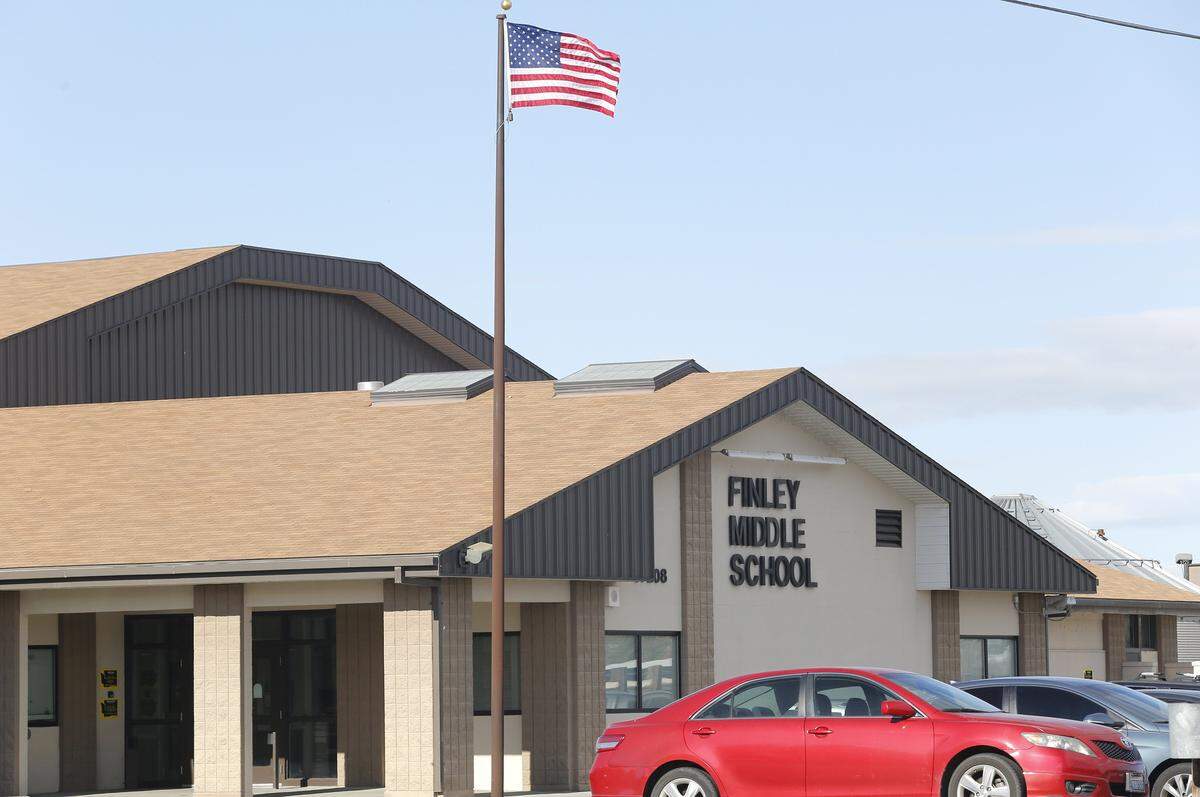
Finley’s full-time enrollment is about 840. The district in the unincorporated area east of Kennewick serves K-12 students in three schools: Finley Elementary, Finley Middle and River View High School.
What would a 4-day week look like?
Instead of the traditional 180-day instructional calendar, Finley students would attend for 153 days.
Elementary students would be in session from 8:05 a.m. to 3:15 p.m., according to initial plans.
Middle and high school students would attend classes from 7:45 a.m. to 3:20 p.m.
And there no longer would be half-day schedules on Wednesdays.
The school calendar with the start and end dates for the school year is still being drafted, but might begin as normal in late August and end in mid June.
Teachers would still work Fridays, when students aren’t around, but those would be time for professional development and other tasks.
Students could use the extra day off to participate in sports, clubs, extracurricular activities or to catch up on instruction away from classrooms.

School financial crisis
Long says the district could save hundreds of thousands of dollars with the new schedule at a time when the district is having to make steep budget cuts.
Voters rejected a $4.4 million replacement levy in February that would have funded education, sports and building maintenance to adequate levels while still making some modest budget cuts.
This month, the district is going back to the voters with a levy that’s about $1 million less.
It’s the district’s last chance to pass local funding for the next two years before the current tax expires at the end of this year.
If the levy passes, Finley still needs to cut a $1 million for the 2025-26 school year. The district plans to lay off five teachers, 10 classified support positions and reduce administrative salaries, in addition to small cuts to clubs and sports.
If the levy fails again, the shortfall will be closer to $2 million — a figure that would force the elimination of all sports programs and cutting more than two dozen teaching and classified positions.

Financial, academic benefits
Long says switching to 4-day schedule has several instructional and financial benefits.
“I like it from the aspect that our secondary folks get additional academic minutes — our kids will actually get more of an education. And I believe attendance will rise because, if you think about, ‘I’ve got to go to school for four days instead of five days.’ That’s just an easier pill to swallow for those who have hardships getting to school in the first place,” Long said.
The district also hopes the schedule could attract some of the students whose families have opted them out of attending Finley schools.
Substitute teaching costs were nearly $200,000 during the 2023-24 school year. Teaching one less day a week could save about $40,000 annually, and other salaries up to $200,000.
Food services could be saved by about $81,000, and utility costs cut by nearly $19,000.
“Initially, I looked at the model with the aspect of where can I save money. That was the only reason why I even looked at it in the first place. The more we dove into it, the more people were starting to say, ‘Why aren’t we looking at this anyway?” Long said.
“We shouldn’t be looking at this just from a fiscal lens. This seems to make sense for kids, this seems to make sense for staff, this seems to make sense for our community,” he added.
But there are some drawbacks if students who rely on free or reduced lunches go an extra day without meals. And there will be added child care costs for some working parents.
Positive parent response
Rory Bush, 42, is a fourth-generation Finley resident who has two kids who have graduated and currently has a freshman enrolled at River View.
The regional sales manager, who also serves on the “pro” committee supporting the April 22 levy measure, thinks the schedule switch is a right fit for the community, and could jibe with many families’ schedules.
His daughter and her friends say they want more school days, not fewer. She participates in sports, FFA and clubs — the same ones he got involved in.
“In a small community like this, it’s huge to have those community ties, and we want to give back to our children and let them have the experiences we had,” said the 2001 graduate.
A co-worker in Idaho said their school district adopt a four-day calendar during COVID. The extra day off helped students deal with stress, they told him.