Pasco’s newest high school will be a game changer
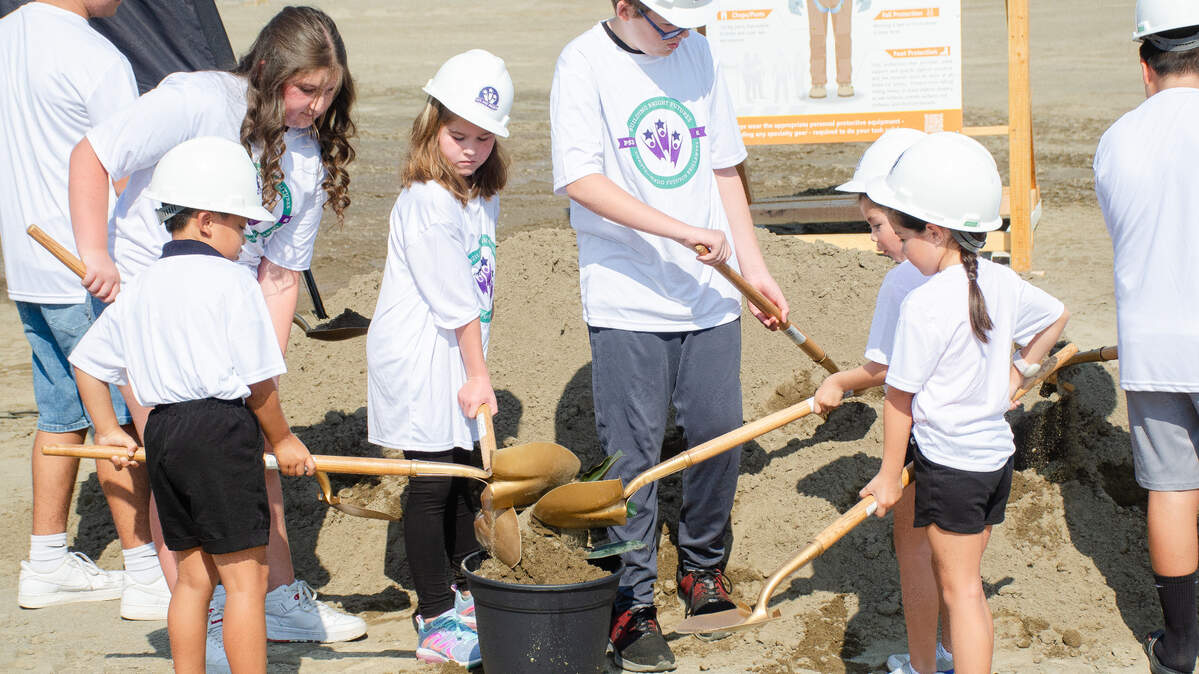
Clad in hard hats and mini shovels in hand, Andrea and Ariana Barraza were extra focused as they turned dirt onto the roots of a small sapling.
It’s a big job for the twin 6-year-olds. They were helping plant the first tree at their future high school — and helping lay the seeds for a brighter future for their neighborhood.
The Pasco School District’s groundbreaking ceremony Thursday celebrated the start of construction of its third comprehensive high school at 6091 Burns Road. Work started this month and will continue for another two years, opening to students in fall 2025.
It’s a project well over a decade in the making.
Nearly 19,000 students attend classes in Pasco and high school enrollment continues to boom.
Chiawana and Pasco high schools are the first- and sixth-largest high schools in the Washington state. Last school year alone, 1,800 high schoolers were taught in portables on the two campuses.
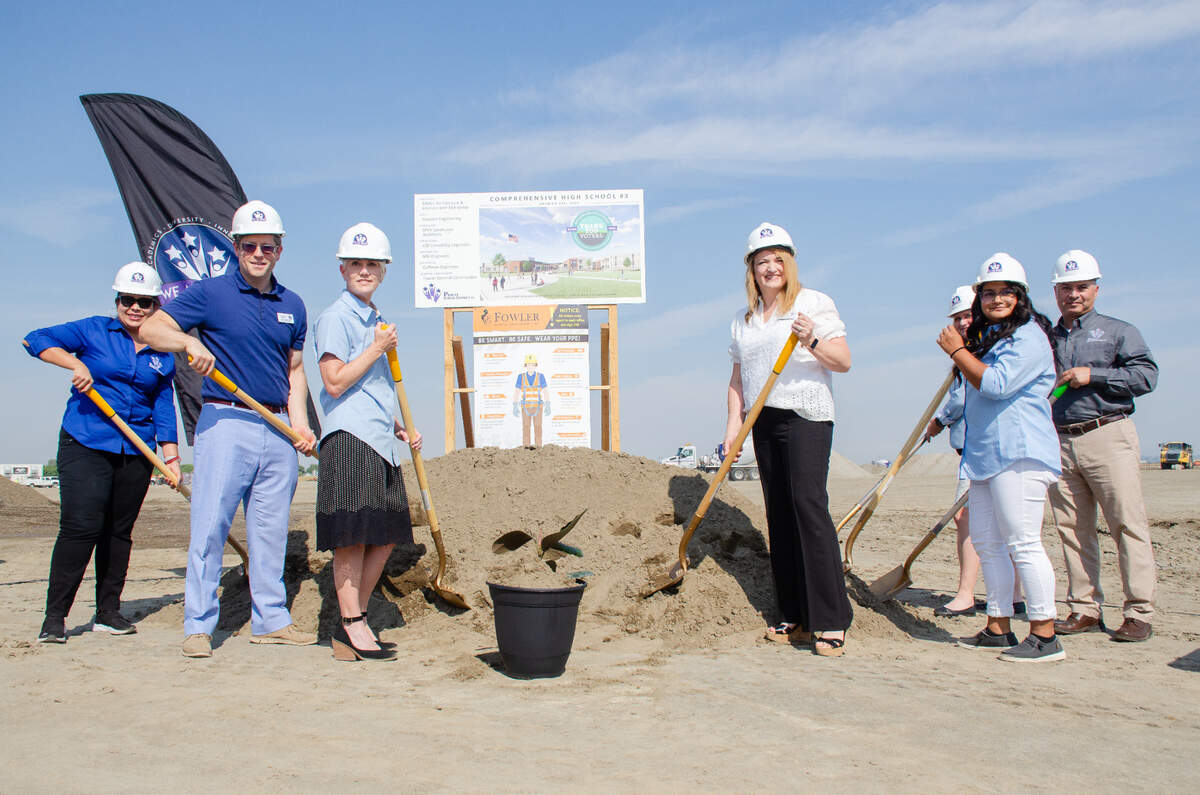
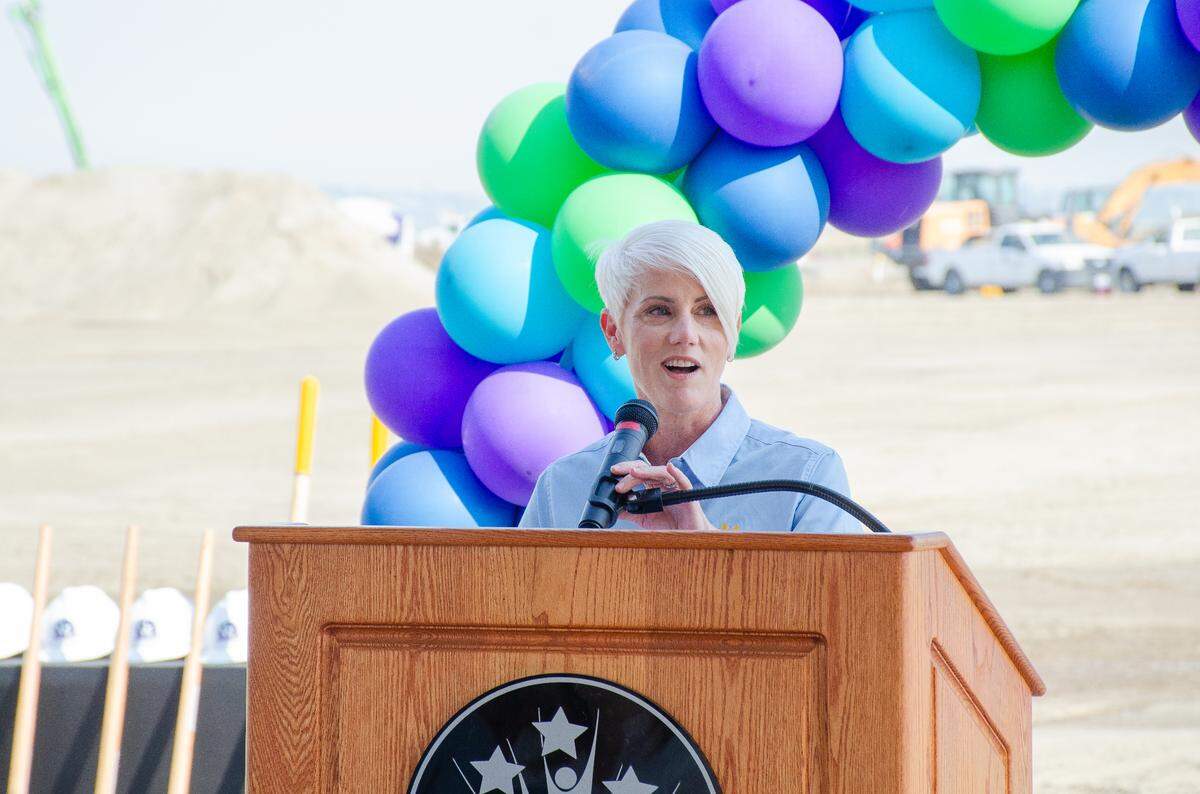
“It’s an extraordinary testament to this community’s commitment and investment in our youth that we were able to get that kind of commitment from our community during what has been uncertain times in our local economy and national economy,” Superintendent Michelle Whitney told a crowd who came out for the groundbreaking.
But a third high school alone won’t ease overcrowding.
The 21-year, $195.5 million bond measure that voters approved earlier this year to build the school will also fund construction of a smaller innovative career and college academy in East Pasco.
That school will serve 600 in-district students, and those who graduate will be ready for the workforce with credentials, industry certifications and hands-on experience.
By The Numbers
The third high school will be a two-story, 300,000-square-foot facility with the capacity to serve about 2,000 students. It’ll sit on a 65-acre campus.
The school will house 82 classrooms, administrative suites, an athletic wing, a library and a 650-seat indoor auditorium.
The site will include facilities to house football, soccer, baseball, softball, tennis and track and field programs. It won’t include a football stadium, though; varsity football will play games at Edgar Brown Stadium.
The turnkey price for Pasco’s third high school will cost more than $185 million. District taxpayers will only pay about $140 million of that as the state plans to contribute $45 million.
Mira Gobel, Pasco’s assistant superintendent of schools and social emotional learning, said the school’s new career and technical education (CTE) program will specialize in agriculture.
“This new high school will be a comprehensive school similar in size and program offerings and extracurricular activities to our esteemed Chiawana and Pasco high schools,” Gobel said. “This dedication in preparing our students for practical and real-world skills in this vital industry emphasizes our dedication to their growth and success in their future.”
Pasco School Board President Amy Phillips says her family has been farming in the area since the 1940s. With the number of local industry jobs and recent advancements in technology, she thinks the program’s focus on agriculture is the right move.
“Supporting our community and one of the great assets of our community is hugely important to me. I’m so grateful to be part of something that supports this agriculture community that helps to take care of the world,” she said.
The district is currently accepting name suggestions from the community for the third high school.
It’s also accepting input from parents and stakeholders as it begins redrawing high school attendance boundaries.
Stevens Middle School Principal Raquel Martinez was recently named “planning principal” and will lead the school on day one when it opens. She formerly taught biology and served as a bilingual facilitator at Pasco High School for nine years.
Why here?
Whitney said locating new schools is a complex balance of finding land available and serving parts of the district that are growing rapidly.
The district began thinking about where to place its third high school during the boundary redrawing process for Three Rivers Elementary, Columbia River Elementary and Reynolds Middle School.
“We started looking for something more ‘central,’” Whitney said. “I think some people would argue with me that this isn’t central, but it’s more central than off Road 100.”
The property at Road 60 and Burns Road strikes a balance that will serve existing and future neighborhoods. Whitney said the location is efficient for busing, walking and biking.
Taxpayer fatigue
Pasco’s success at the ballot box comes during a time of broader strain for taxpayers, who are more frequently rejecting school construction measures that aim to build new schools and replace older ones.
A dozen school districts across Washington state tried passing construction bonds this year. Pasco’s was the only one that got the OK.
That’s because capital construction bonds require a 60% super majority vote from the public in order to pass.
“I think that says a lot for our community and their commitment to children,” Phillips said. “The growth in Pasco is unprecedented.”
The inability of schools to pass construction bonds has also raised questions about the scope of Washington’s constitutional obligation to amply fund public education.
Many public school administrators argue that the state’s duty to fund public education also includes educational facilities. But the state maintains that funding construction does not fall within that constitutional obligation.
A Washington Supreme Court showdown between the state and a small district serving 400 students could settle the issue once and for all.
This story was originally published August 18, 2023 at 4:00 AM.