Richland schools try to define ‘controversial’ teaching issues again. This time it passes
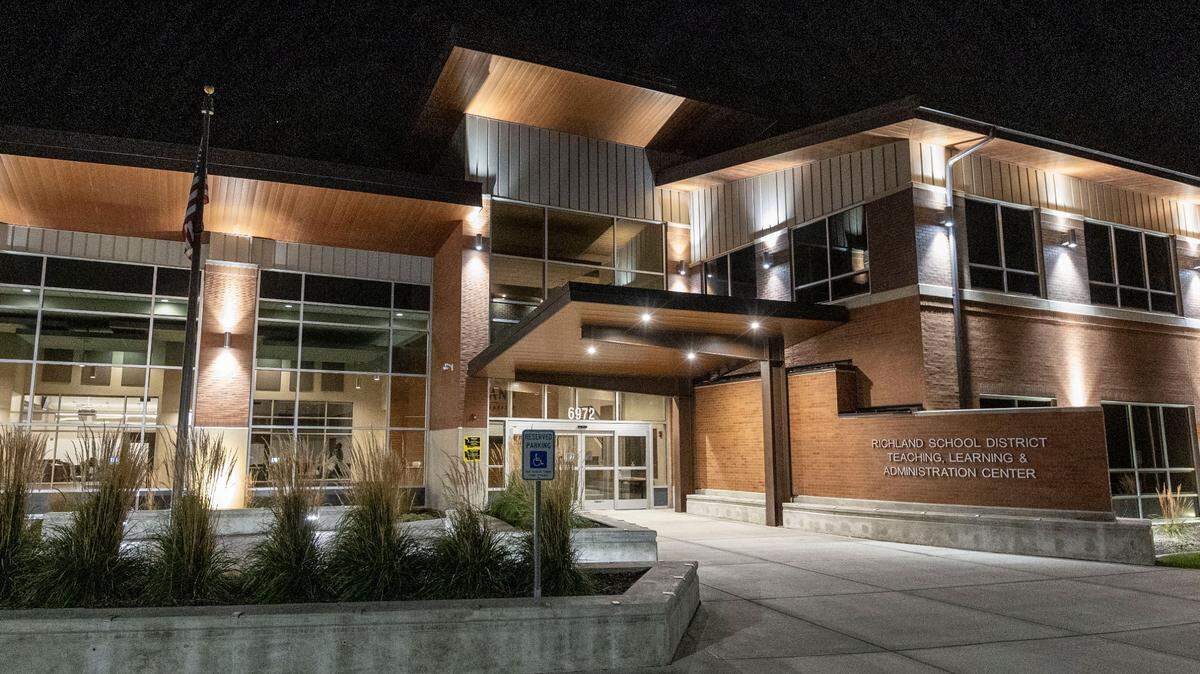
The Richland School Board, in a split vote, revised its policies on the teaching of “controversial issues” in the classroom.
A majority of the board said they wanted to give principals and teachers a better sense of when to alert parents about an upcoming lesson or discussion that could involve a “controversial” topic.
The policy doesn’t actually bar the teaching of the topic. A previously rejected definition was denounced by the ACLU of Washington.
The board defines controversial issues in Policy 2331 as “topics that are not included in the district-approved curricula, or topics that deal with questions of values, beliefs, lifestyles and can divide opinion between individuals, communities and wider society.”
The policy also says students have a right to study under teachers in situations free from prejudice “and political bias.”
But the ACLU of Washington believes even this latest definition could detrimentally impact the use of free speech in schools.
“The policy passed by the Richland School Board is not sufficiently objective and still leaves a lot of room for interpretation to teachers and principals,” writes Roxana Gomez, a youth policy manager with ACLU of Washington. “As written, we fear the policy still invites the risk of censorship and viewpoint discrimination, which runs counter to protecting the constitutional guarantee of free speech.”
The change was adopted 3-2 this week by board members Audra Byrd, Semi Bird and Kari Williams. Rick Jansons and Jill Oldson opposed it.
“I think that controversial issues mean different things to different people,” Jansons said, adding that there’s already a process parents can use to address what controversial issues are being taught. “I don’t think that we can come to a definition that works in all cases.”
“I think the process is more important than defining what it is. And the more we try and define it, the more difficult it gets,” he added.
The definition was drafted and recommended by Williams during the meeting.
Agenda documents show Byrd originally proposed the definition as “not included in the district approved curricula” and topics “covered in the local newspaper within the last three years.”
Byrd in recent weeks has attempted to pass a definition on the issue. She said she’s doing this to give teachers and principals a clearer example of topics that would warrant review by concerned parents in the classroom.
She said there also have been times when teachers shared their own personal political opinions in the classroom.
But the term “controversial issues” has been a topic the board has struggled to define.
Oldson reiterated Jansons’s comments, saying that there are already “checks and balances” in place.
Teachers should continued to use professional judgment to determine when to reach out to parents about controversial topics that are taught in classrooms.
But Williams said they have had issues with erring on the side of teachers’ professional judgment.
“Really, to me, the point in this, adding in a definition, is for clarity sake — not to pigeon hole,” Williams said, adding that it’s important to help “the community to see that we want to make sure our parents are involved, that that communication piece between home and school is vital, and helping clarify what a controversial issue is, which is, in my opinion with my amendment it’s very broad — super broad, which may be too broad.”
But Byrd said Williams’ definition wasn’t objective enough and didn’t “draw a clear line” for teachers and principals’ discretion.
Leif Carman, a student board representative, said he was against the board defining “controversial issues.”
He said he feels teachers have done a good job in judging when a topic could toe the line. He
“I think that it’s important that teachers have some wiggle room, that they’re not walking on nails,” he said.
This story was originally published December 15, 2022 at 12:20 PM.