
These middle school kids are restoring old Eastern WA ag land to its natural habitat
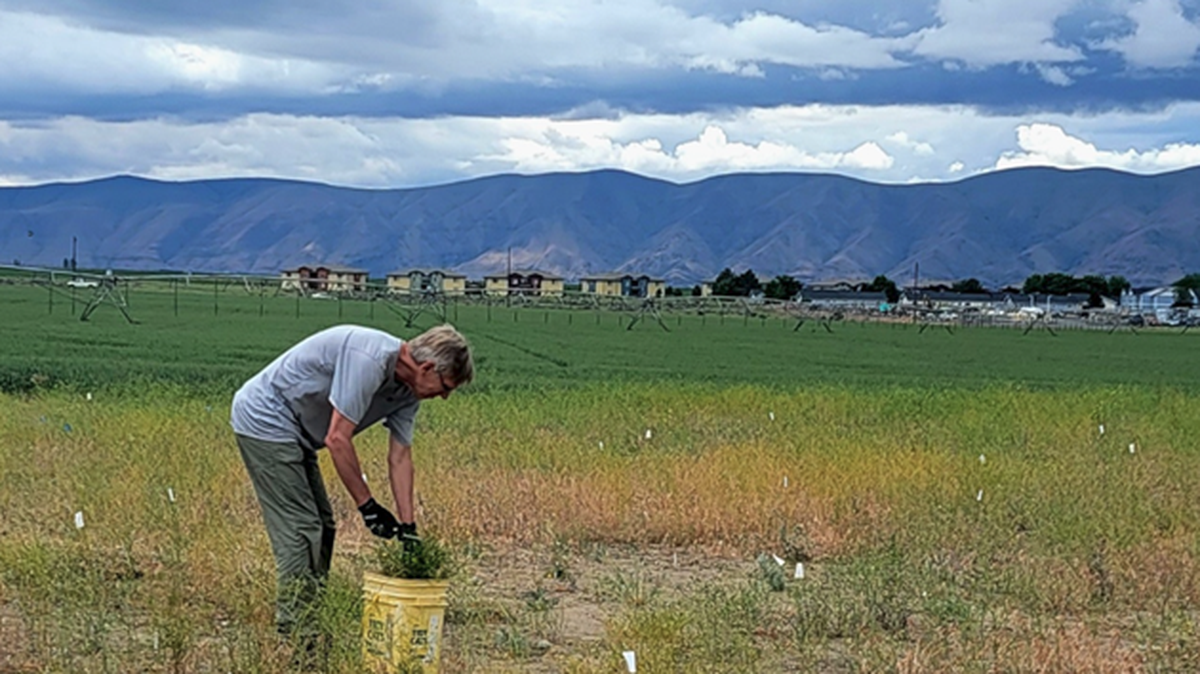
A group of dedicated local scientists and volunteers are working with Mattawa Middle School youth to restore and convert an un-cared for plot of abandoned agricultural land into valuable wildlife habitat.
Richland–based biologist Gretchen Graber organized several day trips to a restoration site adjacent to the parking lots at the middle school and high school in Mattawa.
The effort is part of a two-year pilot program called Youth Ecology Education through Restoration (YEER), in cooperation with the Washington Native Plant Society, which seeks to engage middle school science students as restoration ecologists to make habitat improvements to land in their own schoolyard or community.
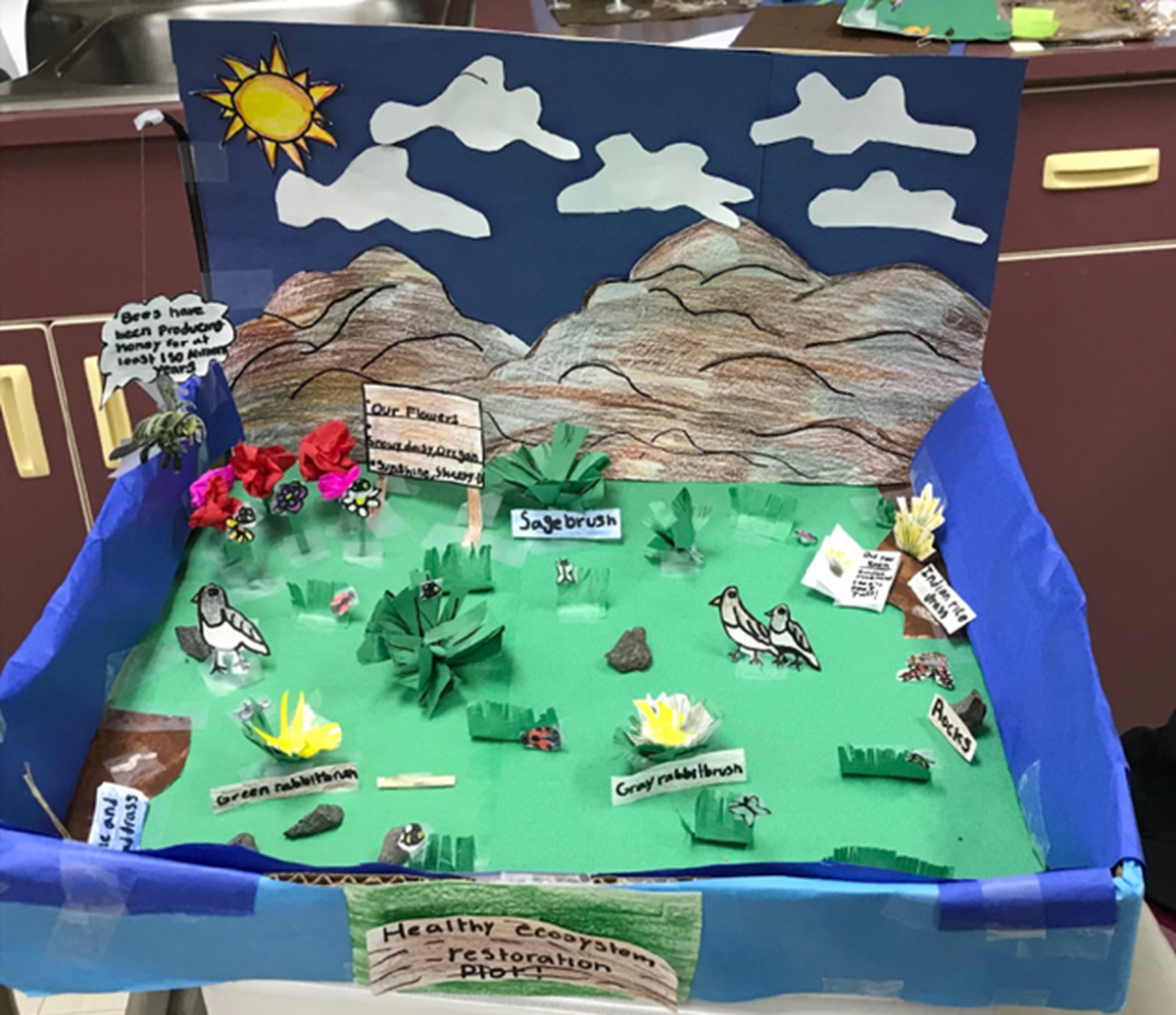
Mattawa is one of five locations with active restoration projects in progress. Each project uses the expert guidance of local WNPS chapter members and supported by a science curriculum taught by their classroom teacher.
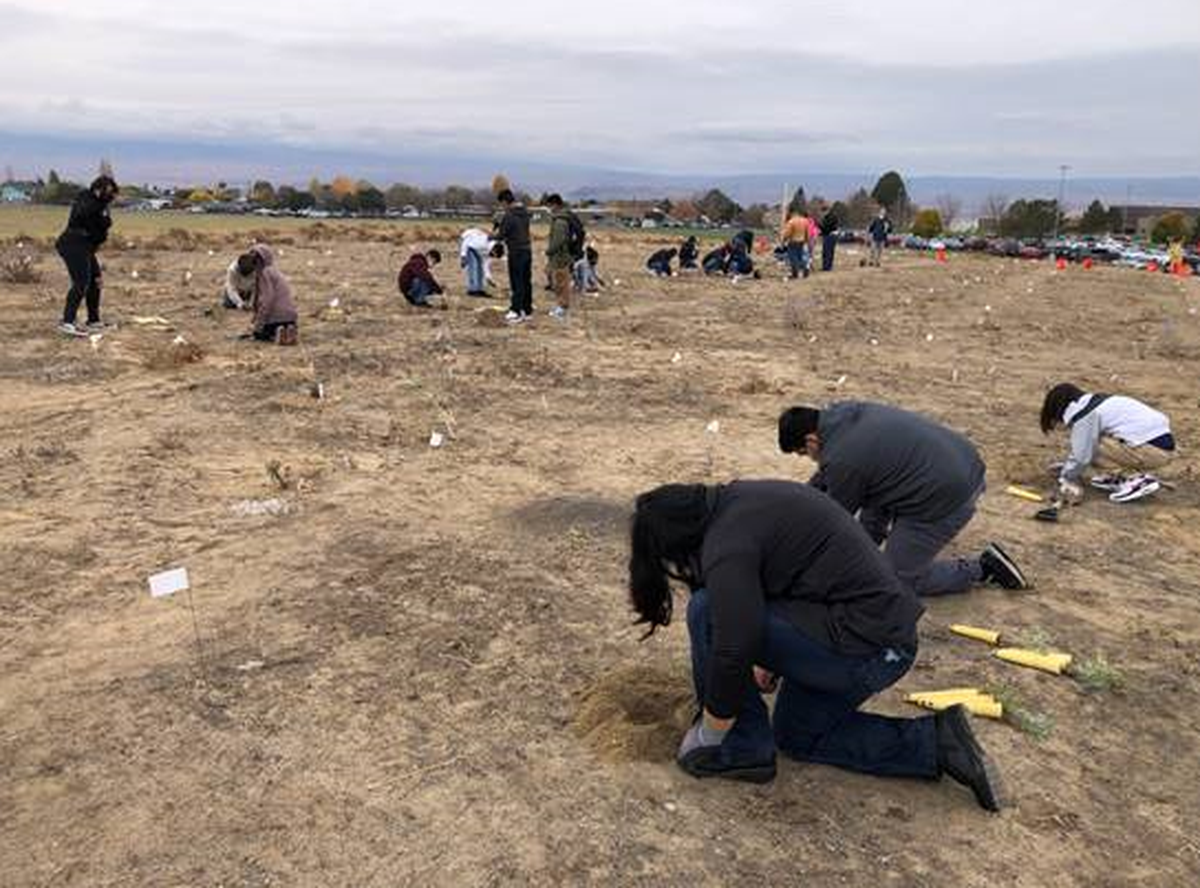
Last fall, students at Wahluke Middle Schools tackled the dry, cracked abandoned agricultural land that was overgrown with weeds and tumbleweeds.
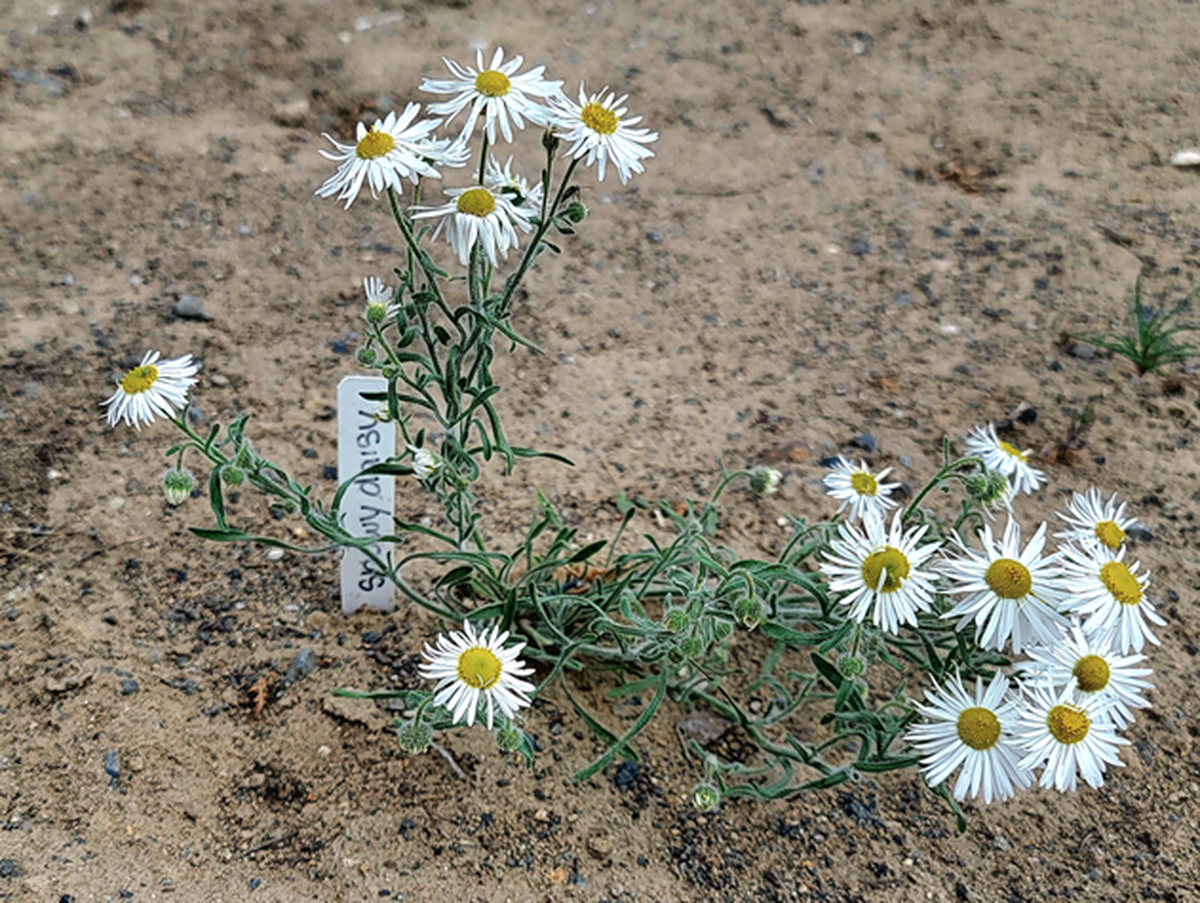
After learning about essential concepts of habitat restoration in class, they went outside, marked the ground with stakes and flags, and then hand-planted a variety of native grasses, sagebrush and rabbitbrush and wildflowers.
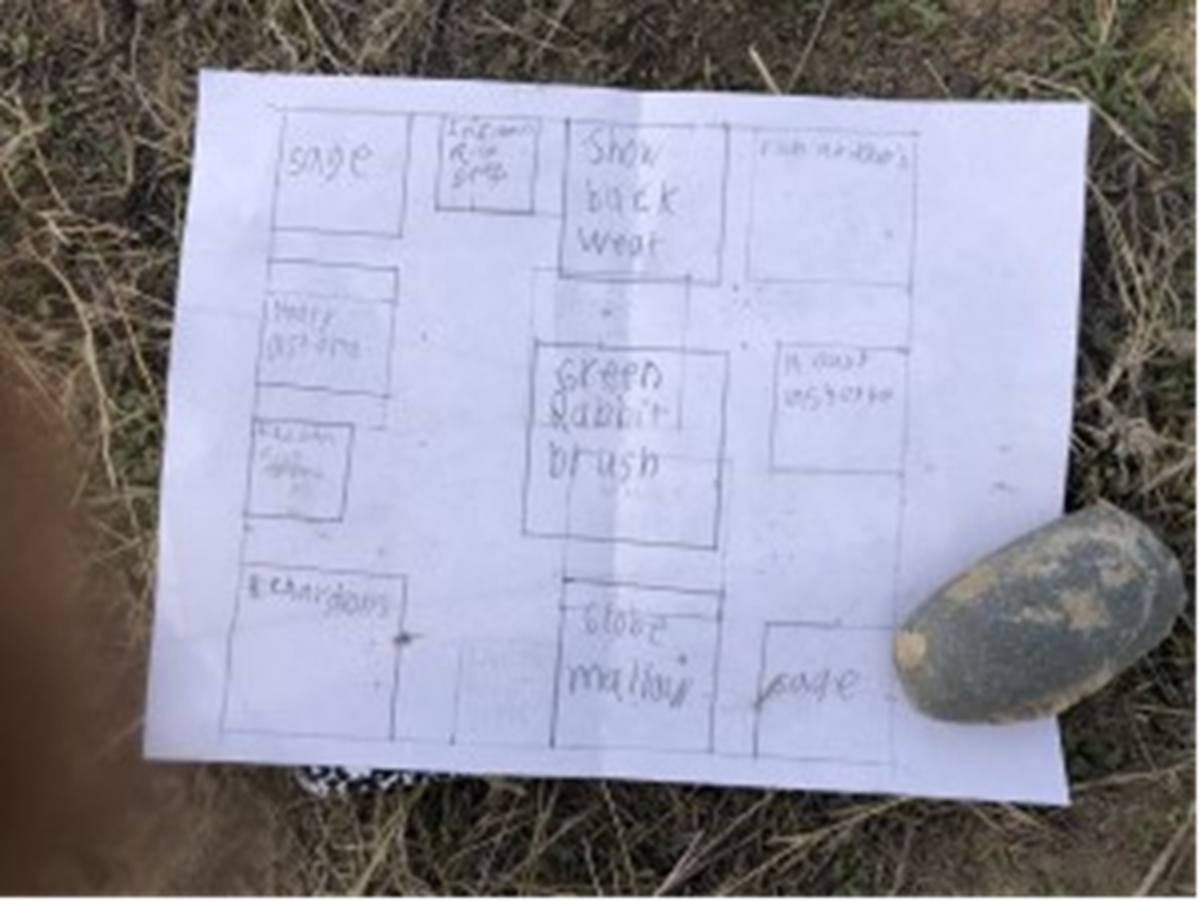
This second year, the area is being monitored, weeded, and tended much like a garden, with the goal of transforming, expanding and further improving the shrub-steppe habitat.
Volunteers wearing gloves were recently down on hands and knees, pulling weeds and invasive species in a three-foot circle around individual plants, to reduce the competition with the unwanted plants for the available water and nutrients, and to foster the growth of a diverse, intact, and healthy ecosystems.
“With a little care and nurturing, we can create a healthy sagebrush ecosystem,” Graber said. “You can see that even in just a year or two, it is possible to return depleted pastures to a habitat containing diverse, well-established native plants that provide food and shelter for pollinators and wildlife.”
“We involve students in real-world projects and solving environmental problems in their, at or near the schools they attend,” said Janneke Petersen, YEER Program Developer and Coordinator in Western Washington.
“We work with teachers to combine high-quality science curriculum with hands-on experience to make real world local projects happen. We’re hoping these projects serve as a model for future project in other locations,” Petersen said.
Anyone wanting to help with the local restoration projects in Eastern Washington can contact Gretchen Graber by email YEEREast@wnps.org or Janneke Petersen, Program Coordinator YEERWest@wnps.org.
To learn more visit the restoration project information page at the Washington Native Plant Society.