
What WA state’s new school guidelines mean for Tri-Cities schools
Tri-Cities school districts are on target when it comes to allowing elementary school students back into classrooms, according to Washington state COVID-19 guidelines.
But under the new recommendations, Tri-Cities COVID rates would need to drop two to three times more before middle or high school students should return in person.
The state Department of Health unveiled a new set of recommendations that lowered the bar for getting students back into schools.
After months of concern from Tri-Cities school leaders, state recommendations now more closely match local guidelines.
While many districts around the state have held off on bringing students back, the Tri-Cities has largely followed recommendations from Dr. Amy Person, health officer for the Benton Franklin Health District.
However, the difference between her recommendations and the state’s has left school board members frustrated and confused in recent months.
Both continue to recommend that students sit 6 feet apart, wear masks and the schools follow other safety and cleaning measures.
This week, the state recommended bringing back the youngest students first, and then fourth- and fifth-graders.
“They did show data that schools are a low risk for transmission if safety protocols are in place, including masks and distancing, cleaning and ventilation,” Kennewick Superintendent Traci Pierce told her school board this week.
“If the districts are already in in-person learning, the Department of Health isn’t recommending changing,” she said.
Tri-Cities parents and teachers remain divided on whether students should continue learning in-person because of the high COVID-infection rates in Benton and Franklin counties.
At Wednesday’s Kennewick board meeting, one parent said students “in the middle” are being left out because special needs students and gifted students are getting more time in the classroom.
Another speaker expressed concern about bringing students back because other parents are not taking COVID seriously.
“One guy said, ‘I’m going to tell my kid to high-five and hug all of his friends because we all need to get the germs,” she said. “There’s just way too much information that is not getting through to people.”
The Pasco Association of Educators started a change.org petition asking the school board to return to distance learning. This came after a survey found the majority of teachers did not feel safe returning to in-person learning at current COVID levels.
Another group of Pasco teachers has voiced its opposition to the union’s stance.
The number of new cases would need to drop to 350 cases per 100,000 people over a two-week period before the state recommends bringing middle or high school students back.
This aligns with the Benton Franklin Health District’s current recommendation of holding off bringing back secondary students until COVID rates begin to dip.
For the two weeks ending on Dec. 10, Benton County had 804 new cases per 100,000, and Franklin County had new 1,129 cases per 100,000.
Since the beginning of the month, there have been 111 COVID-19 cases reported among students and 89 cases among staff members in the Richland, Pasco and Kennewick districts.
Kennewick schools
Kennewick continues to have the most students in classes for the longest period of time. All of the elementary students are back in school two days a week.
The district received reports of 18 COVID-positive this week out of a total of 176 cases since school started this fall. Sixty-five of those cases have come since Nov. 30.
Twelve of the cases this week were students attending Amistad, Cottonwood, Cascade, Lincoln elementary schools and Chinook Middle School. Six staff have gotten sick. Those cases were at Ridge View and Cottonwood elementary schools, Chinook and Desert Hills middle schools and Southridge High School.
The cases in both Kennewick and Pasco have been linked to the rising number of cases in Benton and Franklin counties in general rather than specifically linked to the schools, Dr. Person said.
The most recent survey of Kennewick teachers found more than two-thirds of the respondents felt their buildings are a safe place to work. The results were released as part of Dec. 9 newsletter from the Kennewick Education Association.
The union received responses from 361 teachers, and while they didn’t all answer each of the questions, a majority felt the buildings had enough protective equipment and the policies and procedures were making buildings safer.
A slight majority, 55 percent, believed the schools should stay in hybrid learning.
As for middle and high school, the school board hasn’t made any changes to the Feb. 2 start date.
The school board’s next meeting is schedule for Jan. 13.
Pasco schools
Pasco leaders are continuing to look at the state’s new guidance to see if they need to make any changes to their safety procedures, but the same students will continue coming to classes, said Sarah Thornton, the district’s executive director of Human Resources and Legal Affairs.
“The updated guidance will also be used as the district continues to plan for the eventual return of middle school and high school students for in-person learning, as well as the extension of the elementary school day,” according to a district statement.
Pasco elementary students are back in class twice a week for a half day.
The school board is waiting until Dr. Person recommends opening middle and high schools before they make any changes.
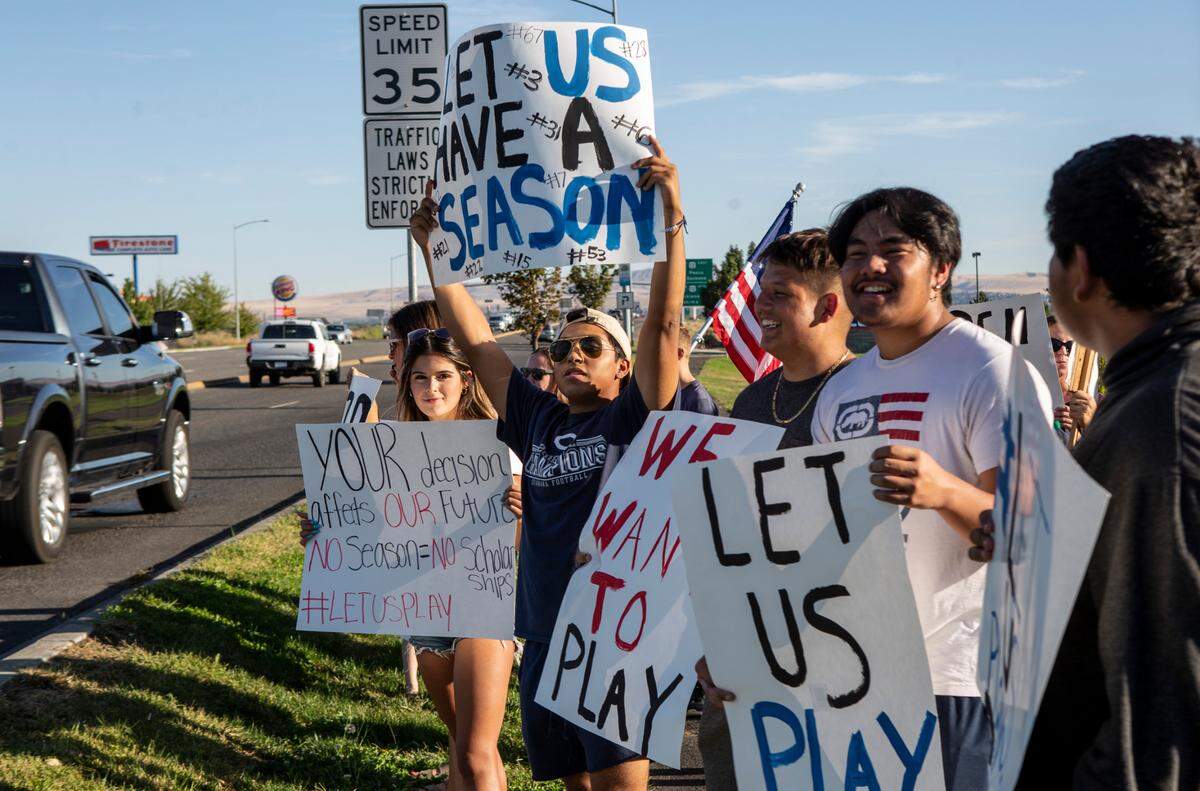
Pasco leaders plan to have a presentation about the new guidelines at the board’s next meeting on Jan. 12.
Pasco continues to see dozens of new COVID cases among staff and students, 25 new cases were reported since Monday and 105 since Nov. 30. Since the start of the school year, the district had 248 cases reported.
Fourteen of the cases this week were among students at Longfellow, Frost, Emerson, Curie and Chiawana High School. The remaining cases were employees at Frost, Twain and McGee elementary schools Chiawana High School and Stevens Middle School.
Only nine of them were in the schools while they were infectious, according to the district.
A recent survey of Pasco’s teachers found the majority weren’t comfortable returning to school. Pasco Association of Educators leaders recently sent a letter to the school board asking them to return to distance learning.
Richland schools
Richland’s preschoolers through third-graders will continue to be in classes for five half days each week. The school board, state and the health district all want to get students back in classes, said Communications Director Ty Beaver.
Fourth- and fifth-grade students are expected to be back in class on Jan. 11 as school leaders continue to reach out to teacher and paraeducator substitutes. After bringing back fourth- and fifth-grade students in November, there were three or more classrooms each day without a teacher.
While the district has an extensive substitute list, many weren’t coming in to fill the absences caused by quarantines, family members getting sick or other illnesses. In response, the district is reaching out to people to find out what is stopping them.
They’re also recruiting more substitutes.
District leaders have set a tentative return date for middle and and high school students of Jan. 26. They haven’t decided if all of the students will return, or if they will phase in the students like they did with elementary schools.
They plan to bring in a consultant to review how prepared the middle and high schools are before sending students back.
“We’re still planning on moving forward,” Beaver said. “We will make sure that our schools are ready.”
Richland has seen the fewest cases of any of the three districts. They reported two COVID cases this week, a staff member and a student from Jason Lee Elementary, and 44 cases since Nov. 30.