
Richland schools to reopen before Halloween. 4-hour meeting ends in split vote
Richland school board members came to a grudging compromise that will start to bring elementary school students back on Oct. 26.
The 3-1 vote late Tuesday came after presentations from state and local health officials, two other failed motions and more than an hour of debate.
The compromise plan will bring preschoolers and kindergarten students back on Oct. 26. Then they will start first- and second-graders on the week of Nov. 2. The remaining elementary students would come back on Nov. 9.
Half of the elementary students will be returning in the morning for four days a week, while the other half will attend in the afternoons.
With COVID transmission rates continuing to climb in the Tri-Cities, board members did not want to bring back secondary students yet. So, no date is set for returning middle or high school students.
To date, six Richland staff members have reported contracting COVID since the beginning of the school year. None of them had any close contact with other students or staff, said school officials.
At the same time, Kennewick reported that 15 staff members have gotten sick — a third of them in the last month.
And Pasco reported that 17 employees have tested positive since the beginning of the school year.
Health officials
The Tuesday night meeting followed an Oct. 1 workshop where Board President Rick Jansons wanted more clarity on whether the state agreed with Benton Franklin Health Officer Amy Person that it was safe to bring students back to class.
Much of the dispute focused around the rate of new cases in the Benton County, which has been increasing in recent weeks. The state Department of Health recommended waiting until the number had dipped to 75 new cases per 100,000 people over a two-week period.
The most recent numbers from the state put the rate of new cases in Benton County at 121 cases per 100,000.
Dr. Person says she is comfortable with opening schools even if the rate reaches 200 cases per 100,000.
She and Lacy Fehrenbach, the Washington Department of Health’s deputy secretary for COVID response, were questioned by the board.
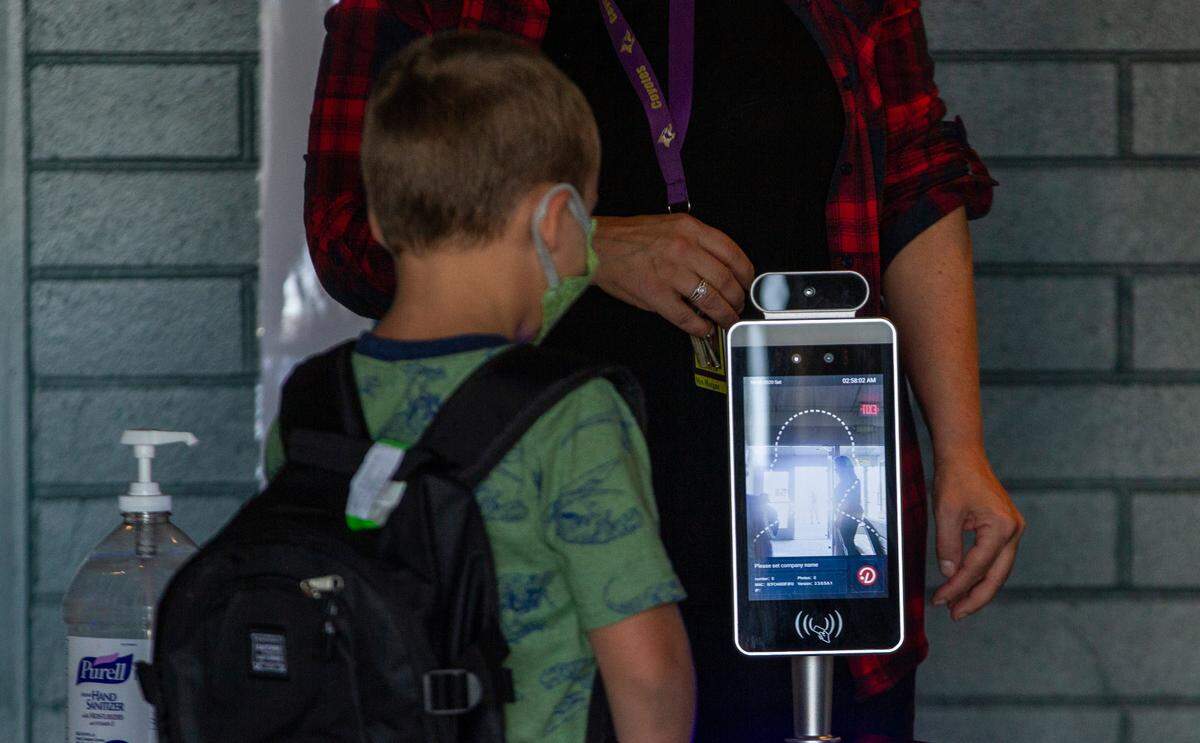
Dr. Person said the rate of new cases in Benton County is only one factor they should consider.
“From the public health standpoint, we’re really trying to achieve the goal of keeping people as healthy as possible,” she said. “For us, that doesn’t mean just keeping people from morbidity and mortality associated with COVID-19, but also trying to keep people safe from social, economic or mental health issues that may occur once kids aren’t in school.”
She pointed to increases in domestic violence and overdoses combined with decreases in reports of child abuse and drops in adolescent referrals to drug treatment centers.
As long as the schools take precautions like masks, 6-foot distancing and hand-washing, Dr. Person said she is confident that students can attend safely.
The increasing numbers in the counties are a factor of more businesses starting to open up and more people holding gatherings, she said.
She also noted hospitals are admitting fewer severely sick COVID-19 patients.
“I believe we are going to see some increase in cases as we allow businesses to open up and we do allow people to interact,” she said. “Do we tell people that they have to stay home and stay healthy until there is a vaccine available? That’s not going to be realistic.”
Fehrenbach steered away from her opinion on Person’s decision. The state’s recommendation that schools wait until new cases dip below 75 per 100,000 for a two week period was only one part of the state’s guidance, she said.
“These decisions have to be made not only based on COVID, but the complex risks and benefits both for in-person learning or distance learning,” she said.
Divided board
The Richland board was divided with Kari Williams and Jill Oldson pushing to bring back elementary students quickly. Jansons supporting a slower approach, and Heather Cleary not feeling it’s safe enough to return. The fifth position on the school board is vacant.
“I don’t want to kick this can farther down,” Williams said, as she urged board members to bring all of the elementary students back within a week. “I have to sit side-by-side with my first-grader to help him to learn anything, essentially, and my children have the best-case scenario. They have a mom who used to be a teacher. I’m a stay-at-home mom. I can help them.”
Oldson pushed for a slower start. Her plan ended up being the one the board eventually settled on. She was willing to give the schools a week between the waves of new students, but wanted them back in classrooms within the month.
Jansons still wasn’t convinced by Dr. Person’s argument, and wanted a clearer statement from the state supporting the move to open schools.
“The state did not change their decision,” he said. “(Fehrenbach) talked specifically about that the numbers should be going down. She talked about being in that moderate range. ... I would like some consistency.”
Cleary said the numbers were still too high to risk bringing students back. She wanted to wait until the district reached 75 new cases per 100,000 over a two-week period
“I think we have the PPE. We have the cleanliness standards. We’ve figured out how to do the air ventilation system,” she said. “The only hang up I have is that our cases are going up.”