
Pandemic forces 44 Tri-Cities daycare centers to close. Those left are feeling the strain
Tyson Fellman expects it will be months before his child care business fully recovers from the effects of COVID-19.
While he has recovered about 70 percent of his business at Beyond the Rainbow child care in Kennewick, distance learning has created new pressures.
“It’s been a challenge,” he said. “We weren’t really set up for that many internet users. We were having trouble with our Wi-Fi and our connection speeds.”
The strain at Fellman’s daycare is being felt statewide as centers that used to take care of students only before and after school need to step in and serve as impromptu classrooms for elementary students.
They are having to hire more staff to help with those educational demands at the same time that their enrollments are down because some parents are still working from home during the coronavirus pandemic.
The financial burden on already strapped day care centers has contributed to 16% drop in daycare programs the Tri-Cities area.
One out of every 10 centers in Benton and Franklin counties has closed this year, according to Child Care Aware of Washington.
At the end of 2019 there were 268 child care programs in Benton and Franklin counties. To date, 44 centers have closed.
But as more businesses reopen, there’s an uptick in parents looking for places for school-age children as they head back to work.
“The last survey we did about 40 percent said they were at risk of closure,” said Deeann Puffert, the CEO of Child Care Aware of Washington. “They’re just hoping that next month will be better.”
Child Care Aware of Washington is part of a national nonprofit that is aimed at improving early childhood education.
She said private philanthropy and the state have started stepping in with financial help, including Coronavirus Aid, Relief, and Economic Security (CARES) Act money, but she’s not sure if that will be enough to help the centers that must now transform into impromptu classrooms.

Not designed to be school
In a normal year, Beyond the Rainbow has been a place where parents can drop off their kids before school and pick them up after work. They care for children up age 12.
Now instead of taking students to school during the day, staff members help students log into their Zoom classes. They are educational aides, trying to manage the same technical issues that parents are.
“We did have to hire some more staff to help with the school-aged kids,” Fellman said. “Our administrative staff have been helping out there, as well.”
Between struggles with Wi-Fi and with having enough desks, Fellman’s situation is similar to others around Washington. The centers have invested in headphones, bigger chairs and tables, where older children can “attend” online school classes.
Child care centers aren’t designed to be schools, Puffert said. In fact, they’re intended to limit the amount of time children spend in front of screens and to keep kids active, she said.
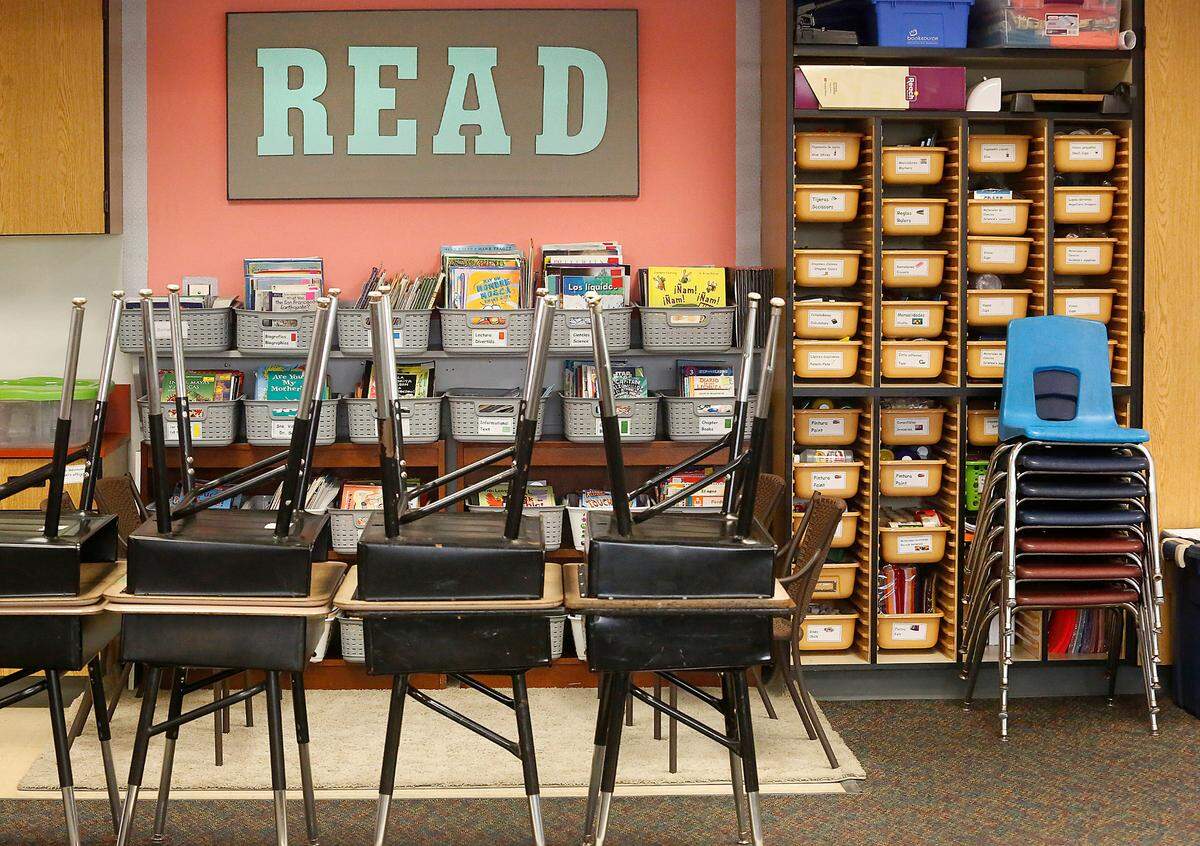
And if some students are being noisy while others are needing to concentrate on school work, they may need to put students in another room and dedicate a staff member to be there because they legally can’t let children out of their sight.
“I think they’re doing the best that they can in a difficult situation,” Puffert said.
Thin margins
There isn’t a great solution to the issue, Puffert said. There needs to be more money to help with internet and material costs.
Even with that, many providers were expecting to see relief as schools began reopening. But Puffert said the reality seems to be getting further away with the threat of another rise in COVID-19 cases possible during fall and winter.
“We can’t keep patching things together,” Puffert said. “I think what we need to start doing is thinking that this is our new normal, and how are we going to shore this up. “
The thin margins that child care centers operate under mean the additional costs could be crippling, she warned because many families can’t pay more for daycare.
Child cares are doing the best they can in the situation, Puffert said.
This story was originally published September 28, 2020 at 12:45 PM.