
Hundreds of Tri-Cities parents opting to homeschool kids in wake of COVID-19
As school begins this week, the number of parents choosing to teach children at home has risen sharply.
Richland School District’s Three Rivers HomeLink parent-partnership program typically receives 20 new applications each fall.
This year, the K-12 school program had nearly 200 applications, said Principal Tyler Reeser. And more enrollment is expected.
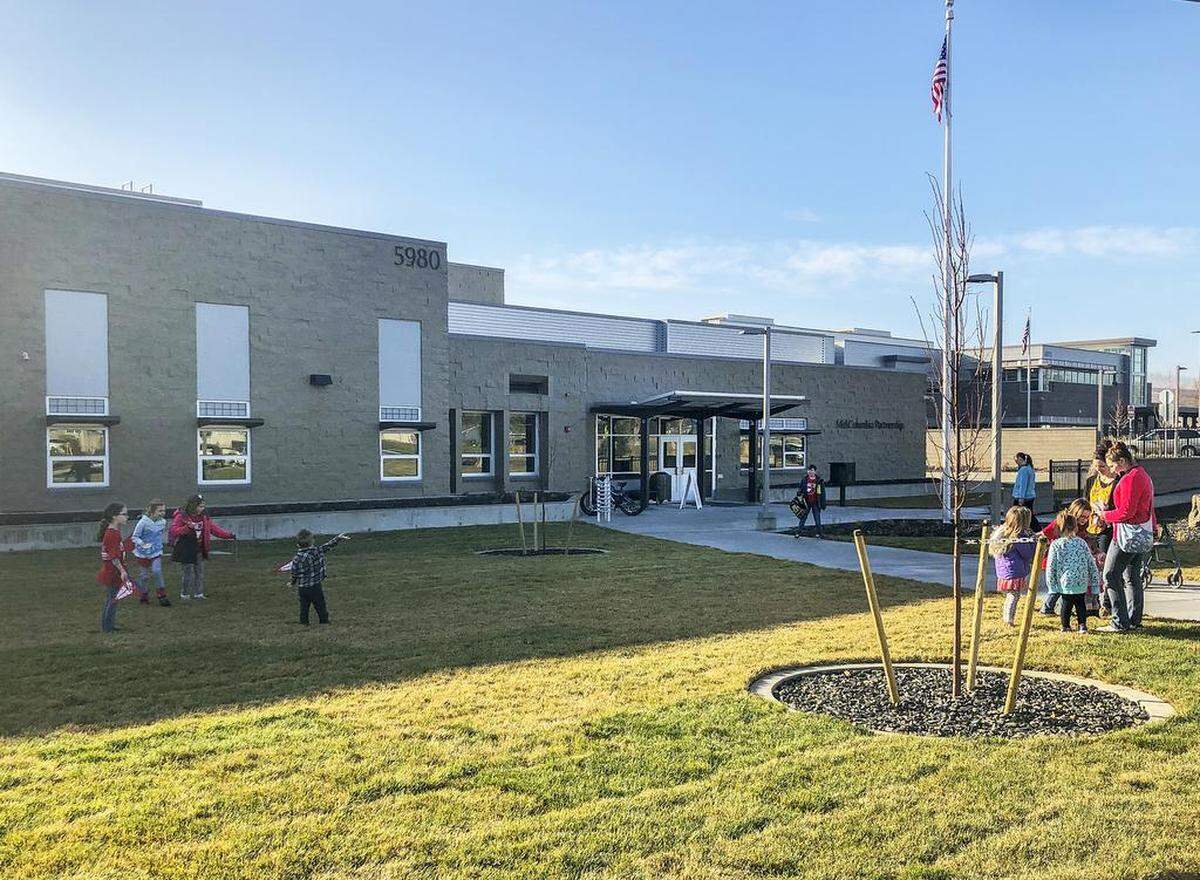
HomeLink and the Mid-Columbia Partnership in the Kennewick School District are publicly funded schools that are considered an Alternative Learning Experience.
The schools follow all public education requirements including testing, but instruction is delivered outside of a regular classroom with approved curriculum.
Parents work in tandem with support from school employees to design and implement the learning plan and decide on full- or part-time enrollment.
When not closed for the coronavirus pandemic, the schools also offer in-person classes and workshops. While Mid-Columbia Partnership requires students to take at least one in-person class, HomeLink does not.
The Alternative Learning Experience programs are different than what Washington labels “home-based” learning — or what most people know as traditional homeschooling — which is neither conducted nor funded through public schools.
These are public schools, so a district’s enrollment and funding from the state remain unchanged as long as students are enrolled full-time.
What does change is that parents — not teachers — are in the driver’s seat of how and when schooling takes place.
Parent interest in the programs range from the flexibility because students don’t have to be online at set times to concerns about the coronavirus when in-person classes resume.
Others parents don’t want their kids, particularly the youngest ones, sitting in front of a computer screen for so much of the day.
Enrollment jump
Last spring, HomeLink had an enrollment of 450 before the rush of additional applications.
Kennewick School District officials said no one was available for an interview but said the Mid-Columbia Partnership had an enrollment of 340 last spring and now has 531.
The Richland district is seeing a similar bump.
The Pasco School Disrict does not have a parent-partnership program.
“There is a substantial interest in HomeLink this year,” said Ty Beaver, communications director for Richland schools.
However, he added the district doesn’t yet have a firm grasp on the number of students being homeschooled who are not doing it through the district.
Families are not required to file a declaration of intent to homeschool until Sept. 15, and enrollment numbers are always in flux the first few weeks, Beaver said.
Washington state law does not require compulsory school attendance before age 8, and families do not need to file a declaration for students who are younger.
With the onset of the COVID pandemic and realizing that the closure could be long-term, Reeser said Richland’s administrators started developing a plan for an influx of students.
Beaver said that the district has been working with HomeLink on increasing resources, including helping with hiring, as well as more discussions about HomeLink’s need for more space when schools are allowed to reopen.
Reeser said an initial surge of interest from parents was triggered last spring by the Comprehensive Sexual Health Education bill.
The law requires all schools to teach about human development and reproduction that is medically accurate, age-appropriate and inclusive of all students. The enactment of the law is on hold pending a referendum on the November ballot.
The other surge came as the ongoing COVID-19 infection rate in the Tri-Cities forced public schools to decide to start the new school year only online.
“Families feel supported,” he said of the program, where he’s been principal for six years. “I often say, ‘You aren’t joining a school, you are joining a community.”
Reeser, whose own kids are in the program, said he emphasizes to families that what works for one may not work for another. Families can adapt how and when students do their school work based on what works best for them.
Attention spans
Brittney Ellsworth-Campbell says her children desperately miss their teachers and friends, and that her youngest has shed many tears over school closures.
The Pasco mother of a 6- and 8-year-old said that she would like access to extracurricular classes like music and P.E. taught by trained teachers.
“I believe in her immunity. We all get sick for two weeks, then we’ll be done with it,” she said. “I wish (in-person school) was a choice for parents.”
But given that no public schools in Tri-Cities are starting in person, she instead chose to go through Mid-Columbia Partnership, saying virtual learning didn’t work for her daughter.
“It was like pulling teeth to get her to sit at the computer,” Ellsworth-Campbell said. “She can’t do it. She doesn’t have the attention span.”
She also added that whenever her children have too much screen time she sees negative side effects in behavior and attitude, and believes virtual learning will increase that.
Ineffectiveness
Elizabeth Porter is a curriculum specialist who authored two books and has taught for 20 years and spent the last five years teaching online. She believes the methods of virtual learning that Tri-Cities schools are offering are not effective nor conducive to learning.
“I am not confident (the schools) have the right things in place to do this effectively,” she told the Herald.
Porter is homeschooling her kids, ages 7 and 12, with the exception of math so that her children can maintain their spot in their boundary school.
She believes by homeschooling with her own curriculum for at least this year, her children will have more consistency and she will have the opportunity to provide skills that have been lacking.
“I believe teachers are doing the best they can,” Porter emphasized. “I think that this is a turning point for education. I also think that parents are not confident the school district is doing what it needs to do at the upper administration levels.”
Mental well-being
Other parents are turning to teaching their own kids over worries about the social and mental health of their children.
Corrine Minton, who taught first-grade school for nearly a decade and most recently was a resource room specialist working with special education students, told the Herald that she quit working over the summer so that she could focus on teaching her children at home.
She doesn’t plan on sending her first-grader or preschooler into the classroom this year.
“The thing they both need is socializing,” she said but she knows they wouldn’t get it. “They can’t share toys or supplies or equipment.”
She said that her son exhibited anxiety in kindergarten that she didn’t realize he was suffering until he started school. She fears that the mandates of social distancing and masks would compound that.
“(Children) are witnessing mandates that enforce fear and anxiety. They don’t have enough information to process. It’s fine for adults to shoulder that, but not kids”
She is concerned about the long-term effects on mental health for the whole community on how schools plan on opening.
“I don’t think people realize that kids are seeing all this activity, and being told you may have it and that you may bring it home to your grandparents. It is a lot of responsibility.”
Minton is grateful that she has the flexibility and the experience to make the decision to teach at home.