
Richland schools promise no layoffs. But Legislature’s change could increase property taxes
No one will be laid off from Richland schools next year, district officials said this week, but that promise is coming along with a possible increase in property taxes.
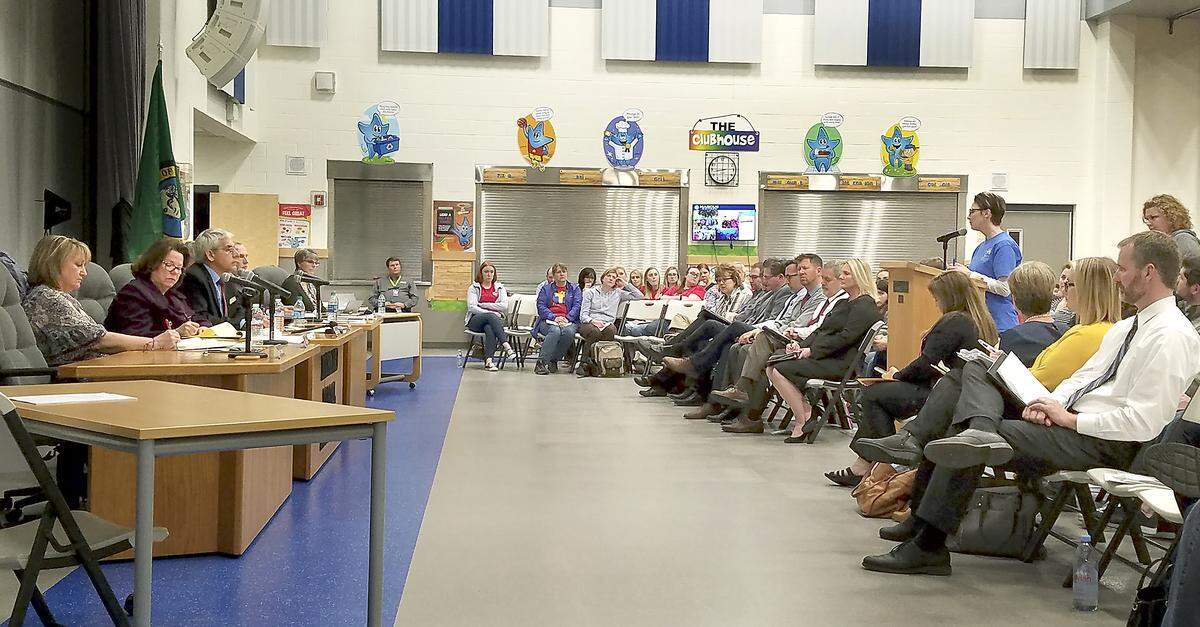
“I believe there will be zero (staff) cuts,” school board President Rick Jansons told a crowd of more than 100 cheering paraeducators and teachers at this week’s board meeting. “That is what the board said in concept earlier, and I don’t see that changing.”
Part of what gives them confidence is that Richland and West Richland property owners could pay more in 2020 after the state Legislature allowed an increase in the amount of money local districts can raise from property taxes.
The Richland district had been considering eliminating 88 full-time classified staff positions because of a budget shortfall after last year’s changes to state funding for teachers, a drop in local property tax revenue and near-static enrollment.
All three Tri-Cities school districts are sorting through the state budget that passed Sunday, but it appears Kennewick and Pasco aren’t able to take advantage of the change to local levies until their current levy expires in 2022.
Richland’s current levy expires the same year but the district had different wording on the ballot measure that district officials say will allow it to increase the rate next year.
This session legislators increased the cap that limited the tax rate that school districts could collect locally.
The cap was $1.50 per $1,000 of assessed property value. Lawmakers increased that to $2.50 per $1,000 of value starting in 2020. That would increase a tax bill for a $200,000 home by $200 a year.
The districts will need to keep the tax money they collect from those levies separate from the rest of their budget. That money can be spent only on items that are needed in the schools — but aren’t funded by the state — such as school resource officers, nurses and special education programs.
2018 levy vote
The way Richland officials worded the February 2018 ballot will let the district change their property tax rate without going back to voters.
“The levy approved by voters in February 2018 allowed the district to collect up to $24 million in 2020,” said Ty Beaver, communications director for the Richland district. “The levy lid initially instituted by the Legislature, of $1.50 per $1,000 in assessed value, meant we could only collect about $12 million under the levy.”
“The new levy lid ... means we can collect about $20 million under our levy authority,” he said. “However, levy collections are based on the calendar year and our budget goes September-August, so we’ll only collect about half of this increase for the 2019-20 school year.”
Kennewick and Pasco are unlikely to benefit this year from the change since both asked in their levy proposals for close to what they expected to collect.
Public Affairs Director Shane Edinger said the school board hasn’t discussed any changes to the local levy.
Kennewick didn’t have a new statement on its budget discussions, though it previously said it didn’t expect any drastic staffing or program cuts.
Sorting through the budget
The last-second budget agreement that managed to keep the Legislature out of a special session is still being parsed by both state and local school officials.
“We and many other organizations around the state are still trying to figure out what it all means,” said Schulte in Richland. “Overall, it’s very beneficial to the school district. That’s not the same story across the state. There are some districts, perhaps in our general neighborhood, that are not going to benefit as much as we have.”
Richland has been at the forefront of the budget discussions after a worst-case budget projection was circulated on social media, but the district is not alone in starting to talk about its budget projections and a $5.8 million drop in property tax revenue.
Pasco officials are predicting a $5 million decline in revenue, while costs are expected to rise by $7.5 million. Kennewick was looking at a $5 million to $7 million shortfall in its proposed budget.
In Pasco, Fiscal Services Director Kevin Hebdon is studying where changes to K-3 class size requirements, special education funding and employee benefit costs will leave the district, Edinger said. He hopes to have a clearer picture during the coming weeks.
All of the districts also are trying to managed the increased cost of medical insurance, which now covers more school employees, including part-timers.
Now any employee that works for 630 hours a year, including nurses, coaches and substitute teachers, is guaranteed full medical benefits.
Pasco and Kennewick are working to determine what their additional medical costs will be.
In Richland, that means paying $12,000 a year in medical coverage for any employee who works an average of 17.5 hours a week. They estimate an additional cost of $1.5 million to $2 million.
Richland had initially planned a Thursday meeting to talk about the budget, but that is delayed until May 21.
This story was originally published May 1, 2019 at 7:37 PM.